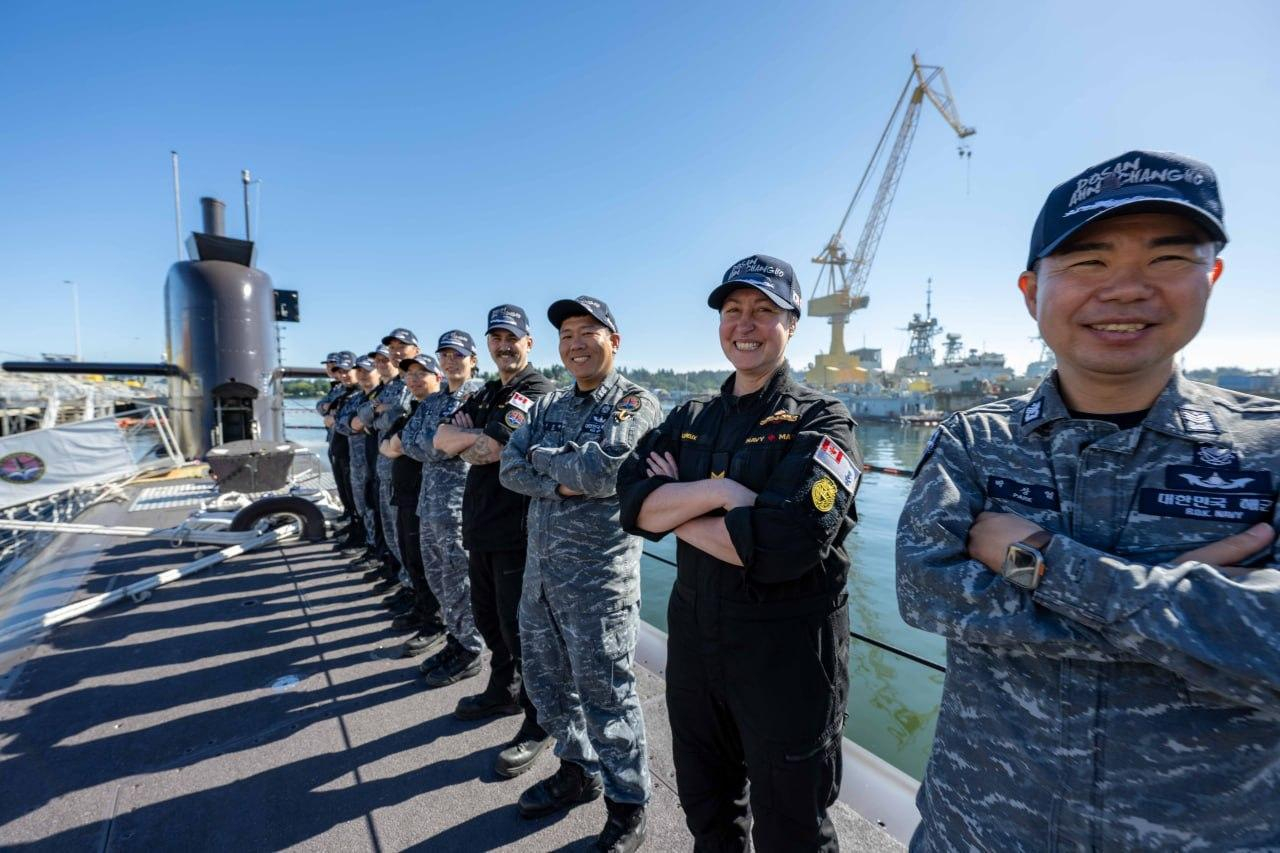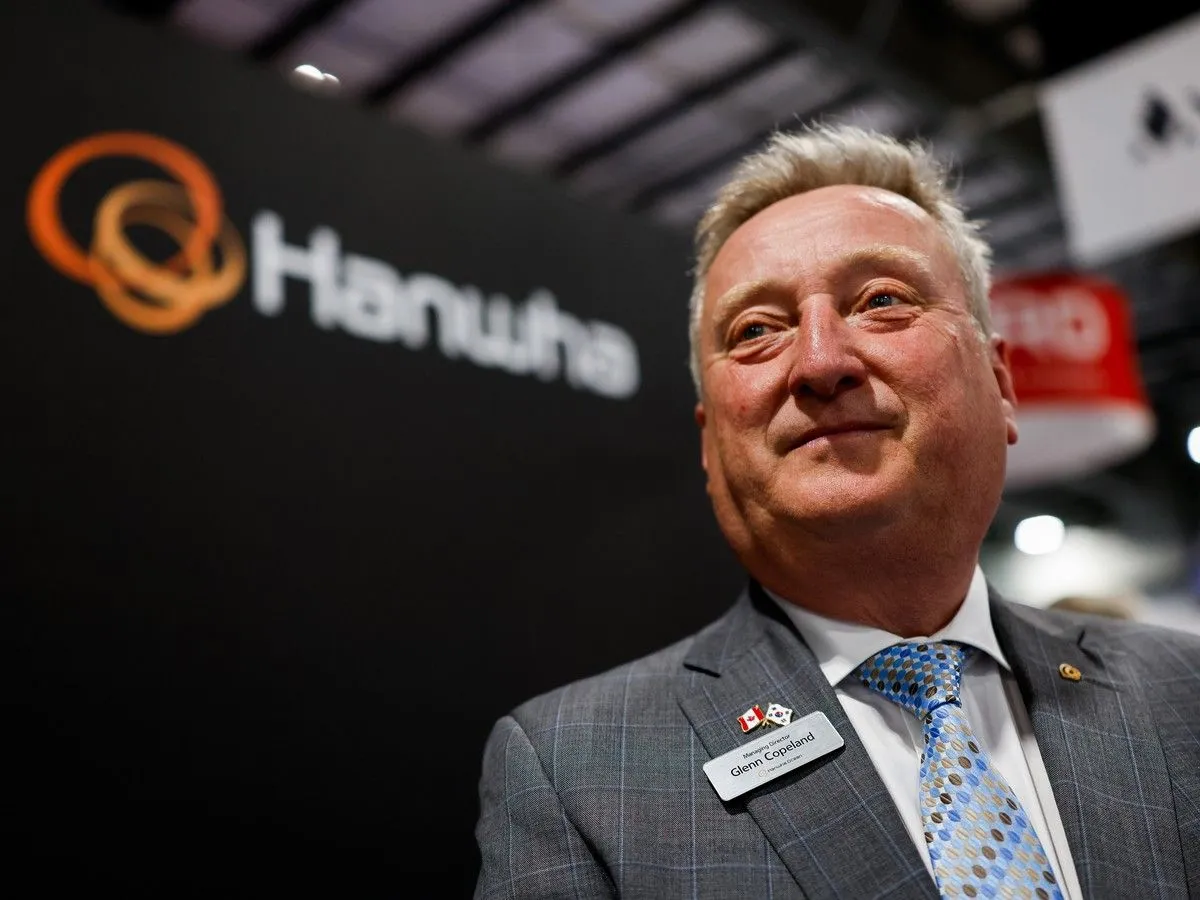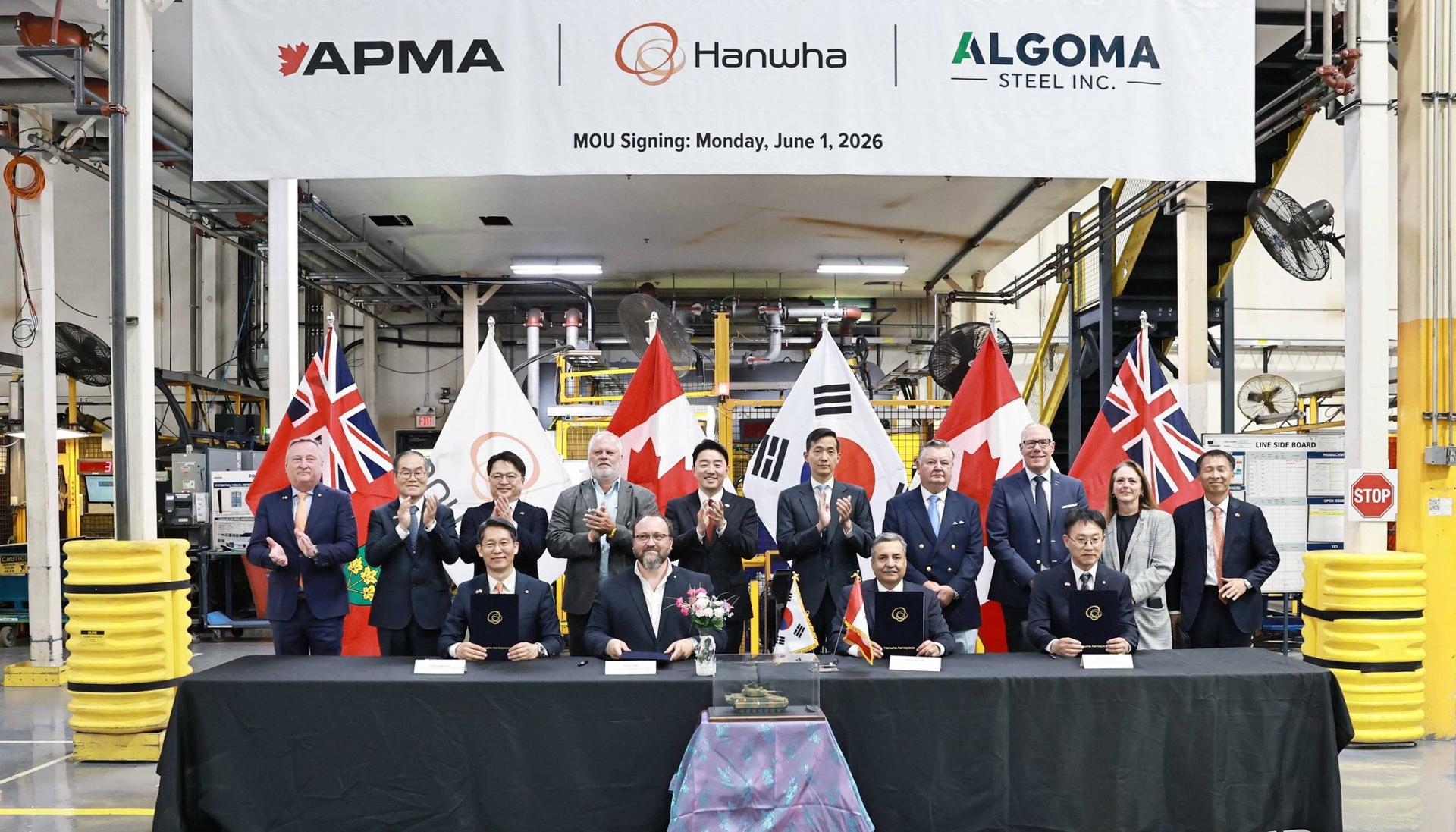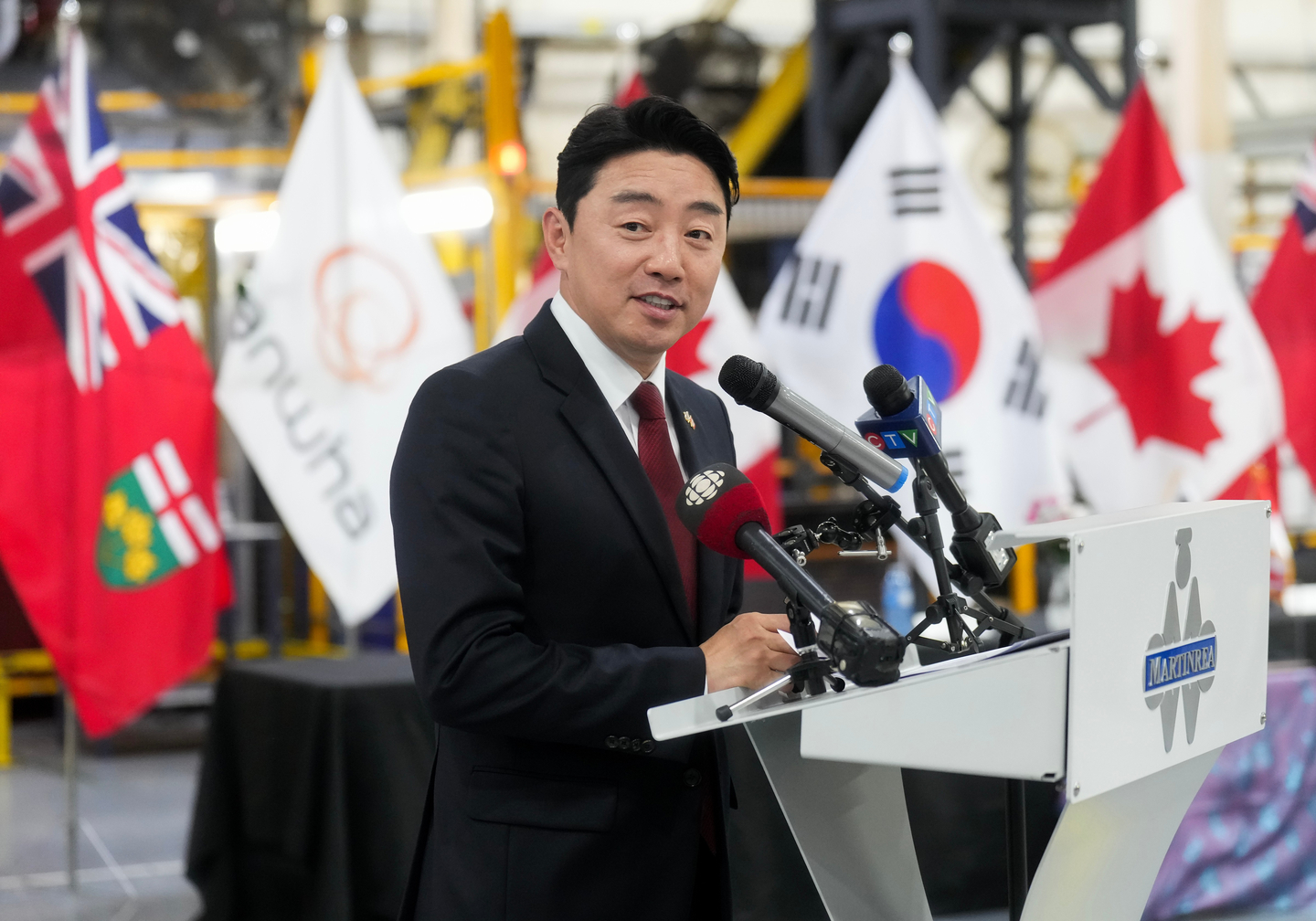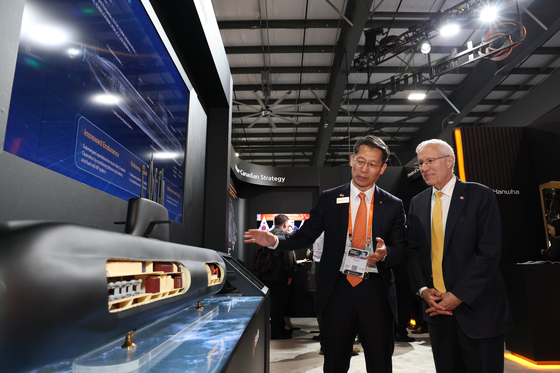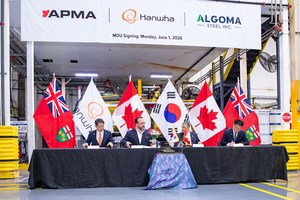
From left: Hanwha Ocean senior executive vice-president Steve SK Jeong, Automotive Parts Manufacturers' Association president Flavio Volpe, Algoma Steel CEO Rajat Marwah and Hanwha executive Park Kwang-nam. Hanwha plans to work with Algoma Steel and APMA to expand local production capabilities and strengthen the domestic supply chain if it secures a CPSP contract. (Hanwha Group) South Korea and Canada are expanding cooperation in energy security, critical minerals, strategic industries and supply chain resilience, a move that could generate more than 100 billion Canadian dollars ($71.91 billion) in economic impact for Canada while supporting tens of thousands of jobs.The expanded partnership was announced Tuesday following a meeting between Canada's Minister of Energy and Natural Resources Tim Hodgson and South Korea's Chief of Staff to the President and Special Envoy for Strategic Economic Cooperation Kang Hoon-sik at the Korea-Canada Energy and Resource Supply Chain Cooperation Forum in Ottawa.The announcement builds on existing partnerships between the two countries and highlights a shared commitment to strengthening long-term economic and industrial ties.The forum brought together senior federal and provincial government officials, industry leaders, investors and representatives from Canada's energy, mining, infrastructure and technology sectors to discuss opportunities for cooperation in energy, critical minerals, hydrogen, advanced manufacturing and strategic resource development.The partnership is already generating significant economic activity. In 2025, energy products became Canada’s largest export category to South Korea, valued at approximately CA$2.2 billion, while metal ores and nonmetallic minerals were Canada’s second-largest export category, valued at approximately CA$1.5 billion.Speaking at the memorandum of understanding signing ceremony between Canada's Automotive Parts Manufacturers' Association, Canadian steelmaker Algoma and Hanwha on Monday, Kang highlighted Canada's growing role in Korea's long-term energy diversification strategy. Korea has already invested approximately CA$1.6 billion in the LNG Canada project and is expected to expand that investment to CA$3.2 billion as future phases advance.Kang also highlighted plans to increase imports of Canadian crude oil, with Korea expected to import approximately 16 million barrels this year and up to 20 million barrels next year. Korea has also recently eliminated the 3 percent tariff on Canadian crude oil imports, further strengthening long-term energy trade between the two countries.In an interview with CTV News, Kang also outlined "Project Beaver," a proposed industrial cooperation initiative linked to Hanwha Ocean's Canadian Patrol Submarine Project proposal.The CPSP is a major submarine procurement program worth up to 60 trillion won ($38.83 billion) to acquire up to 12 diesel-electric submarines for the Royal Canadian Navy. A Hanwha Ocean-led consortium is among the shortlisted bidders along with Germany's Thyssenkrupp Marine Systems. Royal Canadian Navy submariners aboard the ROK Navy's 3,000-ton-class submarine ROKS Dosan Ahn Chang-ho (SS-III), participating in joint South Korea-Canada cooperation drills, pose for a commemorative photo with South Koreans at CFB Esquimalt in Victoria, British Columbia, Tuesday. (Hanwha Group) According to Kang, the initiative would involve more than CA$3.1 billion in investment and support the creation of approximately 9,000 jobs through the development of a Canadian hydrogen transportation ecosystem, including the manufacturing of hydrogen trucks.The proposal includes plans for a hydrogen liquefaction facility in British Columbia, a network of hydrogen refueling stations across British Columbia and Alberta, and a hydrogen-powered commercial vehicle manufacturing facility in Ontario.Hanwha Ocean said it was supporting these objectives through its broader engagement in Canada's energy sector, including engineering collaboration on the Fermeuse LNG project in Newfoundland and Labrador and participation in emerging LNG export opportunities in Western Canada. Leveraging decades of experience in offshore energy infrastructure, floating LNG facilities, shipbuilding, and marine engineering, the company brings capabilities that can support the development and export of Canadian energy resources to global markets.The company's approach to the CPSP reflects the same long-term perspective. The ROK Navy's 3,000-ton-class submarine ROKS Dosan Ahn Chang-ho (SS-III) departs from CFB Esquimalt in Victoria, British Columbia, to participate in joint South Korea-Canada cooperation drills on Tuesday. (Hanwha Group) Independent analysis estimates that Hanwha Ocean’s CPSP proposal submitted in late April could generate CA$96.3 billion in GDP impact and support more than 433,000 Canadian job-years over the acquisition period from 2026 to 2044.According to Hanwha Ocean, the proposal is designed to create long-term economic benefits through industrial partnerships, supply chain development, workforce growth, technology collaboration and sustained investment across Canada.The company said the estimate does not include the potential economic impact of future defense equipment manufacturing opportunities involving APMA member companies, as well as the recently announced LNG and hydrogen investments that are currently being evaluated.Flavio Volpe, president of APMA, said after Monday's memorandum signing with Algoma and Hanwha that the partnership could potentially create 30,000 direct and indirect jobs in Ontario.In addition, Hanwha Ocean plans to establish a venture capital fund to support innovative Canadian companies across defense, shipbuilding, artificial intelligence, aerospace, nuclear technologies and other advanced technology sectors. This is expected to help strengthen Canada's industrial base and foster the next generation of high-growth industries.The company added that its submarine proposal would provide Canada with a pathway to recapitalize its submarine fleet on an accelerated timeline, with a commitment to deliver the first four submarines by 2035 and all 12 submarines by 2043.Hanwha Ocean said, combined with broader industrial, energy and economic cooperation between Canada and South Korea, the proposal represents an opportunity to strengthen Canada's defense capabilities while expanding industrial capacity, creating high-value jobs, attracting long-term investment and supporting long-term economic growth.
Canada, Korea deepen industry partnership with potential CA$100 billion economic impact
South Korea and Canada are expanding cooperation in energy security, critical minerals, strategic industries and supply chain resilience, a move that could gene
884 words~4 min read