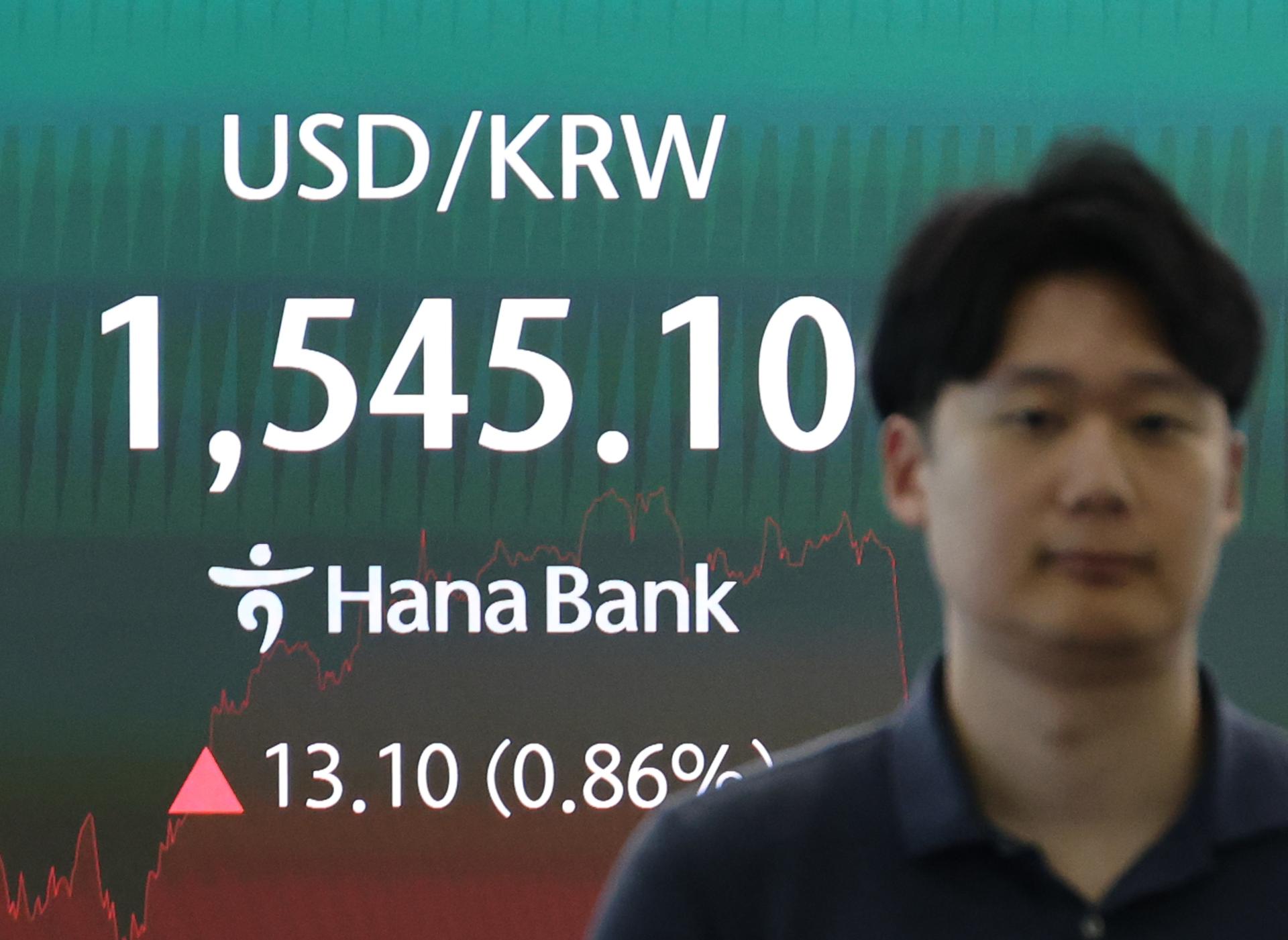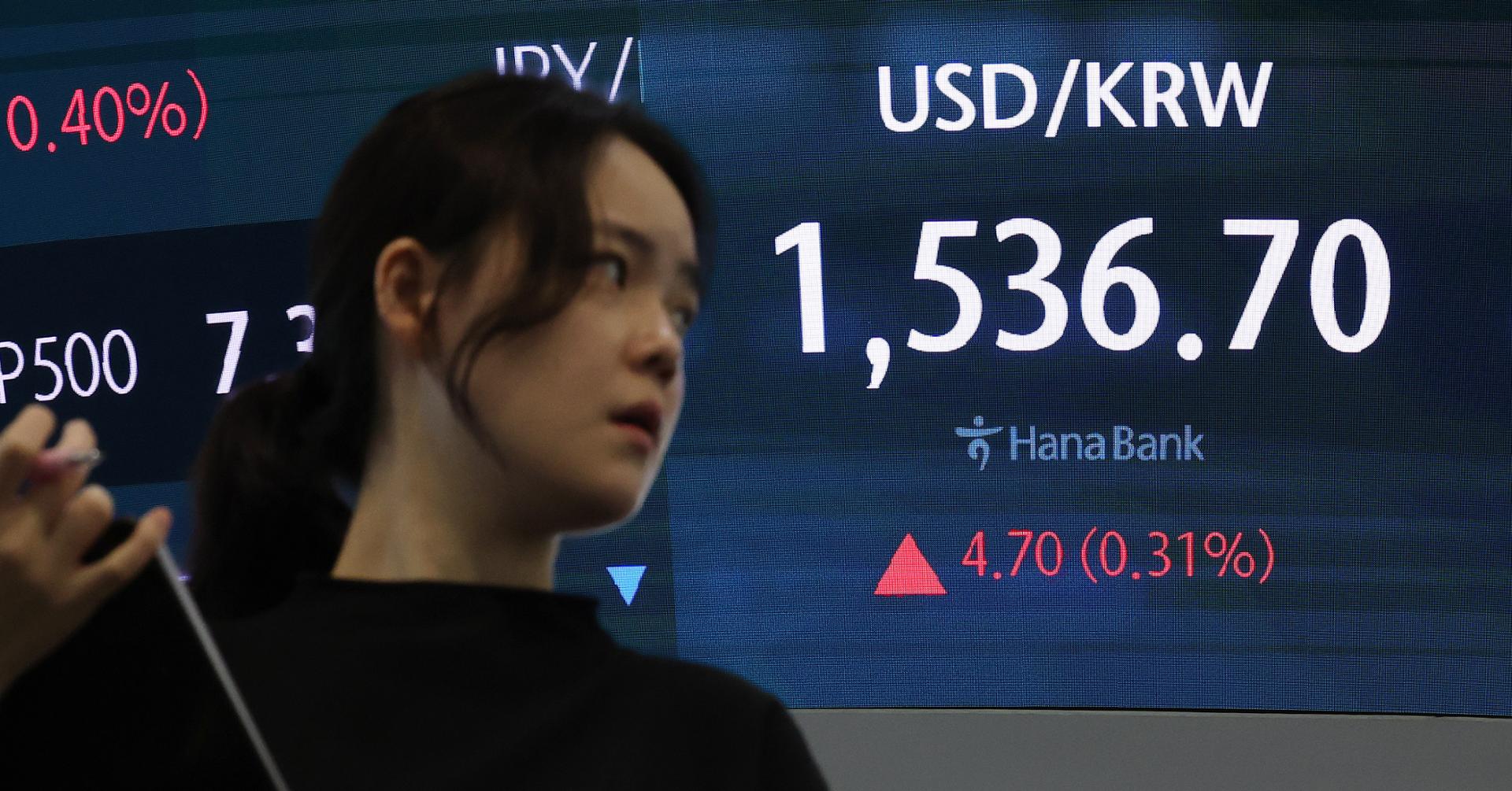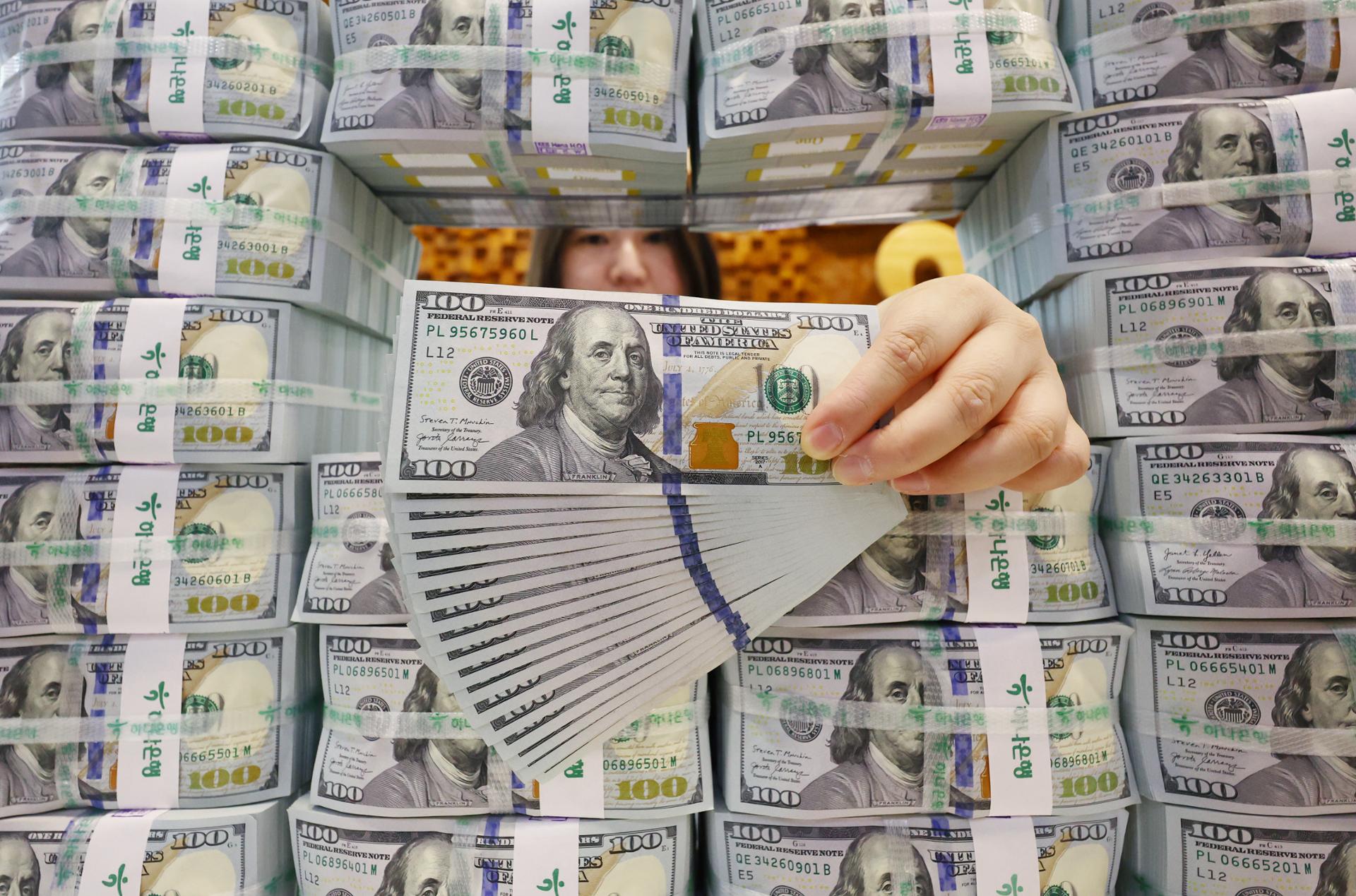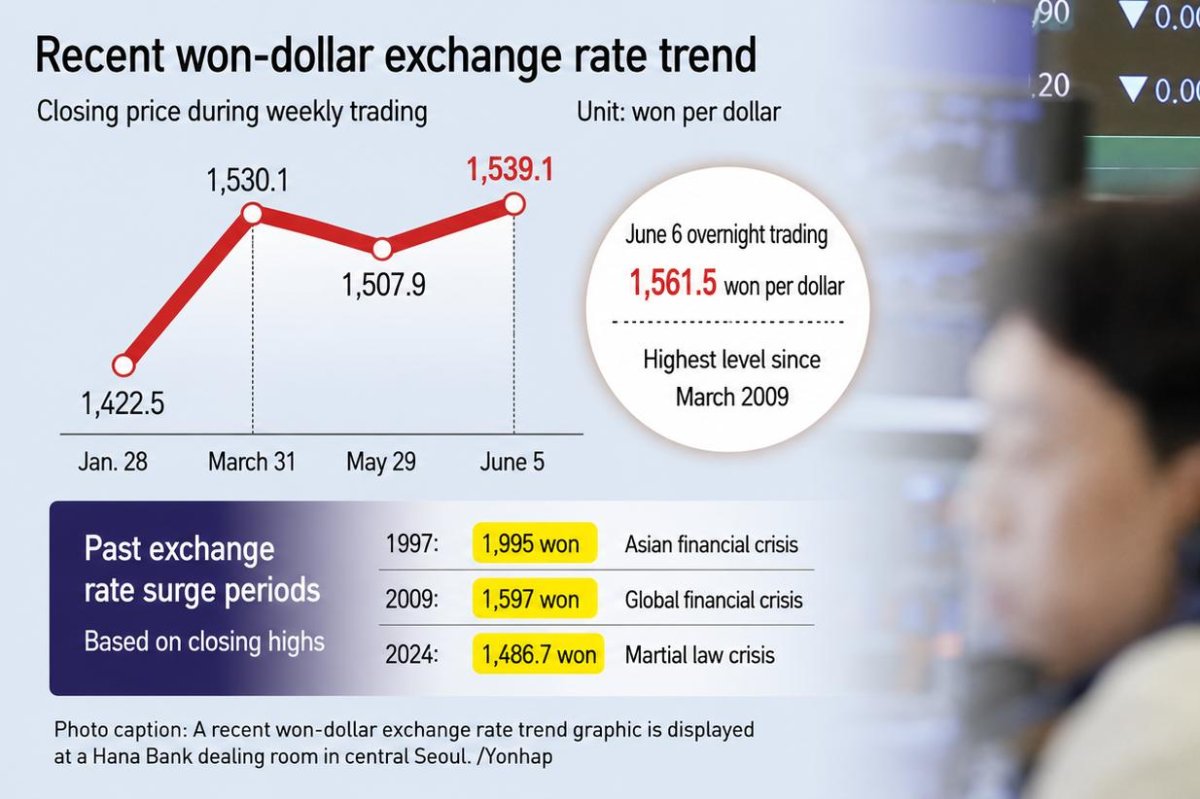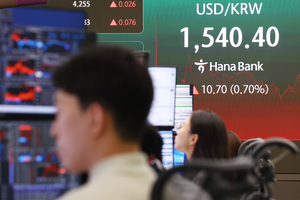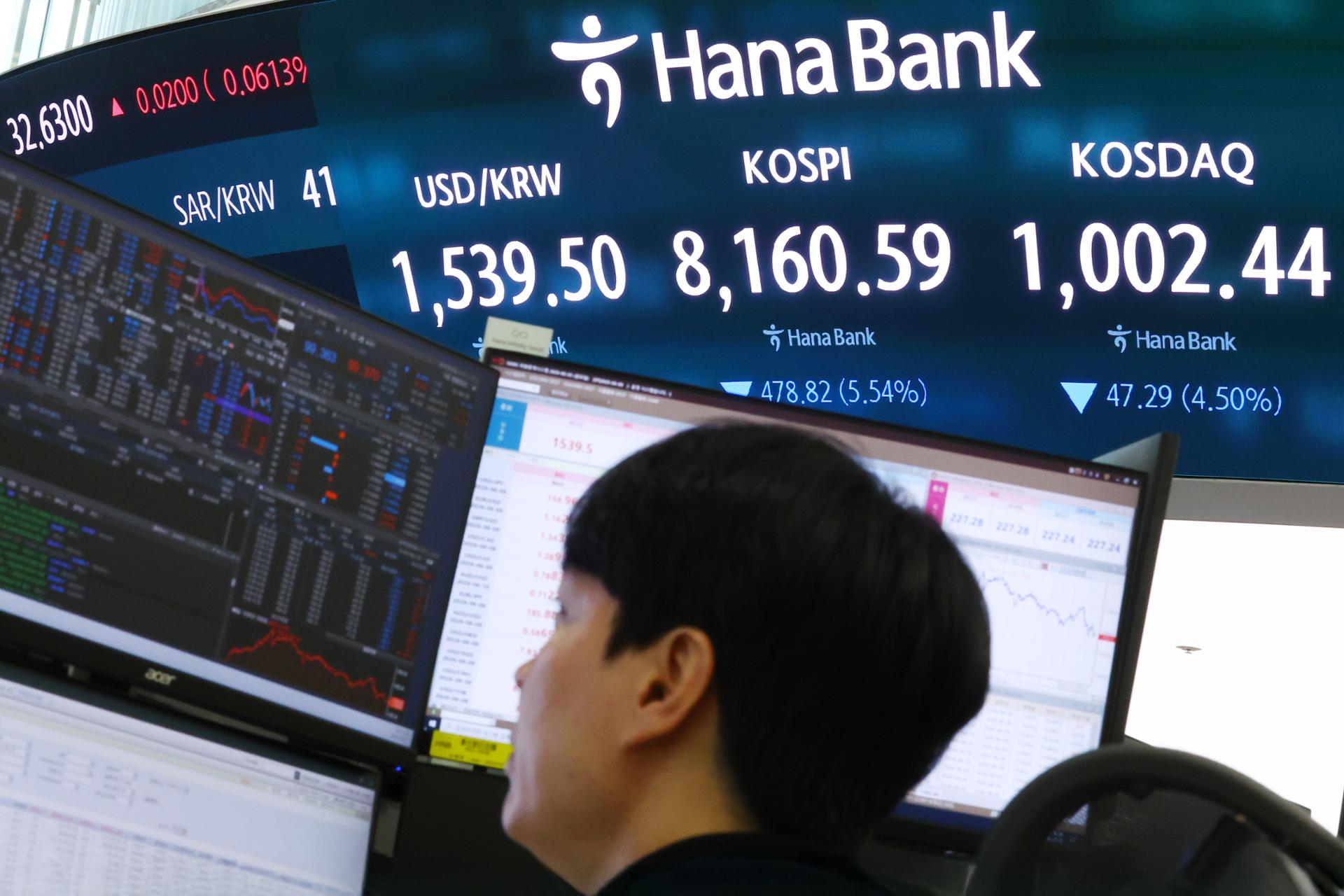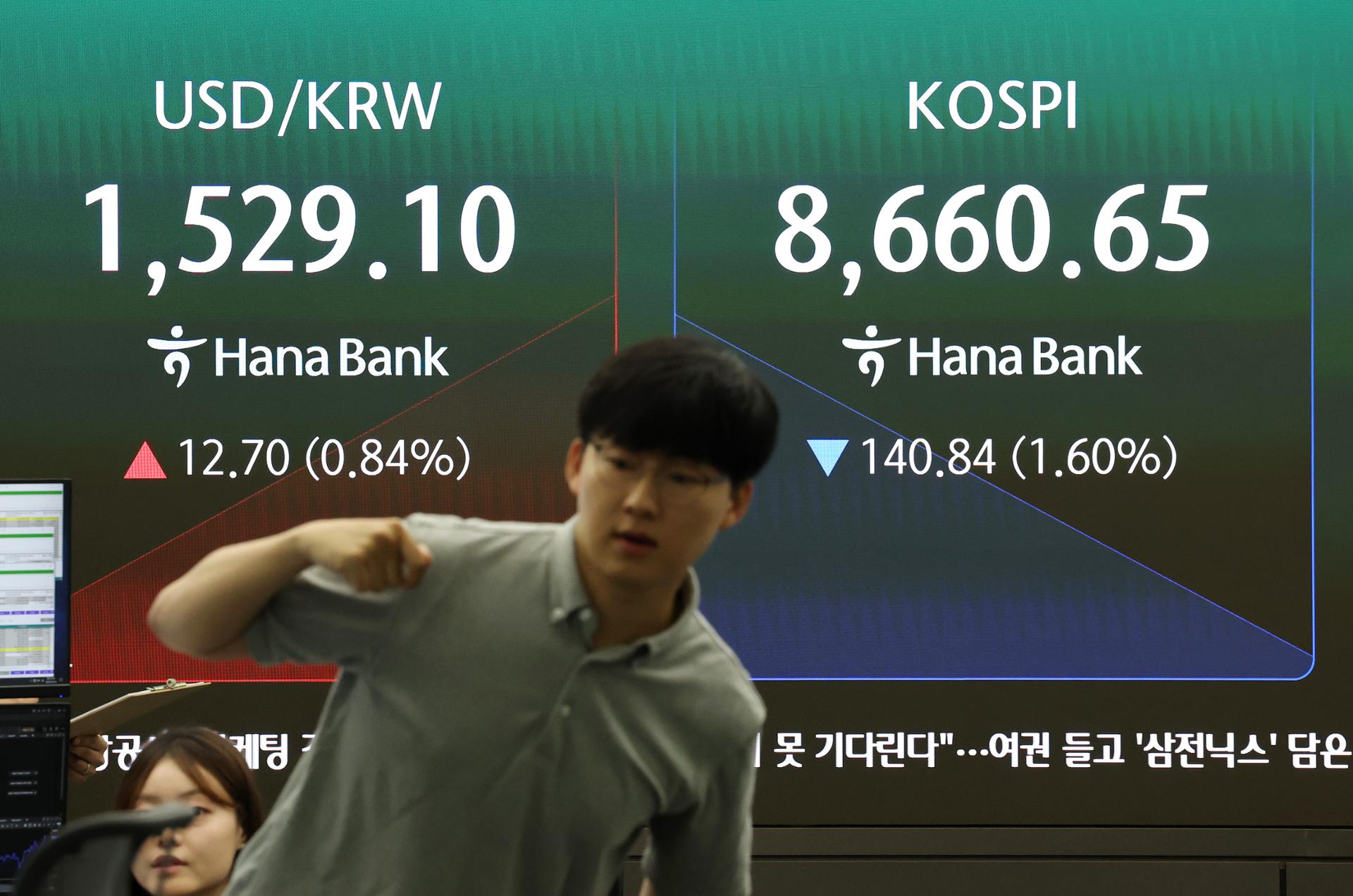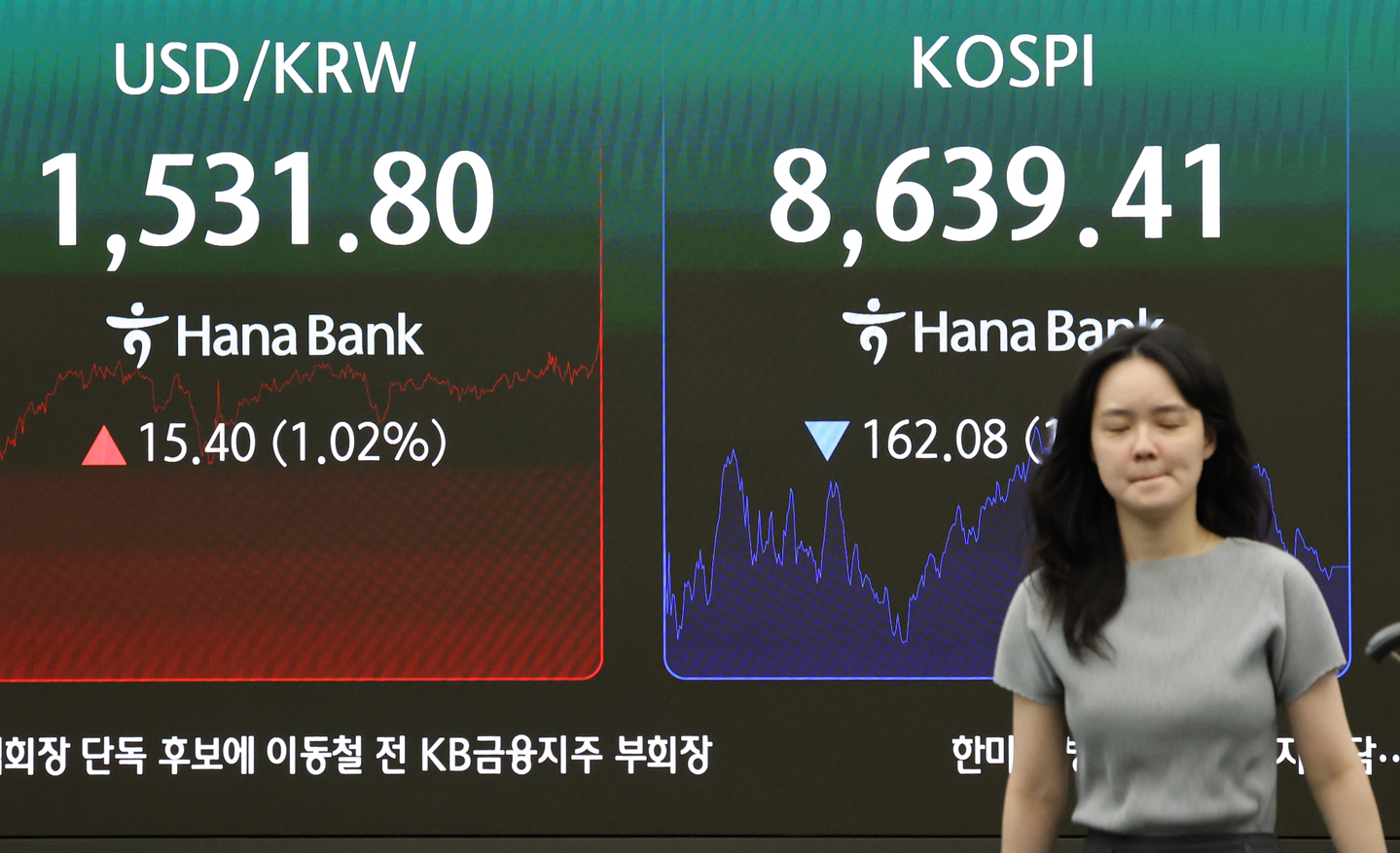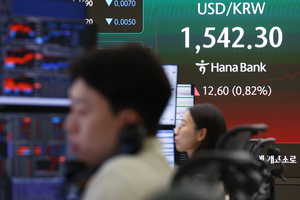
A financial data screen in a dealing room at Hana Bank's headquarters in central Seoul shows the Korean won quoted at 1,542.3 per dollar during trading on Friday. (Yonhap) The Korean won weakened sharply Friday, hitting its lowest level since the 2009 global financial crisis as sustained foreign outflows from the benchmark Kospi weighed on the currency.The won was quoted at 1,529 per dollar at the start of onshore trading Friday. It soon weakened past the 1,540 mark after the opening bell, weakening to as low as 1,549.1 per dollar and briefly flirting with the 1,550 threshold. The currency was trading at 1,544.7 per dollar as of noon.It marked the first time the won had traded above 1,540 per dollar during daytime trading since the height of the global financial crisis in March 2009.Friday's decline came after the won had already breached the 1,540-per-dollar level in after-hours trading in the previous session, touching 1,540.3 per greenback.The won has been under pressure since early May, as persistent foreign outflows from the local stock market weigh on the currency.Overseas investors were net sellers of 2.41 trillion won ($1.5 billion) worth of Kospi shares on Friday at noon. From May 1, they have offloaded shares worth 115.3 trillion won on the main board.Geopolitical uncertainty also weighed on sentiment, with the US and Iran remaining deadlocked over a ceasefire agreement.Despite verbal warnings from policymakers, the won has continued to depreciate. Finance Minister Koo Yun-cheol said Thursday that authorities would take "necessary measures immediately" to counter excessive market moves.Earlier, Bank of Korea Governor Shin Hyun-song also pledged that the central bank would respond firmly to one-sided moves in the foreign exchange market and had both "the tools and the willingness" to act after the May 28 rate-setting meeting.The remarks, widely seen as a verbal intervention, did little to stem the won's decline against the greenback.Market analysts warned that the won's weakness could persist, keeping the currency in the 1,500-per-dollar range for an extended period."Even if geopolitical risks in the Middle East ease and foreign investors' large-scale selling of Korean equities comes to an end, the won is unlikely to gain sharply," said Jung Yong-taek, a researcher at IBK Investment & Securities."Other factors, including Korea's investment commitments to the US, are likely to keep pressure on the won."
Korean won hits 17-year low on foreign outflow
The Korean won weakened sharply Friday, hitting its lowest level since the 2009 global financial crisis as sustained foreign outflows from the benchmark Kospi w
383 words~2 min read