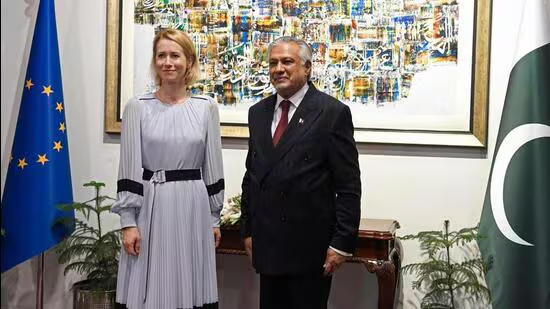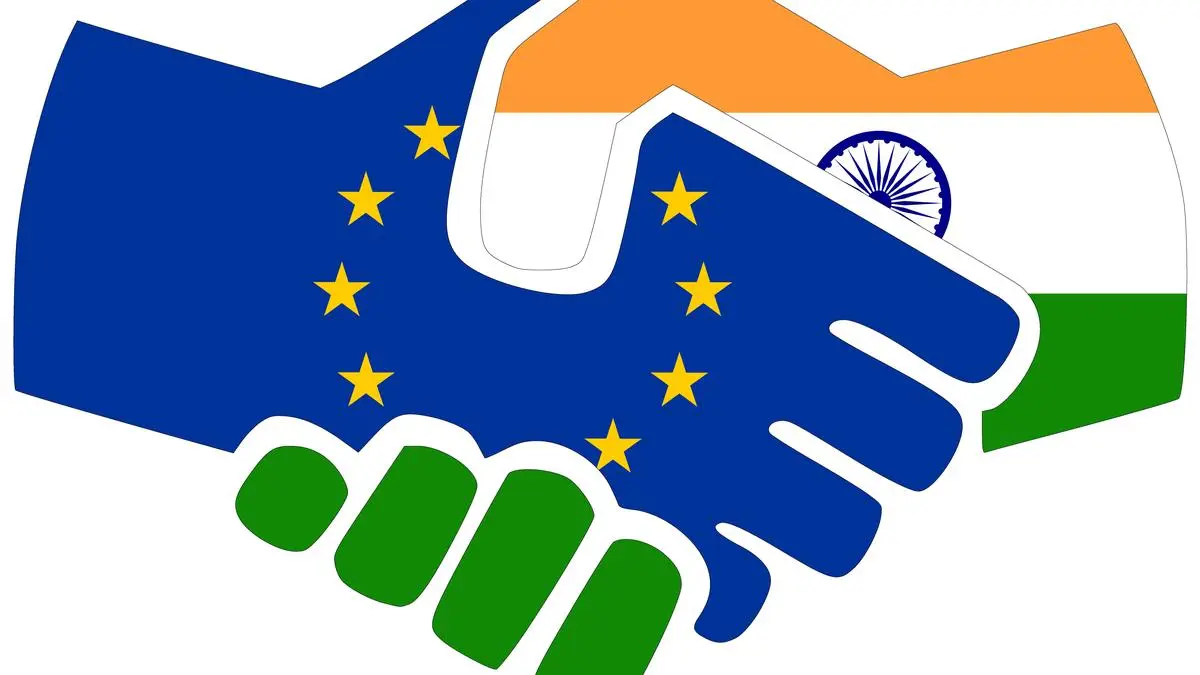
The European Union (EU) could end up losing exclusive marketing rights for its wines, spirits and cheese in India, as it has called for a United Nations (UN) resolution to New Delhi’s dispute with Pakistan over Jammu and Kashmir.Exclusive marketing rights mean recognising that a product is specifically grown in that region. The marketing rights are given through recognition for a Geographical Indication (GI) tag for the specific product.A joint press communiqué issued, following the eighth round of the European Union-Pakistan strategic dialogue on June 1, said that the Pakistani side briefed the EU on the issue of Jammu and Kashmir. The EU side briefed on Russia’s war against Ukraine. “Both sides expressed support for a peaceful resolution of conflicts through dialogue and diplomacy, in accordance with the principles of the UN Charter,” it said.EU to lose moreTrade analysts interpret this as a development that could be an impediment for India to get a GI tag for its basmati rice. India’s application for a GI tag has been pending with the EU since 2018. Brussels has been insisting that India and Pakistan seek the GI tag jointly. But India has refused, saying it could affect the sovereignty of the country. “India and the European Union decided to opt for a separate agreement on GI tag recognition while entering into a free trade agreement (FTA). If the EU takes such a stance on Jammu and Kashmir, it will not lead to any agreement,” said S Chandrasekaran, author of “Basmati Rice: The Natural History Geographical Indication”. He said the EU would stand to lose more than India. “Totally, the EU products such as wines, spirits and cheese have a ₹9,000 crore market value, while that of Basmati rice is ₹2,000 crore,” the Basmati historian said. The main problem for an agreement on GI tags is that Pakistan is claiming the entire Jammu and Kashmir to be its region its and has claimed it in such a way in the GI tag application to the EU. Pak faces rough weatherIndia objected to Pakistan’s application, pointing out several inconsistencies. On the other hand, Islamabad’s application has run into rough weather after the European Commission accepted Italy’s opposition to it. Italian agricultural entrepreneurs’ associations Coldiretti and Filiera Italia moved the European Union against the granting of the GI tag to Basmati rice from Pakistan. The EU has been signing FTAs differently with various countries. For example, with Australia it has combined all aspects, including geographical indication (GI) tag, in the deal. However, the India-EU FTA addresses the GI tag aspects separatelyIndia is claiming GI tag for Darjeeling tea, too, besides Basmati rice, while the EU is seeking a similar treatment for its wines, spirits and cheese.FTA with AustraliaIn its FTA deal with Australia, the EU won a major concession that requires Canberra to introduce a GI protection system for spirits and agricultural goods. Per the deal, Australia will have to protect 231 spirit GIs and 165 agricultural goods GIs, primarily dairy and small goods. However, certain Australian products can have these names until they are phased out over a period of 10 years. Chandrasekaran said the EU actively prevents a product being made generic before registration of GI. It is sensitive to protecting GI for its spirits, wines and cheese.Analysts say India could have clinched the GI tag for basmati and Darjeeling tea during the FTA talks. Apart from the EU, Australia, New Zealand and Kenya have refused to give GI to India’s claim for GI status because it is also grown in Pakistan. Published on June 5, 2026
EU may not get exclusive marketing status for its wines, spirits and cheese in India
EU risks losing exclusive marketing rights for its wines, spirits, and cheese in India amid Jammu and Kashmir dispute with Pakistan.
594 words~3 min read