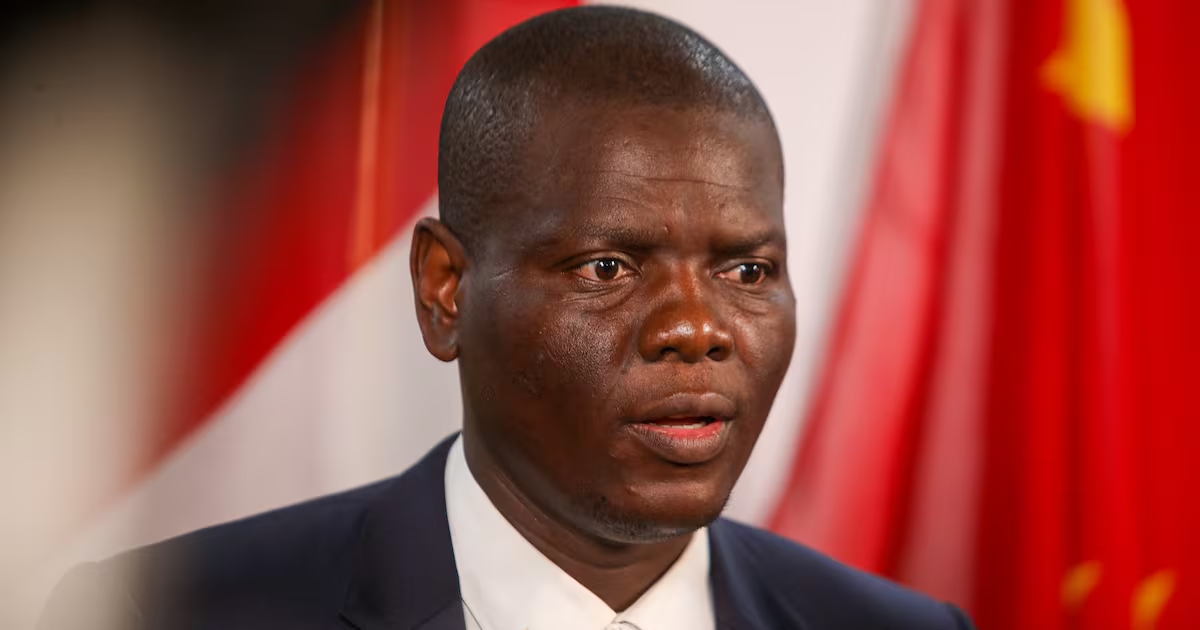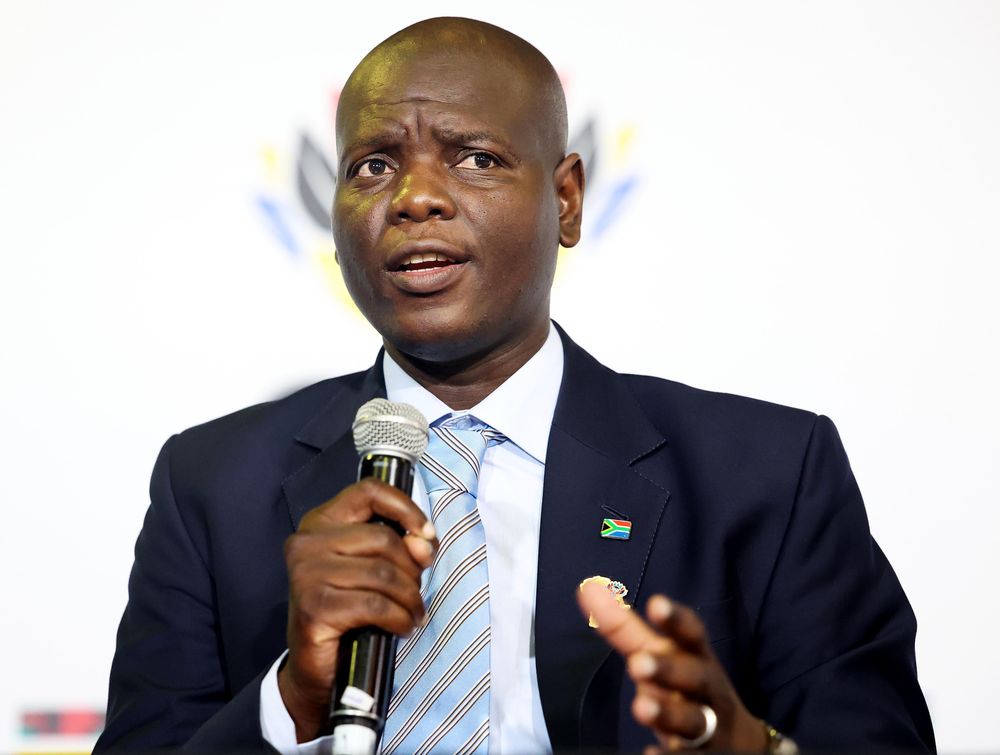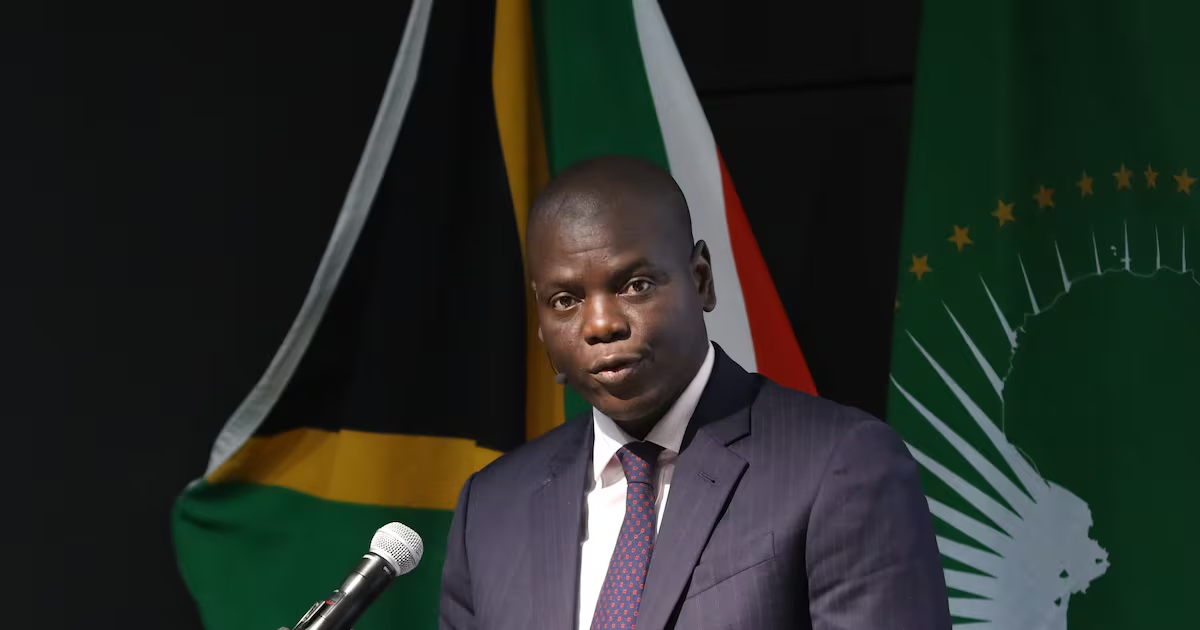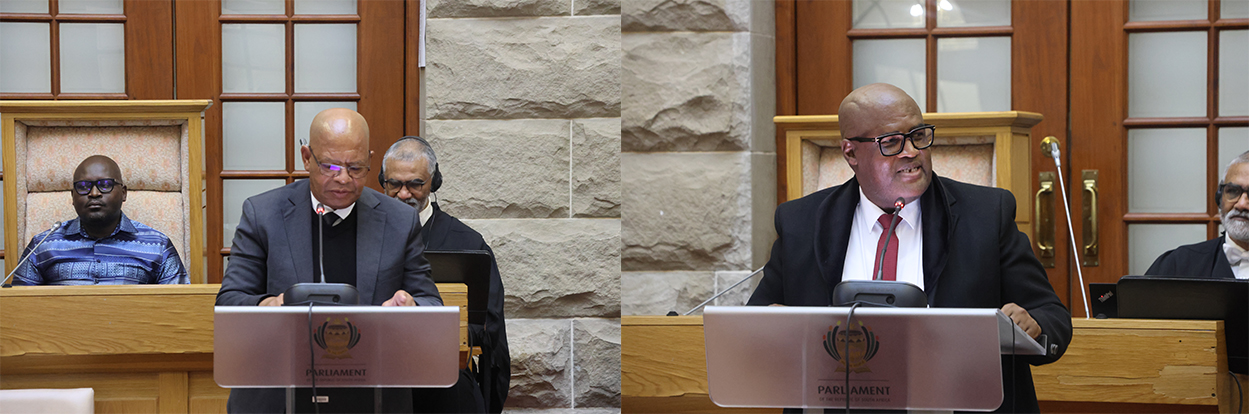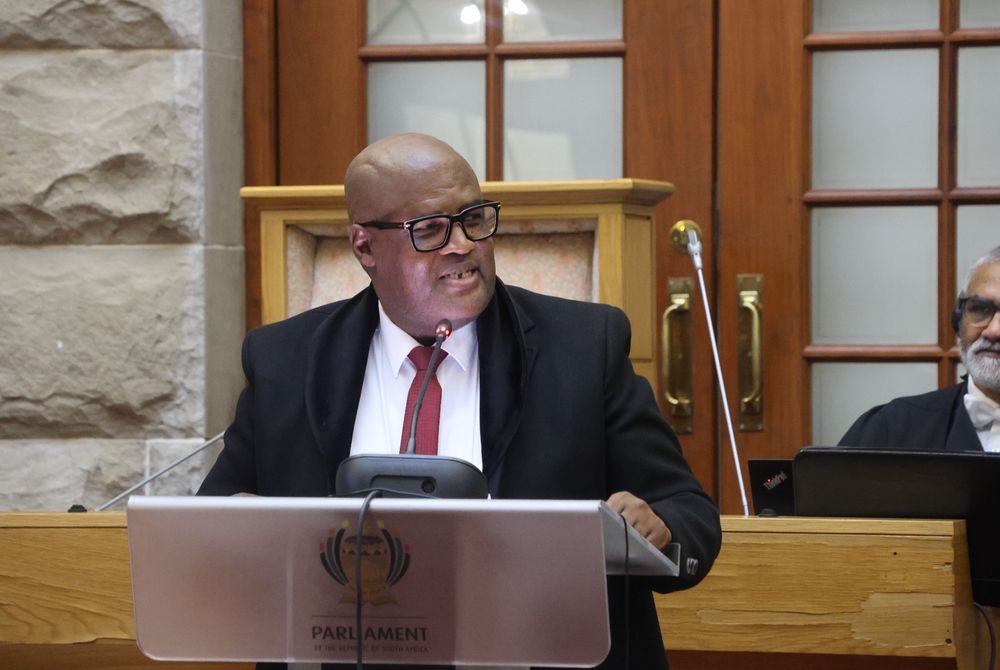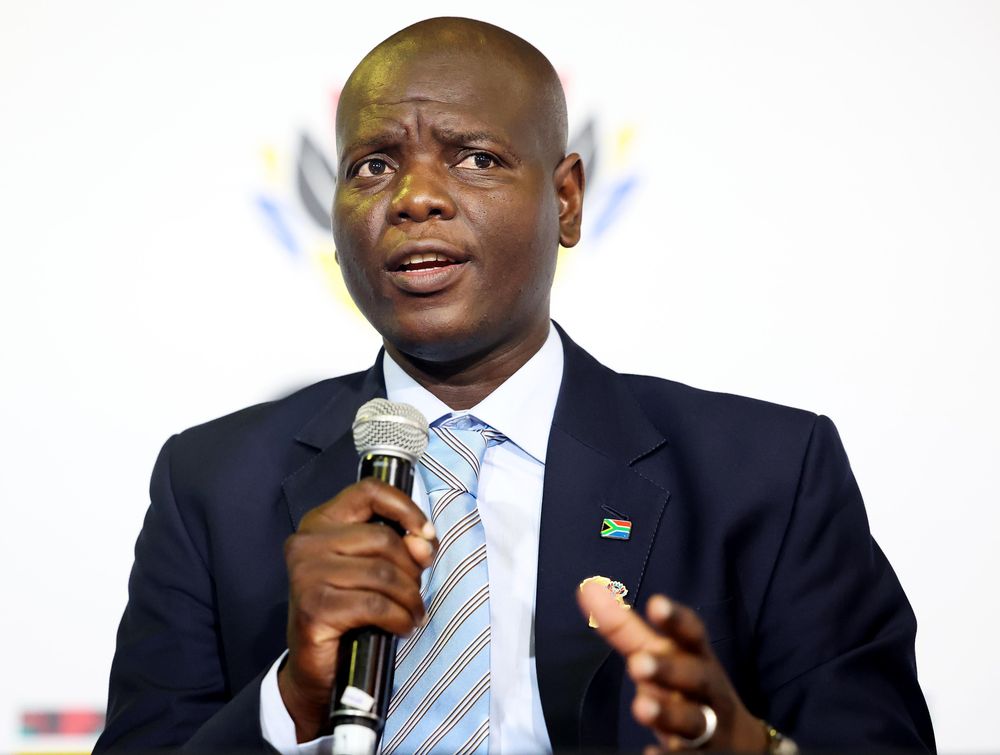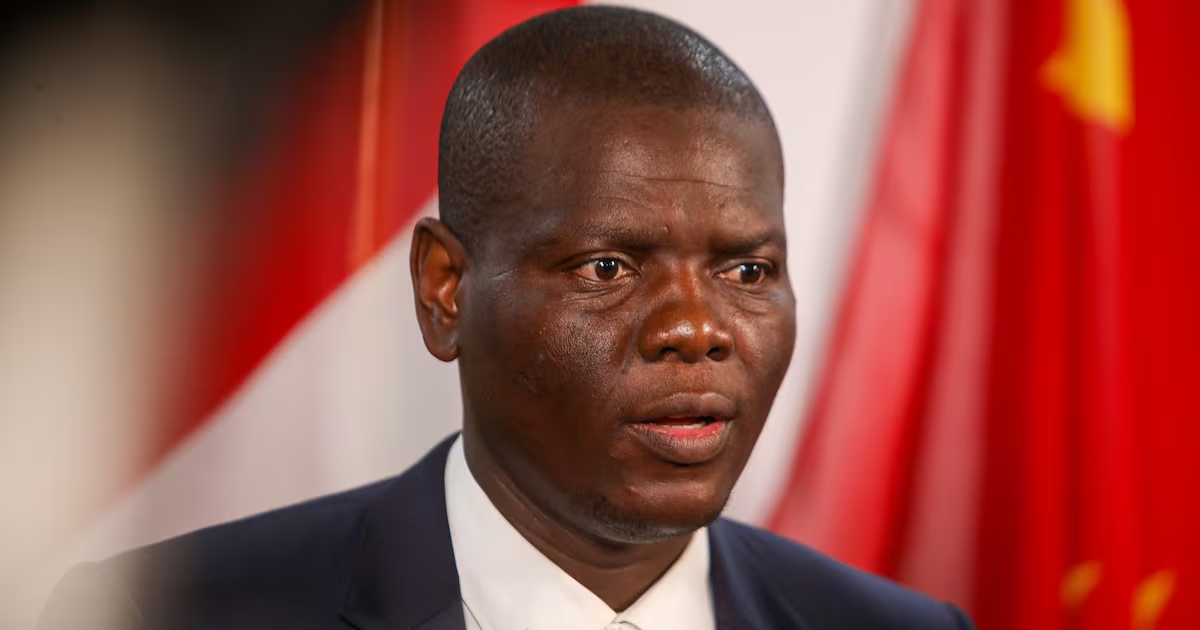
International relations & co-operation minister Ronald Lamola delivered his 2026/27 budget vote speech on May 26, the anniversary of the 1948 election that brought apartheid to power.It was a juxtaposition he noted, pointing out that South Africa’s foreign policy carries a moral weight that transcends budget cycles. His department’s R7.23bn budget, the minister told parliament, represents the outward projection of a hard-won democracy, grounded in ubuntu and the memory of international isolation during apartheid. He is not wrong about the symbolism. But symbolism is not a budget line item. South Africa enters this financial year with economic growth below 2%, stubbornly high unemployment and a foreign ministry whose core diplomatic corps across 114 missions in 102 countries has a vacancy rate of 26.3% (624 unfilled posts). Lamola outlined three main tasks for South African diplomacy: advancing African continental interests, reforming global governance and leveraging foreign policy to improve domestic conditions. The difficulty lies in achieving those objectives at scale with a budget growing at only 1.8% nominally, against inflation running above 4%. In his seminal 1993 essay, ”South Africa’s Future Foreign Policy”, published in the journal Foreign Affairs, Nelson Mandela set out the six pillars that would define postapartheid foreign policy: human rights, democracy, international law, peace, African interests and economic co-operation. Mandela was explicit that South Africa’s ability to shoulder global responsibilities depended on successful domestic economic recovery. Foreign investment, reciprocal trade and South-South partnerships were framed as instruments of rescue, not merely gestures of solidarity. That conditional logic has since been largely decoupled from the country’s foreign policy doctrine.Moral architecture The moral architecture remains intact; the economic constraints have been aestheticised rather than confronted. Lamola’s speech referenced ubuntu but contained no discussion of trade-offs. It listed three ambitious tasks without specifying what activities the department would deprioritise to fund them. A closer look at the numbers is instructive. Of the department’s R22.4bn three-year envelope, 47% goes to the compensation of employees. Operating leases on embassies and chanceries consume about R1bn annually. Mandatory multilateral contributions — R1.1bn to the AU, R557m to the Southern African Development Community (Sadc) and R226m to the UN — further shrink discretionary expenditure. In budgetary terms, the department is an expensive institution with limited room for manoeuvre. Performance indicators tell a similar story: targets of 60 bilateral engagements, five continental peace and stability engagements and four South-South reports a year (unchanged from previous years). These are minimum floors, not metrics of a department operating at the ambitious level South Africa claims on the global stage. Meanwhile, the department’s commitments continue to expand. South Africa will chair Sadc from August, host the first review conference of the Treaty on the Prohibition of Nuclear Weapons (TPNW) in November, serve on the AU Peace & Security Council, support processes in the eastern Democratic Republic of Congo, South Sudan and Western Sahara, pursue the International Court of Justice case against Israel, lead the Hague Group and implement G20 outcomes. Each initiative carries substantial costs in seconded personnel, legal resources and intersessional work. Yet none of these appears to be explicitly itemised in the budget. The Hague Group commitments warrant particular scrutiny. The minister described them as including “halting arms transfers, blocking weapons shipments, suspending procurement from Israeli firms [and] ceasing energy exports”.Impacts ignoredWhatever form these abstract measures ultimately take, they will have implications in trade flows, investment perceptions and companies engaged with affected parties. Neither the speech nor the budget appears to provide for these potential costs or risks. The department would be better served by prioritising missions more ruthlessly: identifying the highest-value bilateral relationships and resourcing them adequately. Performance measurements should shift from activity counts (“60 economic diplomacy initiatives”) to outcomes: foreign direct investment facilitated, market access deals secured and trade barriers resolved per mission. Multilateral and special commitments, such as the Hague Group, the TPNW presidency and chairing Sadc should be separately itemised so that parliament and the public can scrutinise their fiscal impact rather than allowing them to remain buried in broad subprogramme aggregates. The minister closed by quoting Mandela on freedom as “the apple of [our] eye”. Mandela also understood that freedom requires sound economic foundations capable of supporting it. The 2026 budget vote does not strengthen those foundations; it preserves an expansive foreign policy doctrine while gradually eroding the institutional capacity needed to deliver it. A foreign policy that fails to account for costs, expected returns and necessary trade-offs is not a strategy. It risks becoming what scholars term symbolic hegemony. The Mandela inheritance deserves a more rigorous approach. • Davhie is research associate at the Centre for Risk Analysis, focusing on political risk and foreign policy.
OFENTSE DAVHIE | SA’s foreign policy doctrine lacks the necessary budget
Lamola’s budget vote highlights tension between ambitious foreign policy and economics
774 words~4 min read