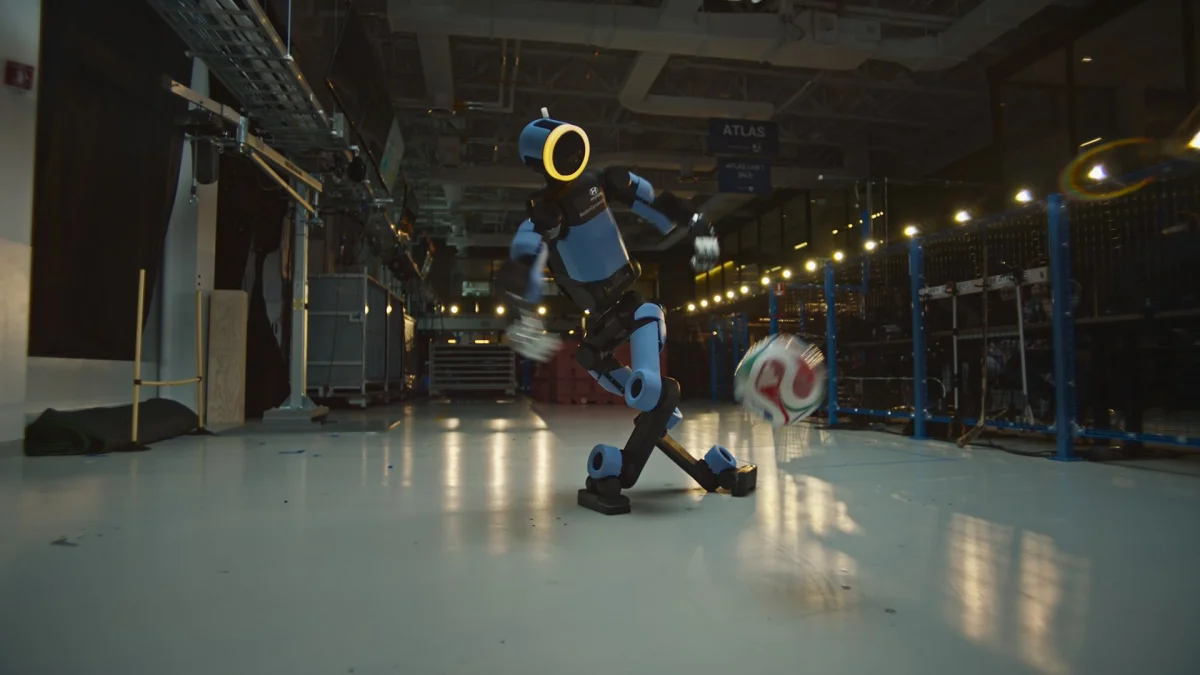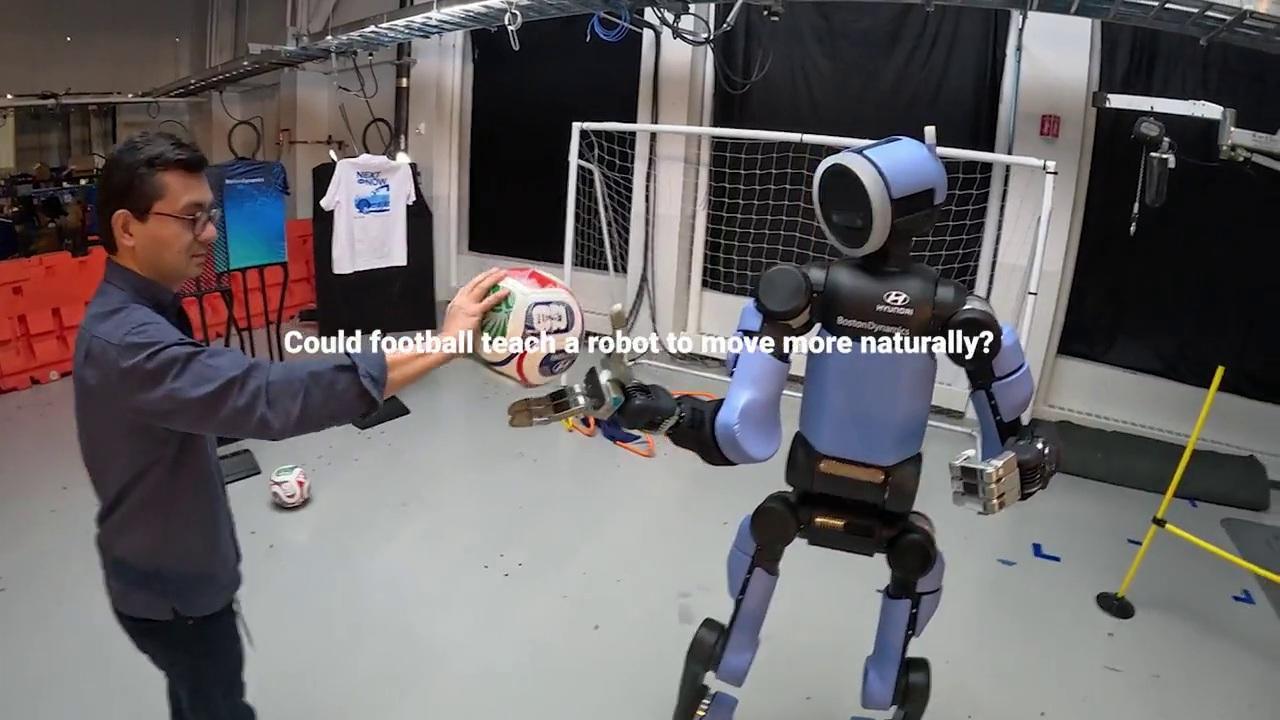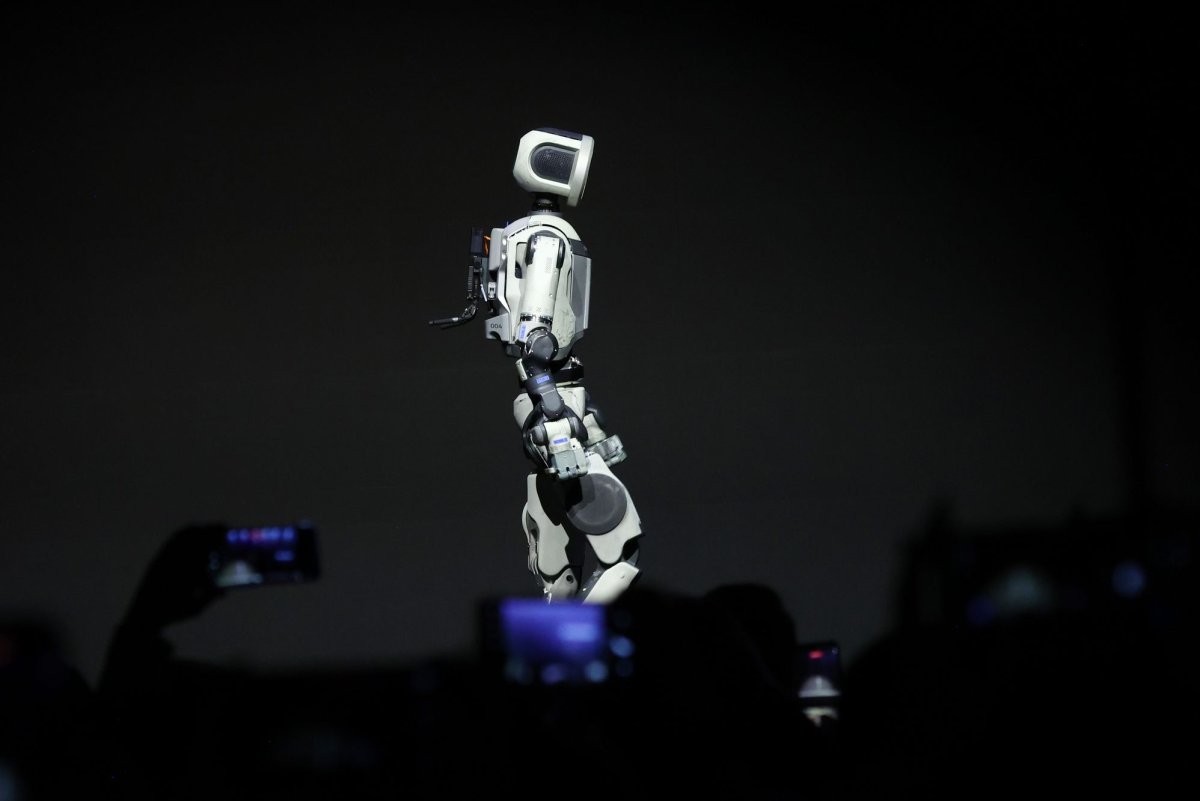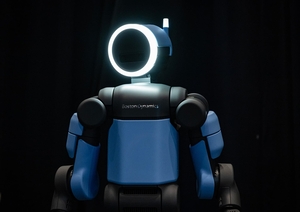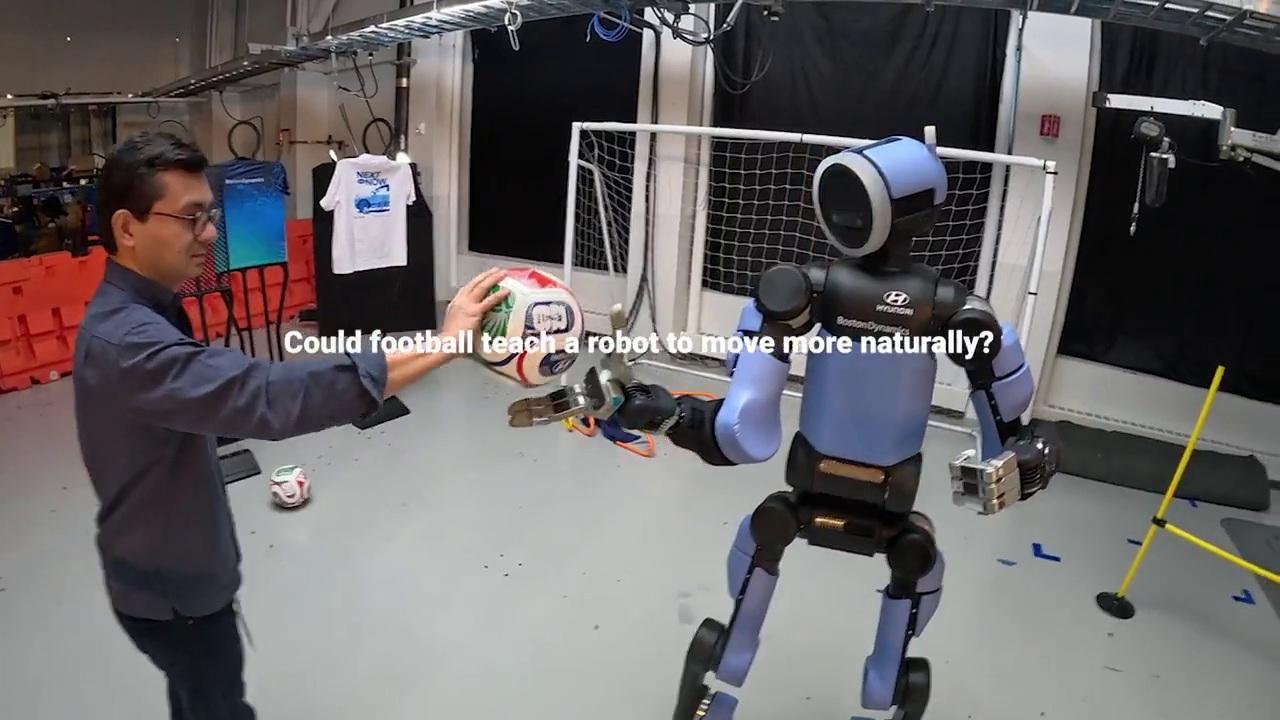
A Boston Dynamics researcher trains humanoid robot Atlas in football skills. Courtesy of Hyundai Motor
A humanoid robot weaving through football drills and flawlessly executing one of the sport’s most difficult trick kicks has demonstrated a profound leap in machine learning, according to technical details released Friday by Hyundai Motor and its subsidiary, Boston Dynamics.
The bipedal machine, known as Atlas, managed to master the "Ghost Rabona" — a high-stakes strike where the kicking leg crosses behind the standing leg after a deceptive feint — by effectively teaching itself to play in a digital simulator before ever touching a physical ball. The display, part of a campaign for the 2026 FIFA World Cup, underscores how rapidly the line between human athletic coordination and robotic precision is blurring.
Beneath the slick corporate marketing lies a profound advancement in how machines learn to navigate the physical world. According to engineering briefs published on Boston Dynamics’ official blog, football was specifically selected as a training environment because it demands a simultaneous cocktail of balance, split-second timing, and real-time physical adaptation.
To bridge the gap between human intuition and cold mechanics, engineers first mapped the movements of professional football players using motion-capture systems. They then translated that data to fit the robot’s distinct metallic chassis through a process called retargeting.