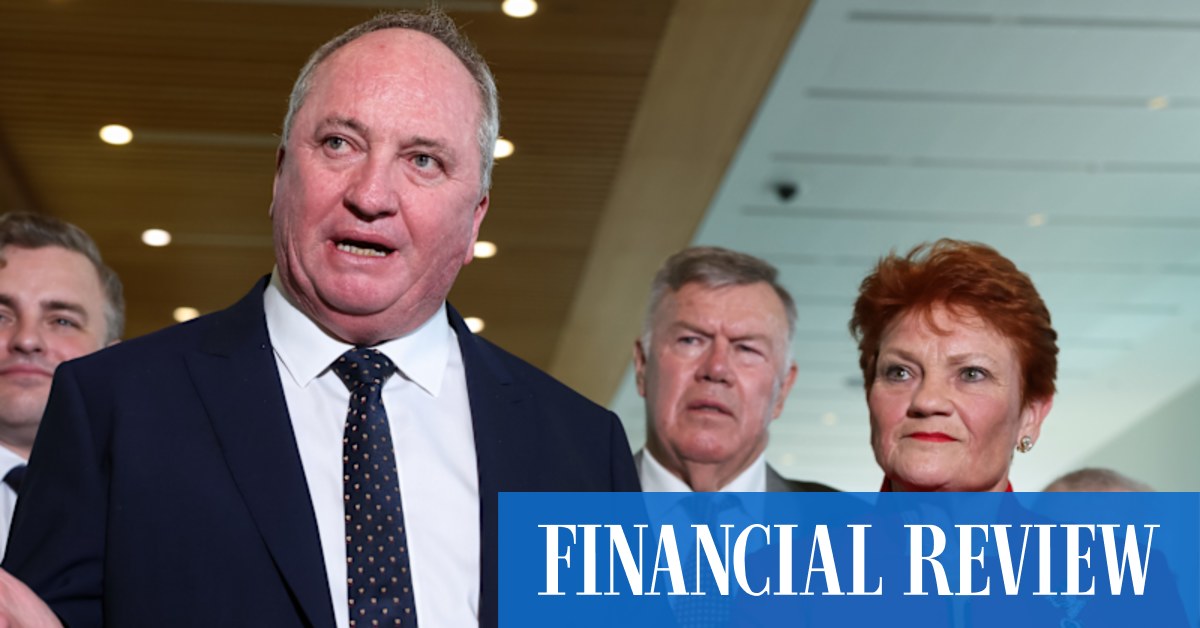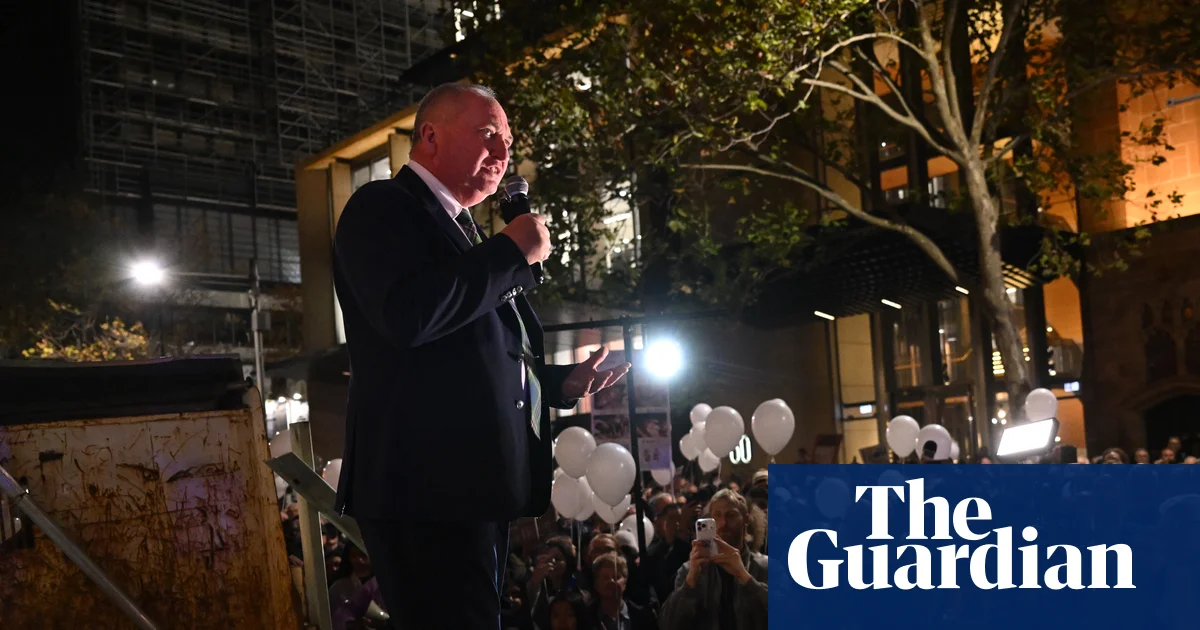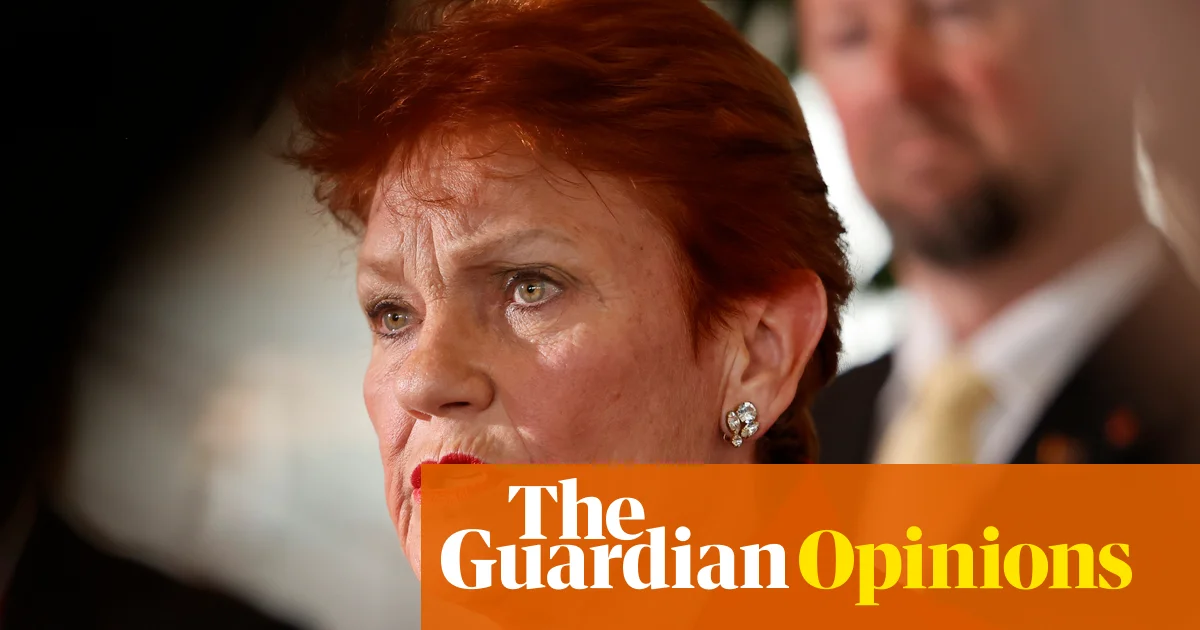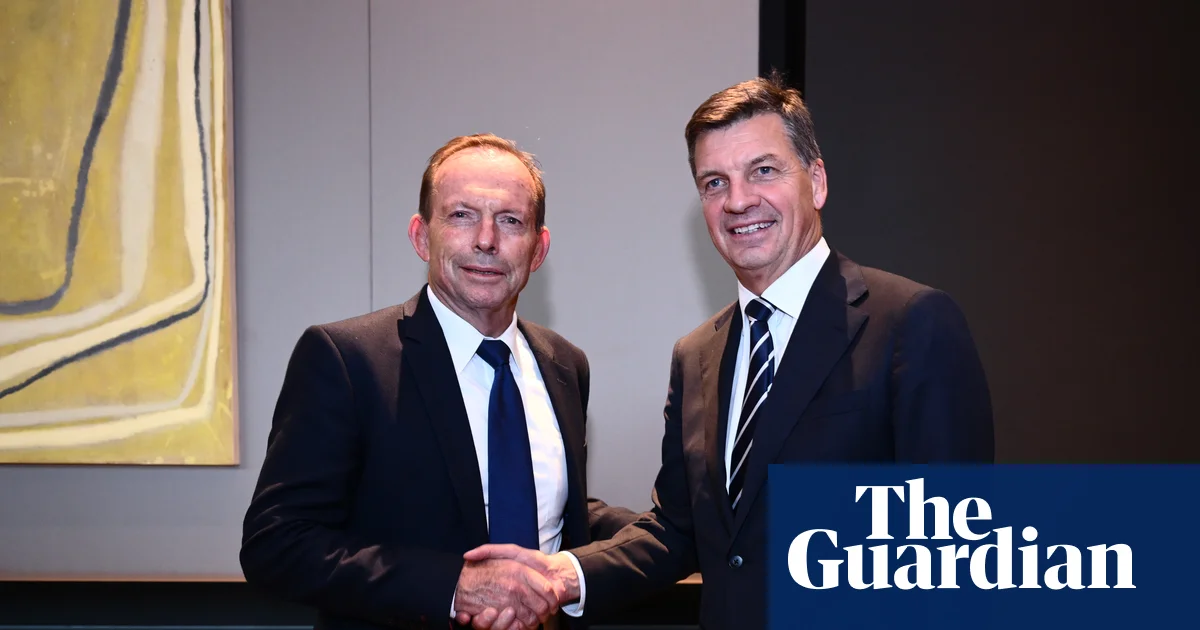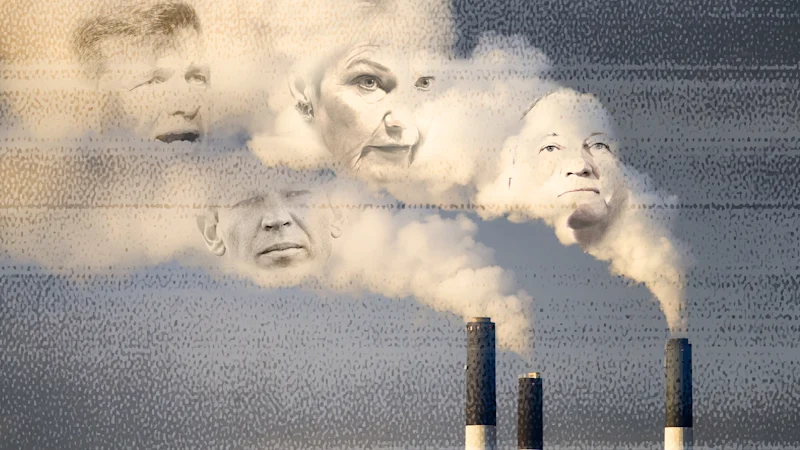
Barnaby Joyce, liberated from the Nationals into the senior ranks of One Nation, is growing ever more blunt about climate policy.His new party not only rejects any action to mitigate climate change, but also the very basics of climate science.This puts One Nation at odds with the Coalition, which has abandoned Australia’s net zero target, but professes to accept the scientific consensus on global warming. And it puts Joyce and One Nation in lockstep with a new hardline stance against climate action and science by surging populist parties around the world.Joyce is unapologetic about his stance, telling this masthead he believes that One Nation’s “pure” position against climate science will elevate it over the Coalition he abandoned.“The day One Nation’s vote got to 18 per cent was the day that the written-in-blood, sealed-in-concrete commitment by the Coalition to net zero was removed within 24 hours,” Joyce says.“Now they’re trying to have a bet both ways by being in [the] Paris [agreement], which is net zero with a French accent.”Last week Joyce posted video of himself watching a broadcast of AGL’s Liddell coal-fired power station being demolished, offering a commentary of contestable talking points.A video Barnaby Joyce posted as he watched the Liddell Power Station stacks topple on May 26.Facebook“Coulda refurbished it. Coulda fixed it up,” he said. “There goes Australia’s prosperity, the end of coal. See they are making absolutely certain you can’t go back to coal-fired power because they are making too much out of the swindle. They are ripping you off because they think you are gullible.”AGL said that it had shut down the power plant because at 52 years old it was beyond its life expectancy and was too unreliable and expensive to maintain.But Joyce was just warming up.A news story came on his TV screen explaining that east coast power prices were falling due to the uptake of renewable energy.Joyce commenting on a news report on power prices in his posted video. Facebook“And then there is this ridiculous thing,” said Joyce, pointing to the screen. “How are you going to do that when you are reducing how much power we can get? They always say this rubbish.”The new climateFive years ago it appeared that climate action was entrenched in global politics. United Nations climate talks secured universal agreements on the need to phase down coal, and later all fossil fuels.In 2022, the Biden administration passed the Inflation Reduction Act, the biggest commitment of spending on emissions reduction in history. Two years later the UK closed its last coal-fired power plant. The climate was rapidly warming, but willingness to act was accelerating.That was to change.US President Donald Trump abandoned the Paris climate agreement on day one of his second term, issued orders to bypass regulations on oil and gas exploration, dumped clean energy subsidies and gutted emissions standards.Climate change, he railed at fellow world leaders at the UN General Assembly months later, is “the greatest con job ever perpetuated… If you don’t get away from this green scam, your country is going to fail”.US President Donald Trump signs an executive order in April last year that will expand the mining and use of coal inside the US, reviving a declining US fossil fuel industry.BloombergRight-wing populism surged globally and its leaders were emboldened on climate.The Alternative for Germany party, now the country’s second-largest political force, explicitly rejects both climate change and the need for emissions reduction. “The alleged scientific consensus on man-made climate change has always been politically constructed,” says its manifesto in part. “The predictions of the IPCC are based on inadequate models.” The IPCC is the UN’s Intergovernmental Panel on Climate Change.In the UK, Nigel Farage’s Reform party is now topping Labour in polls, and rejects climate science.In an interview with the Bloomberg climate podcast Zero a fortnight ago, Farage’s deputy Richard Tice refused to even look at charts that laid out the link between carbon emissions and temperature increases.“I don’t agree with any of it,” he said.“You can’t present me with a whole load of graphs that I can’t read that may well be bullshit… This terminates now. It’s end of podcast.”The interview did not end, and over an hour Tice laid out his view that the link between human emissions and warming was not settled (it is) and that the climate has always changed (it has not on the current timescale).He rejected any action to reach “net stupid zero” and laid out a set of policies that would see government support for nuclear power, end all subsidies for renewable energy, encourage offshore drilling for more oil and gas and ban battery energy storage.Rallying call: The Reform UK team Suella Braverman, Robert Jenrick, Richard Tice, leader Nigel Farage, Lee Anderson, Andrew Rosindell, Sarah Pochin and Danny Kruger following Farage’s speech in Birmingham in February.BloombergTice also warned investors in renewable energy to redirect their capital to fossil fuels.“We put people on notice. Invest in nuclear. Invest in gas. Invest in oil. Don’t invest in renewables.”Joyce takes a similar position. Asked if One Nation’s policies would drive renewables investment away from regional Australia, he says bluntly, “I’m hoping so”.In his view the renewable energy zones created to encourage clean energy development, and the wind farms being constructed in them – which he likes to call “swindle factories” – are of no benefit to locals.“All their promises about labour are just complete and utter lies. There are no permanent jobs. They’re fly-in, fly-out contractors,” Joyce says. “If that was the case, Glen Innes would be a much bigger town than it was before, and $2 billion worth of precincts went into their area.”He also believes One Nation has captured the zeitgeist.“I can road-test this by giving a speech in town halls, and one of the biggest claps I get is when I say ‘I am going to get rid of the climate change department’.”One Nation has taken the lead in the polls, and in conservative policymaking, Joyce says.Polling surge: One Nation’s Pauline Hanson and Barnaby Joyce.Alex EllinghausenThe Liberals have shifted their energy policy away from emissions reduction since the 2025 election, when then-opposition leader Peter Dutton pledged an ambitious rollout of nuclear power plants to support clean energy in the grid.After the election, Dutton’s replacement, Sussan Ley, announced a plan that edged away from nuclear and promoted the need for carbon capture and storage to cut the emissions from coal plants.Current leader Angus Taylor is now full throated in his support for coal.“I announce that a Coalition government will work with coal-fired power plant owners to keep them running as long and as hard as possible to get electricity prices down,” he said in his budget reply speech last month.However, Taylor was treasury spokesman when Dutton pledged $331 billion in taxpayers money for nuclear plants and was sceptical of the use of public funds. While One Nation has pledged billions of dollars to build coal plants, Taylor has stopped short.Joyce claims the Liberals are equivocal and conflicted. “They’re in Paris now out of net zero, it’s just ridiculous. Just be pure about this. They’ve fooled no-one.”Opposition energy spokesman Dan Tehan rejects Joyce’s claim that the Liberals are following One Nation’s lead.New Liberal Party president former prime minister Tony Abbott with Liberal leader Angus Taylor at the party’s federal conference last weekend. Abbott is a leading opponent of net zero.Joe Armao“We’re focused 100 per cent on Australia and doing the right things by Australians. We all remember that, Barnaby Joyce was the one who signed the agreement, that led to net zero for the Coalition,” Tehan says.Though the Liberals support Australia’s continued participation in the Paris Agreement, Tehan says, the party does not believe it forces Australia to actually deliver on net zero by 2050.“Everyone knows it’s a toothless tiger and not the main game. The main game is energy abundance and energy affordability, and that’s what we’ll be pursuing,” he says.Former prime minister Tony Abbott, a leading opponent of net zero since he was ousted from parliament in 2022, was recently elected as Liberal Party president.Nationals Leader Matt Canavan has campaigned for years against Australia’s net zero commitment and claimed credit for pushing the Coalition to ditch its support for the goal.In his first speech as leader to the National Press Club in April, Canavan said advocates of net zero used the policy to pursue a socialist agenda.“They want to tell us what energy we can use, what car we can drive, what food we can eat, lots of them don’t think we should eat red meat, and some of them, even want to control what we say.”As political warfare over climate rages on, University of Melbourne specialist in climate denial Dr John Cook, has detected a shift in rhetoric.Where once politicians tended to pay lip service to accepting climate science, he believes they are becoming increasingly likely to reject scientific advice entirely.“The idea that they’re emboldening each other does seem to be the case,” Cook says. “I think in the US, especially, it is climate denial on steroids, and they’re not just giving arguments, but they’re actually dismantling climate science, defunding it, and shutting down organisations.”He detects a growing disconnect between political philosophy and the policy debate.Opposition to climate action, says Cook, found an early home in conservative think tanks due to a natural mistrust of government regulation and taxation that climate action demanded.But when green energy technology started becoming cheaper than fossil fuels, some conservatives began backing government intervention to block renewables and subsidies to support nuclear or fossil fuels.“It’s not just about political ideology any more. Now it’s just about tribal alliance.”However, recent history has shown that political rhetoric does not necessarily determine decision-making, even of ardent cultural warriors, says Michael Liebreich, the chief of consultancy Liebreich Associates, who founded Bloomberg New Energy Finance and once served on the UK Board of Trade along Abbott.“Don’t get fooled by the knockabout politics. There’s what politicians say to get votes and then there’s what they end up doing if they were in [government],” Liebreich says.“Tony Abbott signed up to Paris and then Scott Morrison signed up for net zero. That’s the reality of political expediency.“What actually happens is neither as good as the progressives promise nor as bad as the headbangers say.”Get to the heart of what’s happening with climate change and the environment. Sign up for our fortnightly Environment newsletter.
The global anti-climate movement is breaking politics here
But in Australia the fiercest battle is among the right-wing parties over policy “purity”.
1,724 words~8 min read