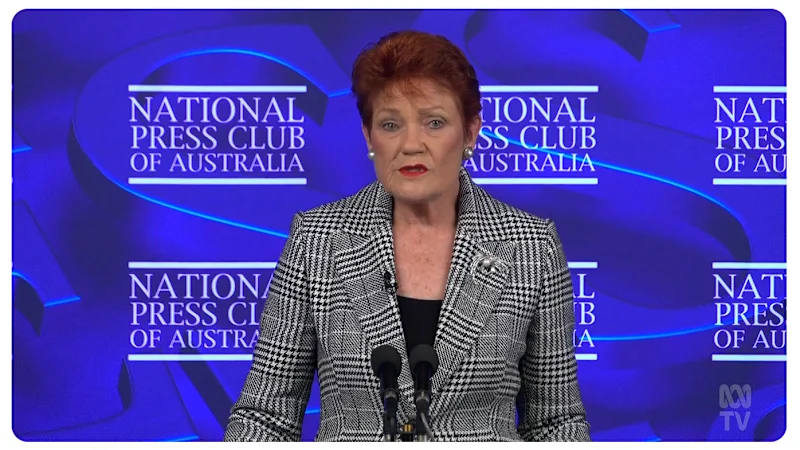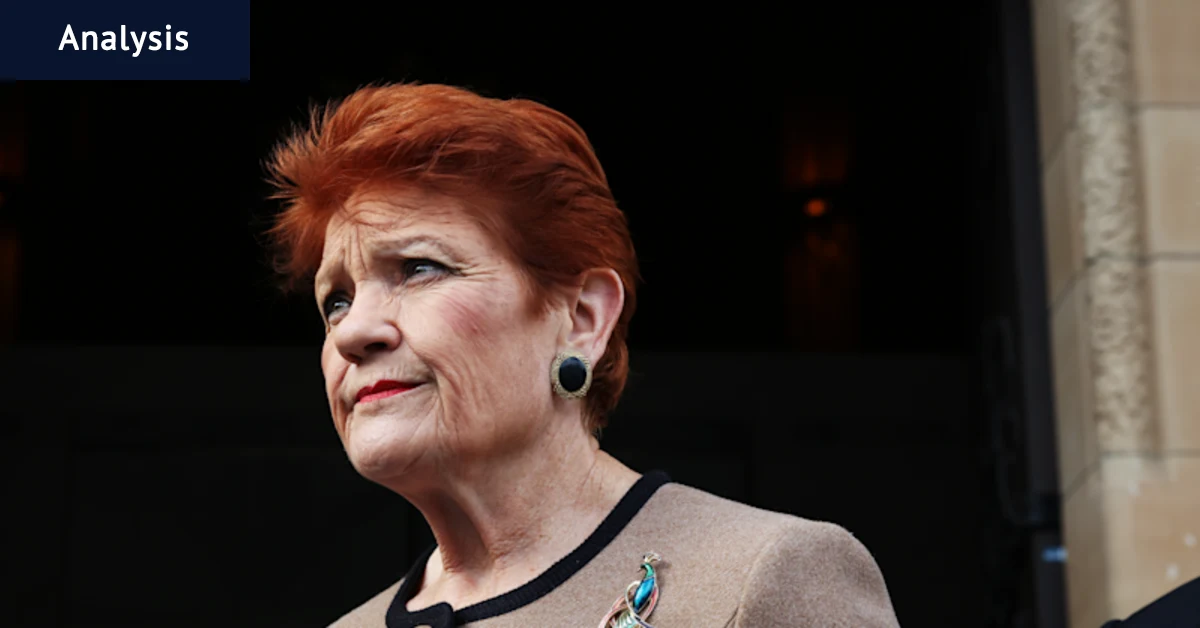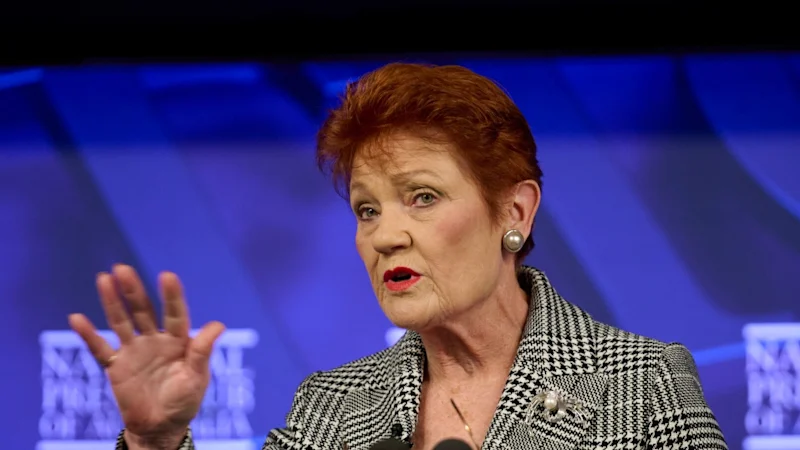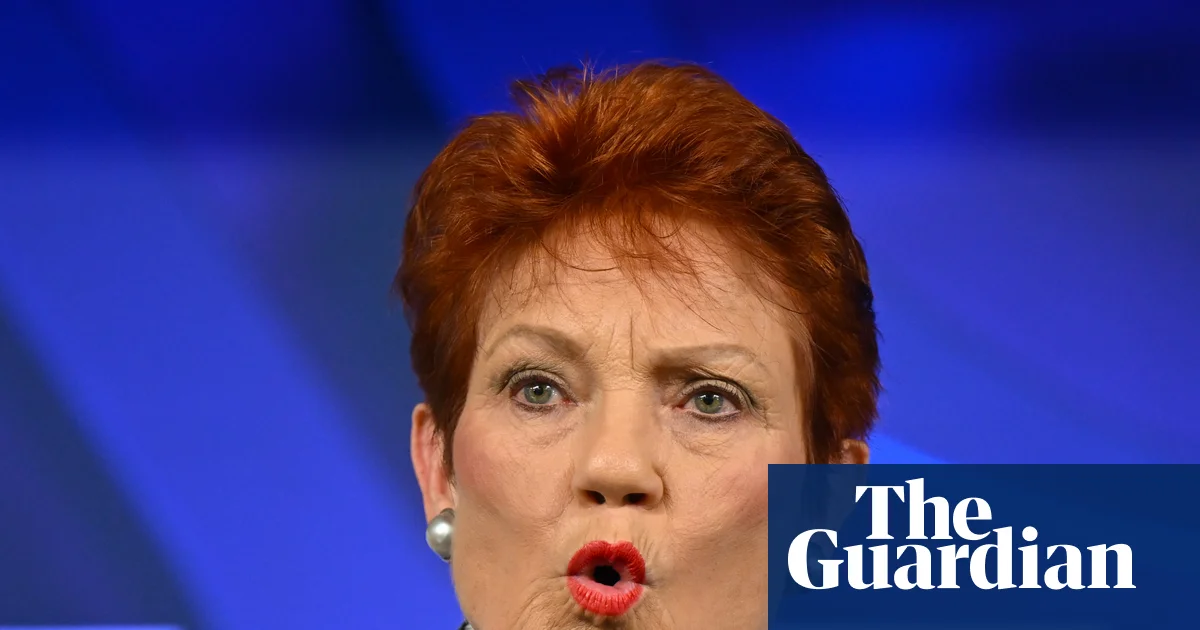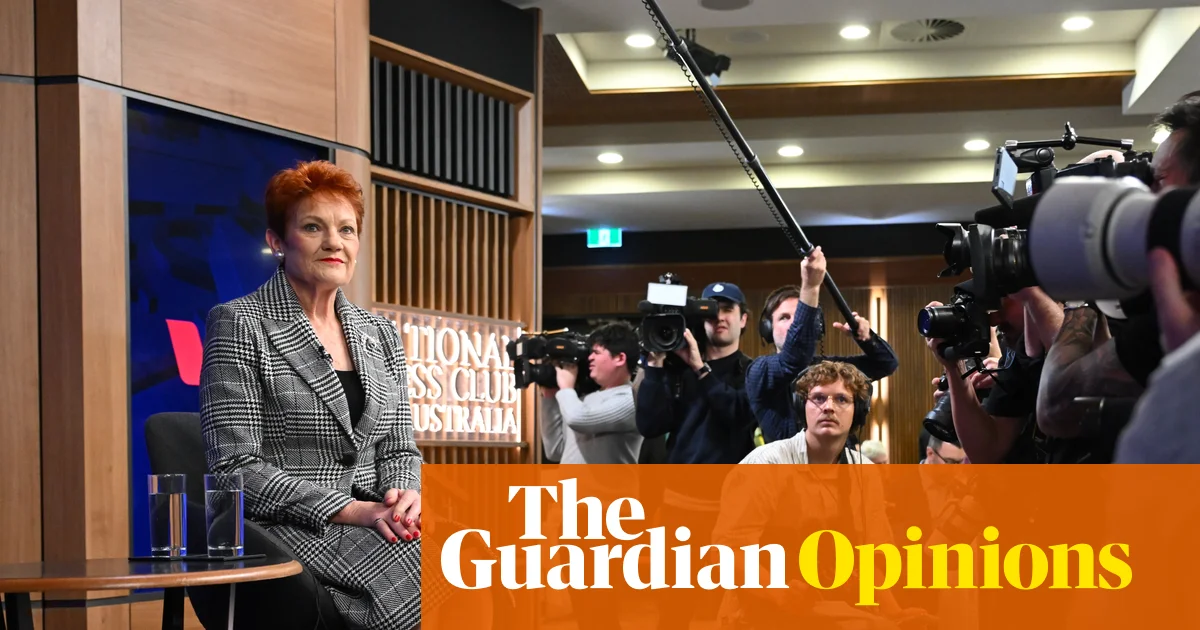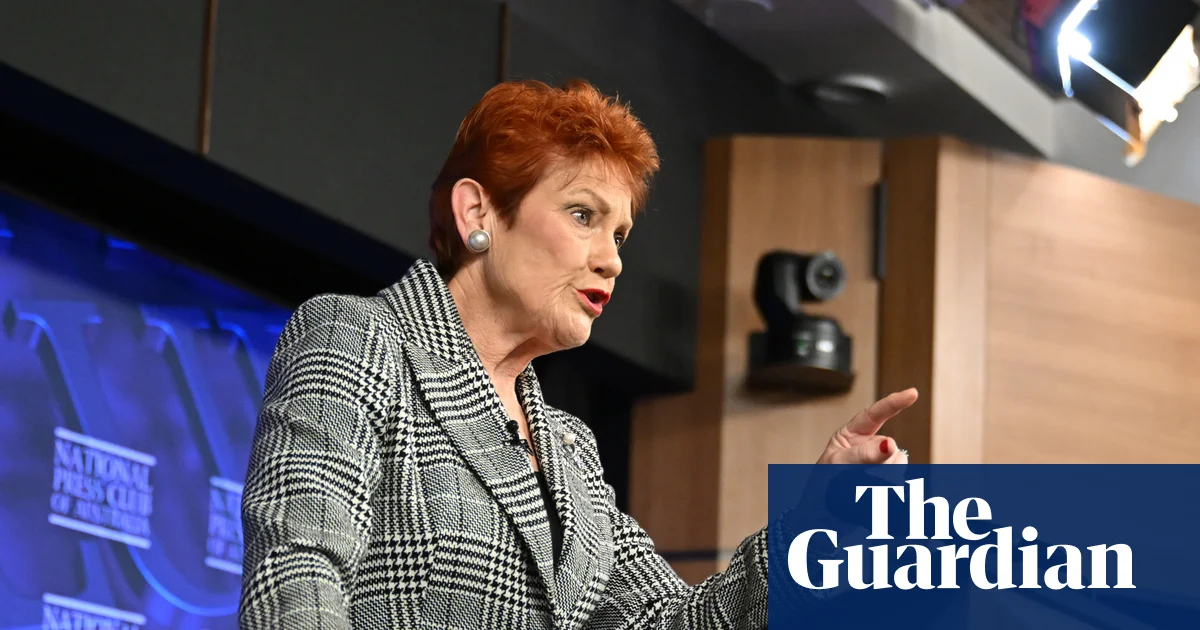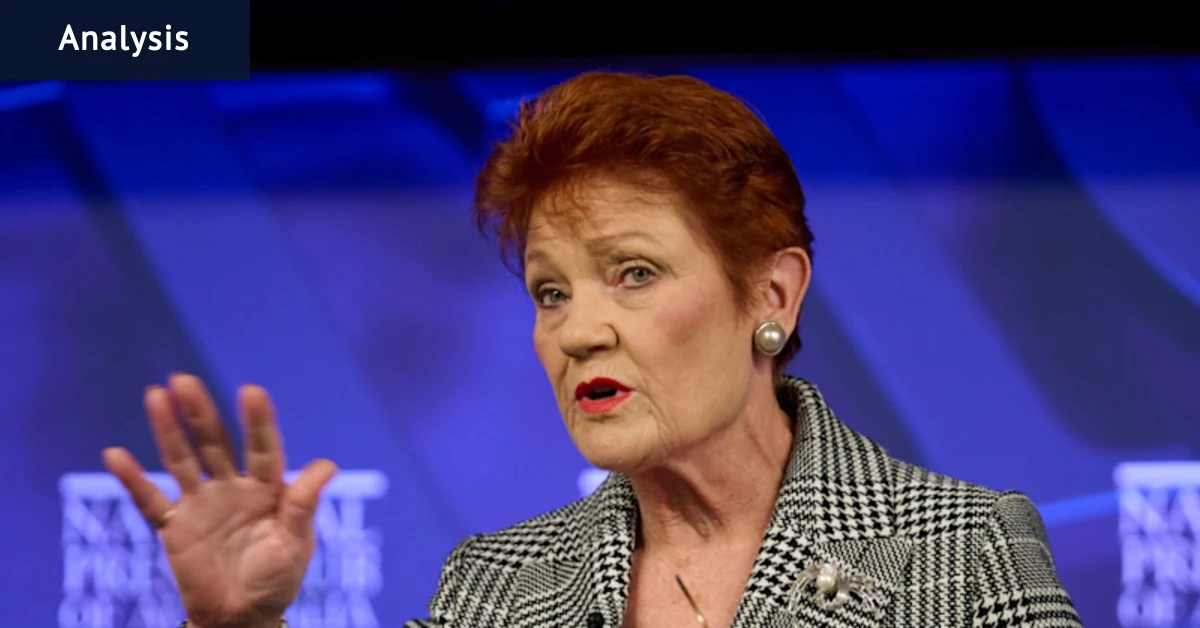
Updated June 19, 2026 — 2:56pm,first published 2:55pmWhen Pauline Hanson railed against the “hoax” of global warming at the National Press Club this week, she sent Australia’s climate wars back to 2009, when then-opposition leader Tony Abbott branded climate change “absolute crap”.Abbott backed away from his most strident opinions, but One Nation’s surge in popularity has elevated previously fringe views to the heart of Australia’s political debate.One Nation leader Pauline Hanson.BloombergThe party’s manifesto states climate action is a government move to exert totalitarian control over society and it denies the science of global warming.“Net zero is … a vehicle for creating a socialist Australia in which citizens are forced under comprehensive government control,” says One Nation’s policy statement, dubbed ‘the real impacts of net zero’.How will this new force change the political debate?The climate wars are about to do the time warp, again, but even more polarising.It’s just a jump to the left. And then a step to the rightEver since Abbott tore down the Rudd-Gillard-Rudd government, the Coalition has criticised Labor’s climate policies as overly ambitious and expensive, while maintaining their commitment to addressing global warming.Abbott signed Australia up to the Paris Agreement on climate change in 2015. Liberal prime minister Scott Morrison committed to net zero in 2021. And Coalition leader Peter Dutton last year declared he would build seven emissions-free nuclear power plants to help reach that goal.Since its 2025 election wipeout, and the emergence of One Nation, the Coalition has backtracked on climate action. Former leader Sussan Ley ditched net zero and her replacement, Angus Taylor, switched the Liberals’ focus from nuclear energy to coal power, declaring fossil fuels essential to cutting power bills.But Taylor, unlike One Nation, accepts that climate change is a real phenomenon.On a page dedicated to the topic ‘net zero is destroying Australia’, One Nation claims records that track global warming are fake.“These supposed effects are based on discredited computer modelling that does not account for temperature records reliably documented for decades before 1910 and deliberately distorts temperature records to falsely portray temperature rises as greater than they truly have been.”The science of global warming has been established for more than a century. Average global surface air temperature has increased by about 1.4 degrees since the industrial revolution.The United Nations science body, the Intergovernmental Panel on Climate Change, has found that human-induced greenhouse emissions are the dominant cause of global warming, which is raising atmospheric temperatures and increasing extreme weather events. Its findings are subject to more than 2000 independent scientific reviewers.Labor in a timewarpOne Nation’s strong polling threatens a slew of Labor seats. Just as Abbott declared in 2013 that then-prime minister Kevin Rudd’s carbon pricing scheme was a “great big tax on everything”, One Nation will oppose the hundreds of billions of dollars in funding it claims are wasted each year on climate action.Hanson told the press club that the Albanese government’s policy to boost renewable energy was the “central source of national poverty” and claimed its green bank, The Clean Energy Finance Corporation that provides loans to low-emissions technology, had received $200 billion of taxpayers’ money.The corporation’s annual report states it has committed $24.2 billion to more than 420 transactions and its total lending capacity was $32 billion.One Nation also states it would scrap the bureaucracy working on climate policies and related programs, saving “approximately $30 billion per year”.Given some of the most costly renewable energy initiatives, such as the $20 billion scheme for transmission lines or the Capacity Investment Scheme for solar and wind farms, are loan programs, it is difficult to see how this saving would be achieved.One Nation did not respond to repeated questions on these figures.Hanson said One Nation would build one nuclear energy plant if there was demand, incentivise investment in coal and gas plants, and “dig baby dig” for fossil fuels to deliver power at the “world’s cheapest price”.CSIRO’s annual energy cost report card found last year that a new coal plant, using the modern technology to keep emissions down as much as possible, would produce electricity for between $111 to $178 a megawatt hour.A traditional large-scale nuclear plant would generate electricity at a cost between $155 a megawatt hour to $252 a megawatt hour, depending on how it was integrated into the grid.But electricity produced from renewable energy, CSIRO found, would cost between $116 and $165 a megawatt hour – and that’s factoring in the estimated $40 billion in rollout costs to pay for the large batteries and fast-start gas turbines needed to back up wind and solar farms, as well as the extra transmission links to connect far-flung renewable energy zones to major cities.Hip pocket attackHanson pointed out that the average debt of electricity customers who cannot pay bills has risen about 22 per cent in the past year. Around 1.7 per cent of residential customers are on hardship payment plans.While the Albanese government is crowing about a small cut in power bills in the coming financial year, electricity bills have risen, on average, across the eastern seaboard by around 22 per cent since the Albanese government won office in 2022.Labor has some positives to point to. The share of renewables in the grid has risen to around 50 per cent in 2026 and the energy market regulator has advised this boost in green energy is driving a cut in average power bills of around 5 per cent in NSW and Victoria.However, power bills have risen by up to $500 for many people, in stark contrast to Prime Minister Anthony Albanese’sa promise to cut bills by $275 by 2025.Labor’s failure to deliver meaningful progress on its $23 billion Future Made in Australia vision is another key point of contention.Since it was announced in the 2024 budget, the government has cut funding for programs to create local solar panel and battery manufacturing, green hydrogen production.Significantly, Labor’s pledge to establish an offshore wind industry is stalled, with many projects paused or withdrawn. This is a particularly controversial issue in regional areas, which are set to lose jobs as coal plants close. They were promised hundreds of new jobs to build the turbines in blue-collar regions such as Gladstone, Newcastle, Wollongong, Gippsland and Bunbury but the projects have stalled.Labor’s pledge to boost renewables to 82 per cent of the grid by 2030 also confronts major headwinds.Investment in renewable projects collapsed by 50 per cent over the past year, wiping out $4 billion in spending on the rollout, spurring industry warnings that the delays could raise electricity bills.Planning delays, rising building costs and a backlash against development in regional communities is stalling the rollout.New coal versus old coalAccording to Grattan Institute energy and climate change director Alison Reeve, power bill spikes were driven by the 2022 global energy crunch caused by Vladimir Putin and compounded by ageing coal plants.“It is not renewable energy. The main factor was the high cost of coal and gas following the Russian invasion of Ukraine. This caused a wholesale price spike,” Reeve said.The 15 coal plants in NSW, Victoria and Queensland are on average 38 years old, fast approaching the 42-year marker at which Australian generators typically close. They become increasingly unreliable and expensive to run as they age.This means replacing the nation’s existing electricity generators is necessary.Reeve said building new coal plants would cost more than the current renewable energy rollout. She pointed out the current operating costs of coal plants, which were largely built with taxpayer funds in the 1980s, are not reflective of the cost of new ones.“New coal is more expensive than old coal because the latter only has to pay for its fuel and maintenance. New coal has to pay for its fuel and maintenance and for the capital that was borrowed to construct it.”The battleground for the next round of Australia’s climate wars is already mapped out. The first skirmish will be the Victorian election in November, ahead of the federal poll that must be before the end of May 2028.But Hanson will not have to wait until an election to stress test public opinion if the super El Niño weather system, now heating up in the Pacific Ocean, delivers on its threat of drought, heat waves and bushfires this summer. Cut through the noise of federal politics with news, views and expert analysis. Subscribers can sign up to our weekly Inside Politics newsletter.From our partners
Can Hanson’s war on climate change ‘hoax’ survive the summer?
One Nation’s rise is not just a threat to the Coalition. It is redrawing the battle lines of Australia’s long-running climate wars.
1,392 words~6 min read