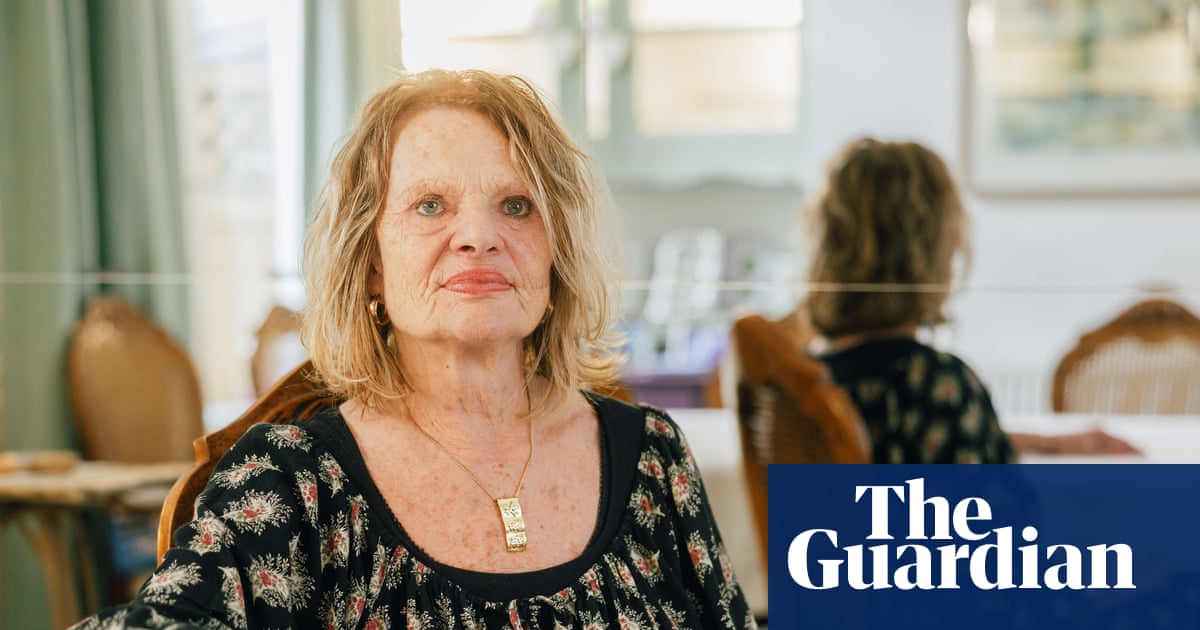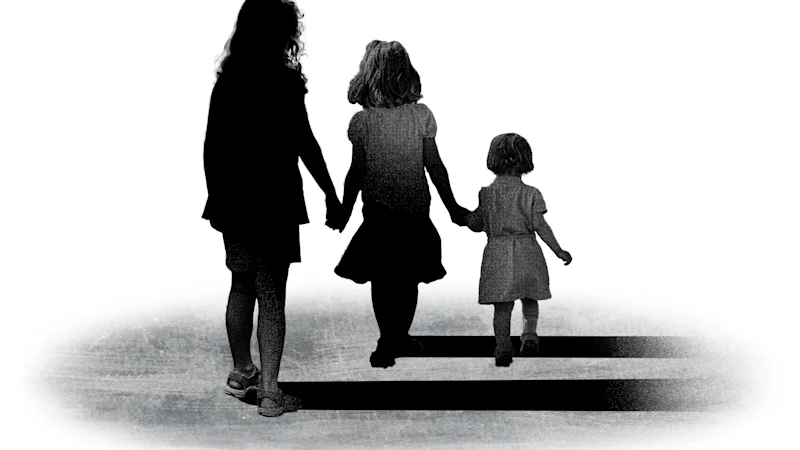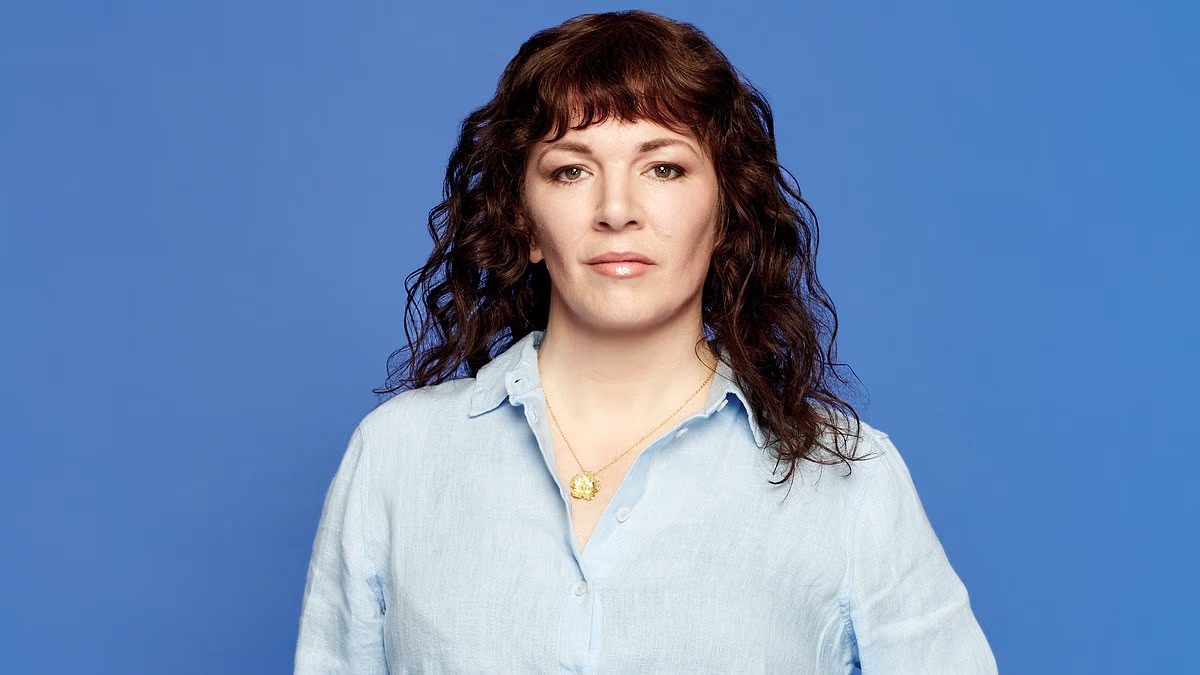
When I got the chance to escape, I always knew exactly where to run. I still remember the noise of my little feet pounding over the pavements, my heart pumping in my chest.I would head for somewhere green – the small squares or parks where nature bloomed in our city streets.I’d find a tiny sliver of space under a tree or among some flowers and try to vanish. There, tucked between green dappled leaves, I felt safe and protected.I was just seven, but already knew how to run for my life. I was running to try to escape the cycle of abuse I had found myself trapped within.It had all been so subtle, incremental in its progression.In those days, school playgrounds were surrounded by railings and the children were visible from the road. My school, in Portsmouth, was just like this.One man, in his early 20s, would watch us through the railings.Then, one day, as I walked the short distance home from school, as so many children did in the 80s, he started following me, talking to me all the way. From the age of seven, Brigit Anna McNeill was horrifically abused by a gang of paedophilesWhile I was very slight, I was tall for my age, with long wavy auburn hair. Despite my popularity at school, I was shy and scared in certain situations. This turned out to be one of them.The man slowly extracted all sorts of detail from me – from where I went after school to what I was afraid of.I remember feeling so repelled by him, but unable, in my innocence, to articulate this or act upon my feelings and just run away. I’d always been told to be polite to grown-ups.Eventually, we began walking a little further away from my house.And so it began. After grooming me in this manner, he started regularly meeting me after school, and would take me to a house to sexually abuse me, involving other men, too.The abuse took the form of a twisted sexual show of what my main abuser would do to me – and then the others would replicate his terrible acts.I told no one at the time, not even my parents, and hid the turmoil within me.And I soon learned to be a certain way to limit danger while I was with these men – pleasing, polite, obedient. To do whatever they wanted, no matter how abhorrent.I had to completely numb my fighting instinct. On the occasions I had rebelled against their demands, they had beaten me and threatened to drown me. So I would play my role.But the moment there was a pause in their vile behaviour, I would run. – always to green spaces.It’s no surprise, perhaps, that I sought out nature. Things that grow have always represented something wonderful and safe to me.A love of plants was seeded in me when I was a very small child, at the hands of my two wonderful grandmothers, Granny Mary and Granny Rosemary. I adored them both.When I was tiny, Granny Mary and I tended her garden, planting mint for teas that soothed our bellies and fed the bees.Echinacea, I learnt from her, was for the immune system. Chamomile was for restless stomachs and natures.Granny Rosemary, who lived in Gloucestershire, taught me the word ‘nemophilist’: one who is in love with the forest. Wandering the local woods with her, she explained how tree root systems worked, and how the woods were a symphony of co-operation between plant species.Today, my heart still soars when I see the first bluebells nudge their heads into the springtime air.The scars from those years of abuse run deeply within me. The age of seven is such a formative time, when your memories are becoming concrete, your experiences embedding themselves in your personality. My young mind and body suffered enormous trauma that rippled through my whole life, into my 20s and beyond.Today, I am a mother of three incredible sons. I’m now a herbalist and wild plant medicine teacher, living in a cottage cradled among trees on the edge of Dartmoor. Everywhere I am surrounded by nature. The herbalist says natural healing and plants helped her find peace following years of traumaThere is a deep peace within me, which has led me to look back on those awful years with a new perspicacity. I grieve the girl I was – the things that happened to me should never have happened. But I am thankful that I am here, that I am healing.Plants, in short, saved me.Even before the abuse, my life had already been hard. I was a poorly child and, around the age of six, spent long stretches in hospital.I had complications with my heart and my anatomy was highly unusual – an extra spleen, additional vertebrae – which doctors believe is because I absorbed the remnants of a twin who died early in utero.I was also diagnosed with a rare autoimmune condition, systemic scleroderma, which causes a stiffening of organs and joints and can be fatal.From an early age I had a sense of being separated from the reality of my body – endlessly being poked and prodded by doctors as they tried to establish what was going on.I survived it by making my mind drift away from the physical sensations I was experiencing.Ironically, developing this ability to disassociate would be useful later when I was being forced to obey my abusers.When I was nine, after two years of suffering at their hands, I was bought a pair of roller skates. They turned out to be an unlikely salvation, as it meant I could go home from school so fast I was harder to catch.The abuse began to lessen. Then, not long after, we moved to London and it stopped completely.But the trauma seemed to weave itself into my tissues, and heighten my scleroderma symptoms.My organs and joints stiffened, my skin tightened like drum skin across my frame, as if I were becoming stone. It began to feel like a quiet, devastating testimony written into flesh and bone.I was treated with endless medication and, at 15, underwent a huge operation, because my oesophagus had become so stiffened that I was unable to eat. Without it, I would have only had weeks left to live.Indeed, I was just 5 stone at the time – a frighteningly low weight for my 5ft 9in frame.All this, combined with the after effects of the abuse, meant I cut myself off entirely from my body just to be able to exist.After studying art at university, I decided I wanted to progress into art psychotherapy, and pursued my training in London.On the surface I was doing ok, but the reality was that my early 20s were a time of self-destruction – of rebelling against the battlefield of my body.To pay the bills, I became a part-time model, treading catwalks in cold warehouses where vodka passed as water. I could go days without eating, hollow and high on the edge of vanishing.But my thinness, my detachment, were admired. It was the 90s, the era of heroin chic – waif-thin limbs and haunted eyes. The marks of trauma were mistaken for beauty. I drowned what remained of myself in booze, mapping my days by the distance between drinks.Bodies, too, became a narcotic. I wasn’t seeking intimacy, love or closeness. Me seeking out sex was a bit like the wound seeking the weapon. My addiction was my psyche’s desperate attempt to master what had once mastered it.But each time I sought out physical oblivion through sex or booze, the emotional need within me grew. I regularly awoke in unfamiliar beds beside strangers whose faces bled together like ink in the rain.I must’ve been good at covering up the turmoil inside me, because no one intervened.When I saw doctors about how I felt, they offered different labels: depression, anxiety, addiction, eating disorder. They handed me prescriptions designed to soften the edges, to quiet the howling that rose in the night – but never once asked what that howling might be trying to say.Then one morning in my early 20s, after another evening of annihilation, I woke to find myself staring at my reflection in a stranger’s bathroom mirror. The young woman gazing back was hollow-eyed, her skin translucent as moth wings.I studied her face as though it belonged to someone I used to know.My throat tightened and my chest ached. Only then did the word come from my mouth, unbidden: ‘Enough.’I realised I was killing myself in slow motion.I gathered my clothes from the floor of the stranger’s bedroom, while he slept on. The street outside was quiet. I walked barefoot, feeling the concrete’s cool roughness against my skin.I found myself sitting on a bench outside Liverpool Street Station. My head dropped and there it was. A single dandelion, sprouting through a crack in the concrete.Something in me stirred.I remembered the happiest moments of my childhood. Of being taught about the healing power of plants by my grandmothers, of wandering in woods, and finding peace there. I reached down and plucked a dandelion leaf, putting it on my tongue.The bitter taste lit up my memories. My Granny Rosemary had always praised the power of the dandelion, and we had often nibbled them together.I also thought of Granny Mary’s hands, palms dusted with seeds as we picked dandelions, and blew on the spent heads. ‘Make a wish,’ she used to say. And I wondered: When did I stop wishing?I knew I had to leave the city. Not long after, I moved to a cottage at the end of a small pot-holed road in Devon, lined with coppering beech, acorned oak and elderberries gone to ink.I knew this was a place where I could find peace, where silence and birdsong could teach me how to listen again. Where my own body, long pushed aside or numbed, could be heard.I loved the solitude, the stillness. Time immersed in nature became both teacher and mirror, showing me the places in myself that had long been neglected, calling me back to wholeness.I sought the guidance of local herbalists and learnt about plants as medicine, using remedies thousands of years old. Sadly, their effectiveness has been largely forgotten.I discovered how to make dandelion teas and tinctures that cleanse our livers, and help our energy to rise again. Indeed, I still nibble dandelion leaves – ten a day – and find their bitterness empowering. Nettles, too, offered me restoration. Using them in teas and stews works with the kidneys and the adrenal glands – the bodily systems exhausted by survival – and restores strength where there was once depletion.And there were so many more plants that came to my rescue.There was no lightning bolt moment when I felt healed. Rather, a slow process eventually brought me to peace.Watching plants battle to life and growth against the odds, I came to realise we humans were the same – our bodies, deep down, always remember their original nature. No matter how compacted we become through trauma, the potential for growth remains.I never went to the police about what had happened to me – it was all so long ago.I now channel my energies into writing, and teaching others about the power of plants.My herbal retreats attract so many women. Some are curious, some are open-minded doctors and nurses. Some, though, are looking for healing.Like me, they are seeking to steady their inner chaos and embrace the power of true, natural wildness.The Wild Within: What Plants Taught Me About Life, Recovery and Renewal by Brigit Anna McNeill (September Publishing, £14.99) is out now. Follow Brigit on @brigitannamcneill.As told to MAUREEN BROOKBANKS
From seven I was abused by a paedophile gang. This is what saved me
When I got the chance to escape, I always knew exactly where to run. I still remember the noise of my little feet pounding over the pavements, my heart pumping in my chest.
1,942 words~9 min read