For some patients, the word “surgery” could be as dreaded as receiving the diagnosis itself. It conjures up mental images of blood and pain – and being hospitalised in an unfamiliar environment.Post-operation, it can be confusing and stressful coping with the after-effects of general anaesthesia (the nausea and shivering, for instance). In the ward, sounds such as beeping monitors, bright lights that are never switched off, and constant interruptions for vital checks can disturb sleep. “The younger generations are increasingly preferring shorter hospital stays and home-based recovery models,” said Dr Chia Shi-Lu, a senior orthopaedic surgeon from HMI Medical Centre and Activ Orthopaedic Centre. “(They view) prolonged hospitalisation as less desirable when equivalent care can be delivered outside the hospital setting. More informed patients are also speaking to me about day surgery options.”
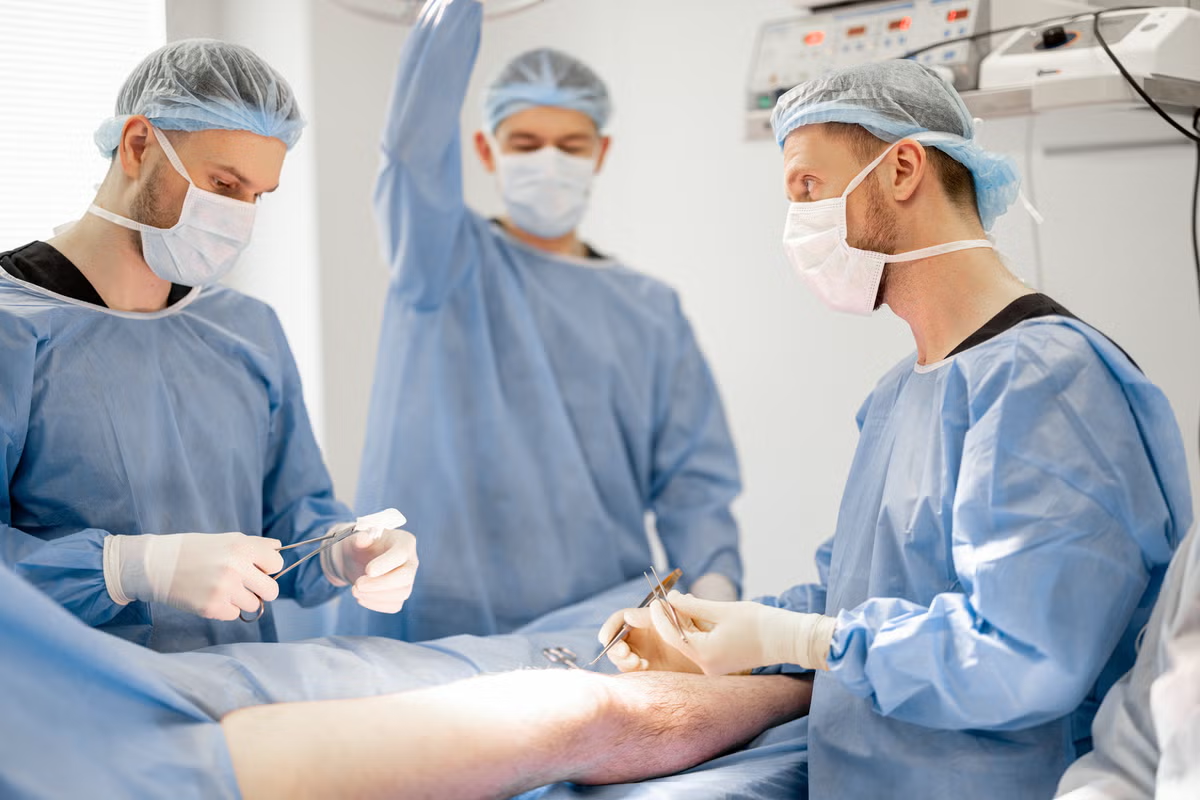
Minimally invasive surgery, regional anaesthesia and optimised post-operative pain management have increasingly made day surgery the standard of care suitable for many procedures. (Photo: iStock/stefanamer)
Which is why more hospitals now offer same-day discharges (under 24 hours) for suitable procedures. For instance, about 30 to 40 per cent of surgeries performed at National University Hospital are done as day procedures – up from 20 per cent a decade ago. Over at Tan Tock Seng Hospital (TTSH), 80 per cent of its elective surgical procedures between 2023 and 2025 were performed without warding. At KK Women's and Children's Hospital (KKH), approximately one in three elective surgeries for women is performed as day surgery.In fact, some hospitals have even “protocolised” day surgery. “Suitable cases that meet the criteria are usually recommended for day surgery, and surgeons will explain this option during consultation,” said senior consultant Associate Professor Alfred Kow Wei Chieh, who heads NUH’s Department of Surgery, Division of Hepatobiliary & Pancreatic Surgery.However, not every patient is onboard the day-surgery train as they may have concerns about recovering at home, acknowledged Adjunct Associate Professor Glenn Tan Wei Leong, who is a senior consultant in general surgery with TTSH’s Divisional Chairman of Surgery. But it is worth noting that “advancements in surgical and anaesthesia techniques, including minimally invasive surgery, regional anaesthesia and optimised post-operative pain management, have made day surgery increasingly the standard of care suitable for many procedures”, said Adj Assoc Prof Tan. WHAT ABOUT INSURANCE? DOESN’T IT USUALLY EXCLUDE DAY SURGERY?It is a misconception that many insurance policies don’t cover day surgeries, said Assoc Prof Kow. “Day surgery procedures, where patients are monitored in the day surgery ward for several hours after the operation, are generally claimable under most insurance policies. Patients may also use MediSave to offset part of the cost alongside their insurance coverage.”