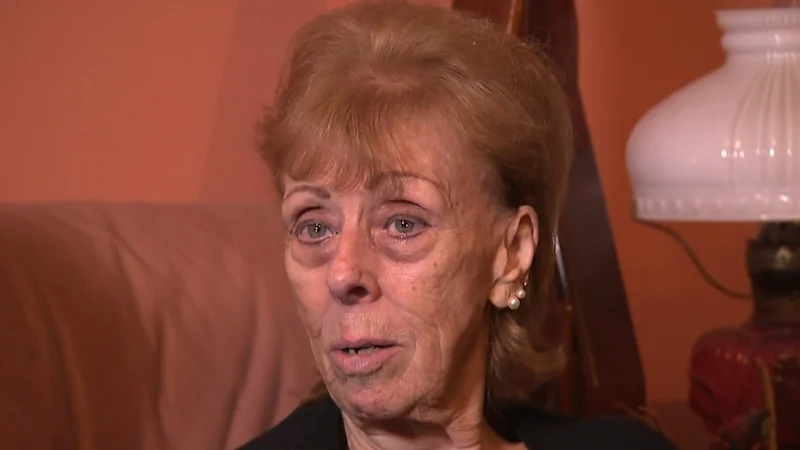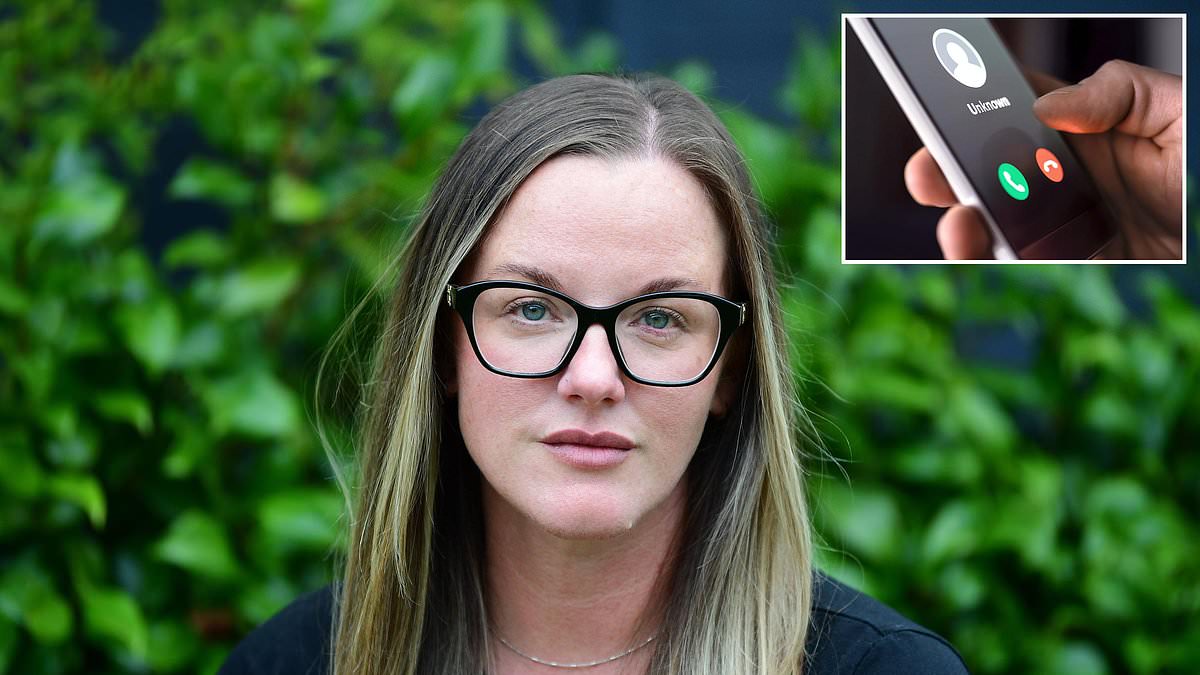
It took just 10 minutes for Julie’s bank account to be drained of $33,000 – leaving her in a flood of tears when the devastating ordeal was revealed.But initially, the aged care worker had no idea about the 17 transactions or that just $60 was left in her account.She found out a day later after a visit to the bank, which ended with the NSW woman arriving home to find police at her house.“I’ve driven up and I thought oh my god, please, not more bad news. Because I thought they were there to tell me someone had died,” Julie, who did not want her surname shared, told news.com.au.Police had gone to Julie’s address for a welfare check after she left the bank. Something she muttered under breath — as she reeled from the shock of losing money she’d saved for years after being scammed by a fraudulent email and call — had sparked concern. Aussies to be scammed out of $2bn waiting for changeJulie is one of the thousands of Australians who has lost a significant amount of money to scams and remains unprotected.Despite the federal government touting world-leading legislation that would tackle scams being passed in February last year, it revealed last week that the legislation won’t be operational for another nine months. The delay comes after Australians lost $2.18 billion to scams in 2025, according to the Australian Competition and Consumer Commission (ACCC). Consumer advocacy groups have warned that everyday Australians will lose a further $2 billion to scams before the laws take effect.Do you have a story? Contact sarah.sharples@news.com.auConsumer Action Law Centre chief executive Stephanie Tonkin said the government was seeking consultation on an ambitious package and it was “fantastic to see movement after such long delays”.“The consultation package has indicated that the entire set of laws and framework will switch on in late March 2027. This delay is nine months later than what we were expecting for our rules and codes of practise to come into force,” Ms Tonkin said.She said including banks, digital platforms and telecommunication operators in the legislation would make Australia a much harder target for scammers, but other sectors needed to be captured such as dating sites, the superannuation industry and organic search results on Google.“We are certainly seeing a complete lack of business reimbursing scams losses when people fall victim to scams. So right now we have a temporary, hopefully, gap but the people that we’re speaking to every day, their lives are being absolutely destroyed by scams, even by smaller amounts,” she said.“It might be a romance scam where someone has been groomed and manipulated even over years and their whole life falls apart and they realise that everything was a scam and a lie. And we have people who are still paying interest on loans that they took out in connection with the scam or on loans they took out after a scam to pay a company to recover their money only to find out that was a second or follow-up scam.”Questions are being raised about the urgency to tackle scams within various industries. Julie was told by the Commonwealth Bank that it had a raised a request to recall the scammed funds “within industry expectations of 2 business days from when you first attended a branch”.$33,150 gone in 10 minutesJulie had never been interested in online banking, but she said she was advised during a visit to her local Commonwealth Bank branch about two years ago to get the app so she could keep track of her money outside the six monthly statements she received. But she never used it.Then in April, she received an email that looked the same as any communication from Commonwealth Bank – where she has been a customer for 50 years – alerting that there had been a suspicious transaction on her account. She rang the number on the email but instead of reaching the bank she was connected with the scammer. He had an Australian accent, supplied his employee number and also gave her a reference number, she said.The scammer told her there were three suspicious transactions and they could be reversed by logging into the banking app and pressing accept three times. Intriguingly, he also advised her to physically attend the bank to check everything had worked.Julie zipped up to the local branch the next day and was asked to show the email.“I could just tell by the look on the girl’s face that something wasn’t right,” she said. “Anyway, she was explaining to me that I pretty much have been scammed and that these suspicious transactions were false. I was quite shocked.”Julie said she was immediately told the bank could not reimburse her. She questioned why she wasn’t alerted by the bank about the 17 transactions of $1950 each. Later, the 65-year-old made a complaint to the bank and was told she had authorised the transactions through the app.She said she worried about being able to pay her rent and whether she would have to sell her car. “It’s just horrible,” she said.Julie got lucky with the bank able to recover $15,000.The single mum was also offered a $5000 one-time offer from the bank, which she accepted, as she didn’t feel up to a fight.“I work in the memory support unit so it’s dementia with violent behaviours,” she added.“Don’t get me wrong. I love it, I’m very passionate about it and I’m looking after vulnerable people and I found myself quite vulnerable myself. I never saw myself as that person.“You feel stupid but at the same time you feel numb. I wasn’t myself for about a good 10 days and it wasn’t until that I got that money and I visited with my son then he said ‘today is the first day I felt I had my mum back’.“I just wasn’t prepared to risk the $5000 because they said that after a certain date that it may not be available to me.”‘What they have put in place isn’t working’Julie questioned why the bank’s system didn’t pick up the fraudulent transactions, particularly given she had never used the app.“That is just craziness. Whatever they have put in place isn’t working,” she added. “I don’t think the government’s done enough and I don’t think it’s done enough together with the banks to help people like myself and people who are much worse off than me when they’ve been scammed.” In a letter from Commonwealth Bank seen by news.com.au, she was told the bank was not liable for the disputed transactions. “The bank met its obligations to you,” it read. “The bank was unaware that you were involved in a possible scam and followed your instructions by promptly processing the payments. When our fraud detection systems identified transactions that warranted questions, we restricted your NetBank and sent you a message to contact us urgently.” A Commonwealth Bank spokesperson acknowledged the significant impact that fraud and scams have on customers and the community generally.“We take these matters seriously and are focused on helping protect customers and their money,” they said.When a customer contacts the bank about suspected fraud or scams, CommBank takes steps to help secure their accounts, review what has happened and support them through the next steps, they added. “This may include investigating unauthorised transactions, raising a dispute, or attempting to recover funds where possible,” they said.“Before approving any PayTo payment request, customers should check they recognise the business and understand what the payment is for. If something doesn’t look right, they should stop and check first.”They said the Commonwealth Bank uses a range of fraud and scam detection systems to monitor activity across accounts, digital banking and transactions and may trigger alerts, additional checks or restrictions where activity appears unusual or higher risk, they added.If a customer sees a transaction they didn’t make or doesn’t recognise, they should contact their bank straight away. Customers customers can also raise a dispute directly through the CommBank app or NetBank, the spokesperson advised.“(Commonwealth Bank) continues to invest in advanced fraud and scam detection technologies and regularly reviews and strengthens our controls to help protect customers as criminal tactics evolve,” they added.Losses Australians can’t afford Carol Bennett, the CEO for ACCAN – the peak national consumer advocacy organisation for communications – said she was “really concerned” about the lengthy delay of the Scam Prevention Framework coming into operation given the huge losses Australians are experiencing.“These are losses Australians can’t afford and it disproportionately impacts the most vulnerable,” Mr Bennett said.“So we’re disappointed that the government has dragged its feet when it comes to implementing this system. We can’t make this happen soon enough.” The government also announced a proposal under the legislation for a mandatory reimbursement of $3000 or less for people scammed.Ms Bennett said she supported a mandatory reimbursement scheme, like in the UK but the automatic amount should be at least $10,000.“Consumers can’t afford to be left out of pocket, especially in a cost of living crisis, when it’s through no fault of their own,” she said.Assistant Treasurer and Minister for Financial Services Daniel Mulino said the government is strengthening protections for Australians, taking decisive action to disrupt scams and making Australia a harder target for criminals. “The government’s view is that it would be appropriate to automatically reimburse scam victims for verified scam losses below $3000,” Mr Mulino said. “Setting the amount higher could create incentives for perpetrators to see Australia as a soft target. “We’ve been clear from the outset that this reform needs to be done properly. We only get one chance to get it right. Scams are an evolving and increasingly sophisticated threat, so it’s critical that the protections we put in place are strong and effective from day one.”sarah.sharples@news.com.au
Woman loses $33k in just 10 minutes
It took just 10 minutes for Julie’s bank account to be drained of $33,000 – leaving her in a flood of tears when the devastating ordeal was revealed.
1,622 words~7 min read