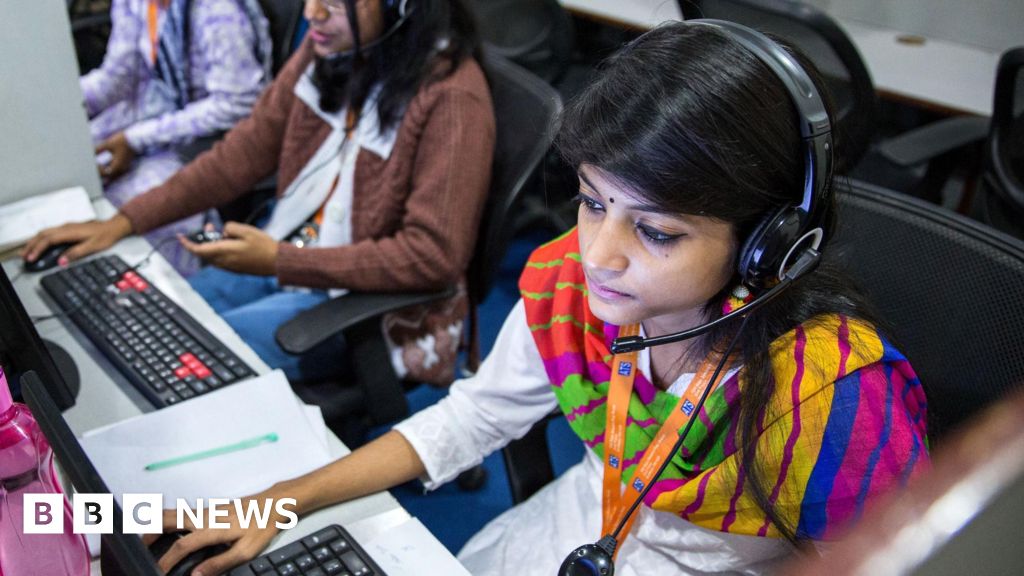
MANILA and BENGALURU: At 10pm, when most of the Philippines is ready for bed, the day is only just beginning for some workers such as Paul Ponce.His clients are in the United States, which is why he works the night shift in an industry known as business process outsourcing (BPO). In the Philippines, BPO jobs include admin work, accounting services, information technology development and customer support.For him, as a call centre agent in Greater Manila, it has been a job that pays. “I was able to send my four kids (to) a private school,” he shared. “Now we (can) afford to buy our own house.”The sector employs nearly 2 million workers and brings in about US$40 billion per year, more than 8 per cent of the country’s gross domestic product. Around 70 per cent of the work is outsourced from North America.
Call centre worker Paul Ponce with his family. (Photo courtesy of Paul Ponce)
In India, a similar story has unfolded in Bengaluru, the country’s back-office capital, where Shahid Khan works from 8pm to 5am, having joined the industry in 2022. “By (working) in BPO, we can (build a) better … future,” he said.Outsourcing employs nearly 6 million Indians and generates about 7 per cent of GDP.India is the market leader, capturing an estimated 55 per cent of global IT outsourcing. The Philippines is second, with a 15 to 18 per cent share of the BPO industry.“When America wakes up, the Indian and the Philippine workforces continue to work,” said Neeti Sharma, chief executive officer of staffing firm TeamLease Digital. “That’s (why) we say that the Indian and the Philippine … workforces work 24/7.”But something is coming to eat the industry’s lunch, or supper in this case. Back-office jobs are among the most at risk of being replaced by artificial intelligence, according to reports from the International Monetary Fund, Bloomberg Intelligence and others.