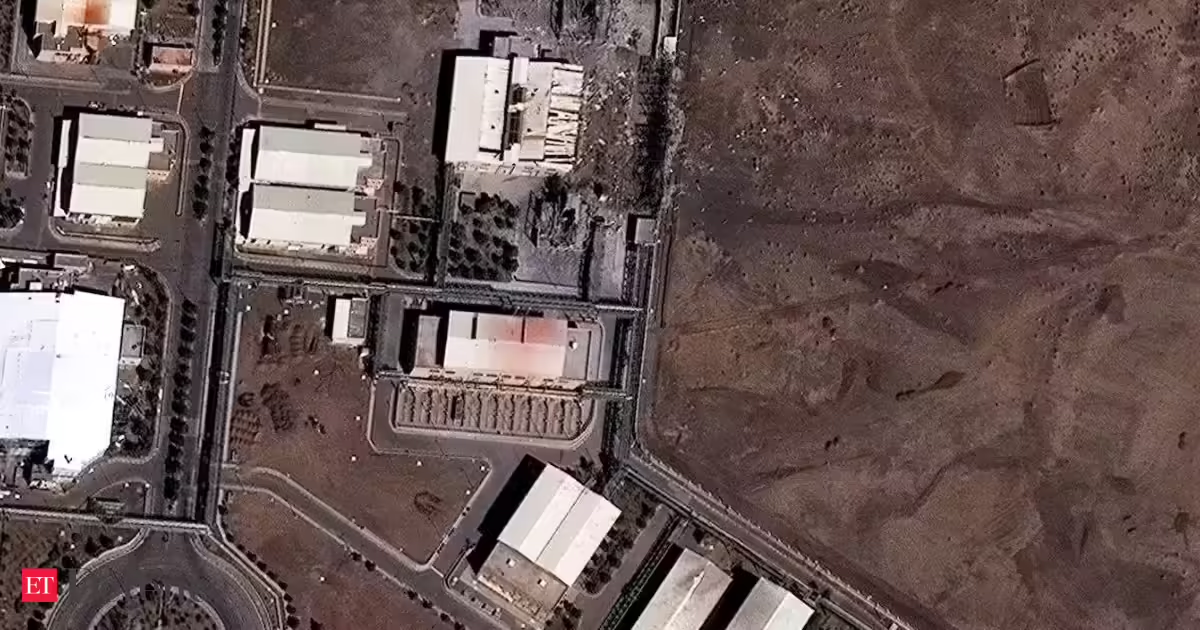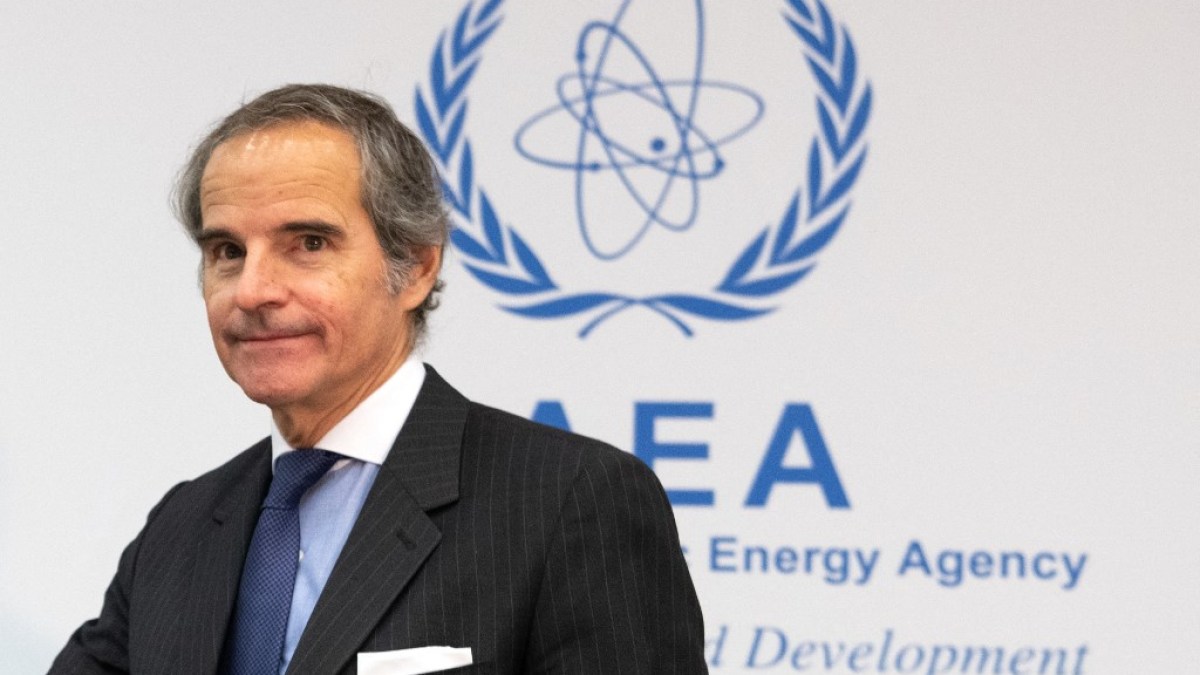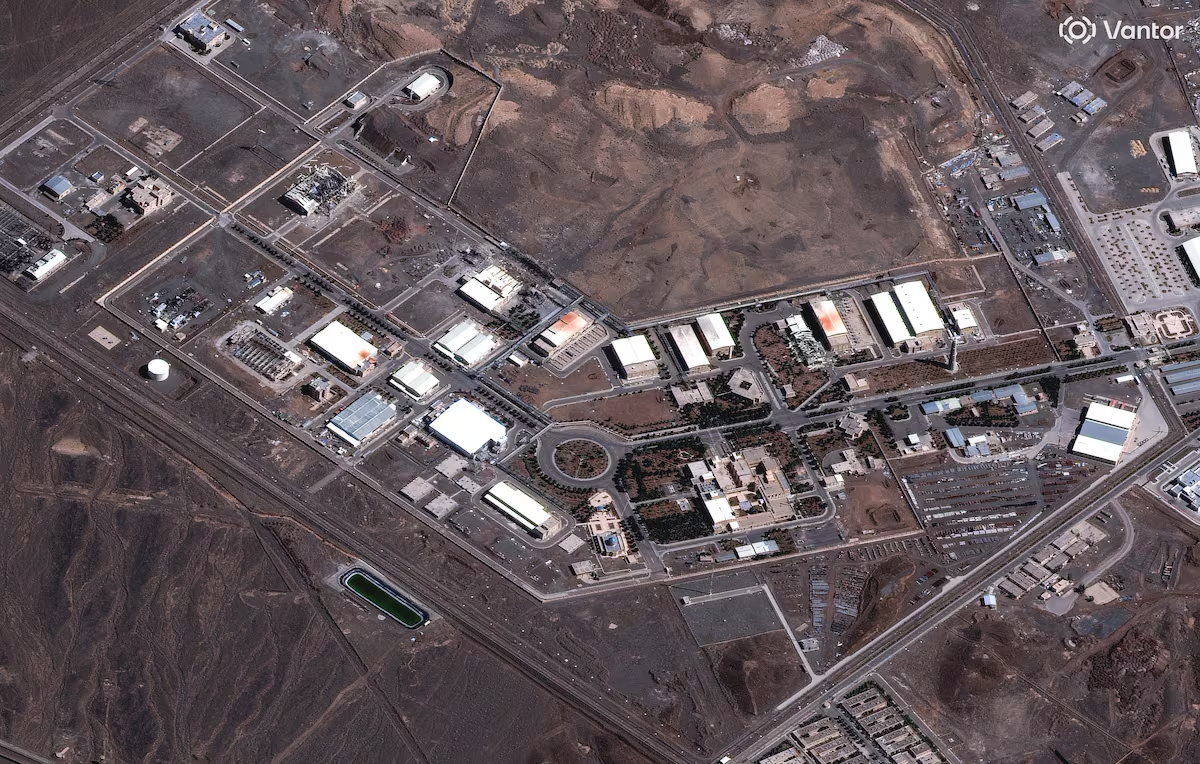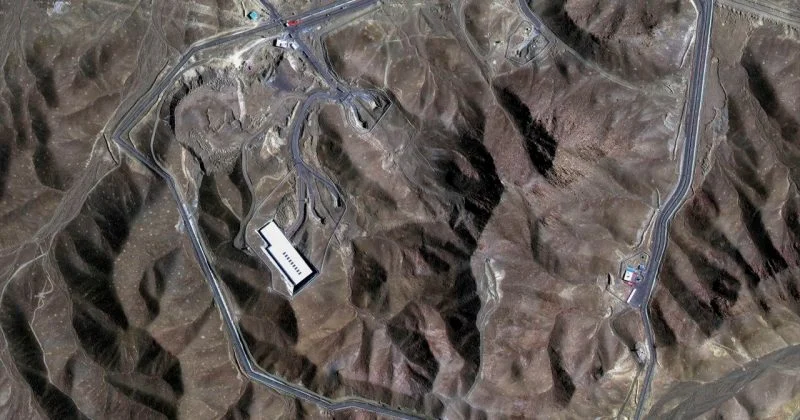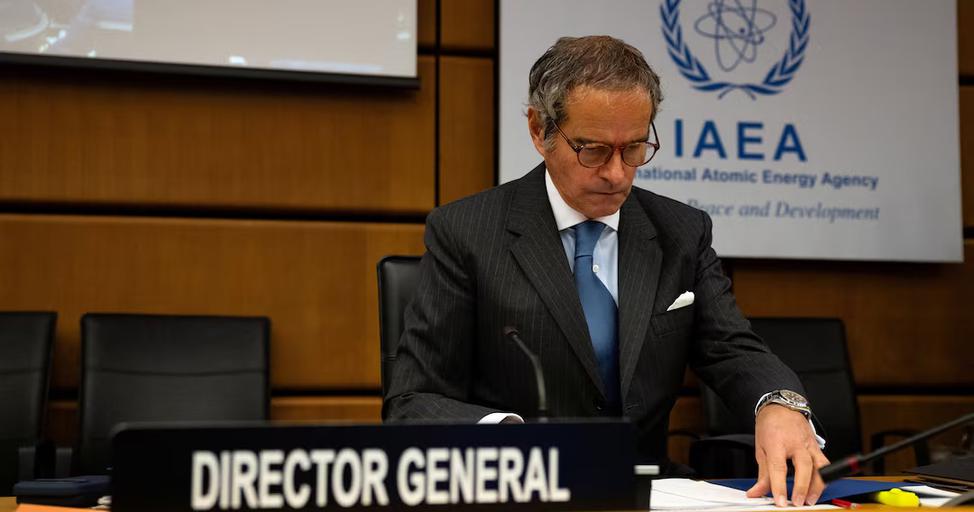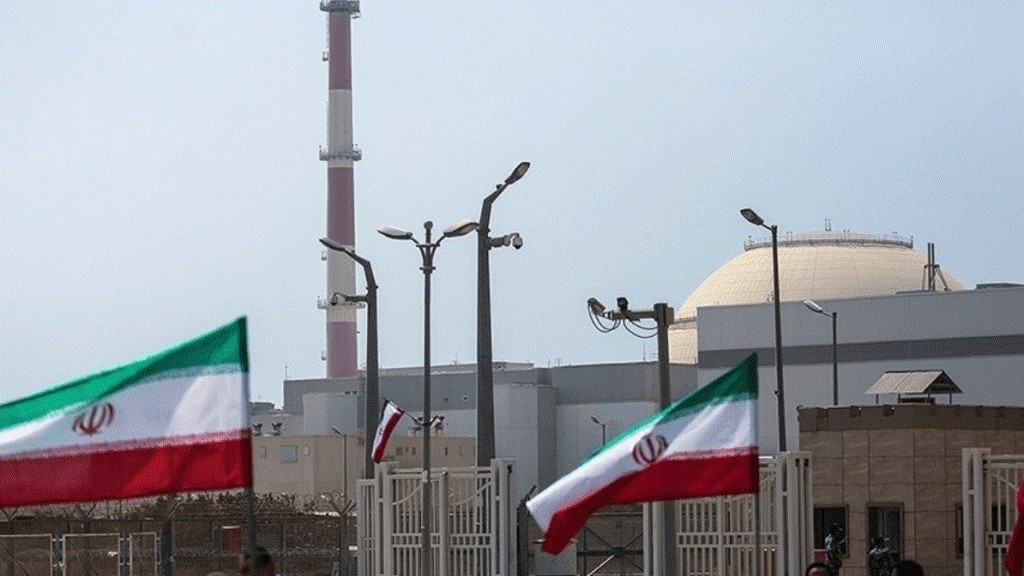
The possibility of Iran developing a nuclear weapon is now higher than it was before the United States and Israel first attacked the country in February, the International Atomic Energy Agency has concluded in a report. The conclusion suggests the war has so far resulted in the opposite of what President Trump set out to do, namely, prevent Iran from developing a nuclear weapon.Bloomberg cited the report, which has restricted access, saying that in it, the IAEA had warned its member states that Iran already has a large stockpile of enriched uranium that is close to weapon-grade, and it can continue the enrichment to achieve weapon-grade nuclear material. The agency pointed out that this stockpile was subject to regular inspections by the IAEA, but Iran suspended these inspections following Israel’s and the U.S. strikes last June.As a result, the IAEA “can’t draw any conclusion regarding this nuclear material,” and “This gives rise to a proliferation concern as this nuclear material, which the agency was not able to verify, includes a large amount of high- enriched uranium.”In an official response to the IAEA report, the White House said, “Suggesting that Iran can more capably produce a nuclear weapon with no functioning nuclear enrichment facilities or military defenses is an indescribably stupid analysis by Bloomberg, which we would have shared had they reached out to us for comment,” as quoted by the New York Post.Related: Dangote Breaks Ground on 700,000-Bpd Second Crude Processing UnitIn June 2025, Israel and the United States bombed Iranian targets, with the U.S. specifically reporting “obliterating” the country’s nuclear facilities. The U.S. bombed three of Iran’s nuclear sites – Fordow, Natanz, and Isfahan – and warned the Islamic Republic that retaliation against U.S. troops in the region or any other retaliation would be the worst mistake it could make. The obliteration of these facilities, however, appears to have been incomplete based on both the IAEA’s report and the very fact that the U.S. launched a war against Iran, citing its nuclear capabilities as the casus belli months after that.That war has upended energy markets, causing unprecedented supply disruptions in oil and gas. As for peace, that still seems a long way away, even though oil traders appear to be leaning towards strong optimism, even as the exchange of missile strikes continues. According to the International Atomic Energy Agency, any peace deal that does not include its involvement as verifier of Iran’s commitment to not developing a nuclear weapon would be a bad deal, further complicating the situation for the United States.“We are not a party to this negotiation. We participated until the last round which ended in February,” the director general of the IAEA, Rafael Mariano Grossi, told Al Jazeera in an interview on Tuesday, as cited by Bloomberg again. “Something that is not verifiable will lead to a bad agreement.”Meanwhile, President Donald Trump said this week that Iran had “agreed” not to develop nuclear weapons, but added that “they can change their mind” in the latest of a series of conflicting and not infrequently confusing messages about the war, that in the early weeks included several declarations of victory.“I did have to say we have to do something about Iran, because regardless of how well we’re doing [economically] we can’t let them have a nuclear weapon,” the U.S. president told the New York Post in a podcast quoted by CNBC. “They’ve already agreed they’re not going to have a nuclear weapon,” Donald Trump added. “I mean, now they can change their mind, but that was one of the things they’ve had to agree, they’ve agreed to that. That was the big thing,” he also said.By Irina Slav for Oilprice.comMore Top Reads From Oilprice.comHouse Passes War Powers Measure on Iran, But Trump Will Likely Kill ItIranian, Russian Crude Premiums Slide as China Pulls Back on ImportsSouth Korea Boosts Jet Fuel Exports to Nine-Month High
IAEA Warns Iran Nuclear Risk Has Increased | OilPrice.com
The possibility of Iran developing a nuclear weapon is now higher than it was before the United States and Israel first attacked the country in February, the International Atomic Energy Agency has concluded in a report
646 words~3 min read