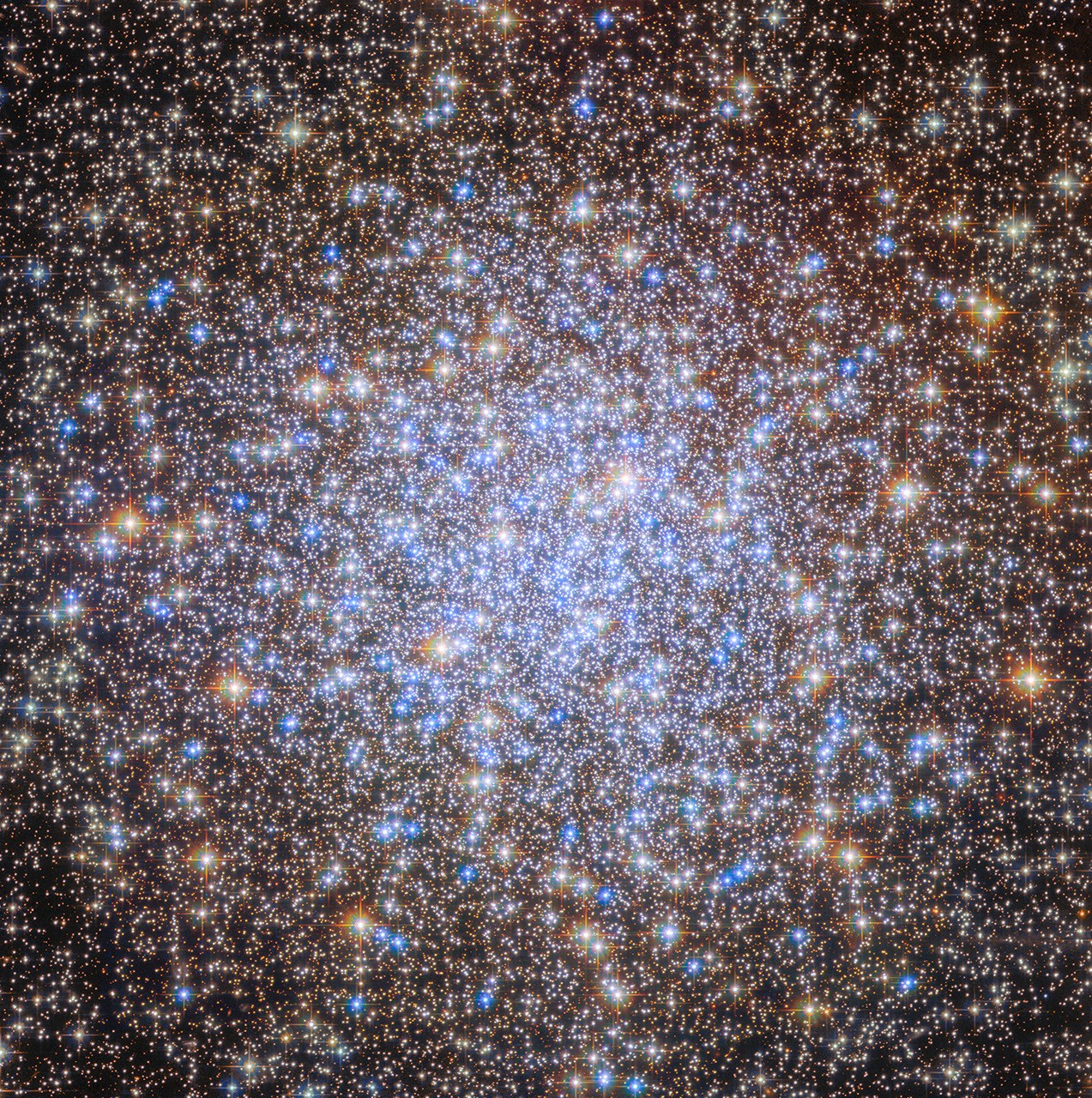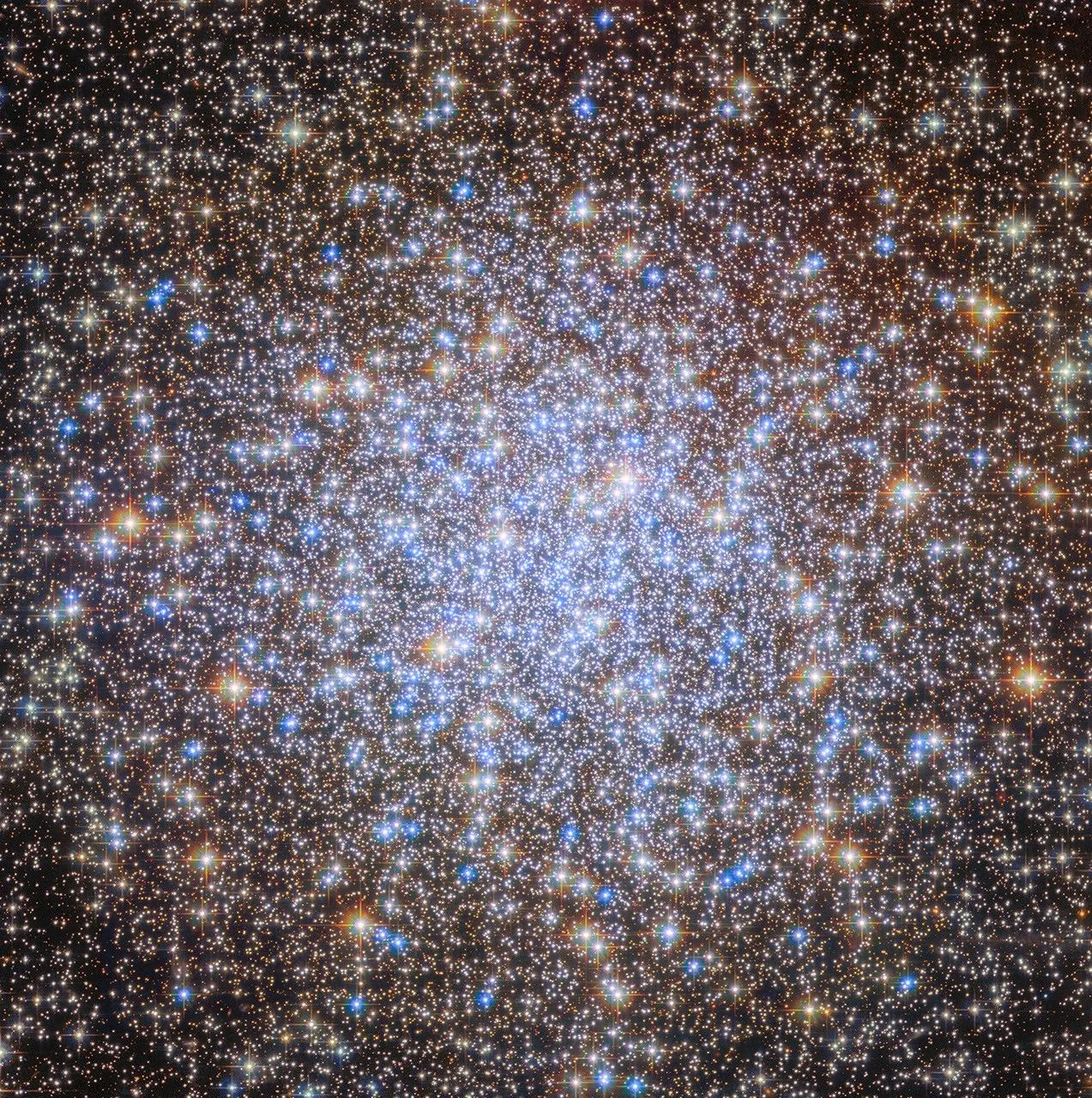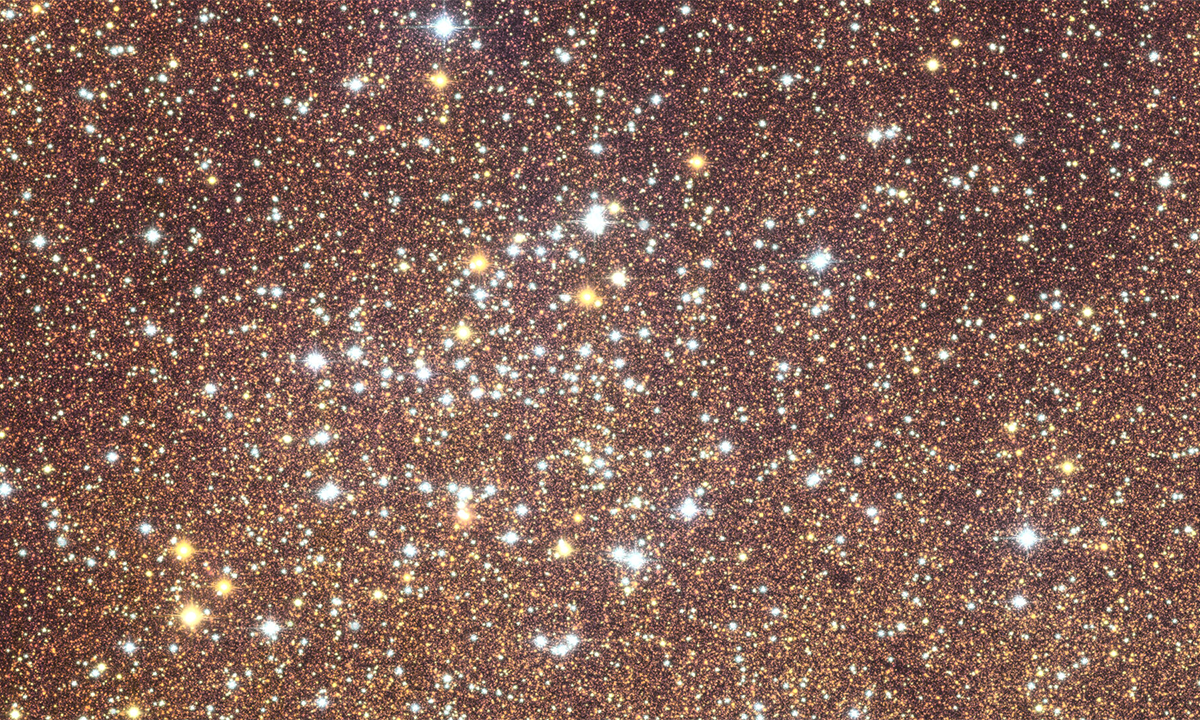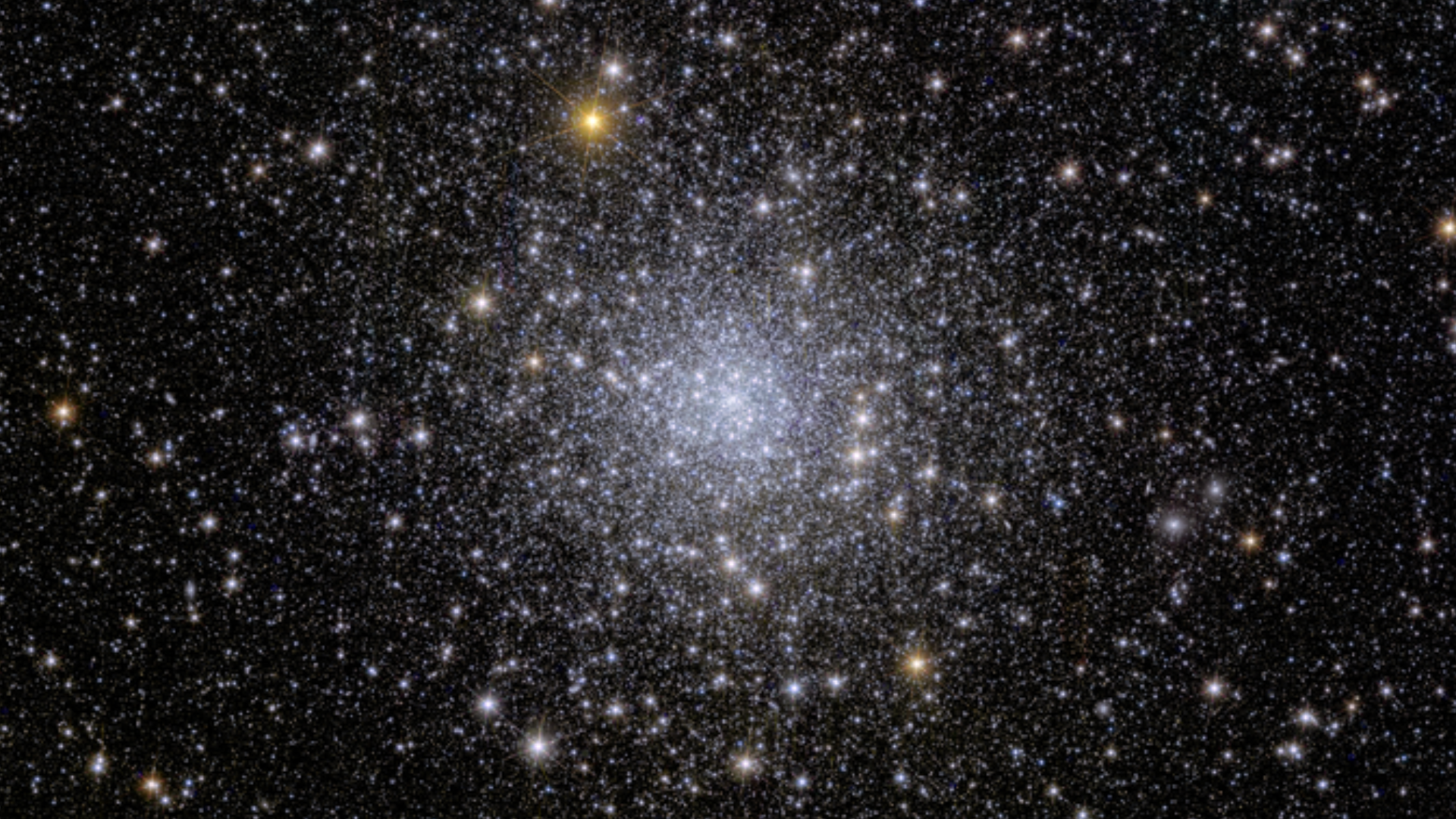
An image of the globular cluster NGC 6397, captured by the Euclid Space Telescope.
(Image credit: ESA, NASA, Euclid Consortium)
A gorgeous new portrait of an ancient star cluster reveals an unexpected imperfection: a visible gap in the brightness of its stars.The stunning image, taken by the European Space Agency’s (ESA) Euclid space telescope, captures NGC 6397 — one of the closest globular clusters to Earth. NGC 6397 is a glittering swarm of hundreds of thousands of stars packed tightly together, but when astronomers took a closer look, they discovered something unusual hidden within the sparkles.A graph plotting the stars by their brightness and color revealed a conspicuous gap — a narrow region where certain stars should have appeared but didn't. The feature is so distinct that it stands out visibly in the data, appearing almost like a blemish in an otherwise smooth distribution of stars, according to a statement from the Space Telescope Science Institute (STScI).The discovery emerged from observations collected by Euclid, which is primarily tasked with investigating dark matter and dark energy. Initially, the team was studying the motions of stars within the globular cluster using data from both Euclid and the Hubble Space Telescope. When analyzing the data from NGC 6397, the researchers weren't searching for missing stars. Instead, they stumbled across the feature while studying the cluster's stellar population."The discovery was serendipitous," Andrea Bellini, one of the research paper's primary authors from STScI, said in the statement. "We were not looking for the gap, but we found it."The gap occurs among red dwarf stars, the most common type of star in the Milky Way. Researchers believe the visible void is linked to changes deep within the stars as they transition from having partially convective interiors to becoming fully convective. That shift slightly alters the stars' structure and luminosity, leaving relatively few stars at certain brightness levels.