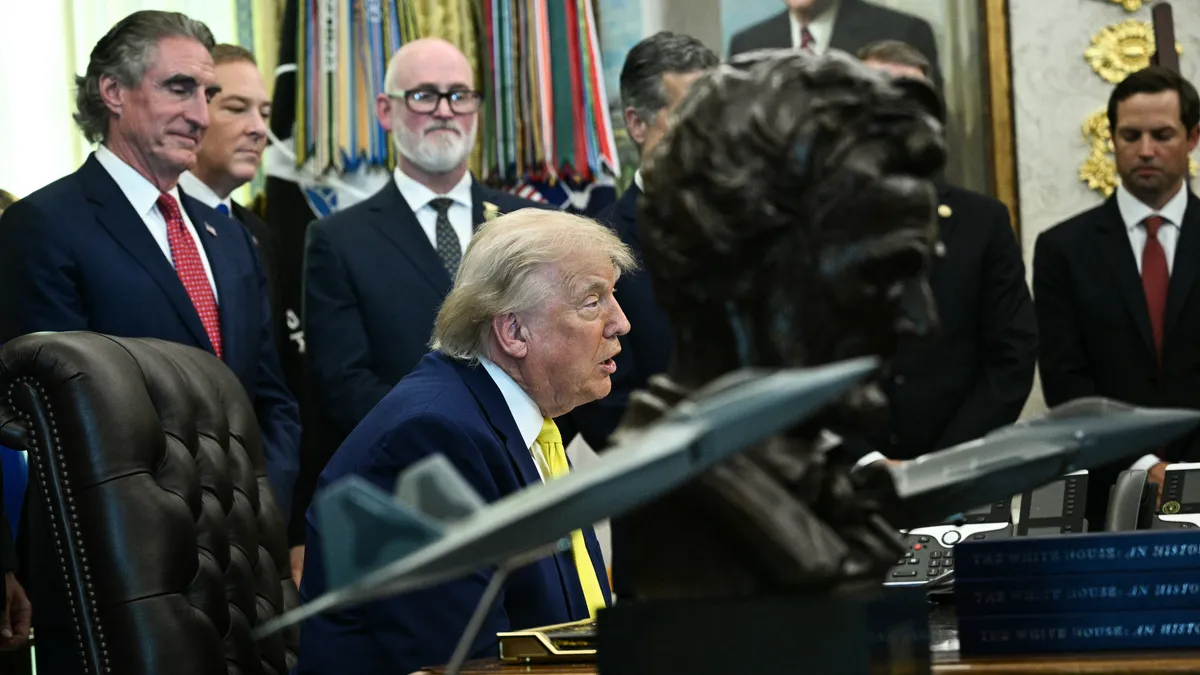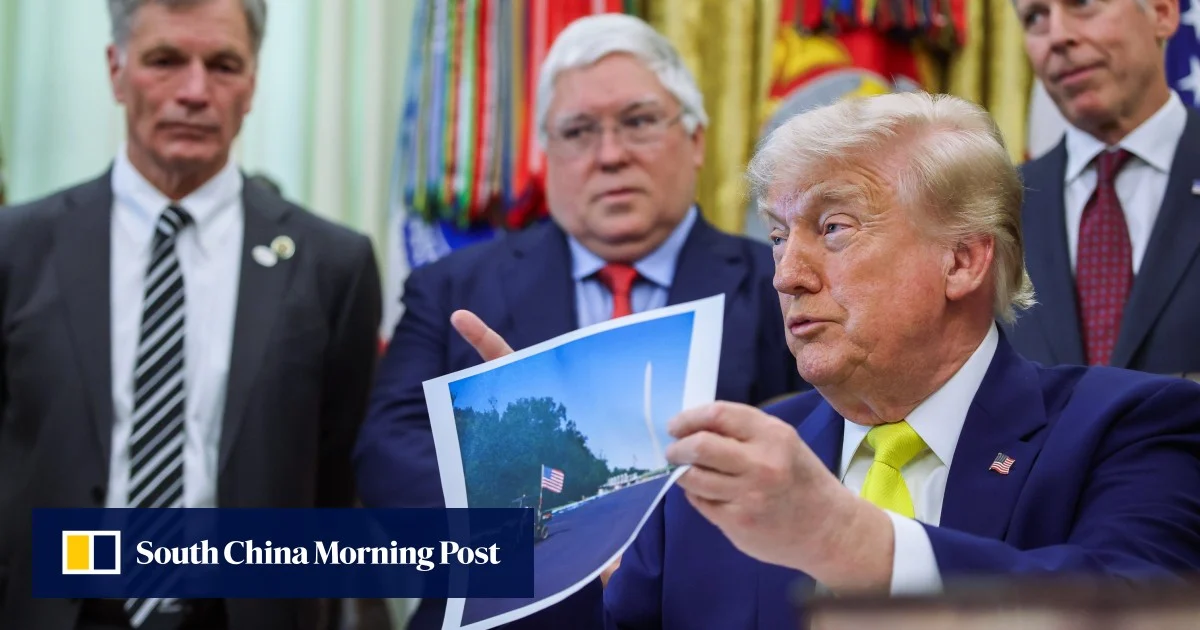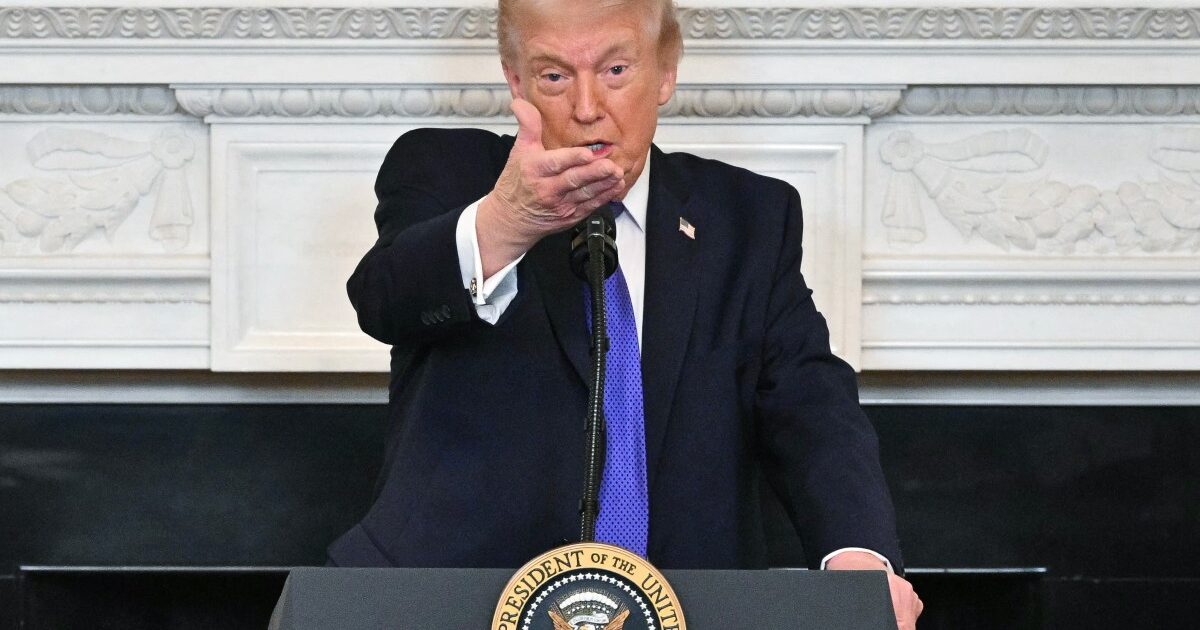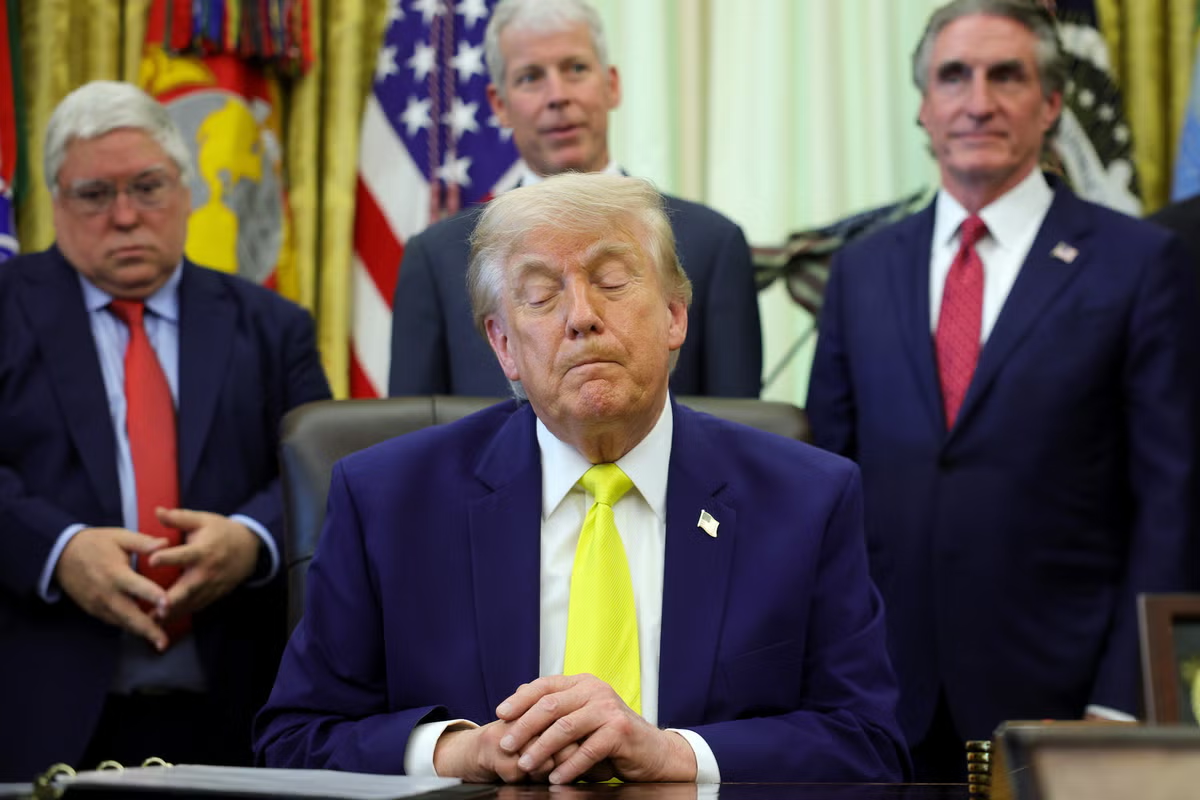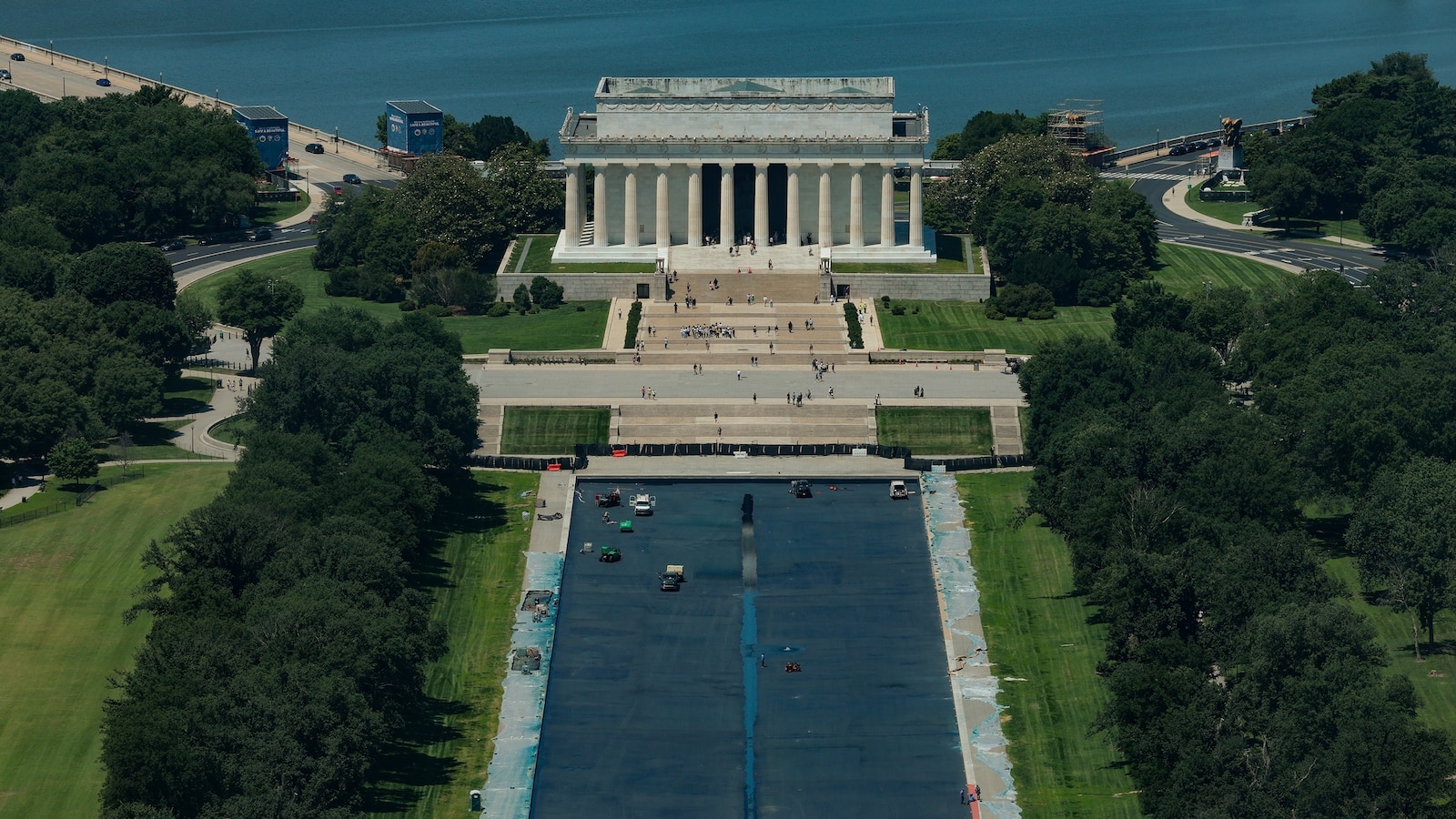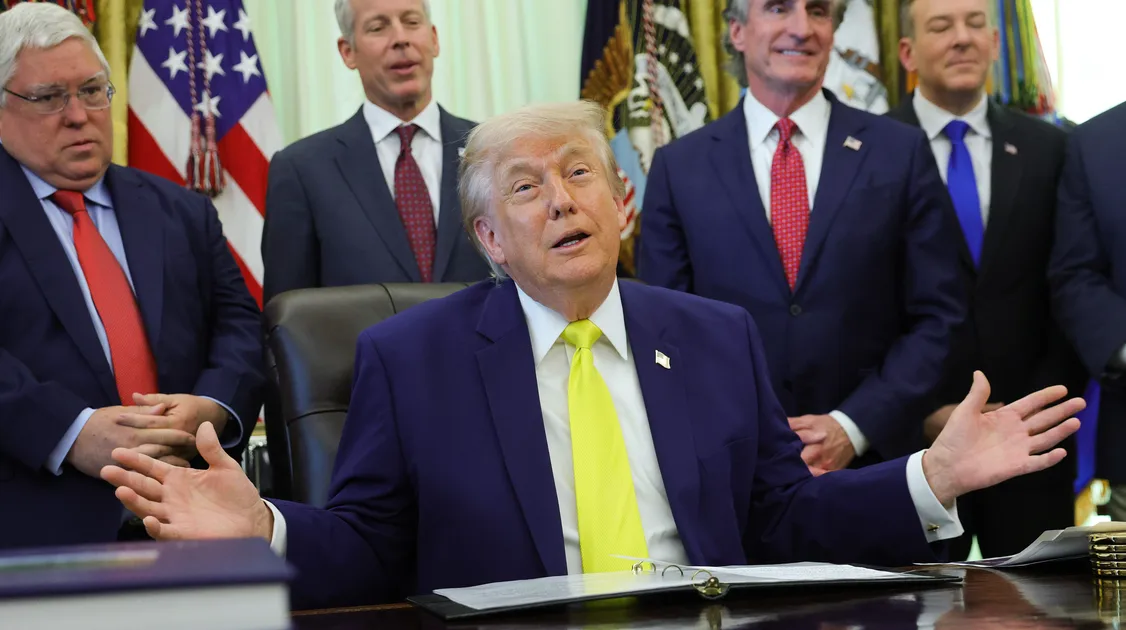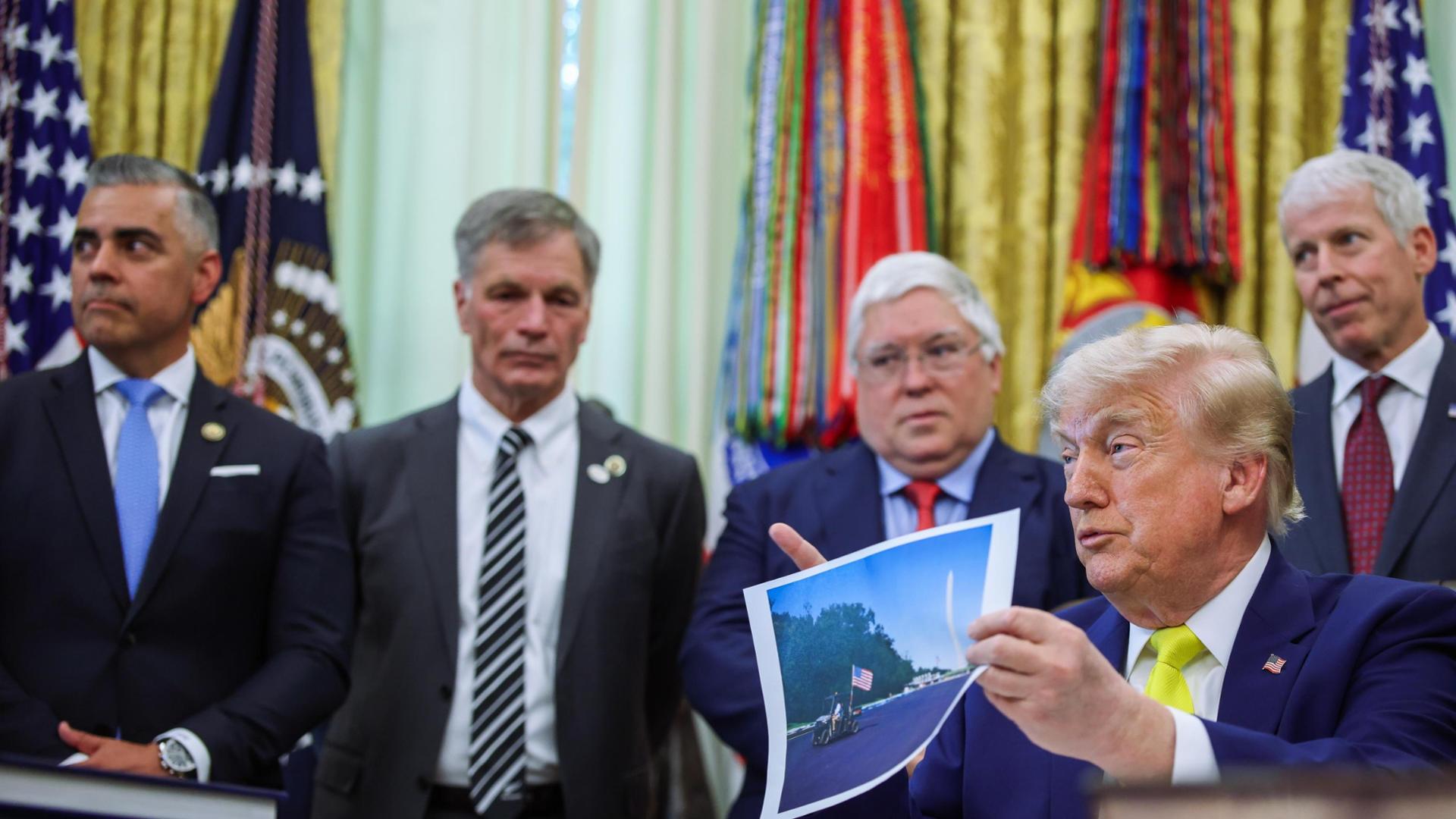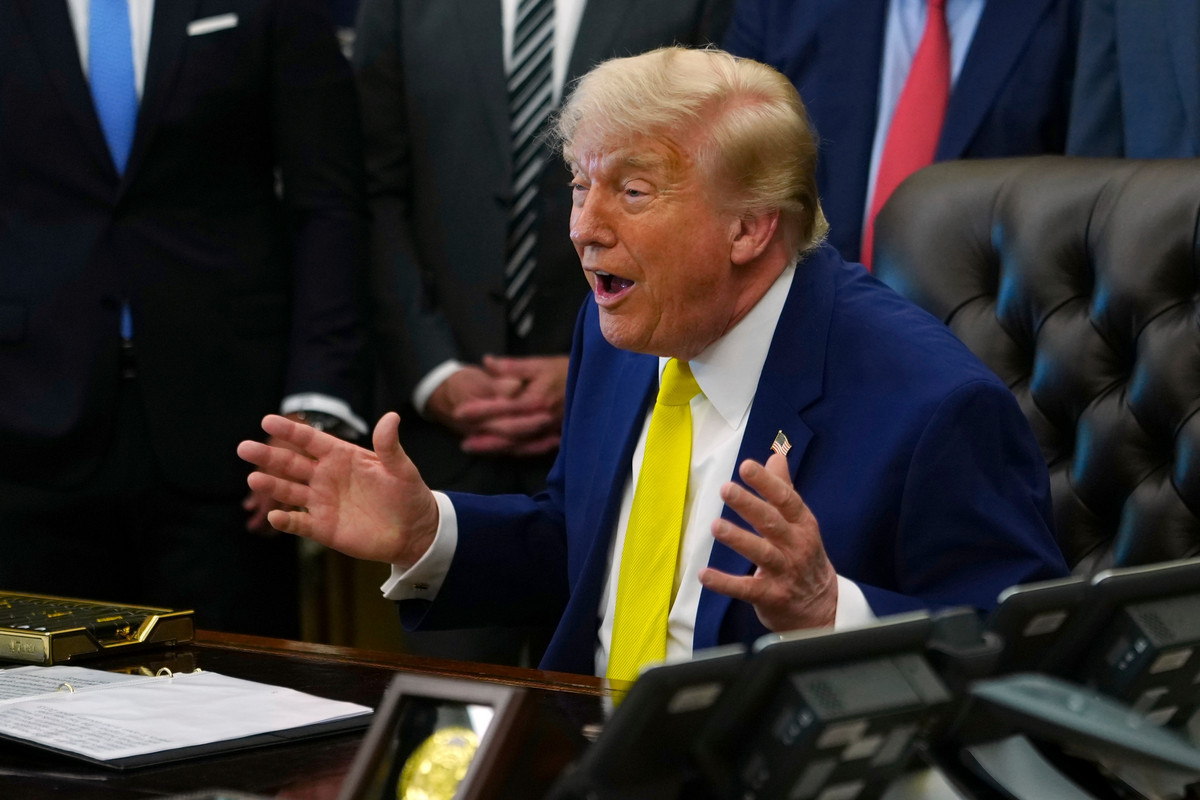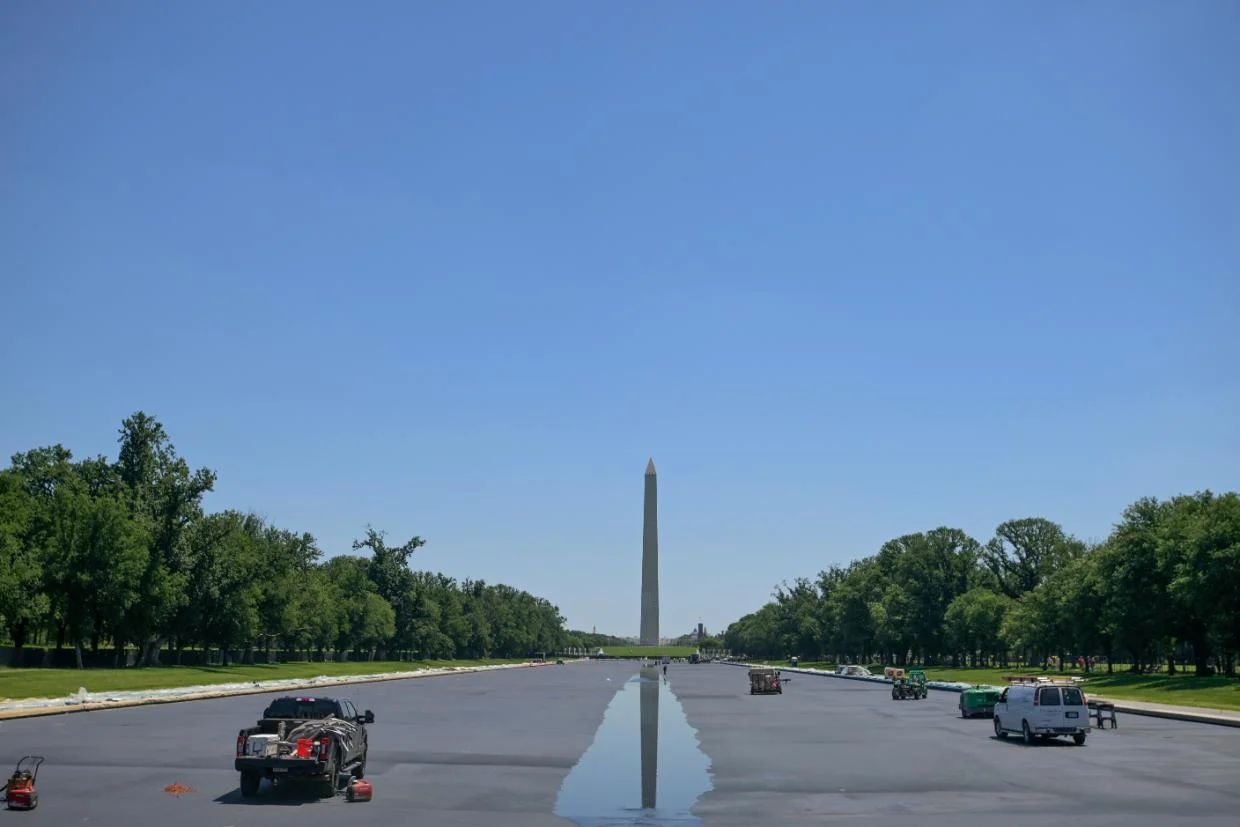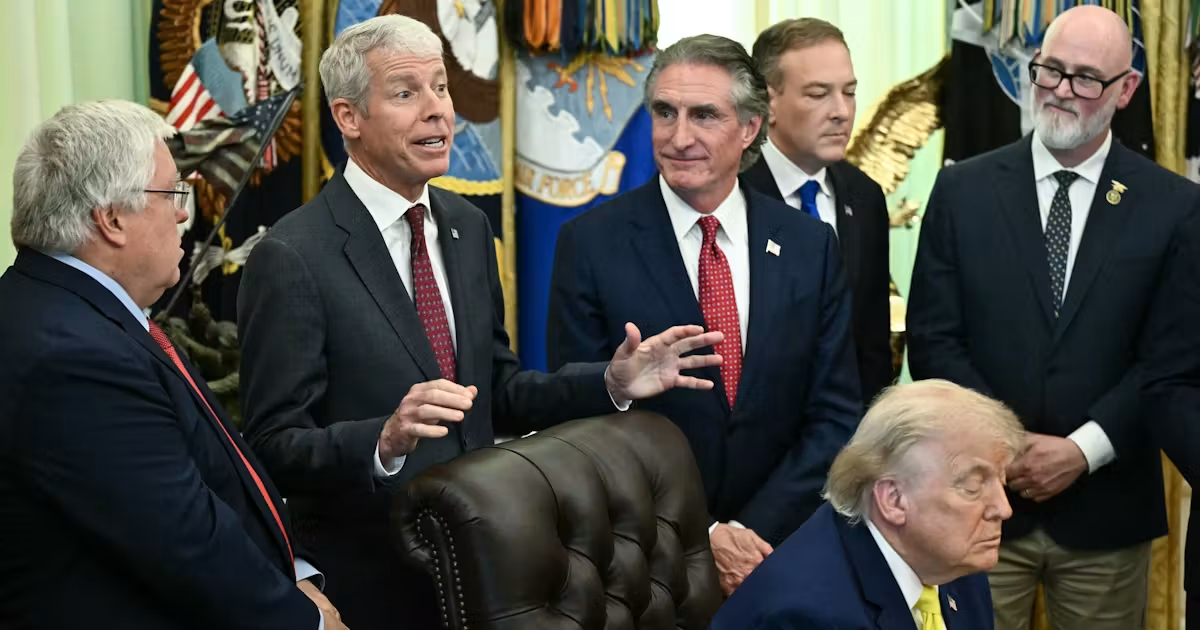
In between naps during a televised White House event Thursday, President Donald Trump suggested creating a new promenade outside the Lincoln Memorial and naming it after himself.“The Lincoln Memorial, the front was supposed to be the back, the back was supposed to be the front, it never got built,” Trump said shortly after appearing to doze off. “They wanna call it the Trump Promenade, but I don’t know if I wanna call it that. But it’s beautiful, it’s a beautiful project. And it’s gonna take the Lincoln Memorial right down to the Potomac.”Trump on a new area he wants to install outside the Lincoln Memorial: "They want to call it the Trump promenade" pic.twitter.com/k30i4toDnM— Aaron Rupar (@atrupar) June 4, 2026 The president again appeared to struggle to stay awake after making the suggestion.Trump is now sitting back in his chair and dozing off pic.twitter.com/376koU6XNK— Aaron Rupar (@atrupar) June 4, 2026 The Trump administration has already spent a massive sum on construction projects around Washington, D.C., including specifically around the Lincoln Memorial. He has dedicated $5 million of taxpayer money to covering four lion statues near the memorial in gold leaf and $13 million to redoing the Reflecting Pool. He has also proposed building a 250-foot arch, which would be so large it would overshadow the entire Lincoln Memorial. That project would cost at least $100 million.Editor’s Pick:Republican Senator Bill Cassidy has joined his Democratic colleague, Cory Booker, in a court filing to block President Trump’s so-called “Anti-Weaponization Fund.”Cassidy and Booker filed an amicus brief supporting a lawsuit against the fund, alleging that it goes against the Constitution by making “an end-run around Congress’s institutional authority” and violating the spending, appropriations, and appointments clauses.The senators’ brief points out that despite a federal judge temporarily blocking the fund last week, Trump refused to say it was dead in a podcast interview earlier this week. They attacked the origin of the fund, Trump’s excessively favorable settlement with the IRS following his lawsuit against the agency after his tax returns were leaked (during his own first term).“Because the very lawsuit that sparked the settlement was collusive and therefore could not be heard in a federal court, and accordingly no monetary award would have been available through that collusive litigation, the Judgment Fund is not available,” the brief states.It’s another anti-Trump move from Cassidy following his primary election loss last month to Representative Julia Letlow, who had the president’s endorsement. Cassidy has also taken aim at Trump’s ballroom and his choice of Bill Pulte as director of national intelligence. But the only reason he appears to be showing courage now is because he’ll be out of a job by next year.That seems to be one of the few things that gets Republicans to criticize Trump: when he withdraws his support and ends their careers. Former Representative Marjorie Taylor Greene, once a staunch MAGA acolyte, reportedly turned on Trump after he didn’t back her running for the Senate. But this effort from Cassidy at least carries some weight, and could help kill Trump’s slush fund in court. Editor’s Pick:Mere hours after his inauguration, Donald Trump granted clemency to nearly 1,600 individuals who faced criminal charges for storming the U.S. Capitol on January 6, 2021, in support of his claims that the 2020 presidential election had been “stolen.” Dozens of those pardon recipients have since been arrested for, charged with, or convicted of other crimes, according to a new analysis by Lawfare. At least 97 January 6ers—or roughly one in 16—have been tied to a crime since the president gave them unilateral forgiveness.The crimes they stand accused of range from petty crimes such as property damage, trespassing, and possession of drug paraphernalia, to serious felonies such as stalking, theft, defrauding government agencies, plots to assassinate law enforcement and government officials, and homicide.At least 14 pardon recipients have since been charged with sex crimes or crimes related to child porn, according to Lawfare. Another six have faced domestic violence charges. Others have been accused of different violent crimes, such as physical assault or illegal firearms possession. At least 20 have been charged for driving while drunk or public intoxication.Notably, five individuals that Trump granted clemency have been charged with or accused of crimes that they conducted after the pardon, suggesting that the president actually facilitated more crime by prematurely kneecapping their judicial consequences.They include Andrew Paul Johnson, who went on to commit multiple sex crimes against children months after Trump freed him from the clink. He was sentenced in March to life in prison for the crimes related to transmitting child porn and molesting a child under the age of 12.Ryan Nichols is another pardon recipient who went on to commit more crime. Nichols was charged on May 10 after he allegedly threatened a person with a gun in a church parking lot.Trump praised his pardon recipients as recently as Wednesday while defending his $1.8 billion “Anti-Weaponization Fund,” referring to the honeypot’s potential awardees as “great people.”“These are people who have lost their lives over nonsense,” Trump told the New York Post. “These were many great people, and I gave them pardons and I’m very proud to have given them pardons. And I think they should be reimbursed for a crooked government.”It’s unclear if the slush fund will proceed, but a slew of January 6ers have already lined up for their slice of the pie. They include former Proud Boys leader Enrique Tarrio, a sex offender who bear-sprayed cops, and a convicted child molester who told his victims he would give them money from a Trump payout in exchange for their silence.Read more about January 6:Arizona’s attorney general is still going to pursue charges against President Trump’s allies for trying to overturn the state’s 2020 presidential election results.Kris Mayes plans to seek a new indictment against those allies, her office announced Thursday, following the Arizona Supreme Court’s decision Tuesday not to reverse a lower court ruling throwing out earlier indictments against the group of 18 people, including former New York City Mayor Rudy Giuliani.“The Arizona Attorney General’s Office will return this case to the grand jury,” a spokesperson for the attorney general’s office, Richie Taylor, said to Politico. “We decline to comment further at this time.”Two years ago, a grand jury indicted Giuliani, former White House chief of staff Mark Meadows, conservative attorney John Eastman, and 15 others over a fake elector scheme to reverse Trump’s 2020 election loss in the state. Trump was named as an unindicted co-conspirator in the case. Last year, though, the case was thrown out by Judge Sam Myers, who said prosecutors didn’t show jurors the text of the Electoral Count Act, which governs presidential elections.Mayes’s office appealed all the way to the state Supreme Court, which decided not to reopen the case on Tuesday. If Mayes secures new indictments, Arizona would join Wisconsin and Nevada as states with active criminal cases against 2020 fake elector schemes. Even if Trump won’t face prosecution for interfering in the 2020 election, the possibility remains open that his close allies could still face criminal consequences.Editor’s Pick:The Trump administration is denying reports of incoming oil price spikes, even as the White House has been warned by multiple executives in the region.Politico reported that one anonymous executive told the administration that their storage tanks were “at dangerously low levels already,” three months into Iran’s retaliatory blockade of the Strait of Hormuz.“We have shared those concerns at the highest levels of government about what’s coming in mid-to-late June,” they said. “I hope they are paying attention to inventories right now. You’re hitting tank bottom.”In all, four executives told Politico that insiders have warned the Trump administration that a major price spike could hit consumers as soon as mid-June.A White House staffer completely dismissed this reporting, saying that “Politico’s anonymous sources are wrong.” And an official at the Department of Energy claimed there were “no such discussions” around inventory.Yet Politico’s anonymous sources don’t sound too far off from what’s publicly known. Last week, Exxon senior vice president Neil Chapman told a room full of investors that the U.S. is “approaching unheard of inventory levels. I mean, really, really low levels. You can debate whether that’s going to hit those really low levels in two weeks or three weeks. But once you get to that point, then you’ll see price shoot up.” Another anonymous source told Politico that this point of view had already been expressed to the White House, but to no avail.“President Trump and his energy team anticipated short-term market disruptions, communicated them openly to the American people, and implemented an aggressive plan to mitigate any impacts,” White House spokesperson Taylor Rogers said in a statement to Politico. “President Trump will never allow Iran to possess a nuclear weapon, and he will continue to advance America’s core national security interests.”Editor’s Pick:
Trump Pitches New “Trump Promenade” in Between Naps in White House
The president revealed a new project dedicated to himself after dozing off in a meeting.
1,472 words~7 min read