Holiday Extras / Unsplash
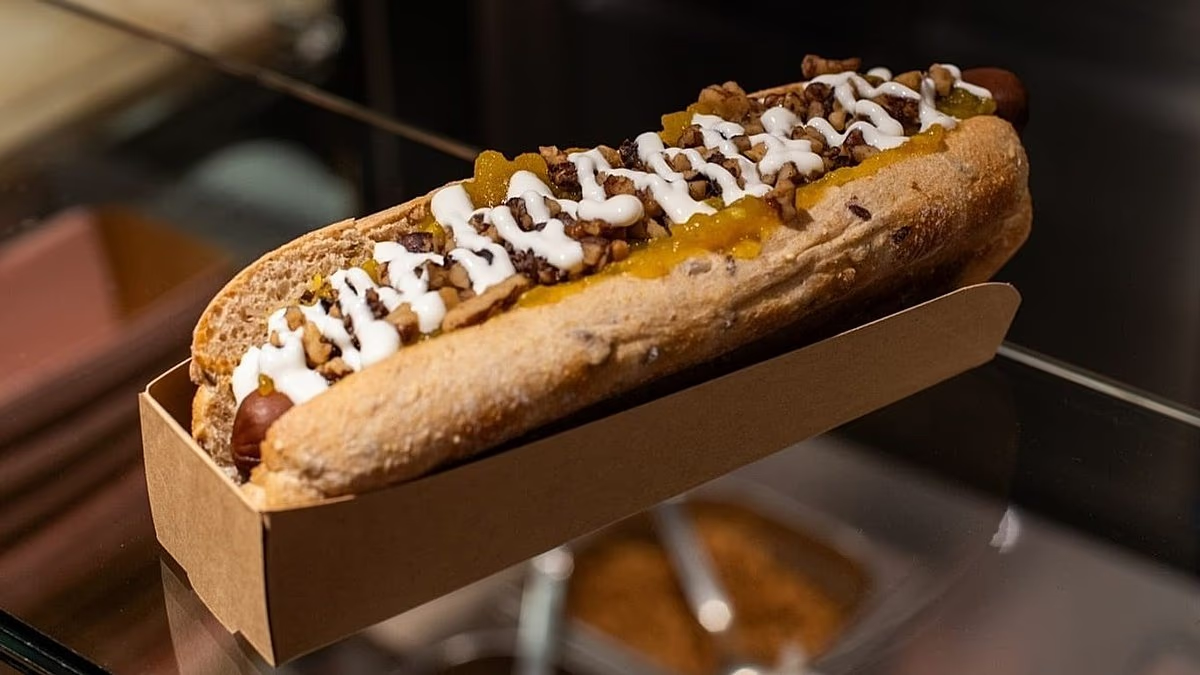
Airport dining has improved considerably over the past decade. Terminals that once offered a choice between a soggy sandwich and a lukewarm hot dog now house full-service restaurants, and some airports have attracted Michelin-recognized chefs to their concourses. The range of food available between security and the gate has expanded enough that most travelers can find something genuinely worth eating before a flight.
But the improvement in options does not eliminate the difference between what tastes appealing in an airport and what serves a traveler well at 35,000 feet. The combination of altitude, pressurized cabin air, limited mobility, and the physiological effects of flying creates conditions in which certain foods cause problems that ground-level eating does not predict. A salad that poses no meaningful risk at a restaurant table becomes a different proposition at an airport salad bar with high turnover and variable food-handling standards. A large coffee that starts a productive morning on the ground can guarantee a miserable few hours in a middle seat.
The seven items below appear in Travel + Leisure and are drawn from guidance from the Centers for Disease Control and Prevention, the Federal Aviation Administration, the Mayo Clinic, and nutrition experts. Each represents a category that most travelers instinctively consider a reasonable airport choice, and each offers a specific reason to reconsider before boarding.