Read The Diplomat, Know The Asia-Pacific
Takaichi’s overwhelming victory during the February election suggests China’s coercive approach might be counterproductive. But Beijing’s tactics are not aimed only at the bilateral relationship.
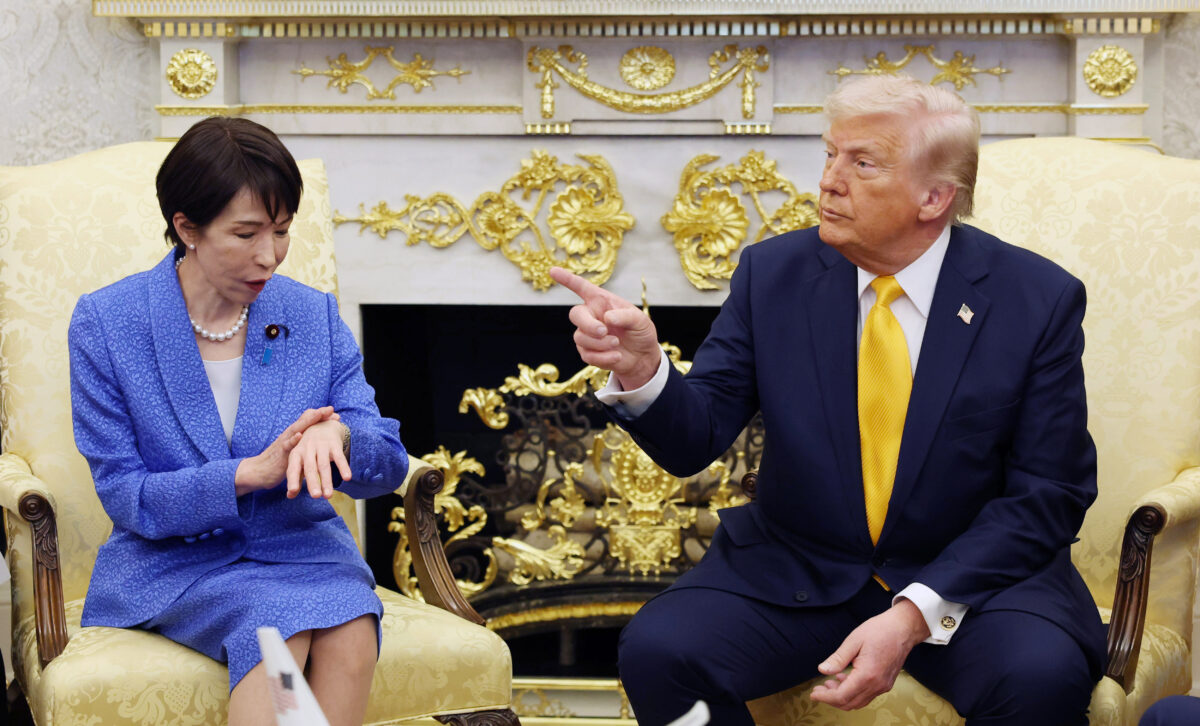
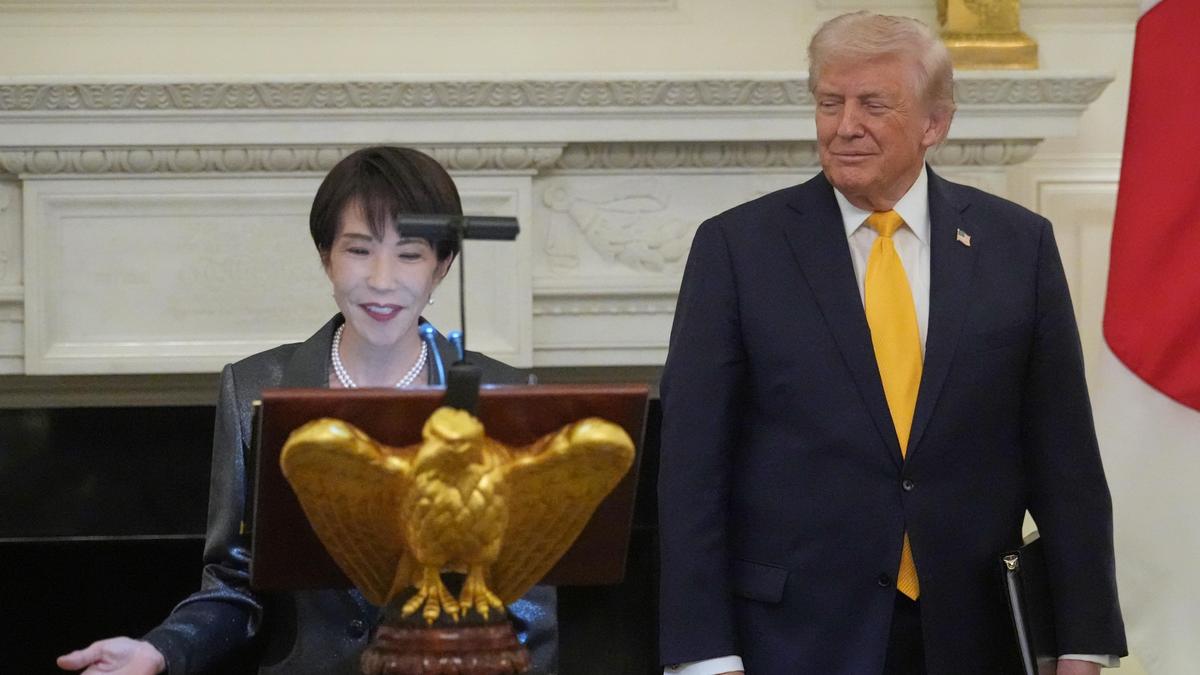
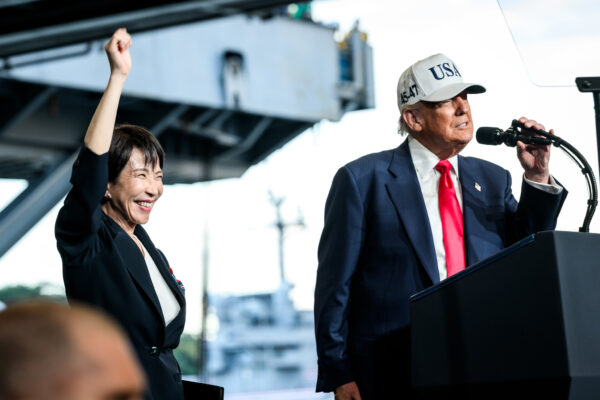
U.S. President Donald Trump welcomes Japanese Prime Minister Takaichi Sanae to deliver remarks to Yokosuka Naval troops aboard the USS George Washington at Yokosuka Naval Base, Japan on Oct. 28, 2025.
On April 17, 1895, the Qing dynasty signed the Treaty of Shimonoseki (also known as the Treaty of Maguan) with Japan, ending the First Sino-Japanese War and dethroning the “Middle Kingdom.” More than a century later, on the same date, a Japanese Maritime Self-Defense Force (MSDF) vessel passed through the Taiwan Strait. On Weibo, a Chinese version of Twitter, a hashtag “China is no longer the China of 131 years ago” accused Japan of provocative action, attracting over 14 million views.
The current Sino-Japanese tension began long before the April 17 MSDF transit, however. It started with Japanese Prime Minister Takaichi Sanae’s remarks in early November 2025 that a Chinese attack on Taiwan could become “a situation threatening Japan’s survival.”