(Image credit: Shutterstock)
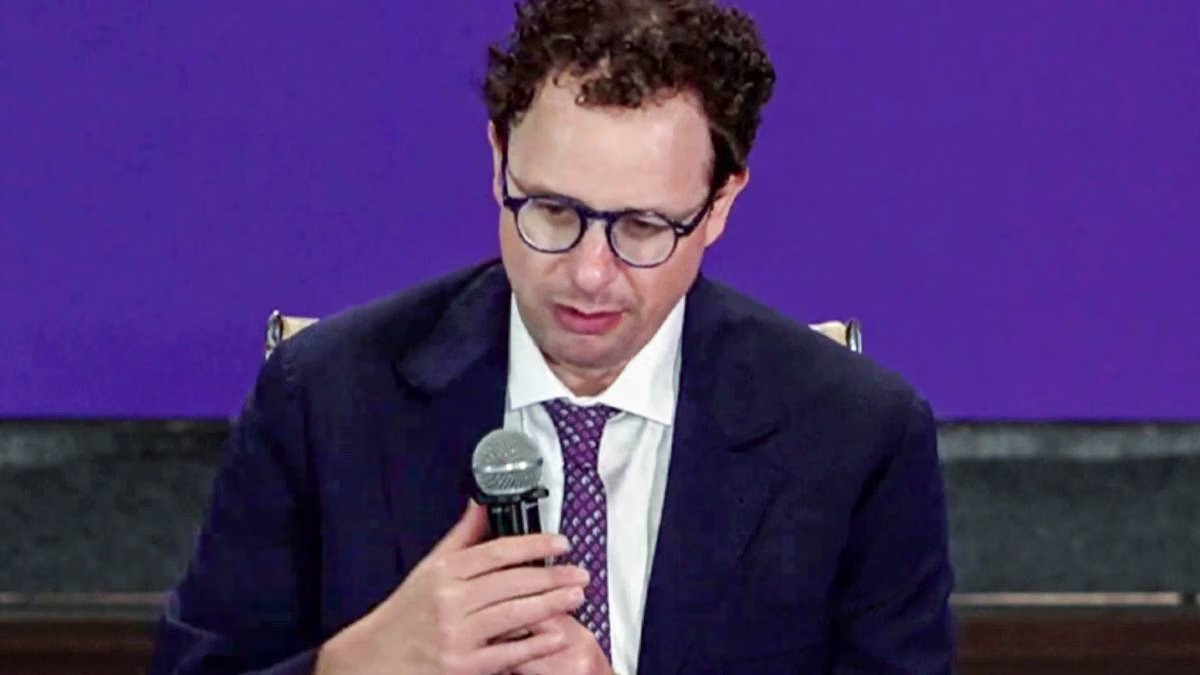
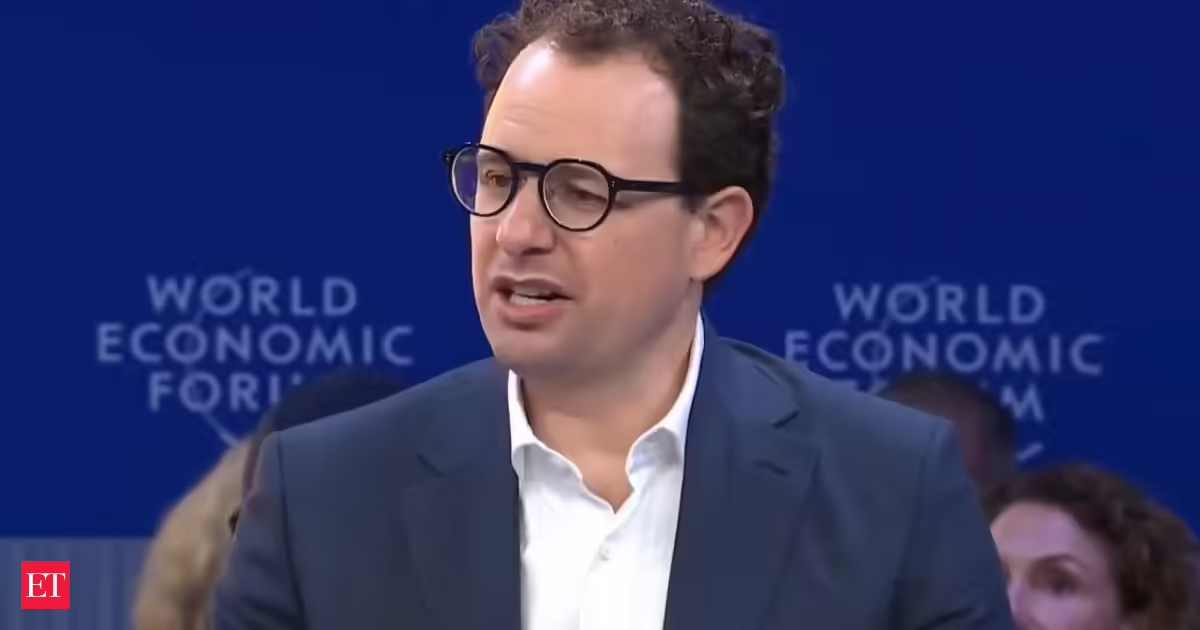
AI skepticism is hitting a boiling point. You can't scroll through social media without seeing college grads booing pro-AI commencement speeches or local communities fighting the expansion of massive AI data centers.But while tech CEOs spend a lot of time hyping up the future, they aren't as oblivious to the backlash as you might think. Yes, people like Anthropic CEO Dario Amodei have a massive financial stake in making sure AI integrates into our workplaces and daily lives. But Amodei, alongside several other industry titans, is actually acutely aware of the tech's dark side.In fact, some of their recent commentary might surprise even the biggest AI cynics. It proves that the people building tomorrow's tech aren't just faceless corporations; they actually recognize the dangerous reality of the tools they are unleashing.AI leaders like Dario Amodei know exactly how dangerous the tech can be
(Image credit: Credit: Tom’s Guide/David Paul Morris/Kyle Grillot/Bloomberg/Chance Yeh/Getty)In his essay "The Adolescence of Technology," Amodei argues that while pulling the emergency brake on AI without concrete proof is a mistake, we still need measured, serious discussions about what's coming.“It is easy to say, ‘No action is too extreme when the fate of humanity is at stake!,’ but in practice this attitude simply leads to backlash,” Amodei wrote. “To be clear, I think there’s a decent chance we eventually reach a point where much more significant action is warranted, but that will depend on stronger evidence of imminent, concrete danger than we have today..."But that danger might be closer than we think. In the same essay, Amodei admitted that our current infrastructure isn’t ready for the sheer scale of what's being built. “Humanity is about to be handed almost unimaginable power," he warned, "and it is deeply unclear whether our social, political, and technological systems possess the maturity to wield it.”We’re already seeing the cracks in that maturity. The internet is flooded with AI-generated deepfakes designed to scam everyday people, while corporate reliance on unproven AI systems has triggered massive operational breakdowns.Get instant access to breaking news, the hottest reviews, great deals and helpful tips.And the warnings are getting darker. In a joint warning to the U.S. Congress, OpenAI CEO Sam Altman flagged a terrifying new frontier: biological threats. "AI systems are improving rapidly," Altman stated. "...There is a real possibility that the knowledge barriers which have historically prevented bad actors from obtaining biological weapons will meaningfully erode.”Even Salesforce CEO Marc Benioff has broken ranks with Silicon Valley to demand immediate AI regulation, pointing out how AI chatbots have already been linked to tragic real-world consequences, including teenage suicide.“Tech companies... hate regulation,” Benioff said. “They hate it, except for one. They love Section 230, which basically says they’re not responsible. So if this large language model coaches this child into suicide, they’re not responsible... That’s probably something that needs to get reshaped, shifted, changed.”Bottom lineThankfully, efforts are being made to properly regulate AI.California’s Transparency in Frontier AI Act (SB 53) has been put into action as a law that requires AI developers to be more transparent about how they’ve created their AI’s framework, makes it easier for developers and citizens to report safety errors and protects whistleblowers who disclose crucial information about health and safety risks posed by AI.Plus, New York City Local Law 144 of 2021 “prohibits employers and employment agencies from using an automated employment decision tool unless the tool has been subject to a bias audit within one year of the use of the tool.”With some much-needed pushback against AI’s involvement in the matters of their continued development and employment practices, it’s reassuring to know that safety measures are becoming commonplace and CEOs are advocating for those sorts of digital guardrails.