AFP, LAGOS
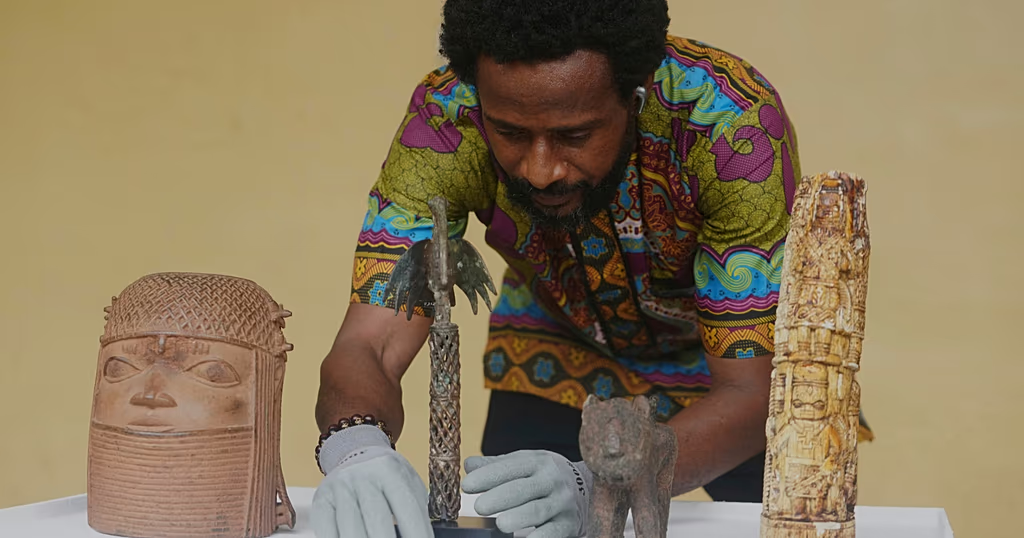
Gazing at two large engraved 16th-century elephant tusks on display at the Nigerian National Museum in Lagos, a guide surprised visitors by telling them: “You can touch them gently.”One of the three galleries at the museum in Nigeria’s cultural and entertainment hub has been remodeled to allow visitors to interact with some artifacts, reversing the typical ban on touching exhibits, as well as take unrestricted photographs in an effort to engage younger audiences, curator Nkechi Adedeji said.As the group felt the texture of the elephant tusks to the tune of Afrobeats softly playing on overhead speakers, a young photographer was busy snapping away.
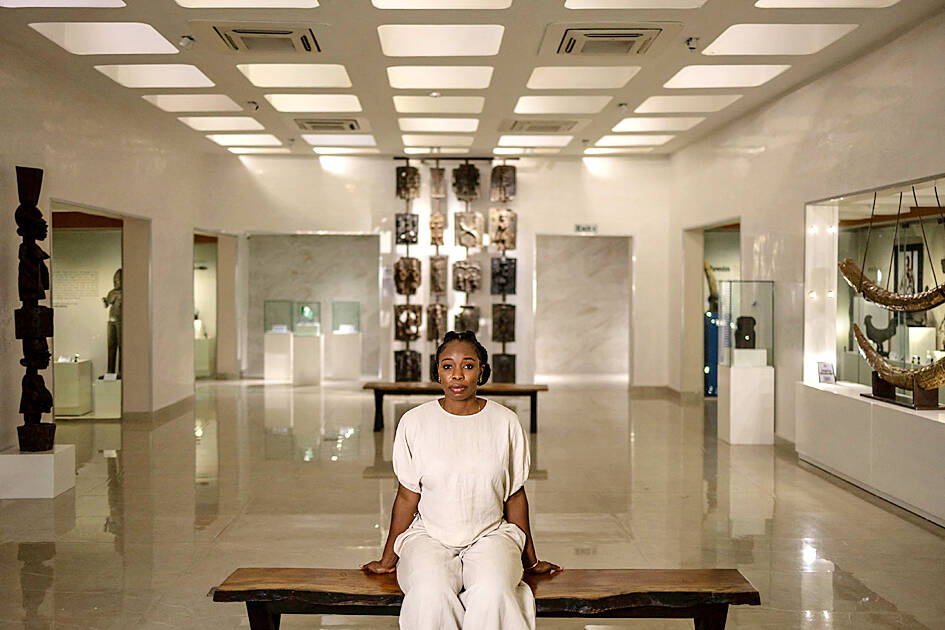
Tinuke Odunfa, interior designer of the Nigerian National Museum in Lagos, poses for a photograph inside the museum on April 23.
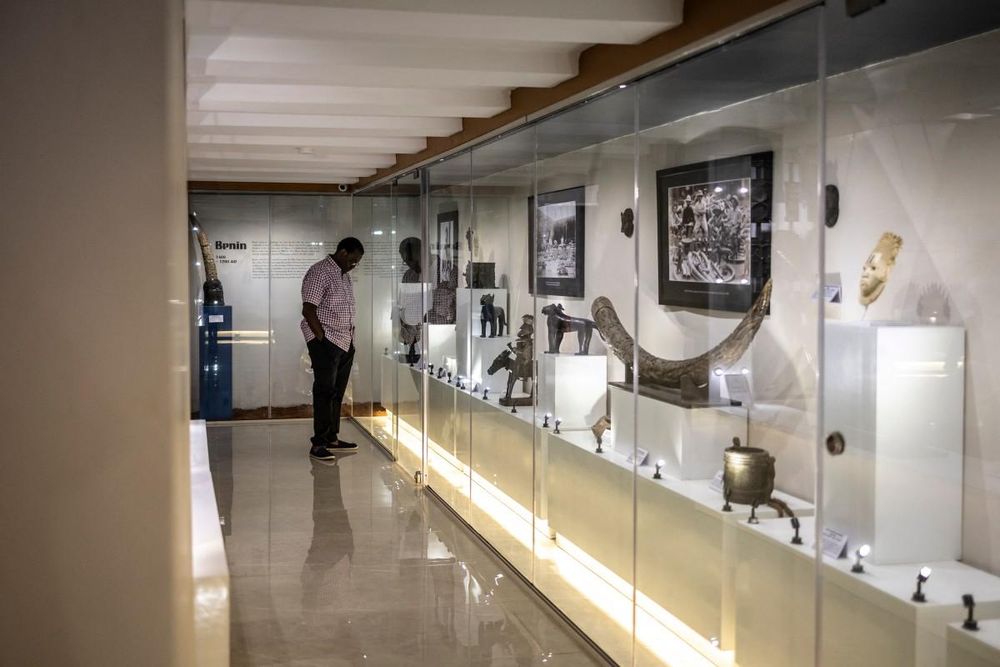
Tinuke Odunfa, the interior designer of the gallery, said the plan was to modernize the space and present Nigerian history in an “intentional” and “immersive” environment.“Everything was intentional in terms of how the space should be experienced, in terms of the colors, how the space leads you,” Odunfa said.
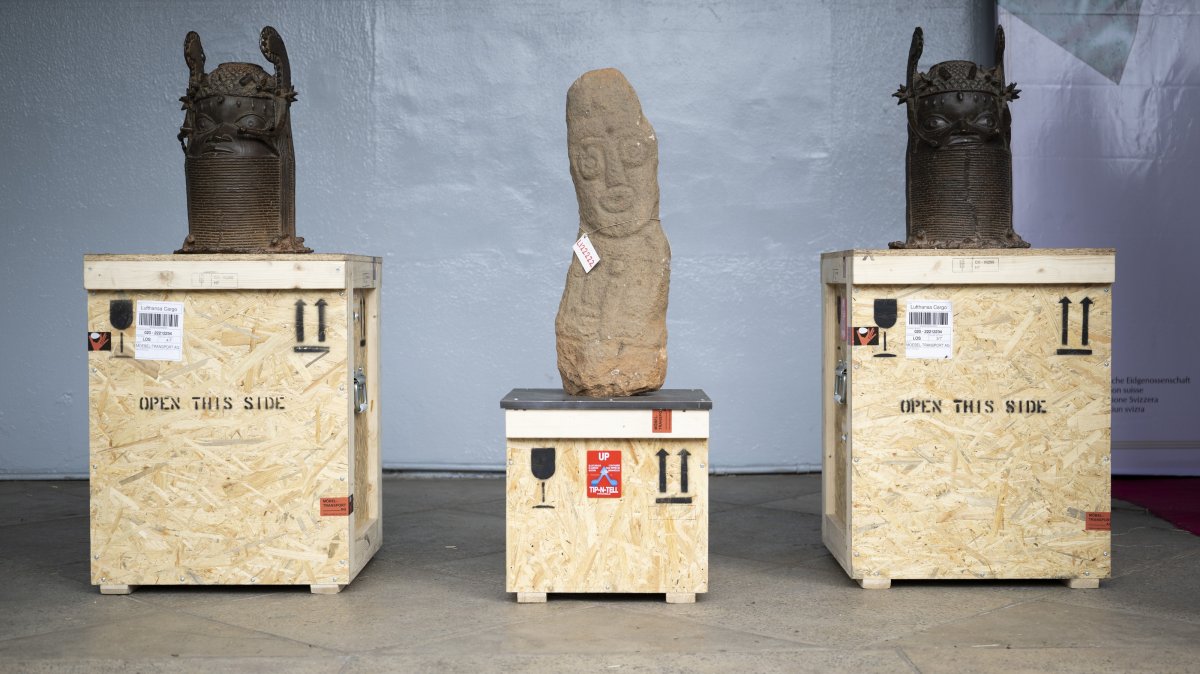
The gallery holds one of the country’s most extensive collections, including major archeological and ethnographic artifacts such as 5th-century terracotta by indigenous Nok people. Its white walls are lined with artifacts encased in glass, arranged chronologically from the oldest to the newest, each accompanied by brief notes. A few other items of the permanent exhibition, “Echoes of the Past,” especially those made of wood and metal, are laid out in such a way that visitors can touch and “feel them,” museum head of exhibition Olusegun Adeleye said.Low ambient lighting casts a soft glow across the gallery, giving the space a quiet, reflective atmosphere.Since the renovated gallery opened to the public in April, it has been drawing more visitors than before, Adedeji said. Its Instagram-ready spaces are drawing more schoolchildren and young adults, with pictures and videos increasingly shared online, making it a popular destination among “content creators.”“They come here, do content and before you know it, it is all over the place,” Adedeji said. “Youths are coming in droves now.”“I love the way the artifacts are displayed,” photographer Oyin Isioye said. “I learned a lot of things... where the artifacts are from, what they represent.”In one corner of the gallery, three empty cases contain a sheet of paper bearing the inscription “British museum, how far??” (meaning “what’s up?” in Nigerian Pidgin). The installation sends a message to foreign museums that Nigeria is ready to pursue the repatriation of its looted artifacts.Western museums, including those in the UK, the Netherlands and Germany, have over the past few years returned several hundred artifacts, but countless more remain in galleries in Europe and the US.“This renovation shows that we can protect and preserve our objects ourselves, we do not need any other country to do it for us,” Adedeji said.