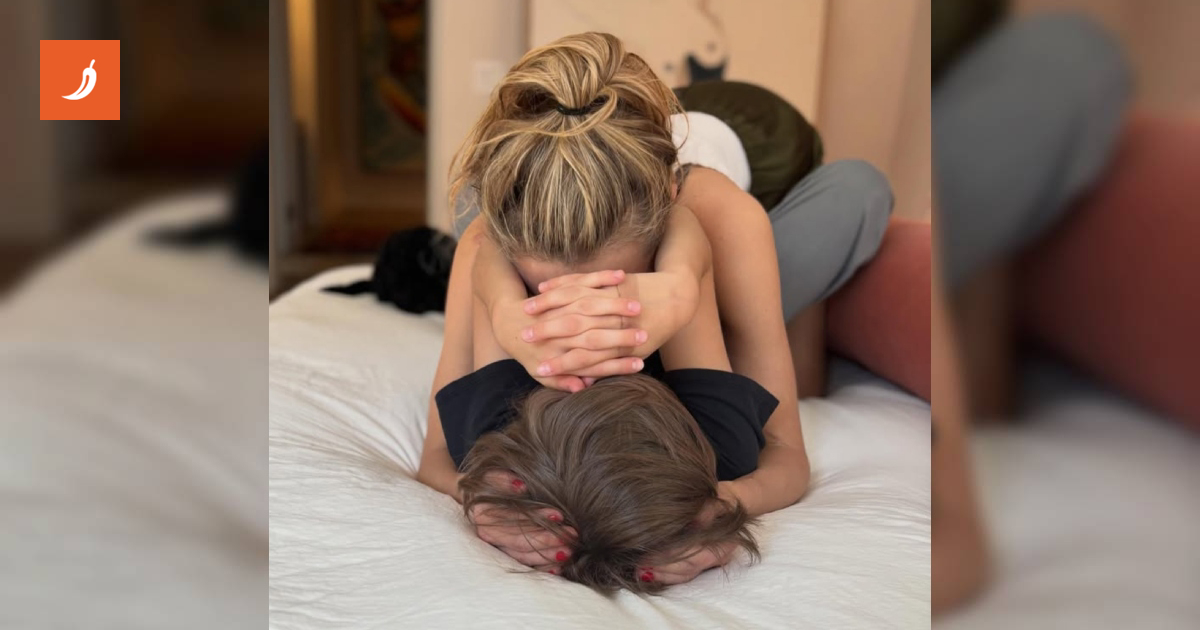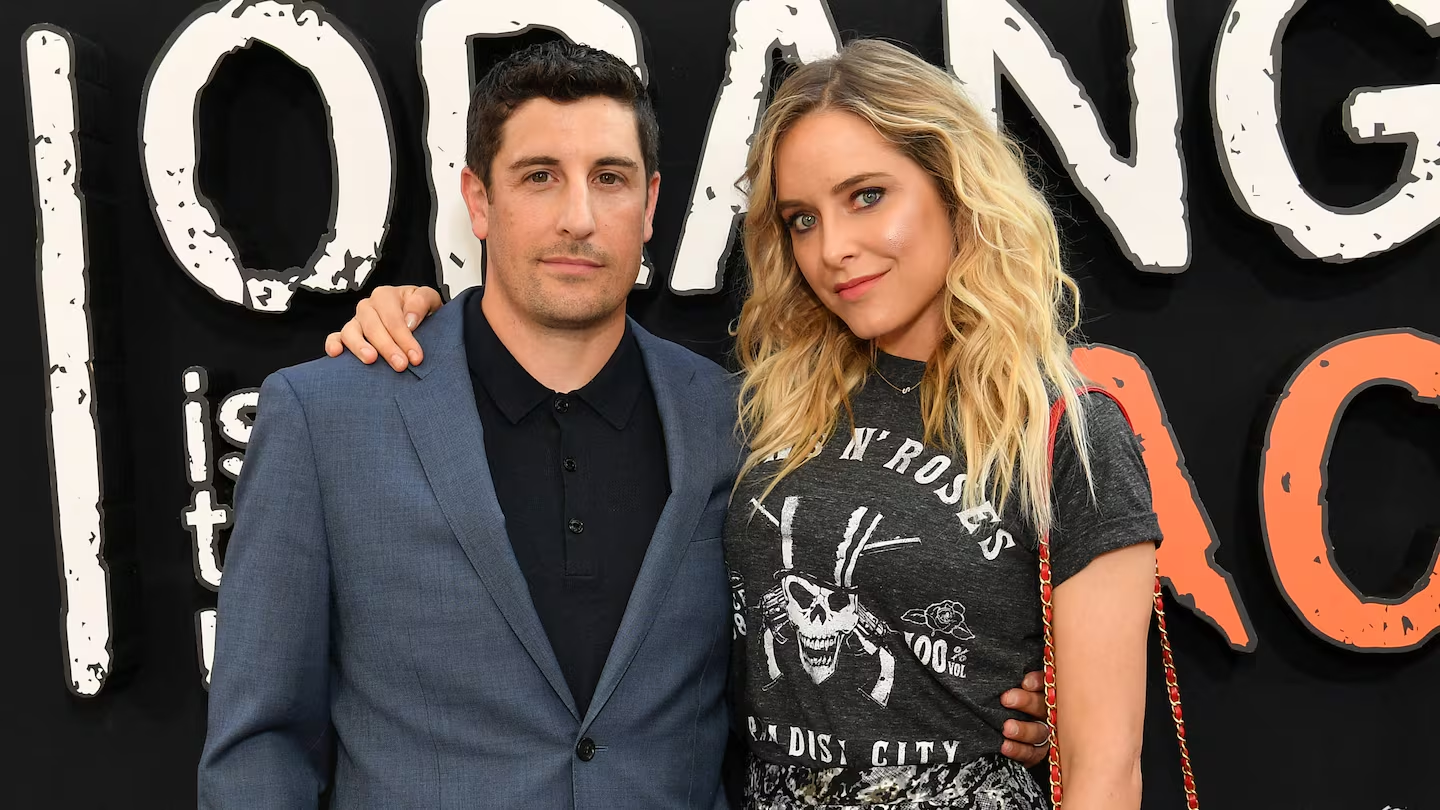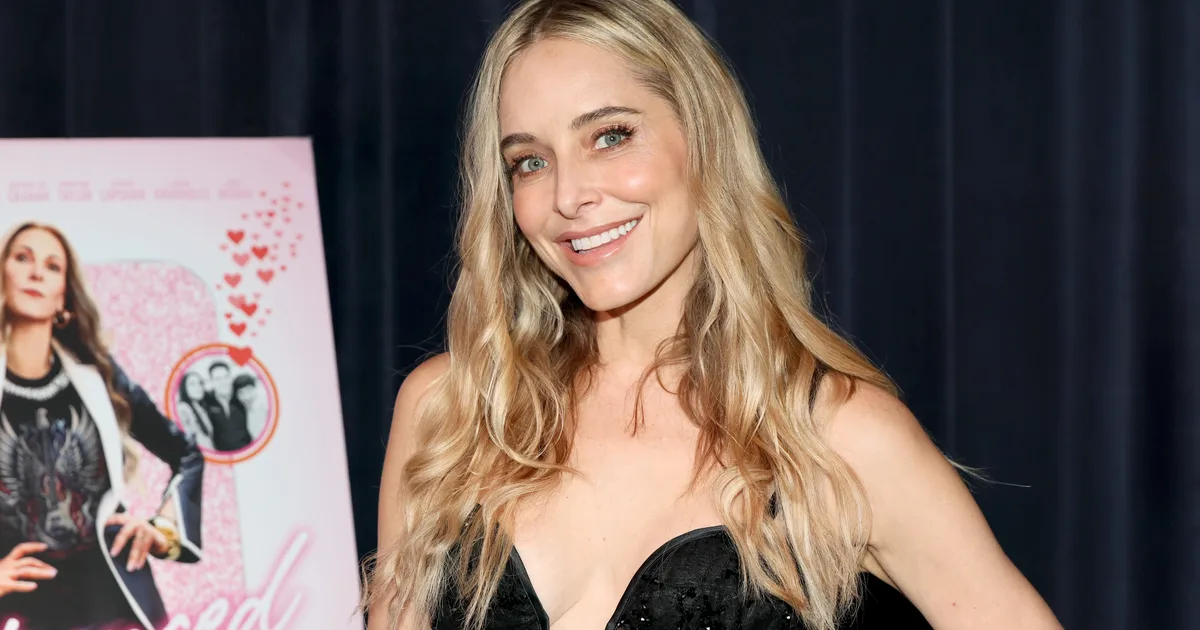
Actor Jenny Mollen has reignited the internet’s ongoing debate about “boy moms” and whether some need a few more boundaries.Mollen, who announced her separation from her husband of 18 years, “American Pie” actor Jason Biggs, last month, drew criticism after posting photos with her oldest son, Sid, that many commenters deemed overly affectionate. The photos, shared in a May 25 Instagram post, show Mollen, 47, and Sid, 12, sharing a hug on a bed, with their faces obscured. In one of the photos, Mollen lies on top of her son while he cradles her face.“Your eldest will be the most toxic [boyfriend] you ever have,” Mollen, who has a younger son, Lazlo, 8, with Biggs, captioned the photos. (You can see the post here, though the original caption has since been deleted.)Most who commented on the post found it all a little off-putting: “Hugging your kids: Healthy and encouraged. Calling your child your boyfriend and posting photos of you lying between their legs on a bed: Not healthy or encouraged,” the top comment reads. “Your child is not your boyfriend. A boyfriend is a romantic partner.”“Our boys are our sons, not our companions,” one mom said. “LEAVE THEM SPACE TO BE.”“Would people be okay if this were a father and daughter???” another remarked. “It’s weird.”John Nacion via Getty ImagesJenny Mollen, pictured last year with her ex Jason Biggs, may be bearing the brunt of the current wave of criticism, but she's hardly the first "boy mom" to post questionable content. Others dug up a Substack essay Mollen wrote about her anxiety over her sons eventually leaving the nest and getting into relationships of their own. At one point in the piece, Mollen describes her boys as “the most emotionally high-maintenance men I’ve ever dated” and describes her sons’ hypothetical future partners as “some crazy bitch who will weaponize my flaws in therapy.” When her eldest started texting a peer, a 12-year-old girl, Mollen said she could already tell that the girl was “my brand of toxic.” “I complained to Jason that I wanted to intervene before he got hurt and that she wasn’t even hotter than me,” she wrote.The Problem With ‘Boy Mom’ CultureMollen may be bearing the brunt of the current wave of criticism, but she’s hardly the first “boy mom” to post content so questionable it verges on parody. On TikTok, there’s no shortage of videos to convince you that the “boy mom” to toxic mother-in-law pipeline is very much a thing: Women filming themselves crying because their sons are “going to get married and move away” someday. Women calling their babies their “lil boyfriend” or “forever boyfriend.” Women who are weirdly confrontational toward their sons’ hypothetical future wives.“To the girl who marries any of my sons, I just want you to know I will always be his first love. I will always come first,” one woman says in a clip. “Mother’s Day is mine. He needs to celebrate with me first. You can be celebrated the day before or the day after.”It’s cringey posts like these that make some women with sons back away from identifying as “boy moms” and simply call themselves a “mom to boys.”“I actually really despise the construct of boy moms and girl dads. I think it’s lazy, among many other not-great qualities,” said Kate Auletta, the editor-in-chief of Scary Mommy and Romper.“Yes, I am the mom of two sons. Yes, I love them with my whole heart and would die protecting them,” added Auletta, who was also the former parenting editor at HuffPost. “What I don’t love is how the child’s sex and mom concept allows people to get away with saying some truly bonkers stuff under the guise of motherly love.”Galina Zhigalova via Getty ImagesThe job of parents is to raise kids to embrace the world and prepare them for their own independent, fulfilling lives — "not trap them in our unhealed issues," said Payal Desai, a content creator and mom of two boys.Abby Eckel, an online content creator and mother of two young boys, has previously spoken out about what she sees as the “emotionally incestuous” tendency among some boy moms to treat their sons like “pseudo-husbands.” She believes that putting so much emotional weight on boys ultimately does them ― and their future romantic partners ― a disservice.“It creates this idea that the world is expected to center their comfort, to evolve around their comfort, that women are meant to serve them, to, you know, make them the center of their world, while also saying, ‘no woman will essentially ever be good enough for my son,’” she told HuffPost.“I find it strange and very exploitative,” Eckel said, noting that such posts bring up issues around consent: Kids may not want their private lives exposed and picked over by random strangers online, but not know how to delicately tell their moms that. Like Eckel, content creator Payal Desai, a mother of two boys, says she feels bad for the sons of overly intense “boy moms.” Still, she suspects Mollen may have been intentionally stirring the pot, posting “ragebait” to generate outrage and attract attention to her Instagram page.“In the case that it isn’t, what we’re seeing is a mother who hasn’t separated her identity from her son, which is unfortunately pretty common,” Desai told HuffPost, adding that favoring your sons feels “rooted in patriarchy” by “giving the men in your life, no matter what form they come in, power and priority over your own sense of self.” “And the language she uses about dating her son, being jealous of girls he’s involved with, wanting his future wife to be motherless, places the burden of managing her emotions directly on him,” she said. The job of parents is to raise kids to embrace the world and prepare them for their own independent, fulfilling lives, “not trap them in our unhealed issues,” Desai said. Lucy Lambriex via Getty Images"In attachment theory, this is called enmeshment," Jennifer Chappell Marsh said of "boy mom" culture. "The boundary between a parent's emotional life and their children’s dissolves. The son stops being just her son and starts functioning as her person." Some Boy Moms Can Be ‘Enmeshed’ With Their SonsJennifer Chappell Marsh, a marriage and family therapist in San Diego, sympathized with Mollen when she saw the viral post.“She’s grieving, her marriage is ending, and she’s scared of losing her sons, too, but that fear is coming out sideways,” Marsh told HuffPost.When a primary attachment relationship ends, people look for connection elsewhere. For mothers of boys, that somewhere is often their sons. It’s not always conscious or done with any intent or hurt, but the emotional pull is real, the therapist said.“What Mollen wrote reflects that,” Marsh said. “It’s dark humor with an underlying truth of where she’s getting her emotional needs met.”There’s a few psychological concepts that help describe the kind of overly attached “boy moms” we see posting online. “In attachment theory, this is called enmeshment,” she said. “The boundary between a parent’s emotional life and their children’s dissolves. The son stops being just her son and starts functioning as her person.”Marsh said “emotional incest” might apply to some boy moms’ relationship with their kids, too: The term sounds icky, but it’s nothing physical. Instead, it describes a child being recruited to meet emotional needs that belong in an adult relationship.“When a son becomes his mother’s confidant, her comfort, her primary source of closeness, he’s functioning as a surrogate spouse,” she said. “The relationship looks loving from the outside. Inside it, the child is doing a job he was never supposed to do.”Children love their parents, but they’re wired to individuate, Marsh explained. Healthy development looks like boys (or girls) pulling away from both parents, forming their own identities and eventually building their own relationships. But inside an enmeshed dynamic, a son pulling away feels like a loss to his mom.Goodboy Picture Company via Getty Images"When a son becomes his mother’s confidant, her comfort, her primary source of closeness, he’s functioning as a surrogate spouse," therapist Jennifer Chappell Marsh said. "The relationship looks loving from the outside. Inside it, the child is doing a job he was never supposed to do." “Kids sense that ― they always do,” she said. “So instead of a son just growing up, he starts monitoring her emotional state. He learns to manage her feelings before his own. He becomes a very vigilant, good reader of the room.” As an adult, Marsh said, a “boy mom” son may seek out partners who need caretaking, because that’s what love looked like in his own experience. And he may feel guilt any time he chooses his partner over his mother.“Or he may wall off entirely because closeness has always come with obligation,” she said. “The enmeshment doesn’t stay in childhood. It becomes the template.” Watching your kids grow up and away from you is genuinely hard, and the feelings Mollen is writing about are real, Marsh said. (Losing a marriage at the same time makes it harder.)“A lot of mothers read that essay and recognized something of themselves in it,” she said. “The problem isn’t having those feelings. It’s using your child to hold them. Kids need to know that growing up won’t destroy their mother.”
Jenny Mollen Ignites 'Boy Mom' Firestorm With Deeply Weird Post About 12-Year-Old Son
The “boy mom” to toxic mother-in-law pipeline is alive and well.
1,545 words~7 min read