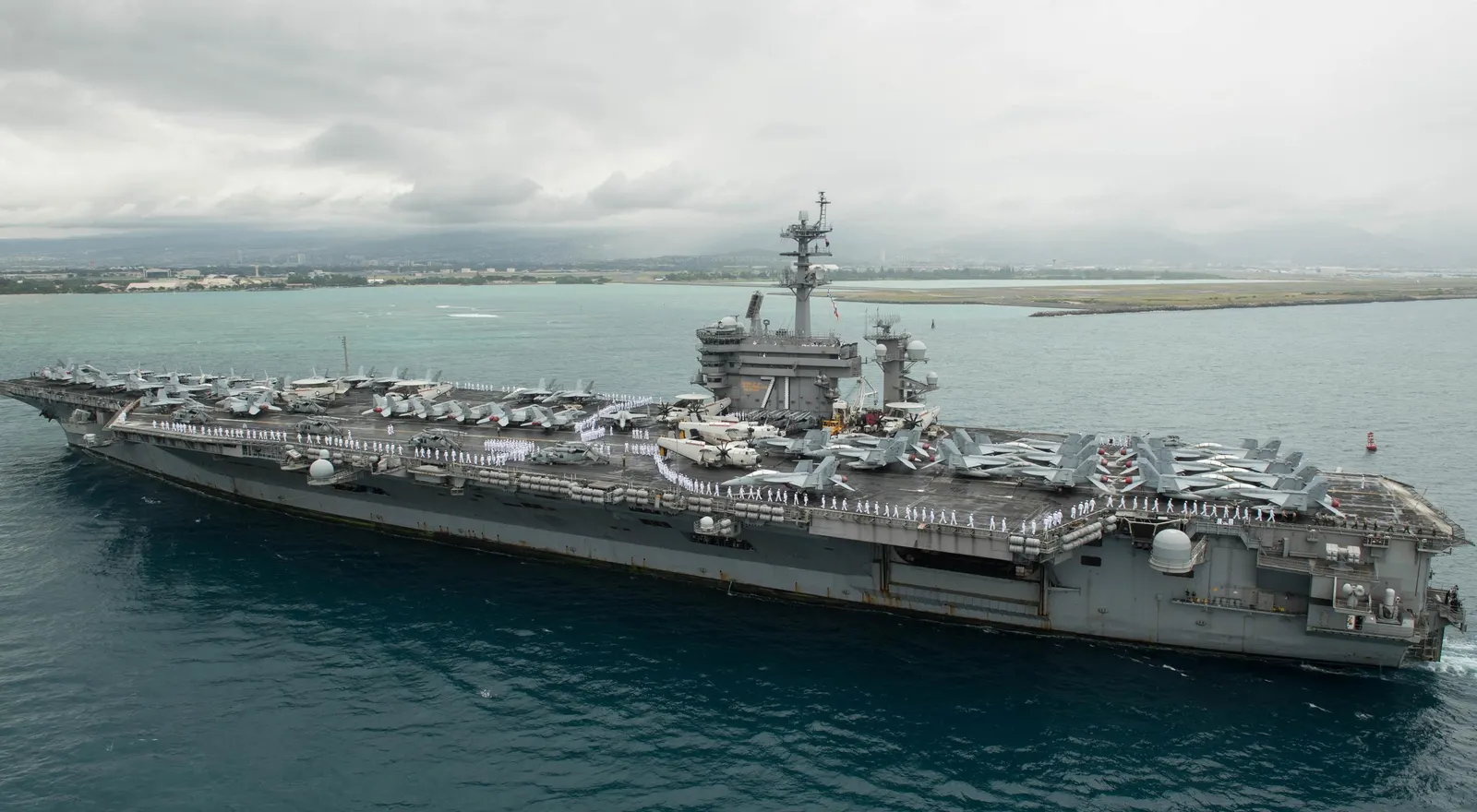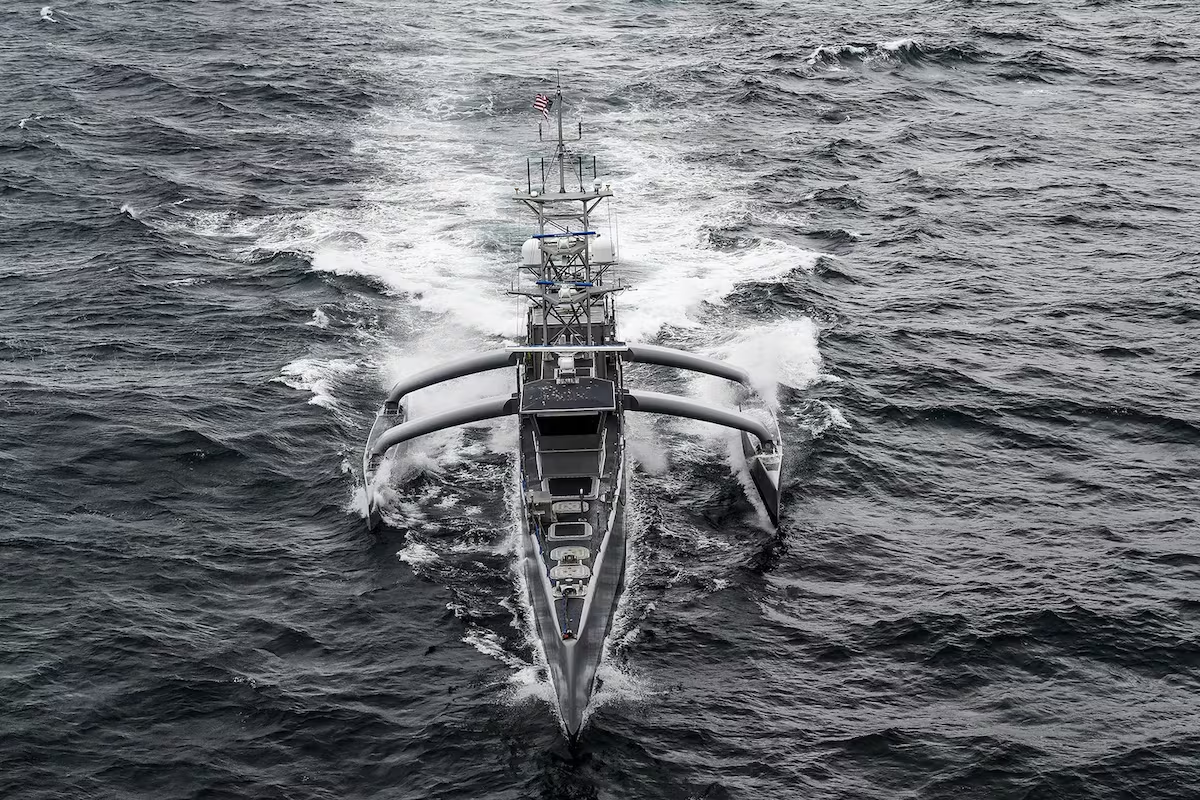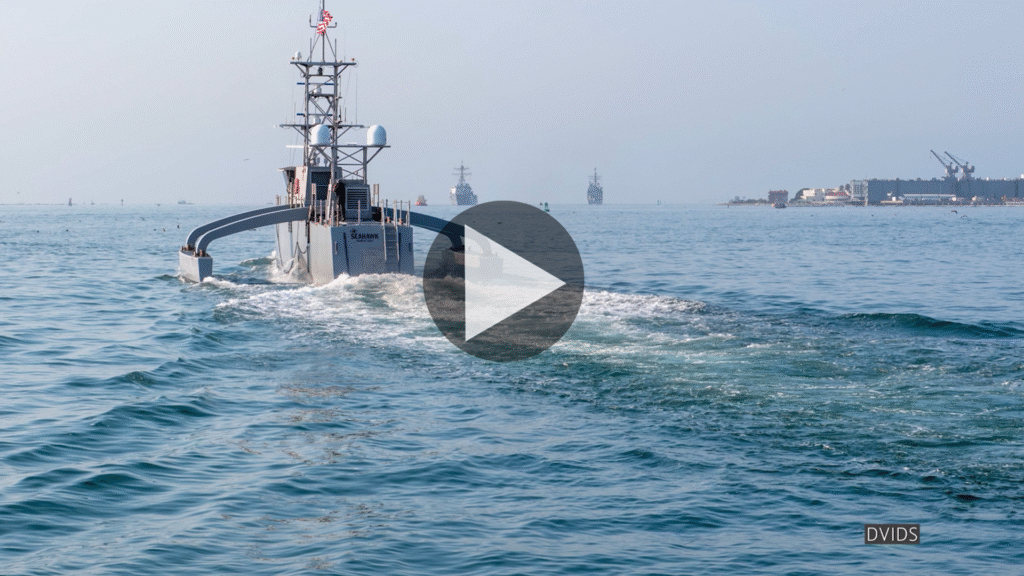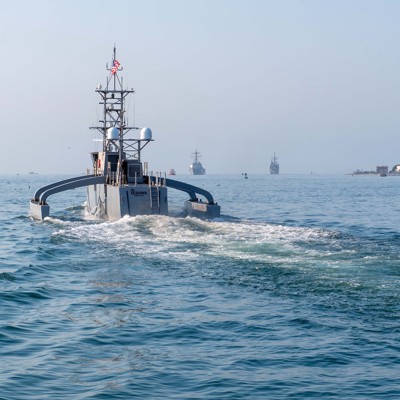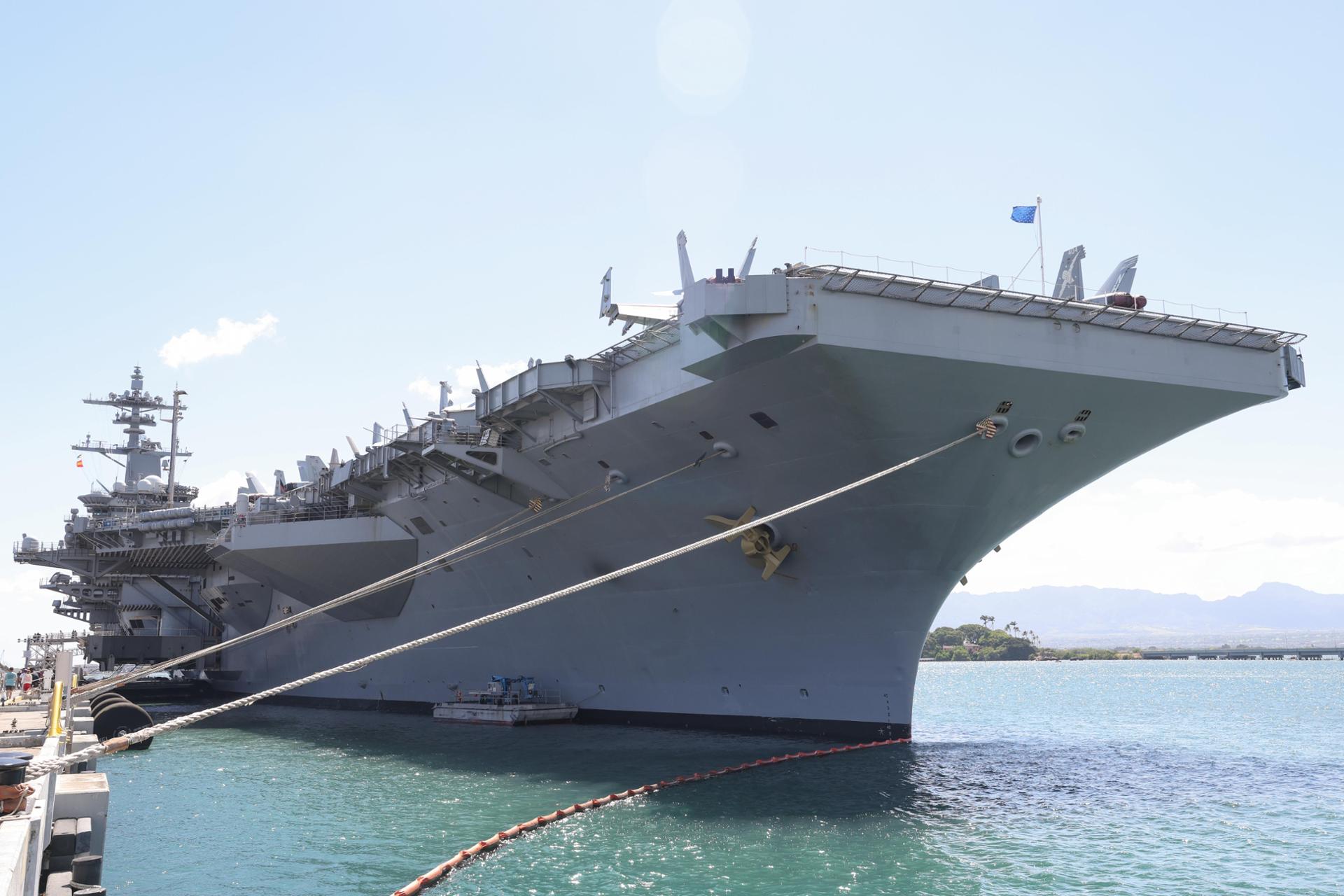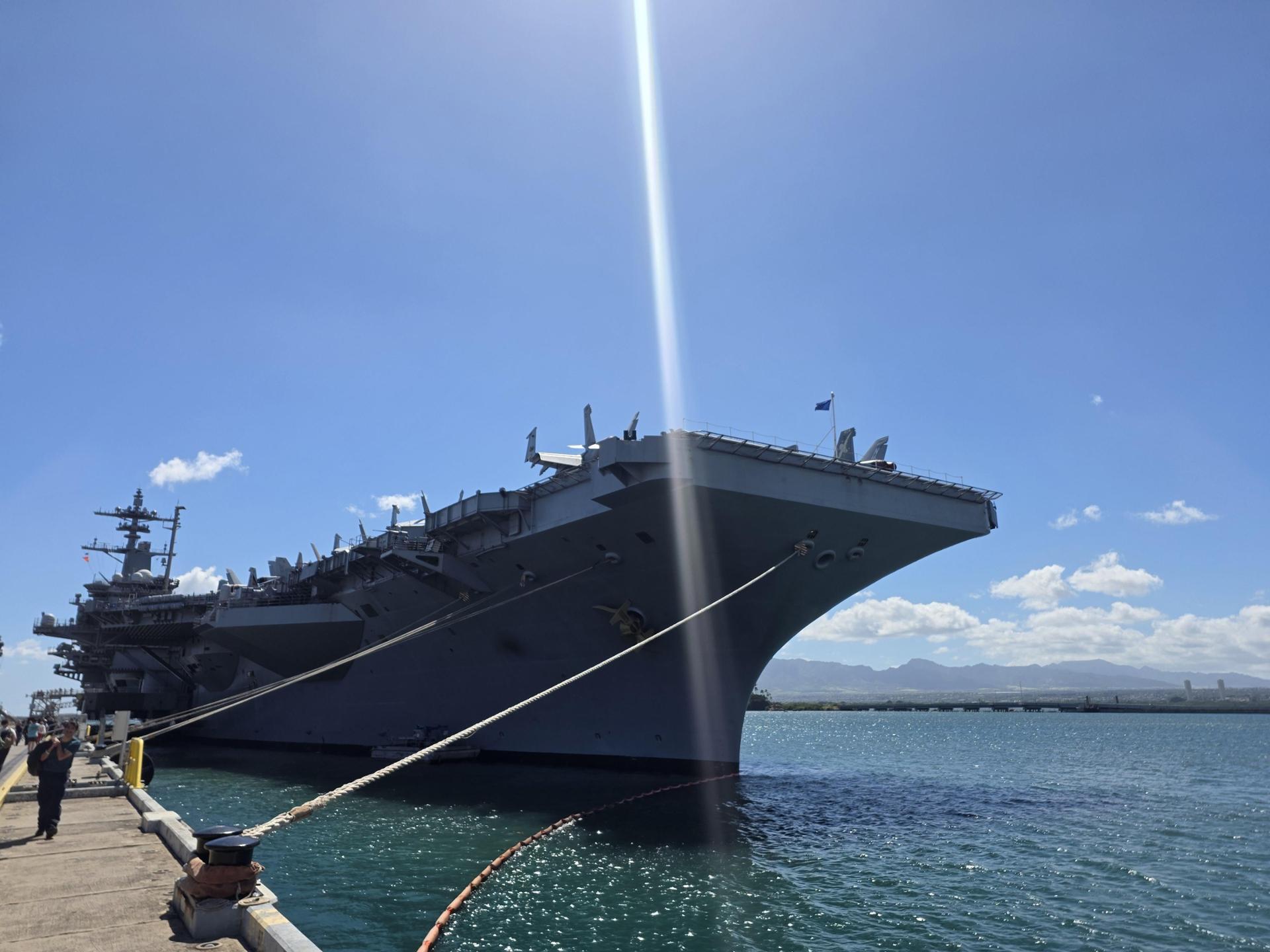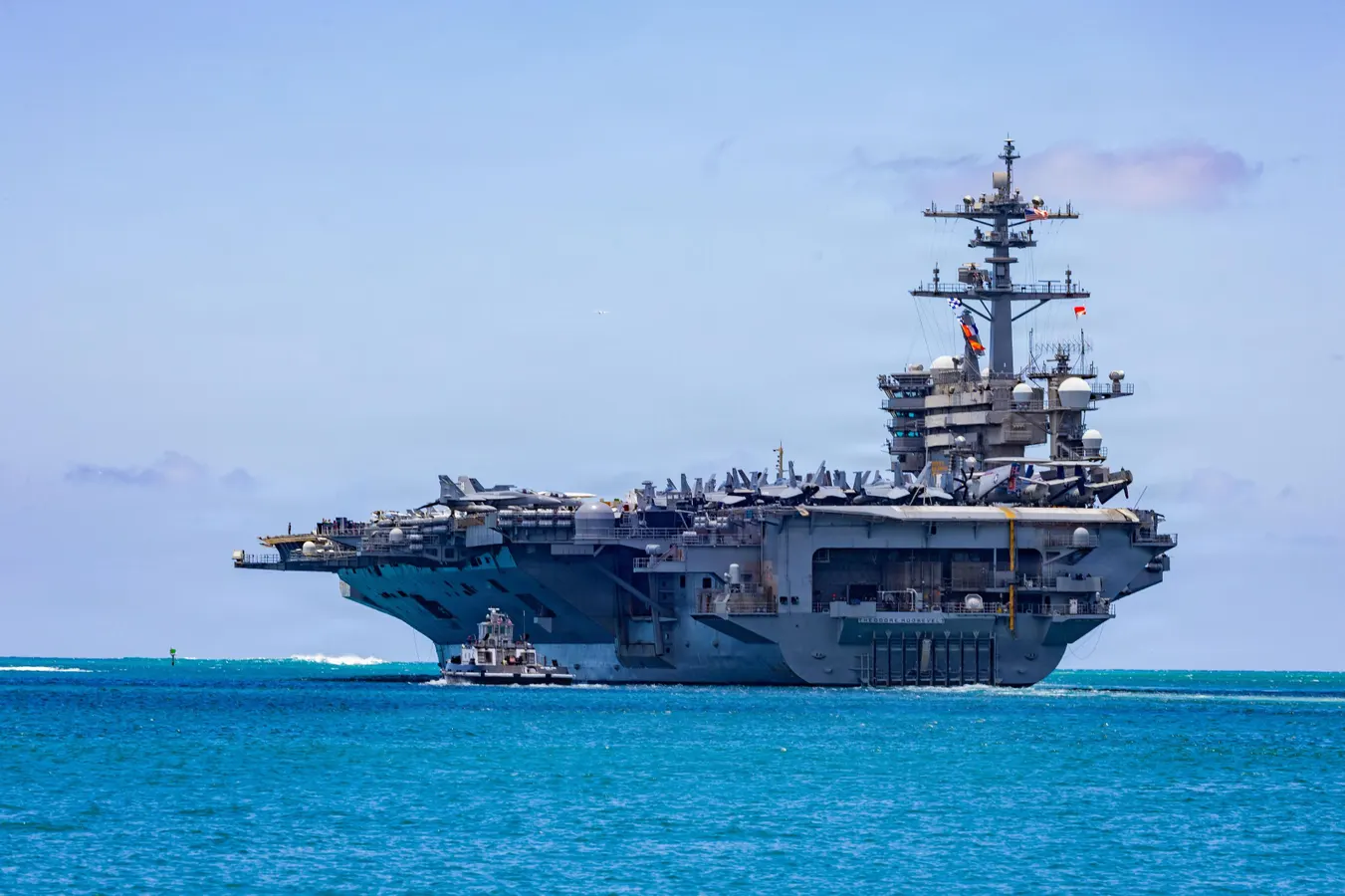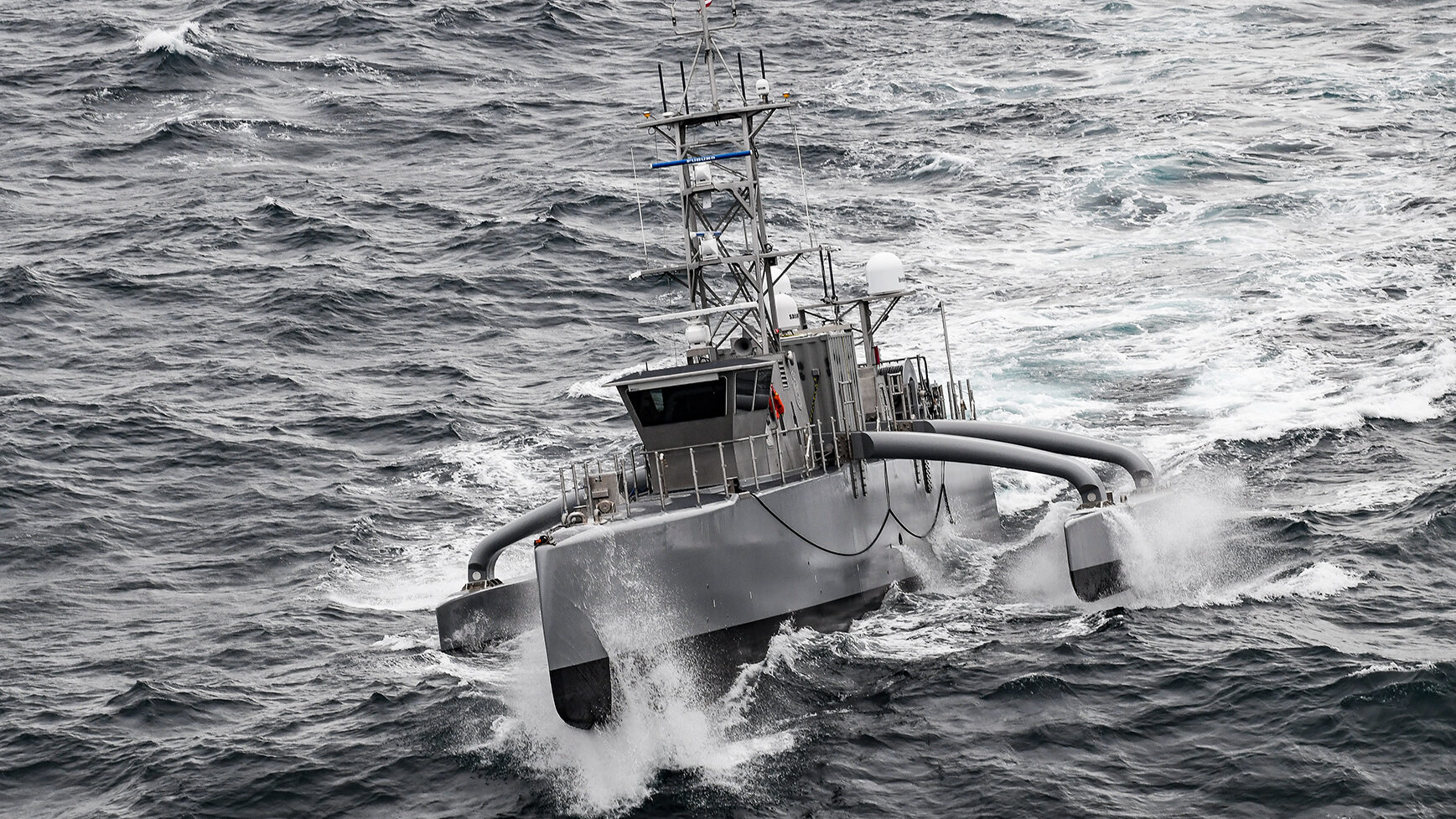
WASHINGTON — The aircraft carrier Theodore Roosevelt is gearing up for a deployment with a Seahawk medium unmanned surface vessel (MUSV) as part of its strike group for the first time — a key milestone signifying the transition of the unmanned system from an experimental to operational part of the fleet.
In fact, multiple experts told Breaking Defense that this deployment could lay the foundation for how the Navy develops its concept of operations (CONOPS) for integrating unmanned into the rest of the fleet, at a time when the Navy is still struggling to articulate how and when it will make autonomous vessels a core part of its arsenal.
“It is certainly a significant development,” said Bradley Martin, a retired Navy captain who is now a senior policy researcher at RAND. “Up to now, it’s all been a matter of testing, and the actual use in operational deployment is a major step. I think that what will happen as a result of this is, we won’t necessarily see immediately some big change in the way the fleet operates, but it will tell the fleet a lot about how to use this type of capability.”
The Seahawk vessel is one of Leidos’ unmanned vessels. An upgraded design of the firm’s Sea Hunter autonomous vessel, the Seahawk supports anti-submarine warfare and maritime domain awareness, and stems from a Defense Advanced Research Projects Agency initiative.