Published Jun 2, 2026, 12:40 PM EDT
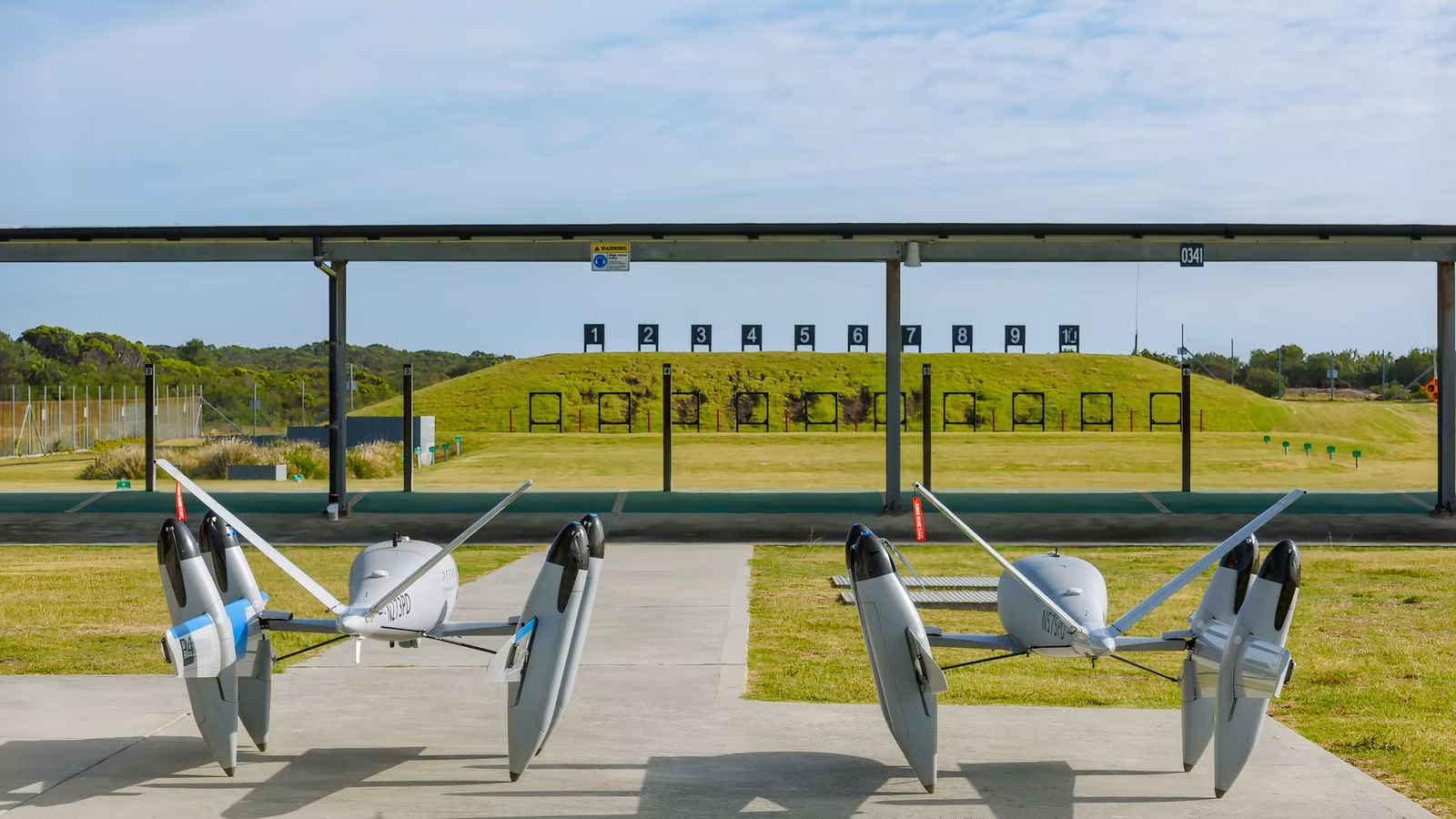
Jason Maddocks of PteroDynamics discusses how the company’s autonomous Transwing aircraft could reshape military logistics.
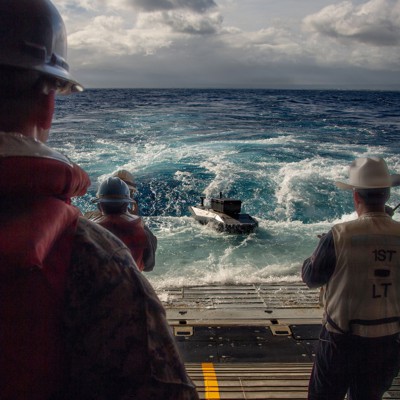
For years, the Pentagon has warned that the biggest challenge in future conflicts may not be firepower, but logistics. Supplying dispersed ships and remote forces across thousands of miles of ocean has become a growing concern for military planners, particularly as China expands its naval capabilities and long-range missile systems throughout the Indo-Pacific. Former Marine Corps Harrier pilot Jason Maddocks believes autonomous aircraft could become part of the solution.
From Harrier Cockpits to Autonomous Aircraft
Maddocks, now vice president of programs at PteroDynamics, has spent much of his career at the intersection of military aviation and emerging aerospace technology. A combat-decorated Marine pilot, Maddocks previously served as the lead test pilot for the AV-8B Harrier and held senior program management roles within both the AV-8B and V-22 program offices. After leaving active-duty military aviation, he moved into the commercial autonomous aviation world, serving as a systems engineering consultant at AVIAN, Inc. for Alphabet’s Loon project and later as head of operations engineering for Zipline. He earned aerospace engineering degrees from both the United States Naval Academy and Massachusetts Institute of Technology and graduated from the United States Air Force Test Pilot School. Earlier this month, PteroDynamics announced that the Royal Australian Navy selected the Transwing vertical takeoff and landing aircraft to support autonomous maritime logistics operations. The deal marks the company’s first international defense sale and expands years of collaboration with the U.S. Navy. The agreement comes as both the United States and Australia place increasing emphasis on distributed maritime operations across the Pacific. The U.S. Navy’s Distributed Maritime Operations doctrine focuses heavily on maintaining logistics and coordination across dispersed naval forces operating in contested environments. Defense analysts have repeatedly warned that sustaining forces across the Indo-Pacific would place enormous strain on traditional logistics systems. Studies from organizations including RAND and the Modern War Institute have highlighted how vulnerable conventional resupply methods could become during a high-end conflict in the region.