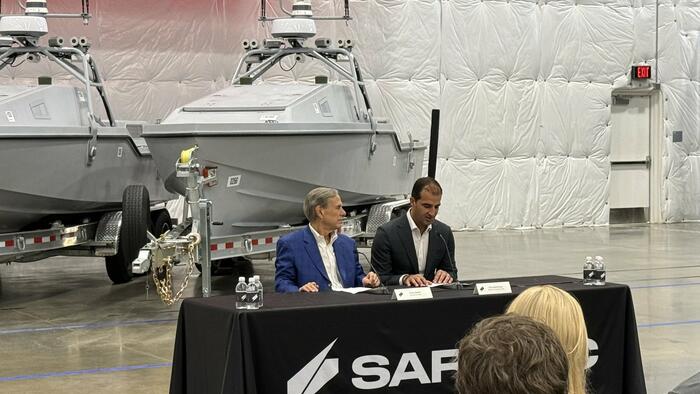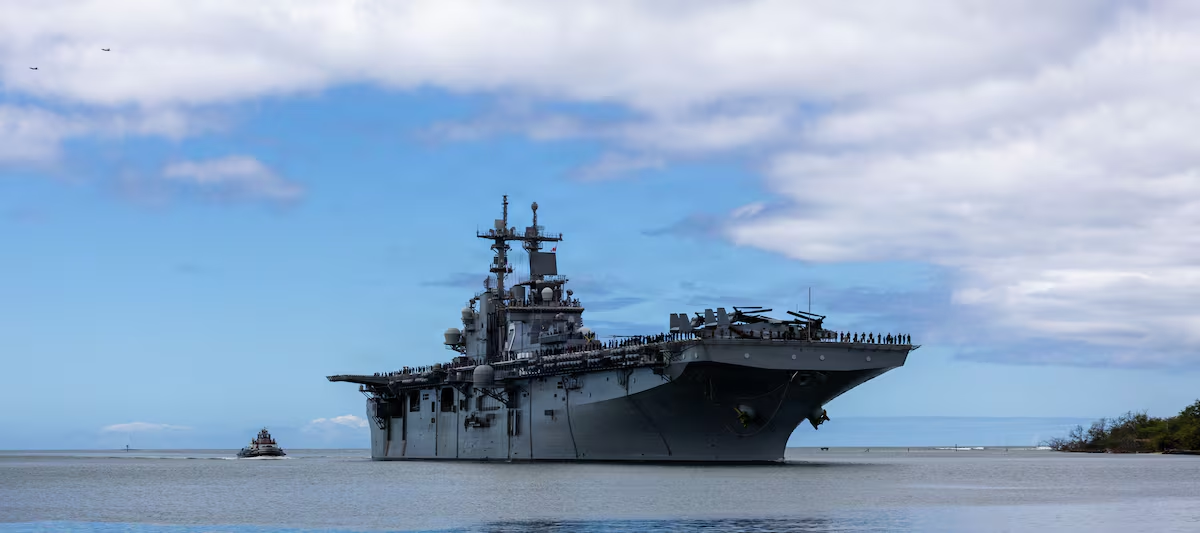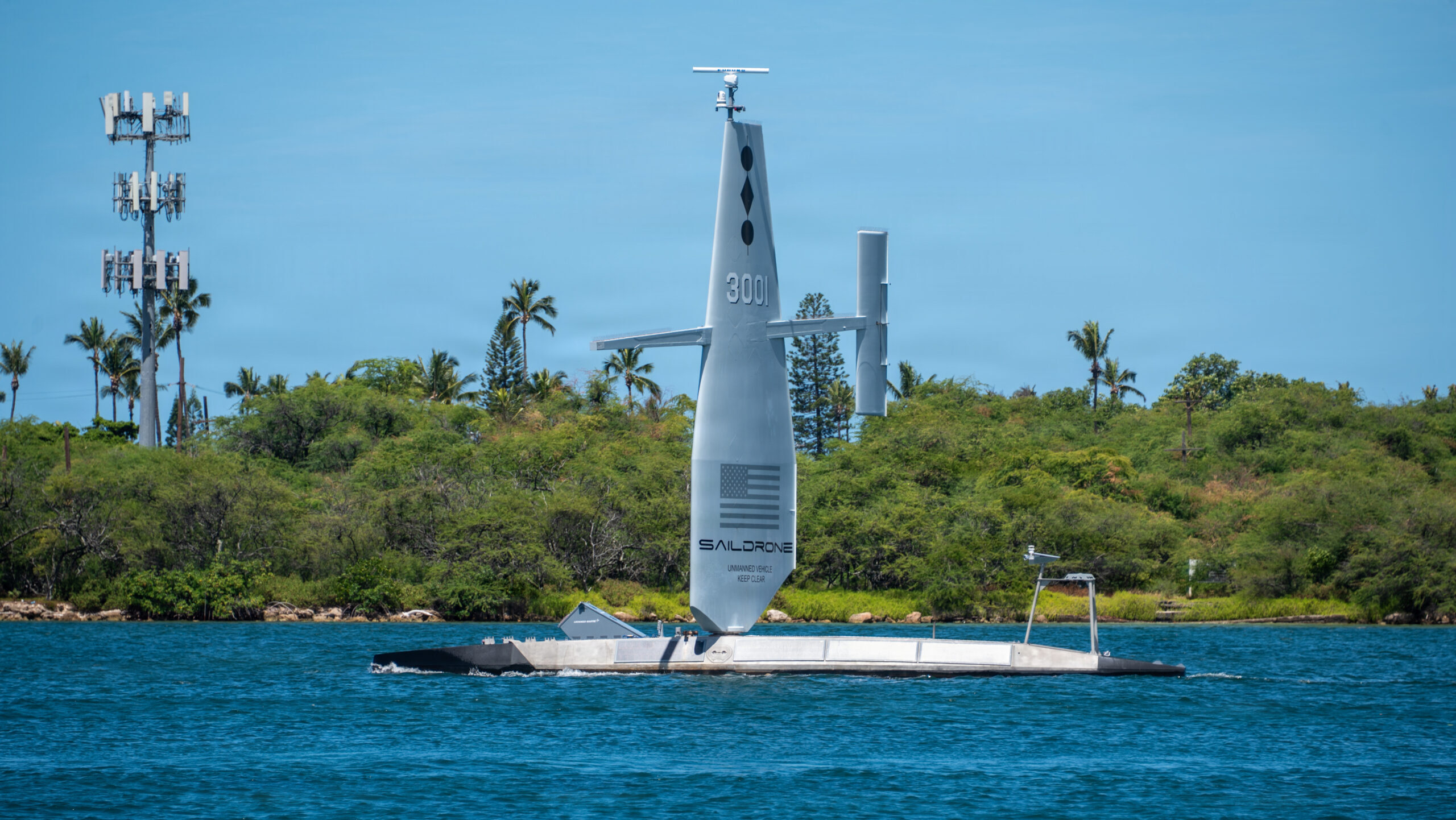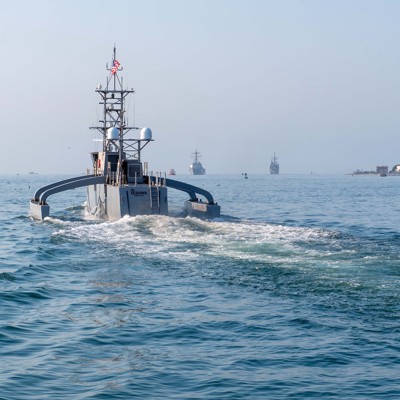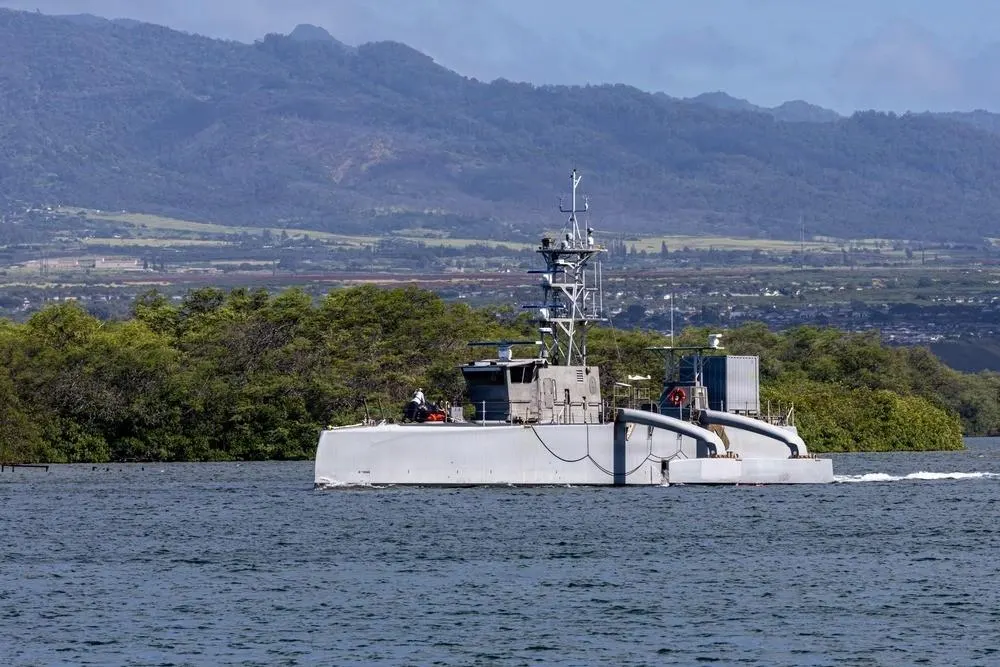
An autonomous Typhoon surface vessel delivers parts for the 3D printer aboard the USS Essex, during RIMPAC 2026, July 7, 2026.
U.S. Navy / Mass Communication Specialist Seaman Zachary Warr
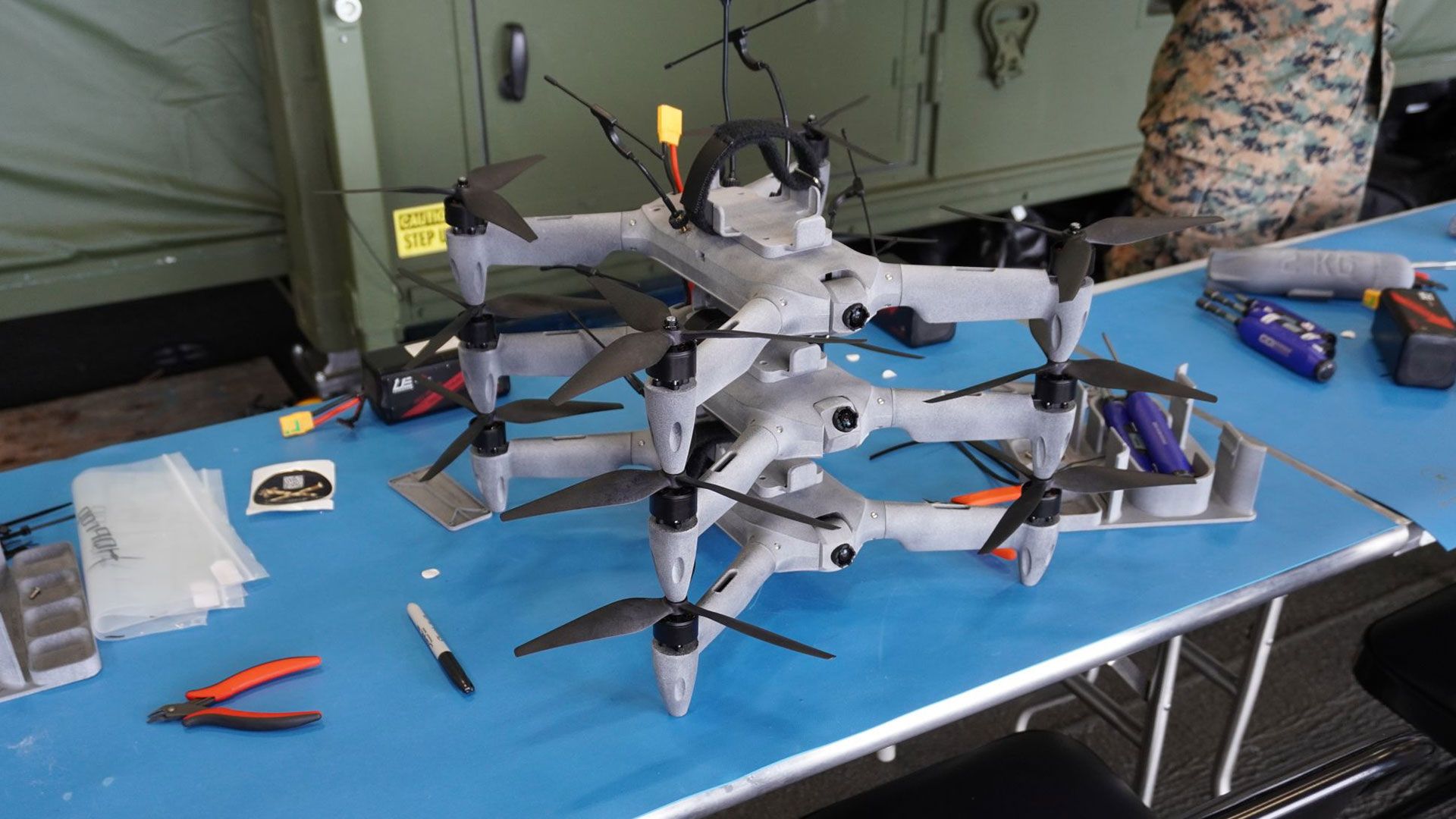
SCHOFIELD BARRACKS, Hawaii—Replacing broken parts and resupplying ships at sea is a challenge anywhere, but in the Pacific theater, that problem is magnified by thousands of miles of sea water. Now, as part of the sprawling Rim of the Pacific, the U.S. military is practicing how it might use tech like self-driving boats and 3D printers that can be thrown out of airplanes to overcome the region’s oft-lamented tyranny of distance.“We are piloting this program during RIMPAC to experiment with the idea of what theater-wide advanced manufacturing is going to look like for the joint force,” Rear Adm. Michael Mattis told reporters during a media day at the U.S. Pacific Command Joint Advanced Manufacturing Center, calling it the U.S. military’s largest advanced manufacturing demonstration so far.This year’s RIMPAC features “38 countries, 31 surface vessels, five submarines, over 30,000 personnel, almost 180 aircraft, and over 1,100 personnel that are going to be doing our landings,” Mattis said. “In that process, it’s an enormous experiment for us to figure out how to sustain the joint force.”Marine Lt. Col. Michael Radigan said the experiment—coordinated by Fleetwerx and the Naval Postgraduate School’s Consortium for Advanced Manufacturing Research and Education—is bringing together a “trifecta of advanced manufacturing, autonomous systems, and artificial intelligence… to deliver true parts that the joint force needs.”“What are we trying to do? Very simply, this is Uber for manufacturing delivered at the speed of Amazon, for the highest quality of parts, and we have the opportunity to do it in the most contested of environments. And that’s extremely challenging,” Radigan said.