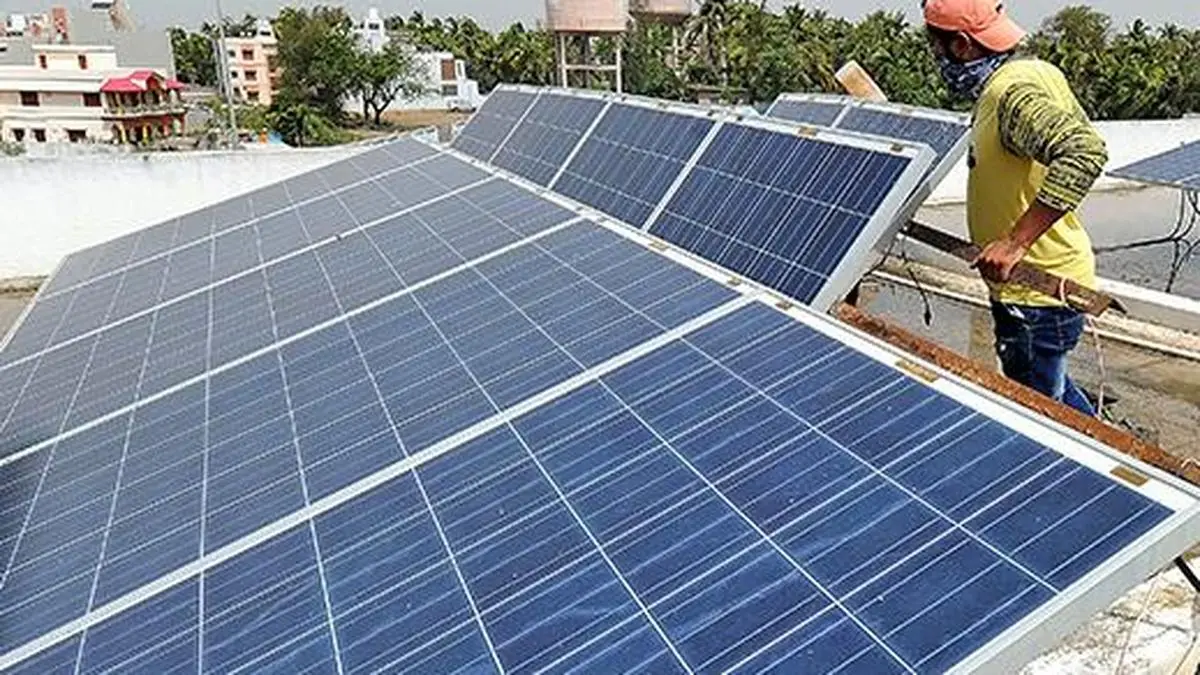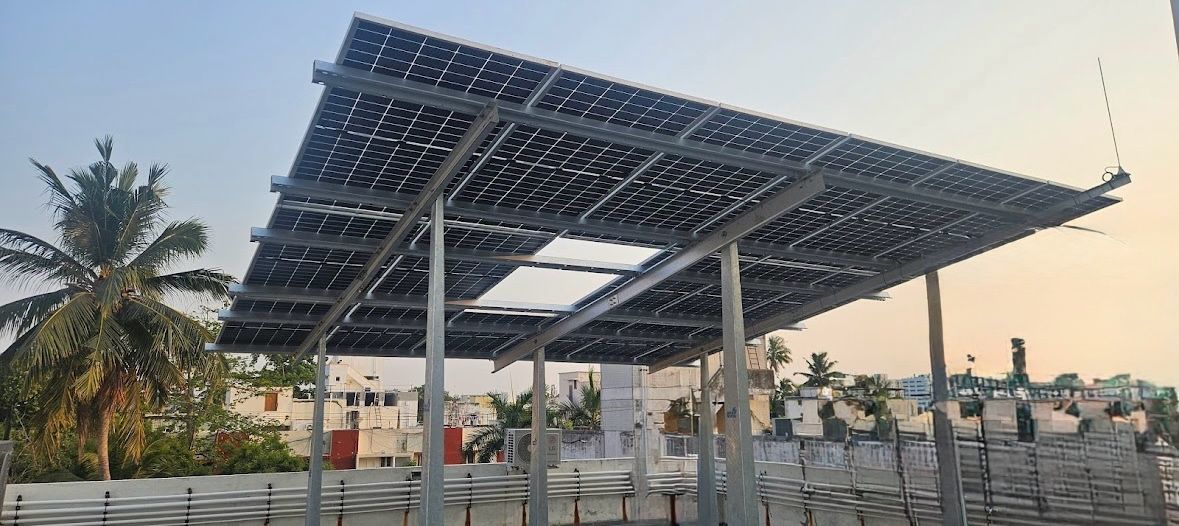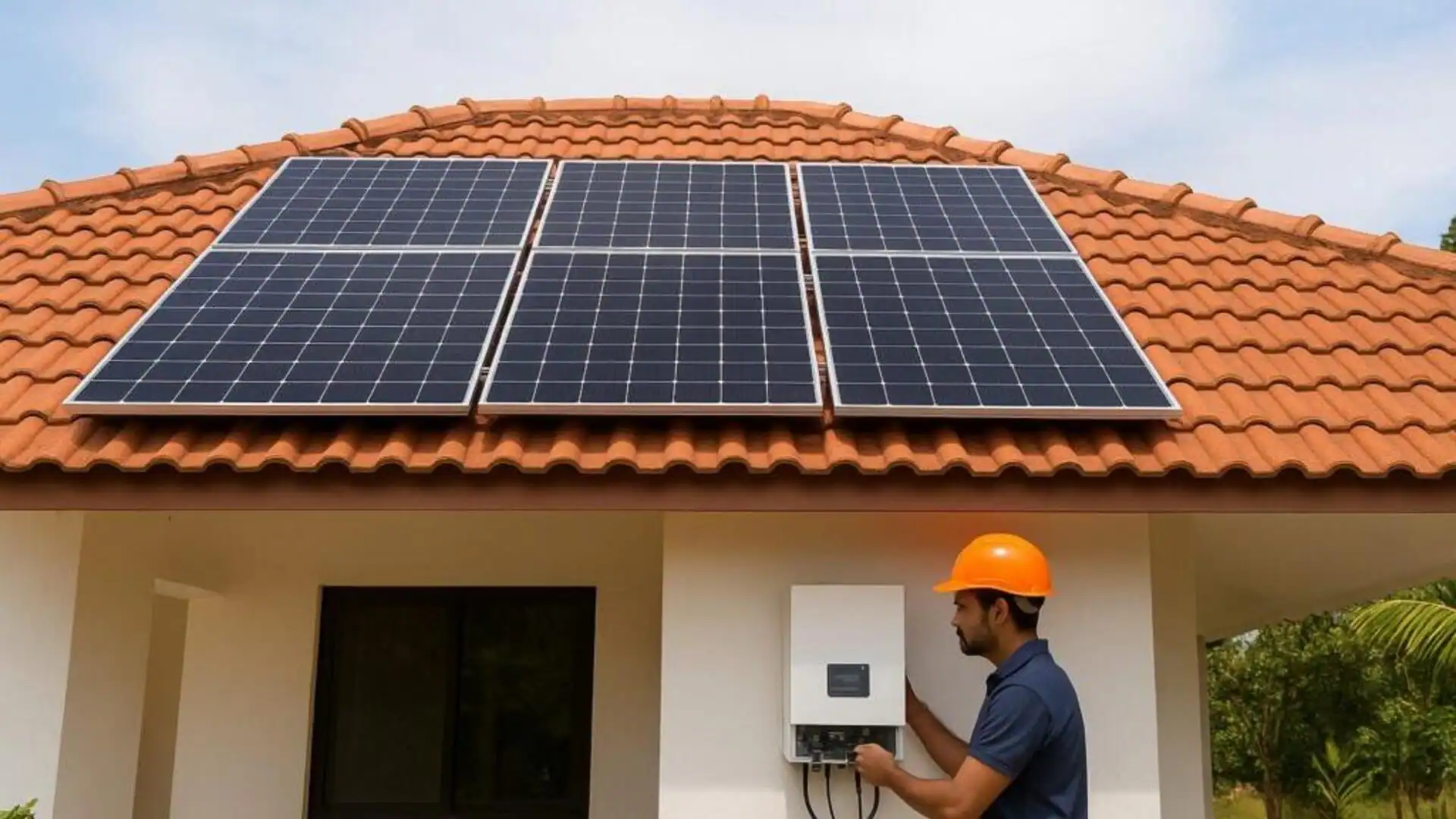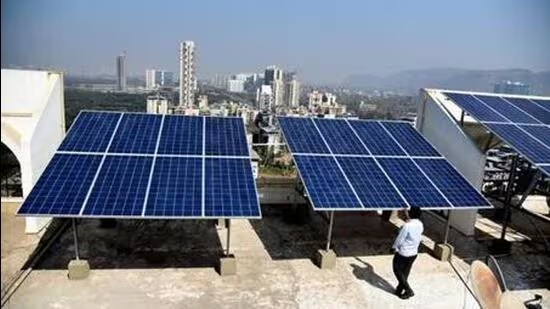
Rooftop solar installations are becoming increasingly critical for Indian households and the domestic power grid, driven primarily by a desire to slash utility costs, according to a new pan-India survey by the Council on Energy, Environment and Water (CEEW).Indian households using rooftop solar reported an average 71% reduction in electricity bills, according to a nationwide CEEW study.About 81% of households willing to adopt rooftop solar cited a reduction in electricity bills as their primary motivation, the CEEW analysis said. For those who have already transitioned, it said, the technology delivered an average 71% reduction in monthly power bills.The consumer survey report was released on Wednesday at an event organised by the Ministry of New and Renewable Energy (MNRE) to commemorate two years of the Pradhan Mantri Surya Ghar: Muft Bijli Yojana (PMSGY).According to the study, the residential rooftop solar growth in India has accelerated from a 45% compound annual growth rate (CAGR) between 2017 and 2023 to an 85% CAGR between 2024 and 2026.CEEW’s consumer-side survey on residential RTS is the first since the launch of the PMSGY. It is based on a pan-India survey of over 17,000 households across 22 states covering 308 districts, and examines how households understand, evaluate, and navigate RTS adoption.“India is blessed with more than 300 sunny days a year and we are turning this potential into a national clean-energy movement. PM Surya Ghar enables households to generate electricity on their own rooftops, reduce bills, and contribute to an Aatmanirbhar Bharat. More than 41 lakh households that are availing the benefits under the programme are our strongest ambassadors, and their experience will help build confidence among many more families,” Minister of New and Renewable Energy Pralhad Joshi said.Around 57% of households surveyed in the CEEW study were aware of the potential of RTS to generate electricity for homes in both rural and urban areas. However, the study suggests that India’s next rooftop solar challenge is not awareness alone, but conversion: helping interested households move confidently from curiosity to application, financing, vendor selection, and installation.“India’s rooftop solar programme has created strong momentum. The next step is to convert awareness into confident action by simplifying the adoption journey through clearer process support, better financing awareness and evidence-based communication. The experience of adopters shows that the value proposition is clear; now the task is to make it easier for many more households to access it,” said Rishabh Jain, Fellow, CEEW.India has become the second-largest solar growth market, surpassing the USA, Minister Joshi said on Wednesday.“India’s solar growth story is setting global benchmarks. In 2025, India surpassed the USA in annual solar capacity additions to become the world’s 2nd largest solar growth market. As the fastest-growing major solar market, India is driving record capacity additions through strong policy support, innovation and world-class infrastructure,” he wrote on X.
Rooftop solar cuts household electricity bills by average of 71%: CEEW
A CEEW survey found 81% of households willing to install rooftop solar cite lower electricity bills as the main reason for adoption. | India News
468 words~2 min read