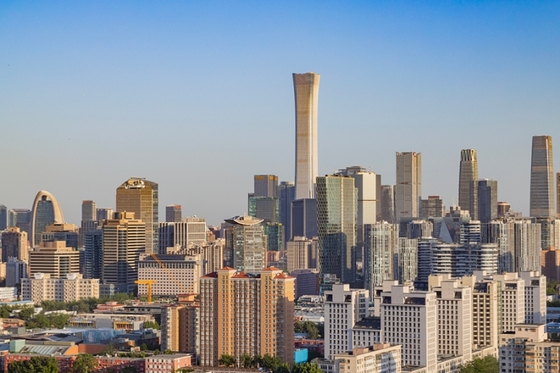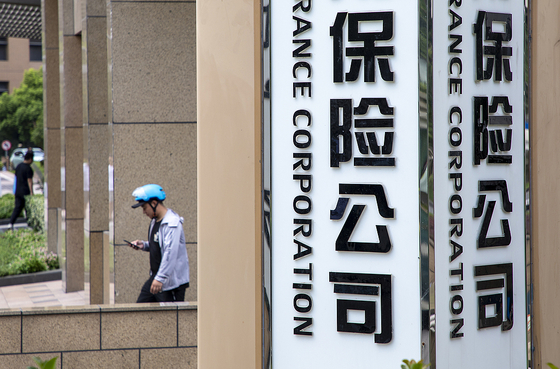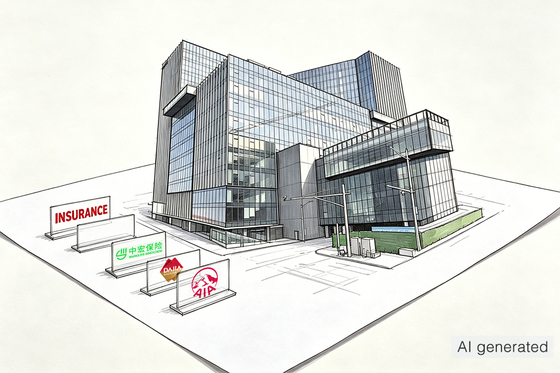
1. Tucked into Beijing’s tech-centric Zhongguancun neighborhood, Dinghao Plaza was once a famous electronics market but has since reinvented itself as a gleaming office complex, reflecting a quiet but significant shift reshaping China’s commercial real estate market. [para. 1][para. 2]2. Three insurance companies—AIA Life Insurance Co. Ltd., Dajia Life Insurance Co. Ltd., and Manulife-Sinochem Life Insurance Co. Ltd.—have jointly invested roughly 3 billion yuan ($443 million) to take a combined stake of nearly 50% in the building. This deal is part of a broader pattern where Chinese insurers are stepping in to fill the void left by foreign investors and cash-strapped property developers. [para. 3][para. 4]3. The logic behind this trend is straightforward: as Chinese interest rates fall, insurers seek higher yields that real estate can provide, particularly through rental income. For example, the Dinghao deal is expected to yield around 5% annually, while some shopping centers yield around 6%, and certain deals from the 2023 property slump returned close to 8%—all well above what Chinese government bonds currently offer. [para. 5][para. 6][para. 7][para. 8]4. According to Jones Lang LaSalle Inc., insurance funds deployed $9.3 billion into commercial real estate on the Chinese mainland between 2022 and 2024 alone, approaching investment volumes of more mature markets like the U.K. and the U.S., and putting China near the top in JLL’s Asia-Pacific rankings. Preferred targets have shifted from logistics warehouses and office buildings to retail assets like shopping malls, seen as more resilient and income-generating. [para. 9][para. 10]5. Chinese insurers are primarily buying properties from two groups of sellers: foreign institutional investors stepping away from China and domestic property developers drowning in debt. For foreign investors, rising U.S. dollar financing costs and shifting geopolitical winds have made Chinese properties less attractive. Some have sold at a loss when acquisition loan interest outpaced building income. For instance, a foreign consortium that bought Dinghao Plaza in 2019 for around $1.3 billion is partially cashing out as insurance funds take over a tranche of bank debt. [para. 11][para. 12][para. 13]6. For domestic developers, sales are driven by survival since China’s property sector slump began in 2021. Two major casualties—China Vanke Co. Ltd. and Wanda Group Co. Ltd.—have turned to insurance funds to offload assets. Since 2024, Vanke has sold a string of commercial properties to insurers like Taikang Life and New China Life, often structuring deals to simultaneously transfer assets and retire debt. In one case, buying 1 billion yuan of assets retired 500 million yuan of old debt. Several insurers have also acquired Wanda properties in deals totaling tens of billions of yuan; in 2025, Sunshine Life Insurance participated in a consortium acquiring 48 Wanda plazas in a single 50-billion-yuan package, a record transaction. One professional likened Wanda plazas to “stinky tofu”—smelling bad but tasting good. [para. 14][para. 15][para. 16][para. 17][para. 18]7. Despite stabilizing the market, these investments have not fixed underlying problems. Some logistics and office assets bought before 2023 now face falling rents and rising vacancies, leading to write-downs. High-quality, cash-generating commercial assets are in short supply, so insurers compete over a small pool, sometimes settling for second-best or taking on more risk than headline yields suggest. Yet deals continue, with insurers now scrutinizing building cash flows rather than relying on developer reputation. [para. 19][para. 20][para. 21][para. 22][para. 23]AI generated, for reference only
Analysis: Insurance Funds Rush Into China’s Battered Property Market
With domestic developers in crisis and foreign capital on its way out, Chinese insurers have become a stabilizing force in commercial real estate
552 words~3 min read