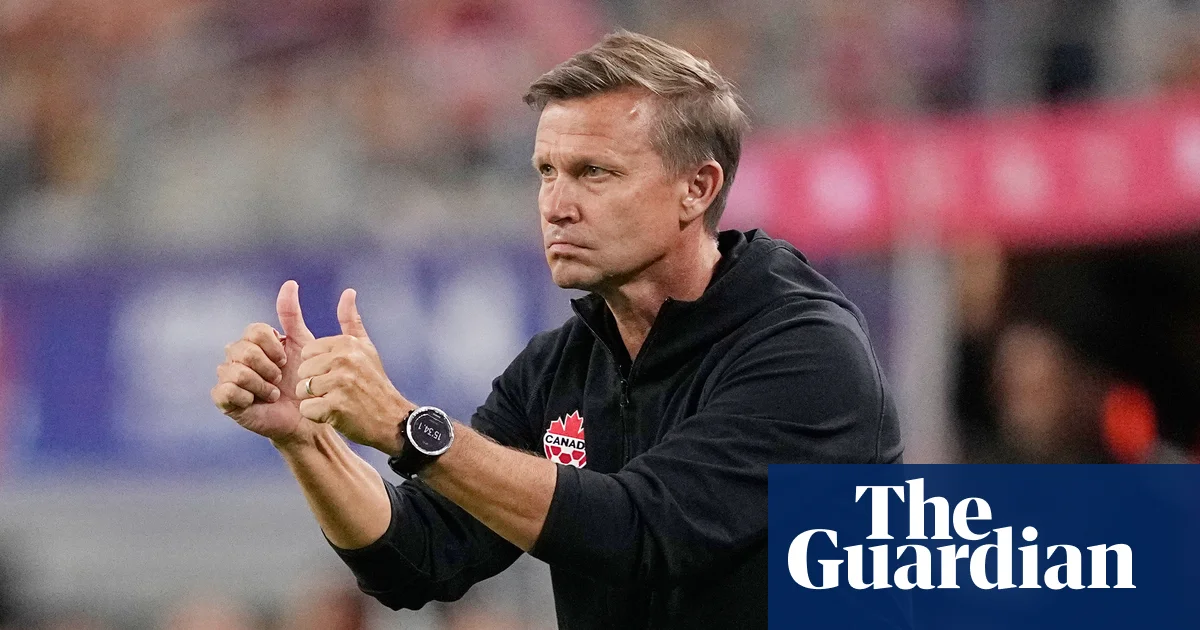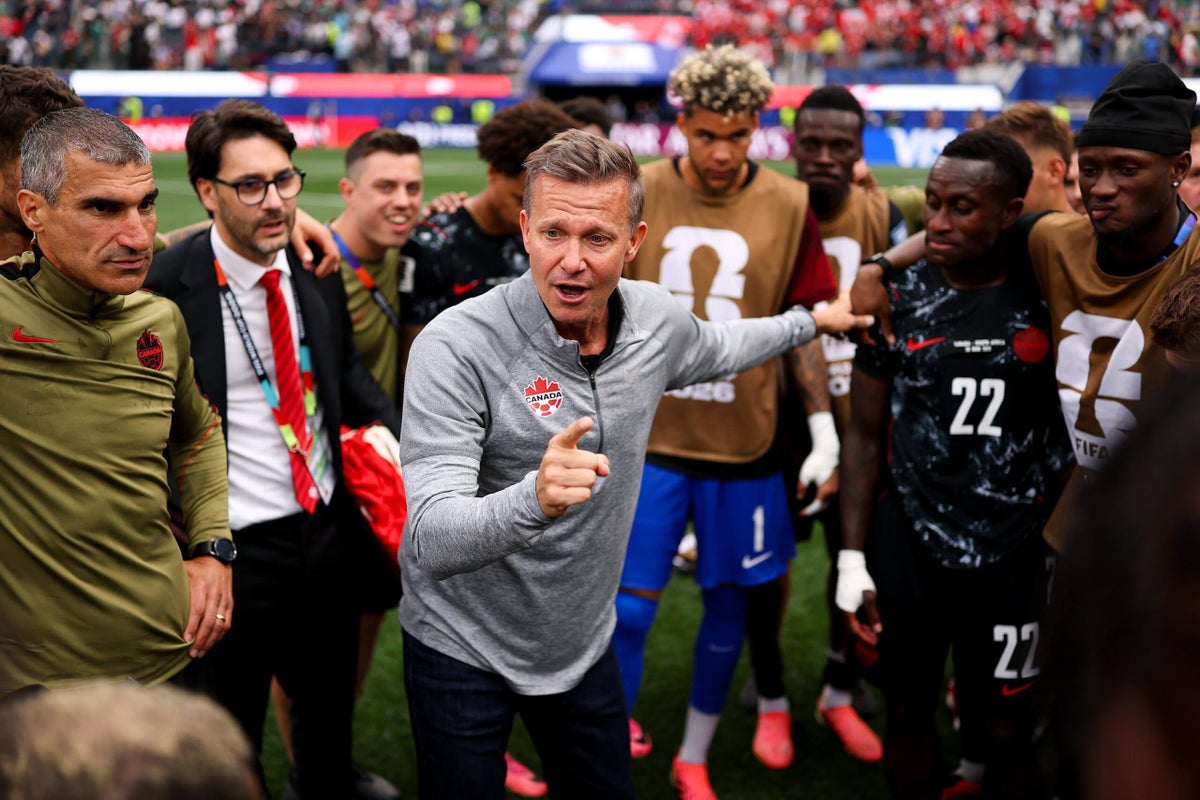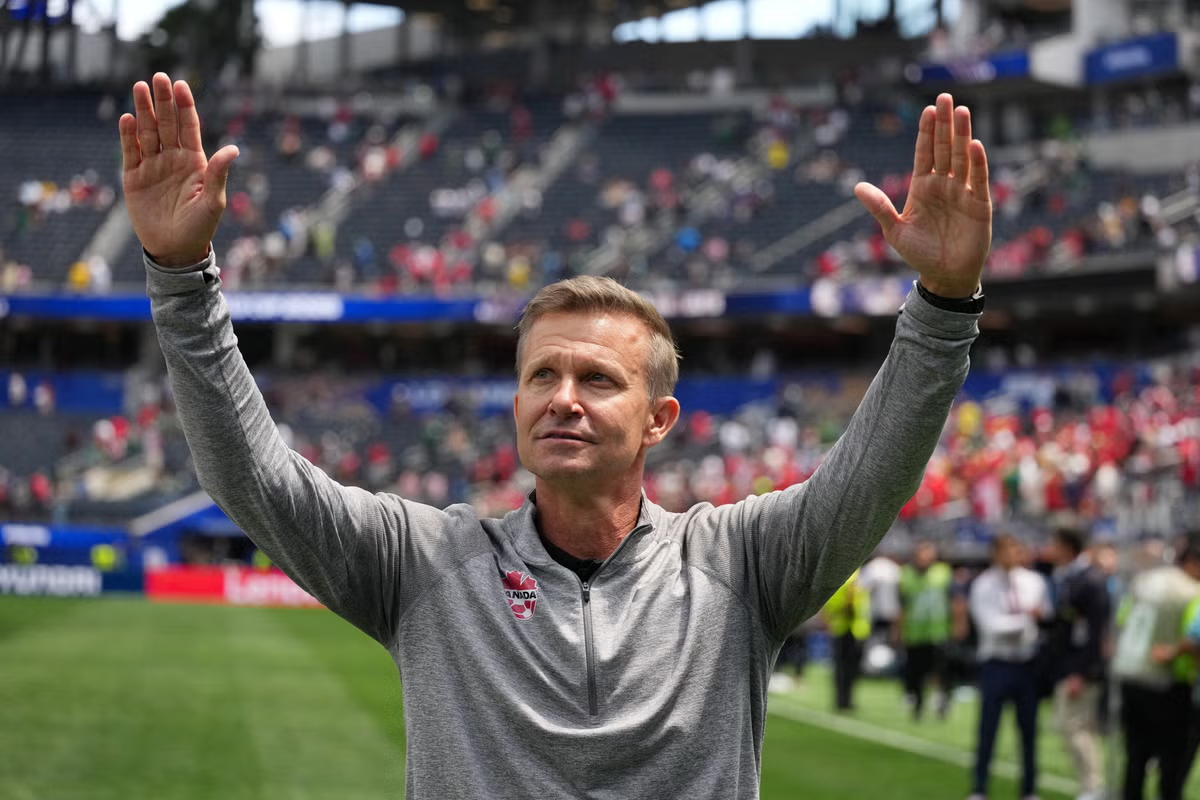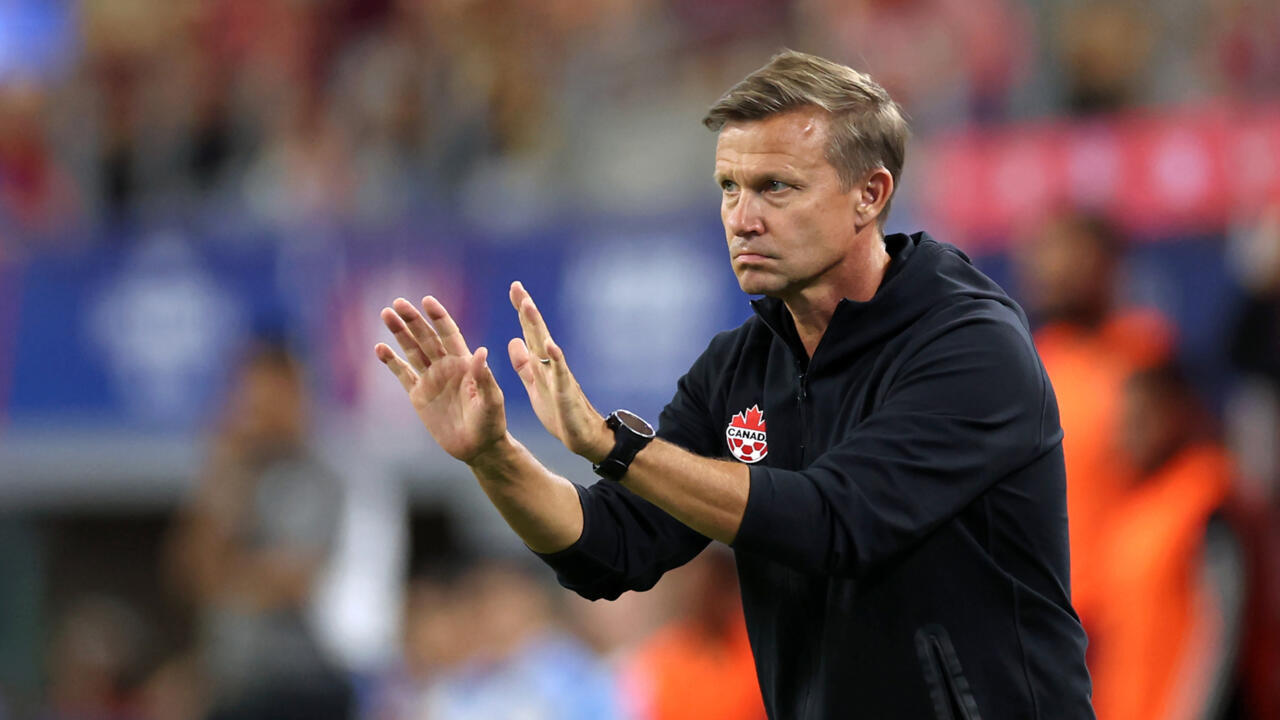
SUNRISE, Fla. – Jesse Marsch leans forward in his seat.Thousands of enthusiastic and possibly drunken voices surround him as an arena full of fans clad in red and white stand in fervour.The head coach of Canada’s national soccer team likes what he sees.“They’re suffocating the opponent,” he says, his voice rich with admiration.It is mid-November, and the NHL’s Florida Panthers are doing Florida Panthers things: forechecking with emotion. Moving the puck with precision. Hitting with purpose. They are personifying the words of their head coach, Paul Maurice, who, in a widely-shared video clip from his team’s 2024 Stanley Cup run, shouted at his players: “Nobody’s hit a f***ing thing! You get a 3-1 lead and now you want to make plays? F*** the plays. Pound their f***ing (defence) so in Game 7, they’ve got nothing left!”As the two-time defending Stanley Cup champions dominate the Vancouver Canucks, the wheels in Marsch’s head keep turning.“Those are all the things I think are essential in sports,” Marsch says of the Panthers, before leaning back. “This is my kind of hockey.”As this year’s Stanley Cup Finals begin, it’s possible attention will shift, curiously, from Canada’s national sport to the biggest sporting event on the planet. Canada opens their World Cup with the first-ever men’s World Cup game on Canadian soil, June 12 against Bosnia and Herzegovina.After a false start in the 2022 World Cup — Canada lost all three of their games — this feels like Canada’s true arrival on the international stage to an expectant national audience. Now we wait to see if Canadians will latch on.It’s perhaps an overgeneralization but: Canadians love hockey. In Canada, there is hockey, and then there is every other sport. For now. Canadians often use hockey as a tool to bridge gaps between us. The game is as frequent a conversation starter as the passing weather.I originally invited Marsch to the Panthers game ahead of Canada’s friendly against Venezuela in Fort Lauderdale in November 2025. Being with Marsch throughout the evening in the company of Canada’s national sport, I ended up learning more about him and the team he is trying to take to new heights than I thought I would.As it does, the game bridged gaps.Those unfamiliar with Marsch, one of the faces of Canada’s World Cup, can rest assured: Marsch doesn’t just know his hockey — he sees so much of his Canadian team in one of most potent NHL teams in recent memory.Racine, Wisconsin, is halfway between Milwaukee and Chicago and no stranger to frigid winters. That’s where Marsch was born. Hockey was one of the many sports he played growing up, before soccer took over his life. Hockey’s speed and physicality was an outlet for an intensely visceral young man.“When I played, the coach would say ‘OK, we’re going to work on this’,” Marsch later told me of his approach to playing sports. “And I was like, ‘I don’t f***ing care, how are we keeping score? Alright, I’m going to win.’”So, yeah. Maybe Marsch could have been a hockey player instead of the kind of midfielder he became, butting heads (literally) with David Beckham when one of soccer’s greatest ever played in MLS.David Beckham confronts Jesse Marsch during a game between LA Galaxy and Chivas USA in 2007 (ROBYN BECK/AFP via Getty Images)“In MLS, I was a hated player,” Marsch said. “I didn’t f***ing care about being friends with the opposition.”While the term “rat” doesn’t apply to soccer the way it does in hockey, it sure seems like a fair assessment. Only endearingly, of course.The first thing you notice about Marsch watching hockey is how intently he does it. He follows the puck and mutters, then eventually shouts, when a hit is thrown. Hockey is fast. Florida Panthers hockey early this season was faster. But Marsch stays ahead of the game, hollering in anticipation before a one-timer is fired.His enthusiasm presents a window into how he operates alongside his players. His emotional attachment to the ups and downs within a game is palpable. Watching Marsch watch hockey, it’s easy to see how his Canadian players might feel like their head coach is in the fight with them, every game.As Marsch watches, he takes gulps, not sips, from his American-sized can of beer. He insisted on ordering the Molson products. Sure, Molson is no longer a solely Canadian brewery. But Marsch should score points for effort in the eyes of curious Canadians. He operates and chats with a natural ease you don’t often see from head coaches, often obsessed with micromanaging every detail at their disposal.And he wants to chat hockey.The terminology to describe the Panthers might be different from how Marsch would describe his team. But come the second period, Marsch has seen enough to confidently say: all the things the Panthers did well en route to winning Stanley Cups are things Marsch wants to replicate this summer.“I love the intensity,” Marsch said. “We would call it ‘forward defending’. You would call it forechecking.”The Panthers might be considered villains in the eyes of some. They can play with a chippy, nasty edge. Their stars, like Matthew Tkachuk, get in the ears of opponents.But their playoff hockey was effective. If you saw something you liked in the Panthers Stanley Cup runs, you might become enamoured by Canada’s team at the World Cup.That, at least as it became clear through the two and a half hours watching the Panthers, is Marsch’s hope.“I like that (the Panthers) are constantly putting pressure on the puck,” Marsch said.Jesse Marsch sees similarities between the intensity of the Panthers and his Canada team (Joshua Kloke/The Athletic)Canada might earn their first World Cup win and get out of the group stage (Marsch’s stated goal) if they execute their brand of full-throttle soccer. Marsch’s coaching career took off as he progressed through the Red Bull system: first from New York in MLS to Red Bull Salzburg in Austria and then to RB Leipzig in Germany. Along the way, Marsch won titles and accolades by developing a version of Red Bull soccer. The central tenets of his game are relentless running with a purpose, pressing the opposition into submission in key places, defending as a unit, and punishing teams in transition.It’s not a style Canada has ever played. It’s not a common approach for most international sides. Marsch soccer demands energy and buy-in from players he only sees a few times a year.Yet as Marsch’s eyes dart around the ice and his grin widens every time the Panthers are in the offensive zone, you wonder if he is making a correlation: See? Aggressive and pacy forechecking works in hockey. And it will work in the World Cup, too.“I love that no one cares if the puck is on net when they take a shot, or that if someone loses the puck or if the pass is off. It’s just the reaction to smother and attack. And it’s a version of what we want to do,” Marsch said of the Panthers. “I’ve seen probably 10 moments down here with the Panthers that I would consider counter-pressing.”The counter-pressing, er, forechecking piles up, Marsch whacks me on the arm to ensure I see what he sees.“They’re hardly letting Vancouver out of their own end,” Marsch exclaims.Yet there are elements in the Panthers’ two Stanley Cup wins that Marsch can’t easily replicate. The Panthers won a Game 7 of the Stanley Cup Finals en route to their first championship. Under Marsch, Canada has not always won the must-win games in front of them. He has made it one of his missions with Canada to develop the kind of cunning needed in these games.Matthew Tkachuk embodies the Panthers’ aggressive style (Bruce Bennett/Getty Images)You could make a case that Canada has three must-win, Game 7-type games in front of them to start the World Cup. But Marsch doesn’t see it that way.“They are three opportunities for us to express who we are and the way we want to do things,” Marsch said. “Obviously, there are tactics in the game and the idea of what you want the game to look like. But more importantly, within the style of play that we have, we have to have a fearlessness. We have to have the ability to capture the moment. And we have a group and a team that aren’t afraid.”By the final buzzer, the Panthers have stormed back, scored three unanswered third-period goals, and won 8-5.For most, a game and a few beers might be enough. But Marsch needs to know: how do the Panthers pull off wins like the one he just saw?In the bowels of the arena, Marsch is as curious as he is gregarious. He wants to experience the Panthers’ postgame media availabilities and, hopefully, meet the future Hall of Famer coach who helped orchestrate the Panthers’ runs.Marsch stands, not in the back, but closer to players as a reporter would, as they speak postgame. Marsch may be head coach of a team in a home World Cup, but is more than willing to wait in a quiet hallway just to possibly chop it up with another coach.“I hear you’ve got a big tournament coming up this summer!” Maurice said as he emerges with a smile.The two men laugh hearty laughs. But they then quickly get to work. There is no time for small talk.When it comes to the Panthers’ success, Maurice tells Marsch that the things that they’re good at are hard to do. Marsch’s eyes light up.Maurice tells Marsch about how he and the team are searching for the next level of emotion within their team. That preferred emotion — desire — came easier to the Panthers when they were hunting for the franchise’s first Stanley Cup in 2024. Late in 2025, with many players wearing two Stanley Cup rings, two more than the average NHL player ever gets to wear, that emotion can’t be easily conjured.Marsch nods.Maurice tells Marsch how they moved from feelings of anger that fuelled their first Stanley Cup, to feelings of love for each other in their second run.Paul Maurice and Jesse Marsch share coaching ideas (Joshua Kloke/The Athletic)Maurice acknowledges it’s a strange word to use. Marsch shakes his head. It’s not, to him. Even though his players might only see each other a few times a year leading up to the World Cup, he wants them to care deeply for each other. If they love each other’s company enough, they should be willing to go the extra yard for each other in games.There are literal notes to share. When it comes to injury recovery, Maurice tells Marsch how his team is unusual. They don’t fly out of a city immediately after road games if they don’t have to. Whether it’s a direct influence from Maurice or not — likely not — Marsch’s Canada are taking a similar approach.Maurice touts how his practices are short but their work is done in the weight room, where they can control the parameters better.“Love it,” Marsch says.This is something most on the outside never see in Marsch.They see the unyielding confidence. They don’t see his wide-eyed curiosity, that makes him want to add new experiences to his reservoir to draw from.Those on the outside see a man who can command a room when the microphone is in front of him. They don’t see the man who appreciates personal connection more than the attention. Marsch has known Maurice — whose narrowing gaze makes him an intimidating sort — for all of about two minutes. But Marsch laughs at a Maurice wisecrack and throws both of his palms on his shoulders to bridge the gap between them.Marsch was public and vocal about his desire for his Canadian players to come out of their shell early in his tenure. He wanted them to show more personality. What Canadians haven’t seen yet is how Marsch lives that philosophy every waking minute.NHL reporters everywhere tend to sit and listen quietly to Maurice as he waxes poetic in a way few other coaches can. People stand spellbound around Maurice. Marsch, however, can’t stand still in Maurice’s presence. Marsch’s arms move wildly as he explains his own coaching philosophy, showing how quickly he wants his players to move come, you know, that “big tournament”.He wants them to move like the Panthers do.He wants them to play with the same passion.He wants what they have: wins when it matters.The two men shake hands, pose for the obligatory photo, and go their separate ways.Paul Maurice and Jesse Marsch (Joshua Kloke.The Athletic)It is a long ride back from Sunrise to Fort Lauderdale. Even longer is the journey back to Canada, where Marsch will coach the most important games of his career.There, his Canadian team will let curious onlookers know what they’re capable of. And he has seen the blueprint for their success in a sport those onlookers know so well.“It’s a fearlessness that is created by ingraining the idea of what we want to do and how we want to do it,” Marsch said of his team’s identity. “And the belief that that way of doing it will make the opponent suffer.”
I took Jesse Marsch to a hockey game. Here’s what he wants his Canada team to take from NHL
The Athletic invited the head coach of Canada's soccer team to watch Paul Maurice's Florida Panthers in action
2,189 words~10 min read