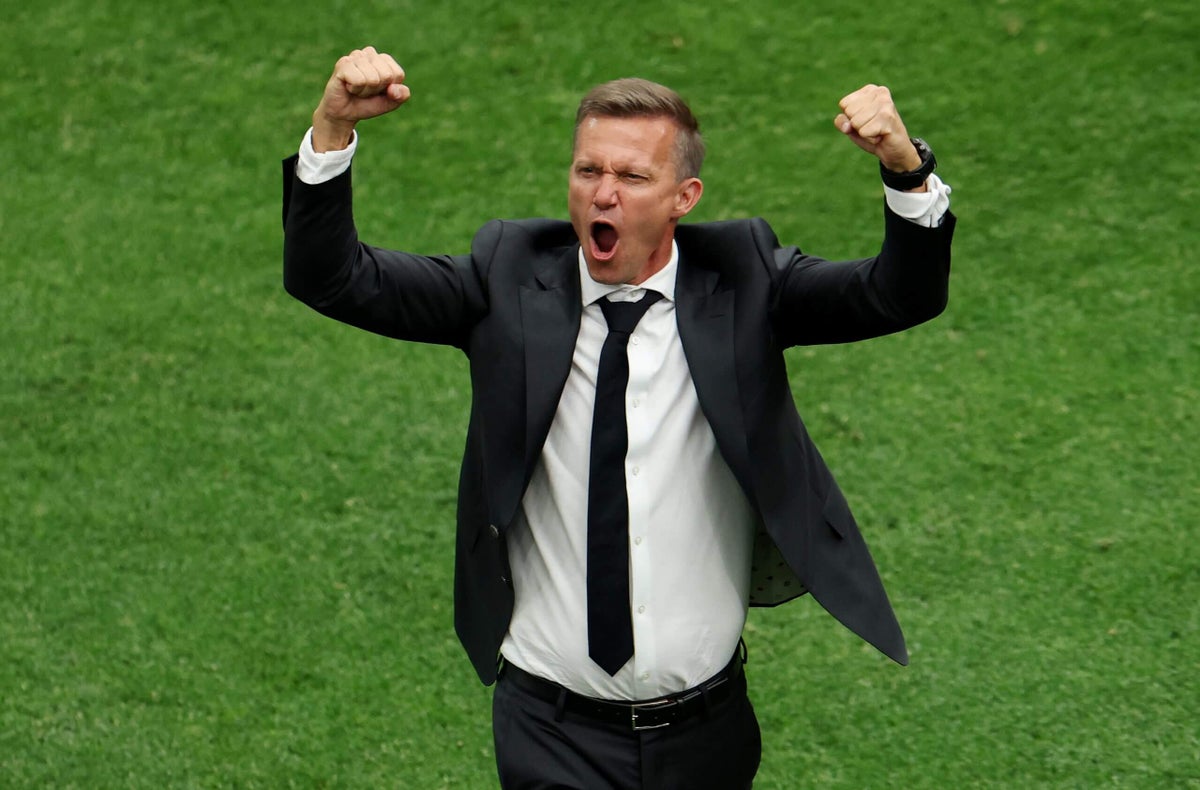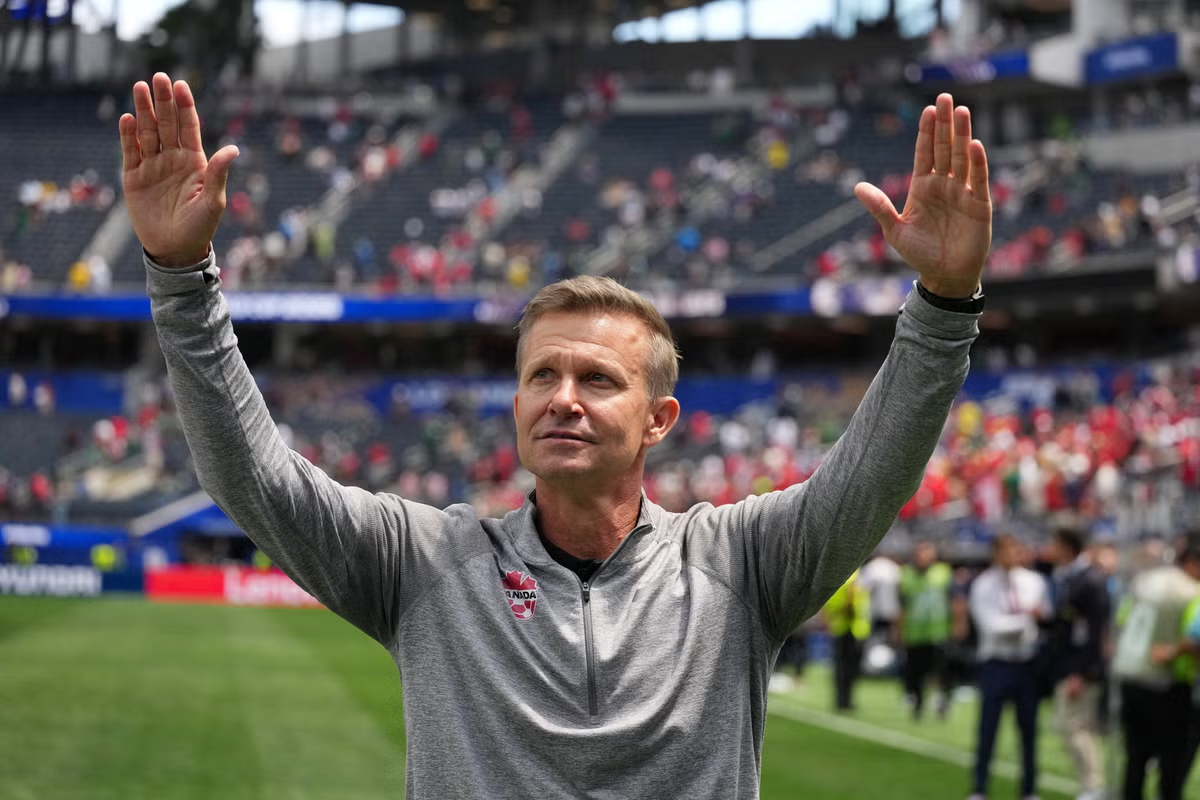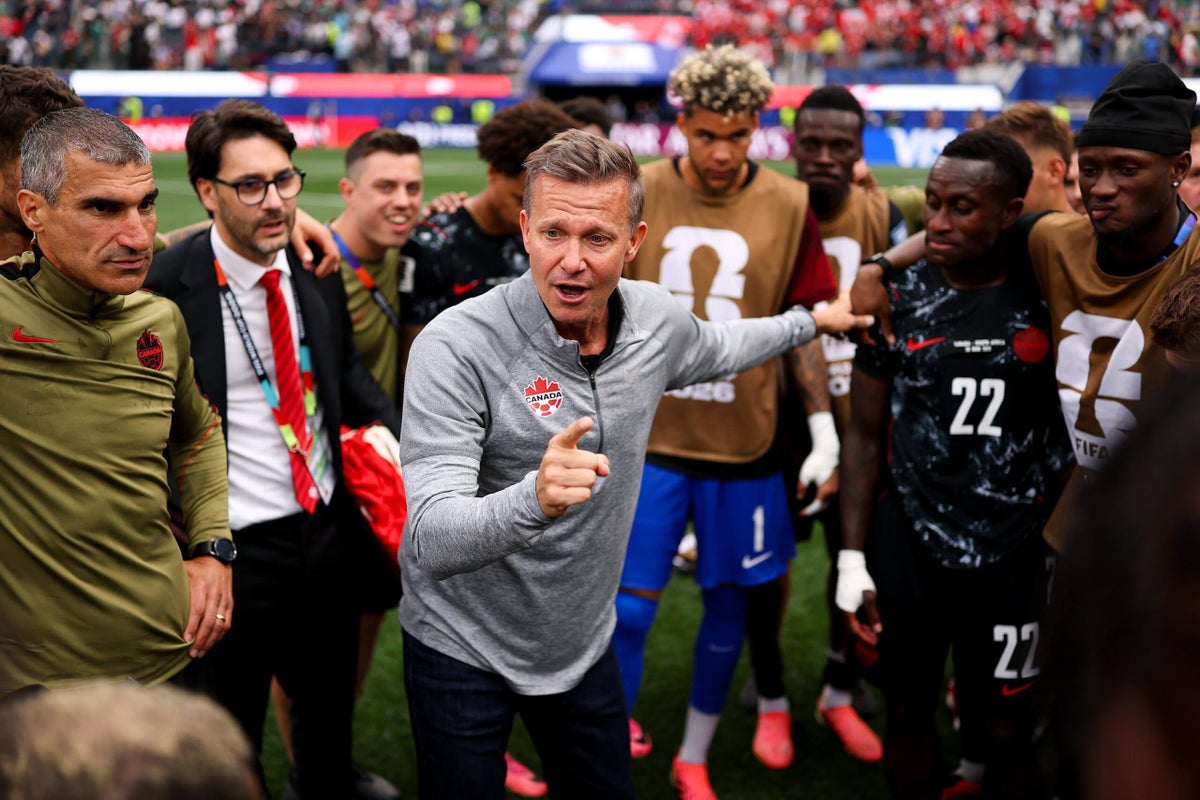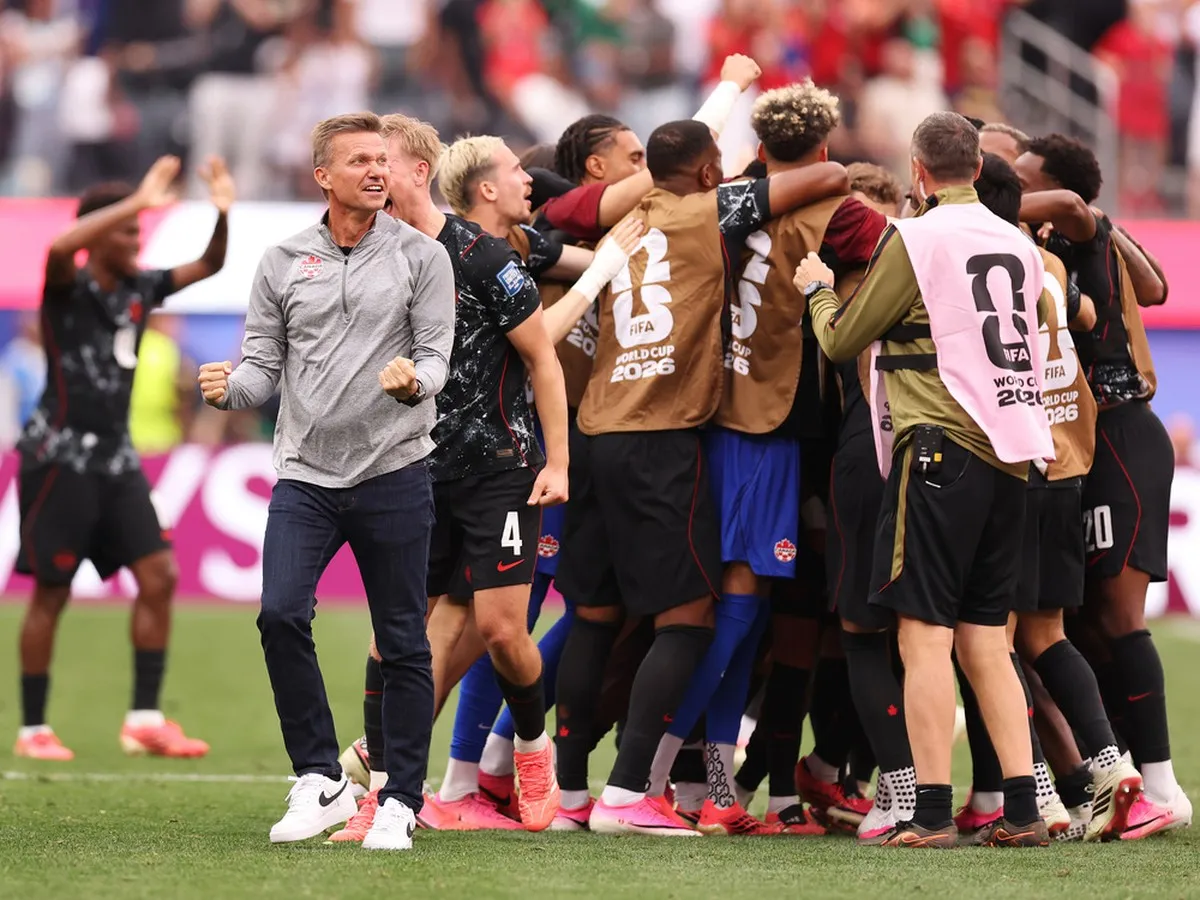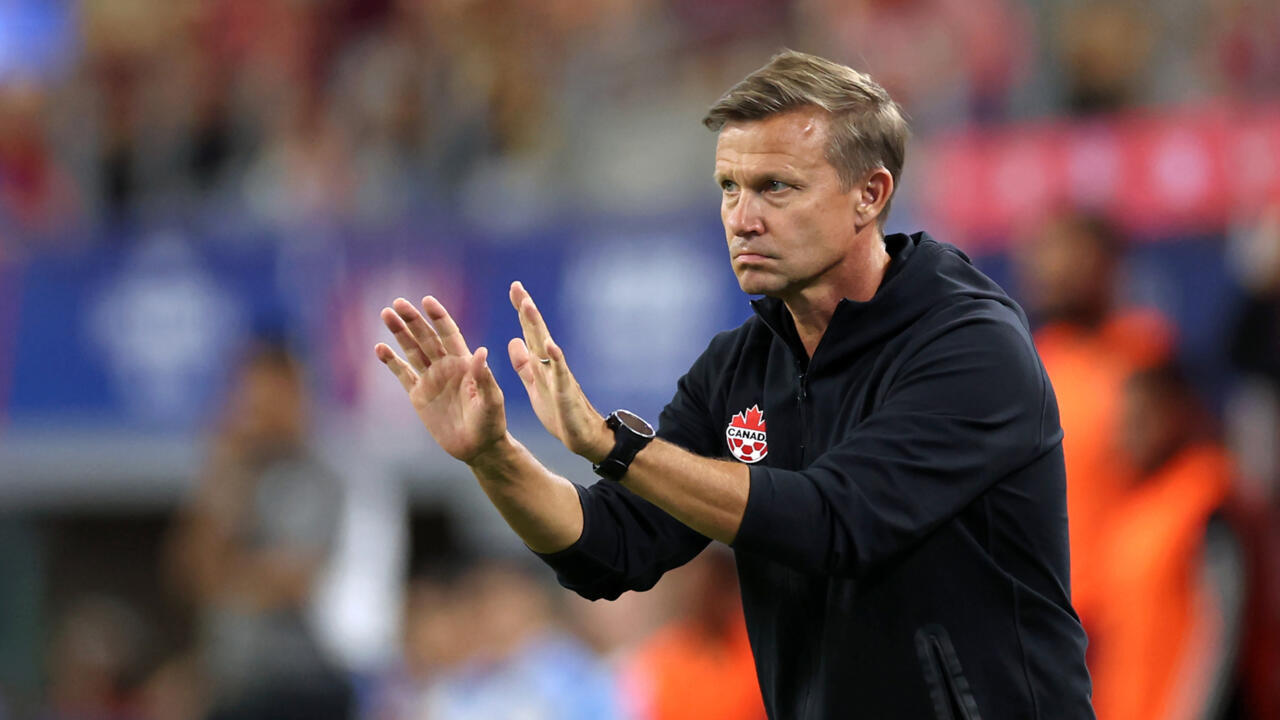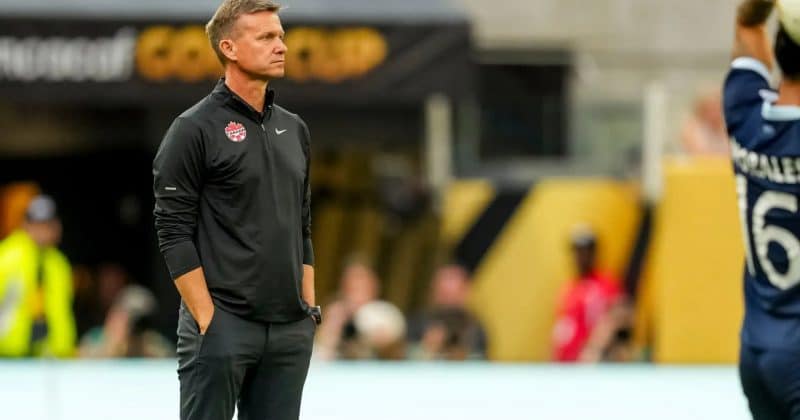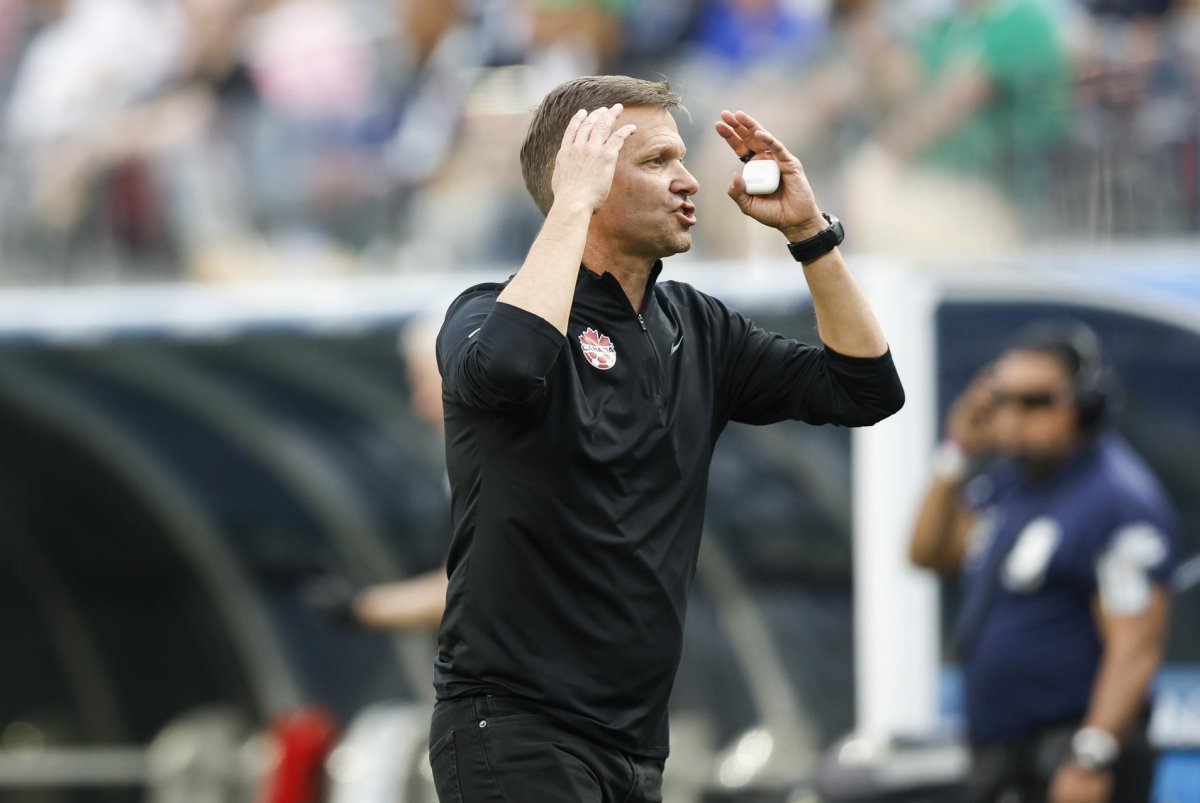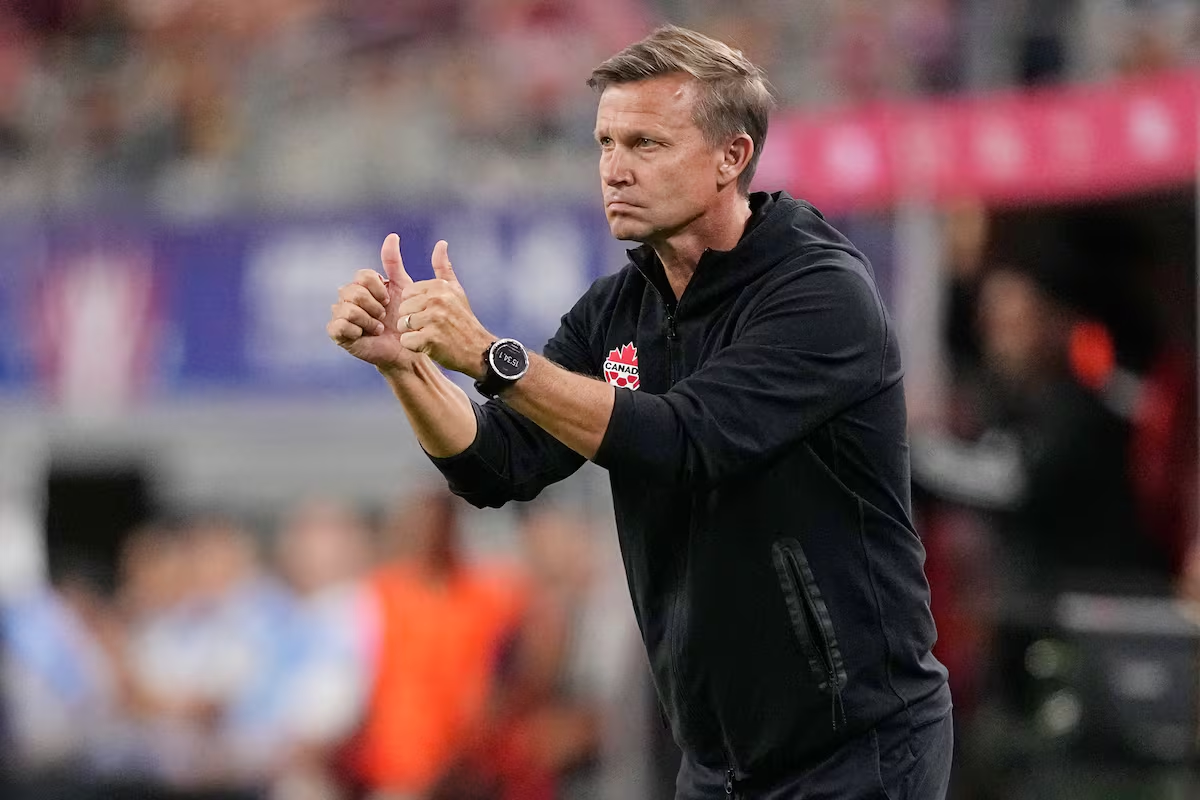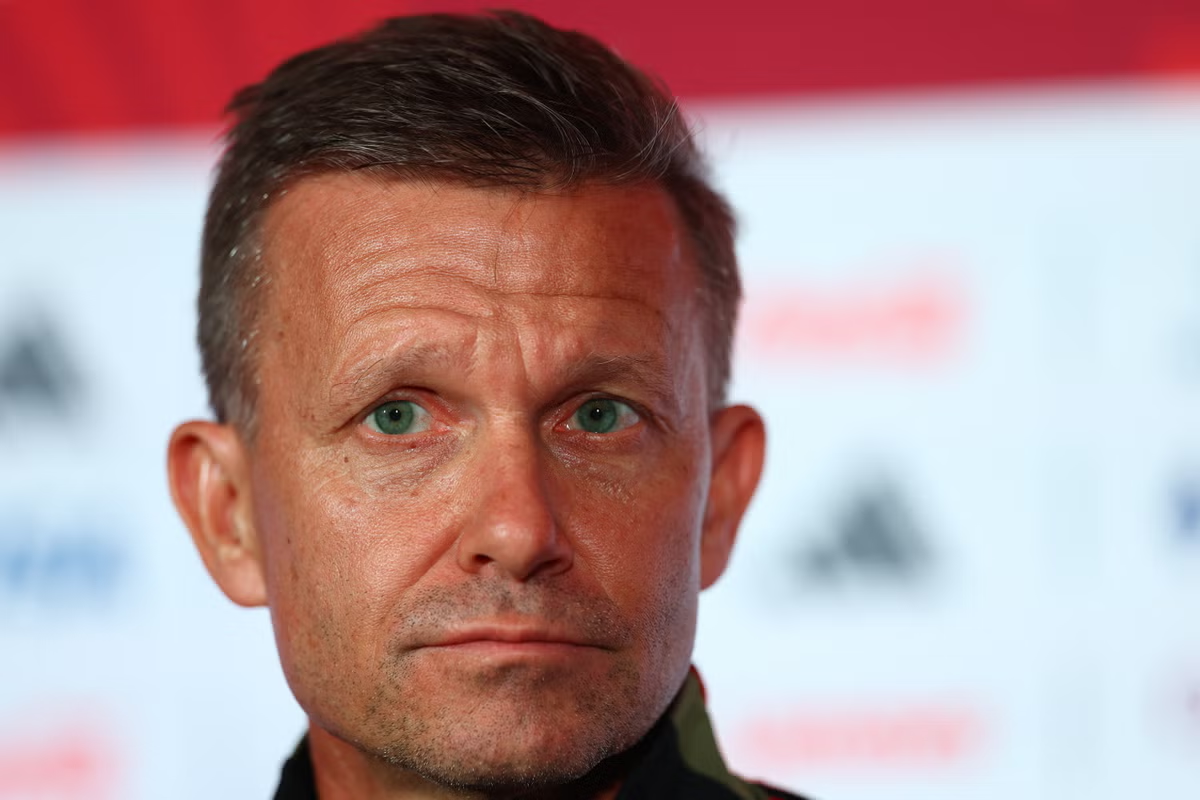
There aren’t many international head coaches like Jesse Marsch. The one-time pre-med student at Princeton University has taken a unique route to the World Cup.Described as “blue-collar” by those who know him, Canada’s head coach is fuelled by wanderlust. He has gambled his way through games of backgammon to fund his ceaseless travel. He is a bellicose competitor, challenging teammates to fights during intense training sessions during his playing career in the NCAA and MLS. As a coach, Marsch has crafted a demanding but enlivening approach that has inspired players and pushed him to new heights for an American manager. And as a conscious citizen, Marsch has not shied away from calling out the U.S. President.Marsch, in short, never stops.“I was constantly blown away with Jesse,” said Bradley Wright-Phillips, the former Manchester City forward who played under Marsch in MLS with the New York Red Bulls. “I was waiting for his mask to be uncovered. Like, you can’t possibly be this real. But up to now, the mask still hasn’t fallen off.”They took their most important step under Marsch, adopting a new identity that reflected Marsch himself. Canada are aggressive, fearless and fun. Those words could easily be used to describe Marsch.As the World Cup gets underway, Marsch will be one of the faces of Canada’s men’s national team. He could help change soccer in Canada forever.To do so, he will have to unleash his larger-than-life personality into the world.These are the untold stories of a man who could end up being one of the stories of the 2026 World Cup.The Princeton yearsMarsch was born in Racine, Wisconsin, and recruited to play midfield at Princeton University. But before Marsch even officially became a Princeton student and began his pre-med courses, he showed unyielding confidence.Joey Thieman, teammate on Princeton University soccer team: “I was the older guy that had to give Jesse his recruitment trip. I showed him around but it was a classic situation where Jesse already knew people at the school. So I wasn’t necessarily showing him around, he knew his way around already. He said, ‘Hey, I know some people here. I’m going to hang out with them a little bit, and we’ll meet up a little later.’ And that was how it went.”Thaddeus McBride, teammate on Princeton University soccer team: “(Marsch) was the life of the party. On the way to games, four or five of us would sit in the way back of the bus. He introduced us to a card game called Euchre, a Midwestern game. We’d play for the entire trip. Perhaps we should have been doing some school work.”Lee Topar, teammate on Princeton University soccer team and close friend: “I lived with him in senior year, his junior year. There were eight of us living together. We had planned a trip to Jamaica to celebrate ending senior year. And we had this running backgammon game. We thought of backgammon as a fun, recreational thing to do. And we bet small amounts of money. But Jesse kept a leaderboard. Everybody might have won $50 here and there, mixing it up in the middle. But Jesse was at the top of the leaderboard. We were all shocked at how much he kept winning. He quickly understood the logic to any game. And his winnings paid for his trip.”Marsch: “I took money from all seven of (his roommates). I could do the odds in my head like in a second and go, ‘Should I take that or should I not?’ All of my friends my whole life, they’ve always said, ‘He’s the luckiest guy we’ve ever known.’ And I said, ‘Yeah, OK. But like, you make your own luck, guys.’”Marsch’s competitiveness and swagger extended to the most unlikely places.Tyson Hom, teammate on Princeton University soccer team and close friend: “Jesse got into Sega hockey, like most guys our sophomore year. One of my roommates had become pretty good and thought — relative to people on campus — that he was really good. So I said, ‘We should go to Jesse’s and then we’ll really know the litmus.’“The first question out of Jesse’s mouth was, ‘How good are you?’ And then based on my roommate’s answer, Jesse just said, ‘Look, you should take the Detroit Red Wings.’ In that game, they’re very good. And Jesse was like, ‘I’m going to play as the Hartford Whalers.’ And my roommate thought it was a slap in the face because Hartford’s a bad team in the game, right? Jesse proceeded to destroy my buddy in the game, to the point where he quit Sega hockey from that moment on, because he just wasn’t good enough and Jesse had crushed him.”The Gold TeamMarsch’s grades dropped during his time in pre-med, so his parents wanted him to return to Wisconsin for a year to work and re-focus. When Marsch returned to Princeton, his year off rendered him ineligible to play soccer for one season. But Marsch had to be involved.He led Princeton’s practice squad, a reserve team meant to challenge their starting XI in training sessions. The team wore gold jerseys and became known as ‘the Gold Team’. Marsch made it his mission to push Princeton’s starters.Jeff Plunkett, teammate on Princeton University soccer team and close friend: “Jesse’s ability to give the Gold Team an identity was wild. He took it on himself: ‘We’re proud and every day we’re going to try and beat the s**t out of the starters.’”Hom: “Those games were very, very fierce. In practices, Jesse was definitely a s**t-talker. It never got us into trouble with other teams, but it elevated the stakes among us.”Marsch: “Even with Canada, I don’t take no for an answer. I won’t accept failure. I want to win all the time. Even as a parent and everything in normal life, I’ve had to curb behavior so I can be tolerable. But when it comes to this f***ing job, it’s not random that I’m good at this. My desire to do whatever it f***ing takes is at an extremely high level.”Princeton qualified for the NCAA Final Four that season.McBride: “If you just took the starting XI versus the reserves, there would be no comparison in terms of talent. But we had so much success that year because the reserves beat us often in training. It drove the starters’ level way up.”Plunkett: “The day before we left for the Final Four, there were maybe three local news crews at Princeton for the final practice. (Head coach Bob Bradley) sets up a scrimmage at the end of practice. Jesse proceeds to kick the s**t out of the starters in front of all these local news cameras. Jesse scored like five goals. I don’t even know how much the local news knew what was going on, but it was the most demoralizing send-off for our starters.”Marsch: “Coaching nowadays has turned into this beast where everybody thinks that everything that happens on the pitch is all about the coach. But when I played, the coach said, ‘OK, we’re going to work on this.’ And I was like, ‘I don’t f**king care, how are we keeping score? All right, I’m going to win.’”The MLS yearsMarsch was drafted into MLS by D.C. United in 1996. He was then acquired by the expansion Chicago Fire and remained with the club for eight years.Zach Thornton, teammate with the Chicago Fire: “(Marsch) was always bringing all the guys together, people from all different countries and cultures. He was a little bit of a jokester, a prankster.”Jim Curtin, Chicago Fire teammate and friend: “This is at a time when MLS was not as popular as it is now. And after a game, we would go to this bar, Resi’s Bierstube, and have a few beers.“Once, our actual game we had just played at Soldier Field was on the TV literally playing in the bar. And there’s an older Polish guy sitting next to us. Jesse, being typical Jesse, taps the guy, he goes, ‘I bet the Fire score right here.’ This guy doesn’t recognize that we play for the Fire. Of course, we scored because he knows the things that just happened in the game. And the Polish guy is like, ‘Oh my god, you know your football.’ And Jesse says, ‘Which players do you like? This Jesse Marsch guy is pretty good.’ And the guy goes, ‘This Marsch guy, they’ve got to get him off the f**king field. I hate that guy.’ Typical Jesse.”Jesse Marsch was a battling player at Chicago Fire. (Jonathan Daniel / Getty Images)Marsch: “I am driven more by people that hate me than I am by people who praise me.”Marsch continued to try and instill a fire in his teammates. Sessions would get intense when Marsch was involved. Fights would often break out.Curtin: “Jesse would never back down from anybody. He still has that. He’s not scared of anyone if he thinks what he’s fighting for is the right thing. Where Jesse thrives, he’s about action. He might not win the fight because I wouldn’t say he was the best fighter on our team, but he’s certainly not going to back down. That mentality is something that everyone will get behind. He lives his culture.”After a move to Chivas USA, one of the most memorable moments in Marsch’s career came during David Beckham’s third MLS game with the Los Angeles Galaxy. While trying to defend against Beckham, Marsch landed a swift kick straight in Beckham’s mid-section. The two began jawing with each other. Consider it Beckham’s “Welcome to MLS” moment.Jesse Marsch and David Beckham confront each other (Chris Williams/Icon SMI/Icon Sport Media via Getty Images)Sacha Kljestan, Chivas teammate: “I don’t think Jesse was an especially talented or elegant soccer player, but he was a leader. He understood that he had to play the game with passion. So it was no surprise that he didn’t care who he was playing against. It’s a derby game. Those games were hot. (Marsch) was setting the tone for our team by showing we’re not afraid of them, ‘I don’t care who I’m going up against.’ He was just true to himself and he always has been. I always appreciated that about him as a teammate.”Marsch the travellerBob Bradley once took his Princeton team to Italy. They wanted to study the great Milan team while also playing friendly matches. Marsch wanted to explore, regardless of the outcome.Hom: “He’s always super curious. Any chance we had, he wanted to explore the city. Marsch and Plunkett went on a five-mile jog and they had seen a sign that just said Senso Unico. That translates to one-way street, but they thought it was the street’s name. And so as they’re trying to run back, they’re looking for Senso Unico and it only dawned on them at the end that it meant one-way. They ended up getting lost. But they didn’t really care because Jesse loves learning.Plunkett: “We came to an intersection and there were two Senso Unico signs and then we just spent the run laughing the whole way back to the hotel.”Marsch: “I’m always like, ‘Let’s f**king experience life.’”Before his senior year, Marsch moved to California.Plunkett: “He had gotten maybe $1,000 of a research grant for his senior thesis, which was on earthquake mitigation, the most random topic. The title of it was ‘Shaken, not Stirred’. He used that money to rent an apartment right in Westwood and he was just running around all summer.”Hom: “Plunkett and Marsch needed summer jobs, so they would cater. They found time to get to the beach and learn how to surf. And it was a competitive thing to see who could get better. They were super committed because Jesse really wanted to do it — and he had just told himself in his mind that he wanted to be able to say that he surfed for a summer, right?”Plunkett: “We were surfing tiny waves on tiny foam boards. We met up with a friend who actually surfed and he was dying laughing at our stances and our boards.”Topar: “I once met him in Vienna, we rented a car and drove through Bosnia and got to Croatia. We were driving through Bosnia and it’s just so hot out. The only thing Jesse really wanted to do was find rivers to jump in. So whenever we saw a river that looked like it might be swimmable, we just pulled over and hopped in every river. He’s an adventurer. You don’t get much rest with Jesse. You might not start early, but once you start, it’s go, go, go.”Marsch the coachAfter a 13-year MLS career, Marsch transitioned to coaching. One of his first roles was as an assistant on the 2010 United States World Cup team under former Princeton head coach Bob Bradley.Michael Bradley, 2010 World Cup player and New York Red Bulls head coach: “Jesse came in and, like he does with everything in his life, he put everything he had into trying to make that group better. He had life, energy and personality and was trying in every way he could to help the coaching staff, help the players, help connect everybody. Jesse understands people and situations.”After the World Cup, Marsch began coaching in MLS. He started with the Montreal Impact before moving to New York Red Bulls and becoming a believer in the ‘Red Bull’ philosophy of soccer.Bradley Wright-Phillips: “There were rumours Jesse Marsch was taking over. He gives me a phone call and he’s intense straight away. He’s talking to me like he’s known me for years. And that took me aback. I’m like, ‘This guy is a lot.’ We had this conversation about him wanting me to be a leader, more vocal. And I told him, ‘By the way, nice to meet you. But just so you know I’m not that kind of person. I’m a quiet guy. I’m not having it.’ And he was like, ‘No, you are very influential. This is what I want from you, and it’s a non-negotiable.’Jesse Marsch helped Bradley Wright-Phillips develop as a leader (Ira L Black/Corbis via Getty Images)“He was letting me know that there’s no way you’re going to play for my team and just coast along. (Marsch) is why I work on TV now. Anyone that met me in those days knows I couldn’t stand up and talk in front of a changing room. It was awkward to me. But during meetings, Jesse would cold call on me, and make me stand up in front of the team. He’d say, ‘OK, what’s the opponent going to do next week?’ You’d have to be prepared.”Marsch brought newfound intensity to the Red Bulls.Wright-Phillips: “Training was a hundred miles an hour. Tackles everywhere. We would have tournament days during training and there were times I left the training ground without saying goodbye to any teammates. That’s how much Jesse would tap into your emotions and get you so riled up.“He also made me a personalized game plan that I had for the season. We had a meeting and he put it up on a projector. Then he sent it to my phone. It was a to-do list. And it was running behind a certain number of times, it was come back into the game a certain number of times, it was holding up the ball in my training a certain number of times. That was my plan and I had to do all of those things. And my all-round game completely changed.”Marsch continued coaching with stops in Austria, Germany and England. Finally, when he was in the running for the Canada job, long-standing Canadian players who were part of the hiring process were blown away by his attitude.Julian de Guzman, former Canada men’s national team midfielder: “Timing is key and we knew that (Marsch) was obviously sought after by the U.S. federation and there was an uncertainty about whether he was going to be the guy or not. Thomas Christiansen (now Panama coach) was also another candidate that we looked at and said, ‘OK, maybe it could be him, right?’ I favoured those two because they understand Concacaf and Concacaf is different than Europe.”Tosaint Ricketts, former Canada men’s national team forward: “The way (Marsch) talked, his ideology, his identity, what he wanted from the players, what he knew about the group, it was the perfect fit for our player pool, our roster. We have one of the most athletic teams in the world. We’re hard workers. But Jesse just brought that confidence, that swagger, and he knew that he wasn’t going to recreate the Canadian player. He wanted to take our strengths and basically f**k teams up. That’s what he does.”De Guzman: “Canada needed fresh energy. They needed this push to say ‘Let’s go for it.’ A leader and somebody who brings the group to life again.”Jesse Marsch brought intensity to the role of Canada coach. (Charly Triballeau / AFP via Getty Images)Ricketts: “I went to dinner with (Canada Soccer CEO) Kevin Blue and we were like, ‘Yeah, Jesse’s the guy.’ But there’s a price to it. So we got on the phone with (former Canada midfield great Atiba Hutchinson) and Atiba was just like, ‘Break the bank.’ That was the moment. No matter what the cost was, no matter what it took to get him in, we had to make sure we got this guy as our leader heading into the 2026 World Cup.”As Canada head coach, Marsch has welcomed young coaches into training camps. He hopes his style, combined with strong results at this World Cup, influences the next generation of coaches.Kljestan: “I was lucky enough in January, Jesse wanted to do an inter-squad scrimmage here in California during their camp and they needed an extra couple of guys. He invited Sean Davis and I just to fill out roster spots for the day to play in the scrimmage. And I got to see it up close: I could tell on some of their faces that they were exhausted and sick of hearing the same messages every day and being told constantly, ‘When you get the ball, run behind, run behind, run behind.’ But you see that it works and you see the results are starting to get there. The majority of the players understand that.”Bradley: “As a young coach, I have the opportunity to come in and spend real time with Jesse behind the scenes. You walk away with bigger ideas, the way things he does in training, ways that things get discussed in the coach’s office. But then there’s also more subtle things in terms of his tone, the way that he engages the staff. It was 24 hours a day of just trying to take everything in. As a young coach, you pay attention to everything.”
Untold stories of Jesse Marsch: ‘He would never back down. He’s not scared of anyone’
What is Canada's coach really like? The Athletic spoke to his college friends, his old team-mates and his former players to find out
3,130 words~14 min read