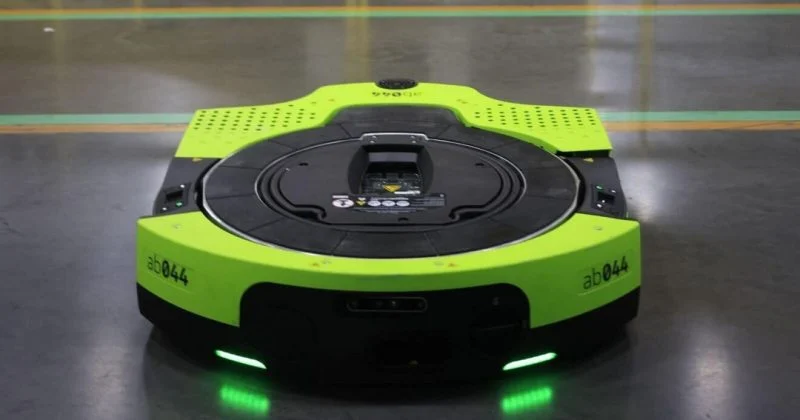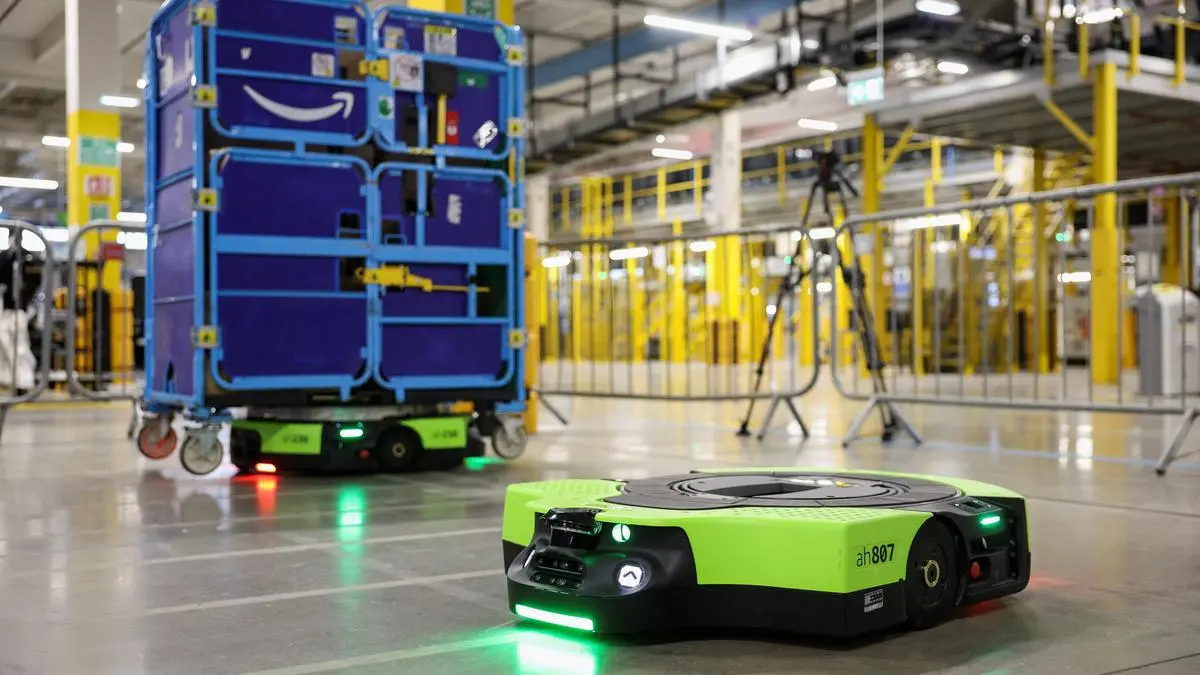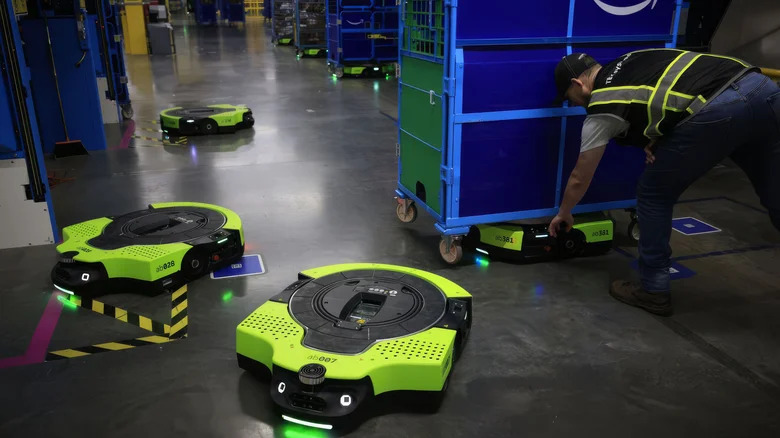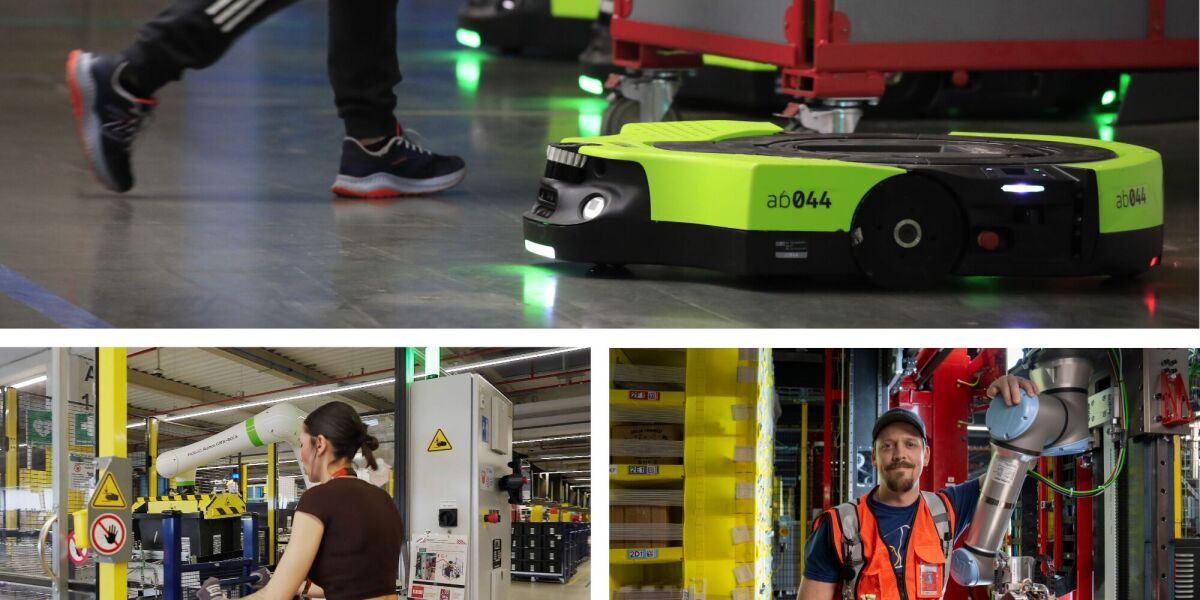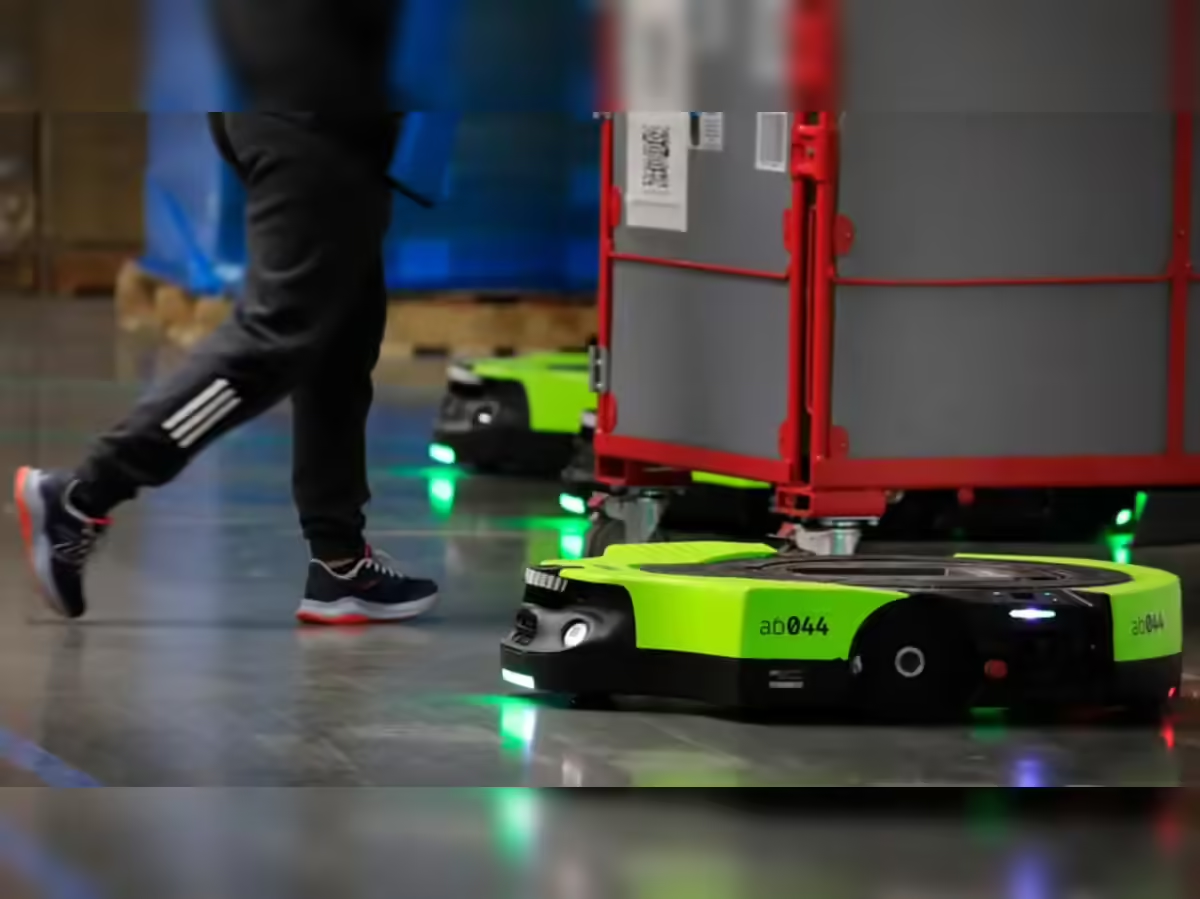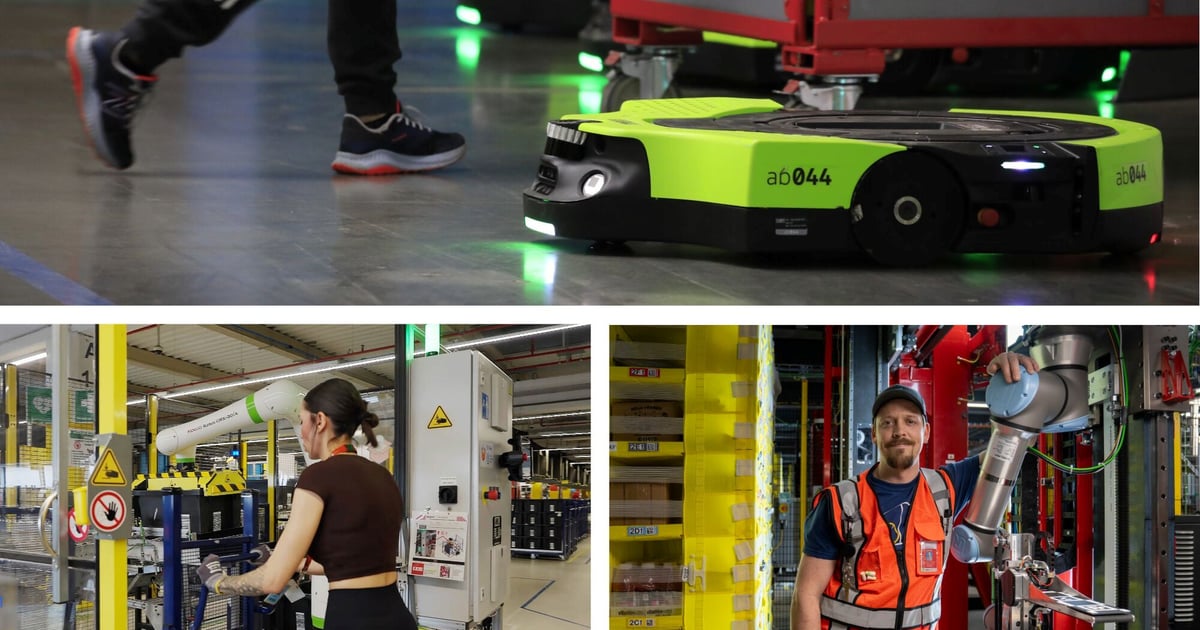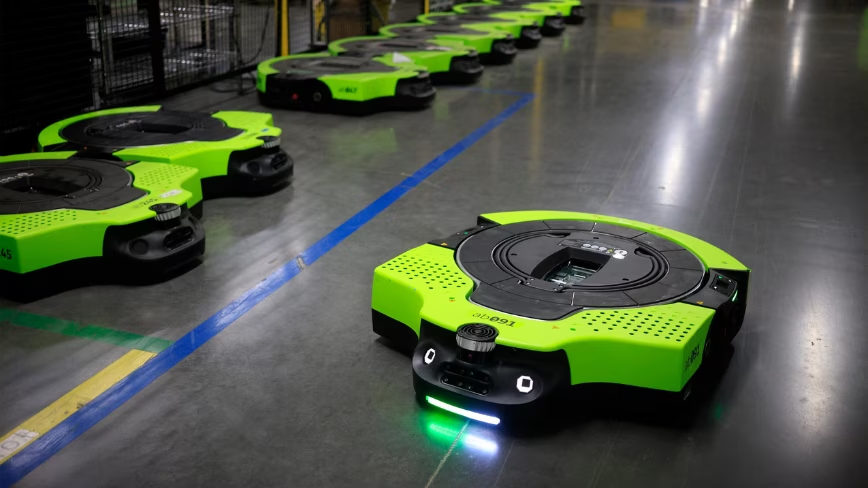
The pitch for Amazon’s new warehouse robot is that you talk to it. At its “Delivering the Future” event at the Dartford fulfilment centre east of London on 4 June, Amazon unveiled a next-generation Proteus that takes instructions in plain language, no technical commands and no programming interface, alongside a plan to invest more than €10bn (about $11.6bn) in its European fulfilment network over the coming years.
The interface is the headline change. “You tell it what needs to be done. It figures out the priority, the route, the timing,” said Scott Dresser, vice president of Amazon Robotics, describing the robot as an assistant for material movement.
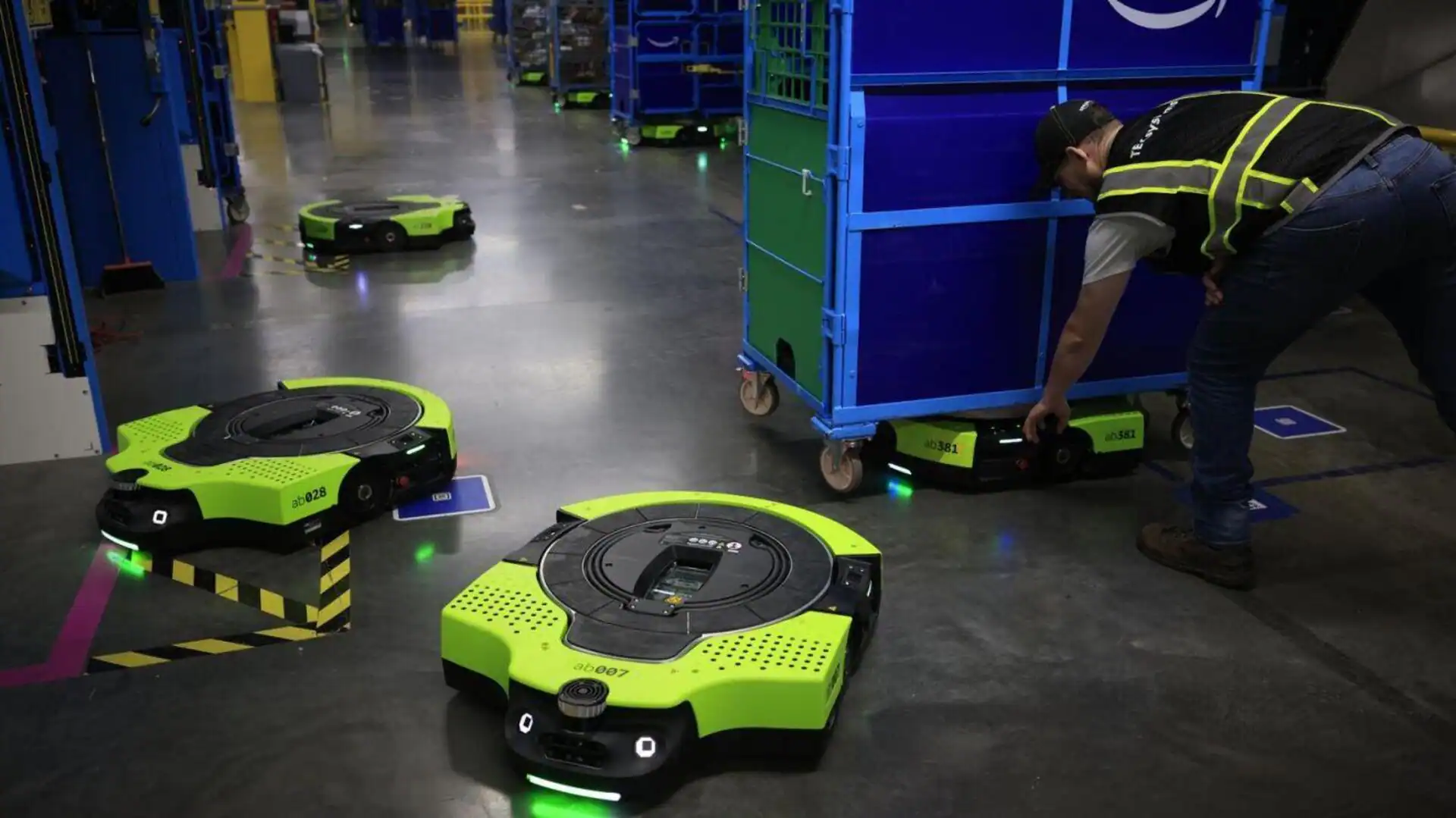
Where the current Proteus, deployed at 25 US sites, works only in dock areas moving carts that can weigh close to 400kg, the new version is designed to operate anywhere across a fulfilment or delivery site, transporting containers as they arrive and ferrying them between workstations.
It is not shipping yet. The next-generation Proteus is being piloted in Amazon’s labs, with European deployment planned for the first half of 2027.
That timeline puts it alongside two other systems Amazon is expanding across the region: STARK, a collaborative tote-handling robot first piloted in Barcelona and set to reach 15 European sites by 2027, and Vulcan, the company’s first robot with a sense of touch, which has moved from Spokane, Washington to its Hamburg facility in Germany.