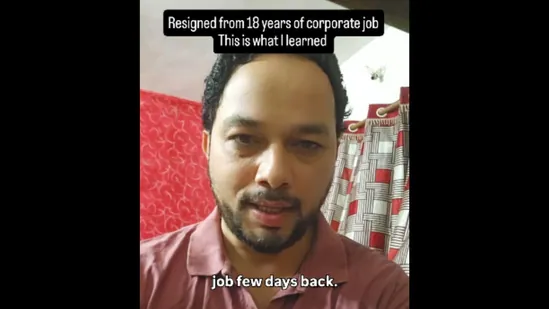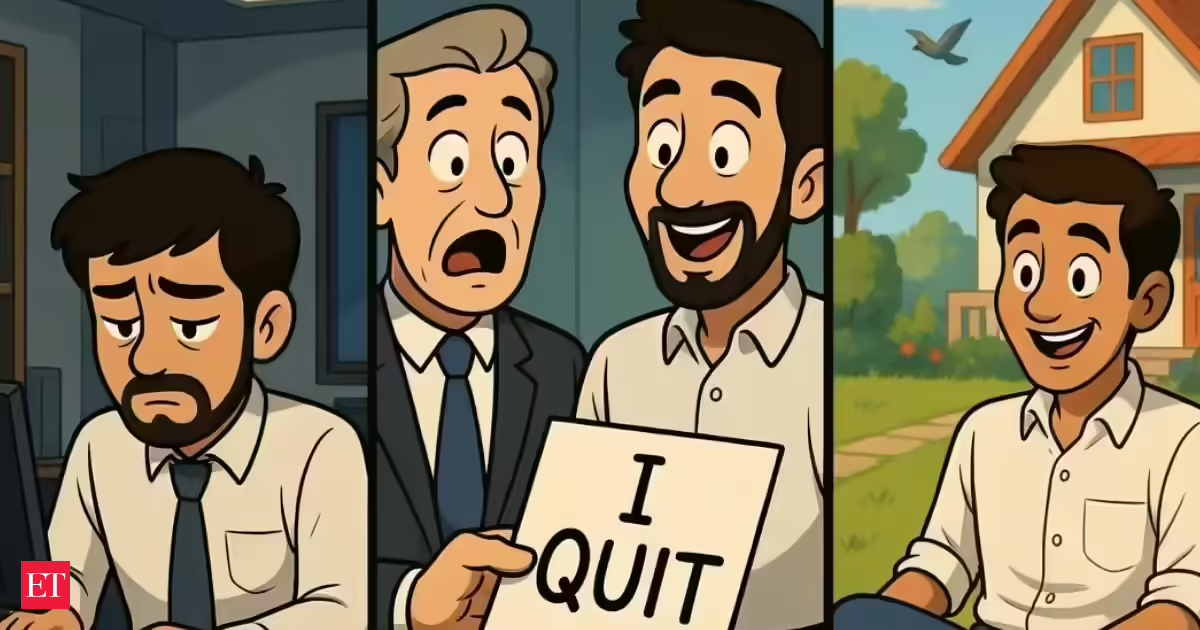
For months, he knew he wanted to leave. Yet every time the thought surfaced, he found a reason to stay. Maybe the next appraisal cycle would be better. Maybe the next quarter would bring more opportunities. Maybe the next conversation with management would finally change things. According to a post shared alongside a video titled “What 60 days without a salary taught me,” none of those things happened. The creator said he eventually resigned at the end of March after spending nearly two years with the same company. Looking back, he says the hardest part was not making the decision itself—it was letting go of the salary that came with it. “Salary is a hard drug to quit,” he wrote. The statement quickly caught attention online, not because it criticised a workplace, but because it described something many employees quietly experience. The post argued that income becomes woven into nearly every part of life. Rent, spending habits, weekend plans, confidence and even a person's sense of security can begin revolving around the monthly paycheck. As a result, he suggested, people often become so focused on maintaining financial stability that they stop asking a simpler question: whether they are actually happy. “It’s only after stepping outside the loop that you can see the loop clearly,” he wrote. User reaction to the post The reflection appeared to strike a nerve with people navigating similar decisions. Many users responded by sharing their own stories of leaving jobs, considering resignations or reassessing what work means to them. One user commented: “I too resigned my job without another offer in hand.” Another said: “Same story bro, tomorrow is my last day of notice period.” When asked whether he had secured another opportunity or simply taken a leap of faith, the origianl poster replied: “I dont want to do conventional job now.”Can someone live without a salary for a while? One particularly detailed response came from an user who recalled spending six months at home without an income. The commenter said that despite having financial obligations and worrying about due dates, something unexpected happened during that period. “Even without earning a single rupee, I was able to live peacefully at home without constantly feeling stressed,” the person wrote. The user contrasted that experience with life after rejoining the workforce, saying salary now seems to disappear quickly because of expenses and commitments. Reflecting on the contrast, the commenter added that stepping away from work temporarily helped them realise that happiness does not always come from money alone.What did people say after leaving demanding jobs? For others, the conversation was not just about finances but also about time and mental well-being. One user described how life changed after spending 40 days away from work. “40 days and i was able to regain my sleep cycle back to normal and peaceful evenings sitting back and enjoying a coffee WATCHING the rain without worrying about night shift, target, manager and riding to company IN rain,” the comment read. Another person, who appeared to be weighing a major career decision, simply wrote: “I'm in between a decision, thanks for this post.”(Disclaimer: This article is based on a viral social media post and online reactions. The Economic Times cannot independently verify the authenticity of the content and does not claim or endorse it.)
'I wasn't happy': Man says quitting his job made him realise that a steady salary alone cannot lead to happiness
After spending nearly two years at the same company, a man says quitting his job led to an unexpected realization about happiness. In a post reflecting on life without a salary, he explained how a steady paycheck had quietly become tied to his sense of security, confidence and daily decisions. But stepping away from work made him question whether financial stability alone was making him happy.
551 words~3 min read