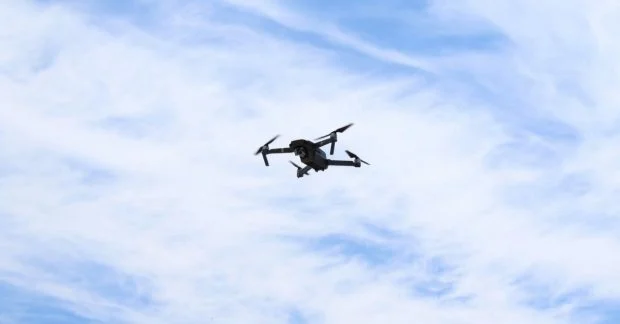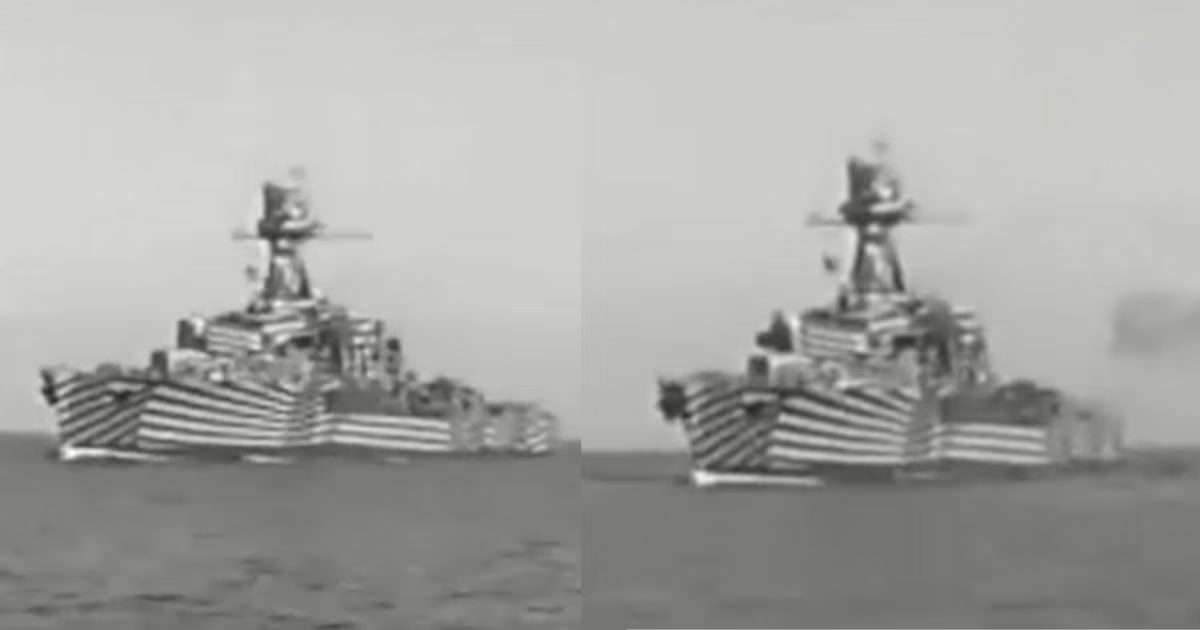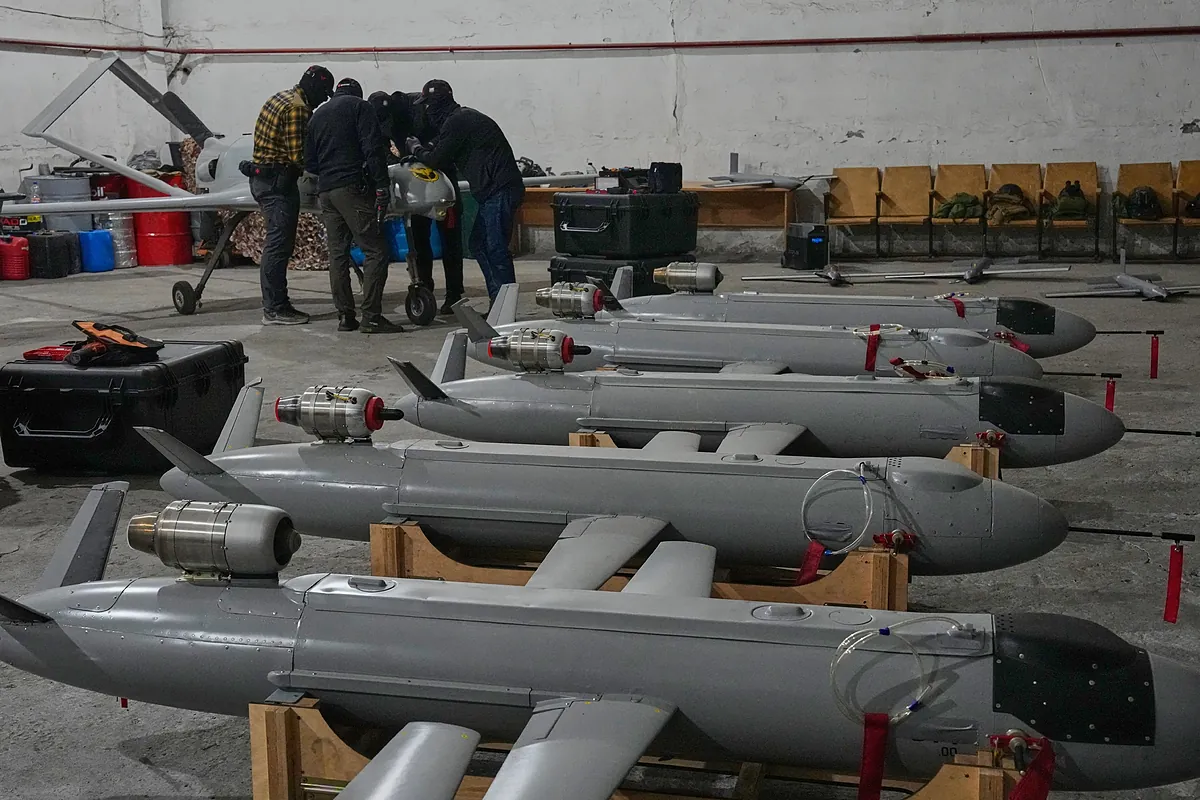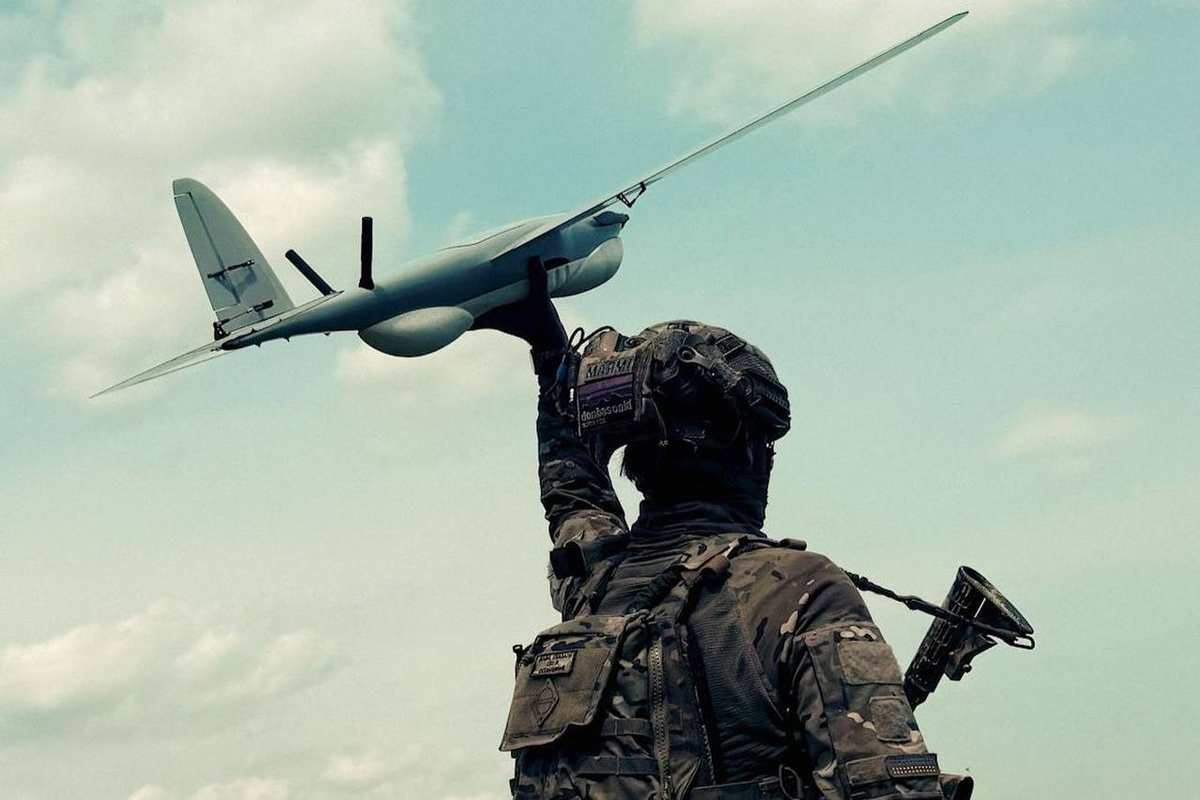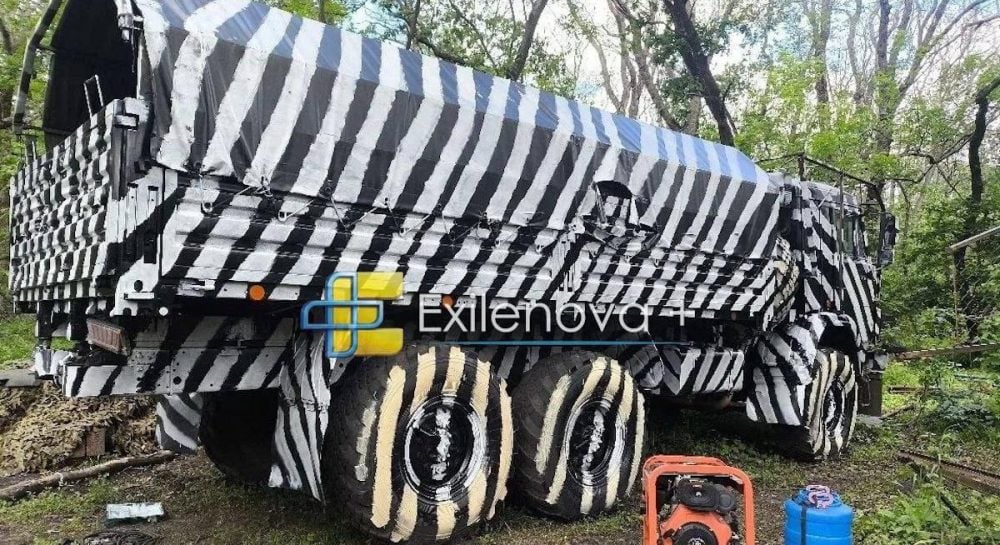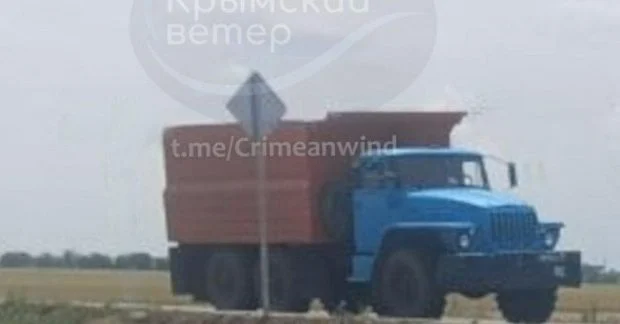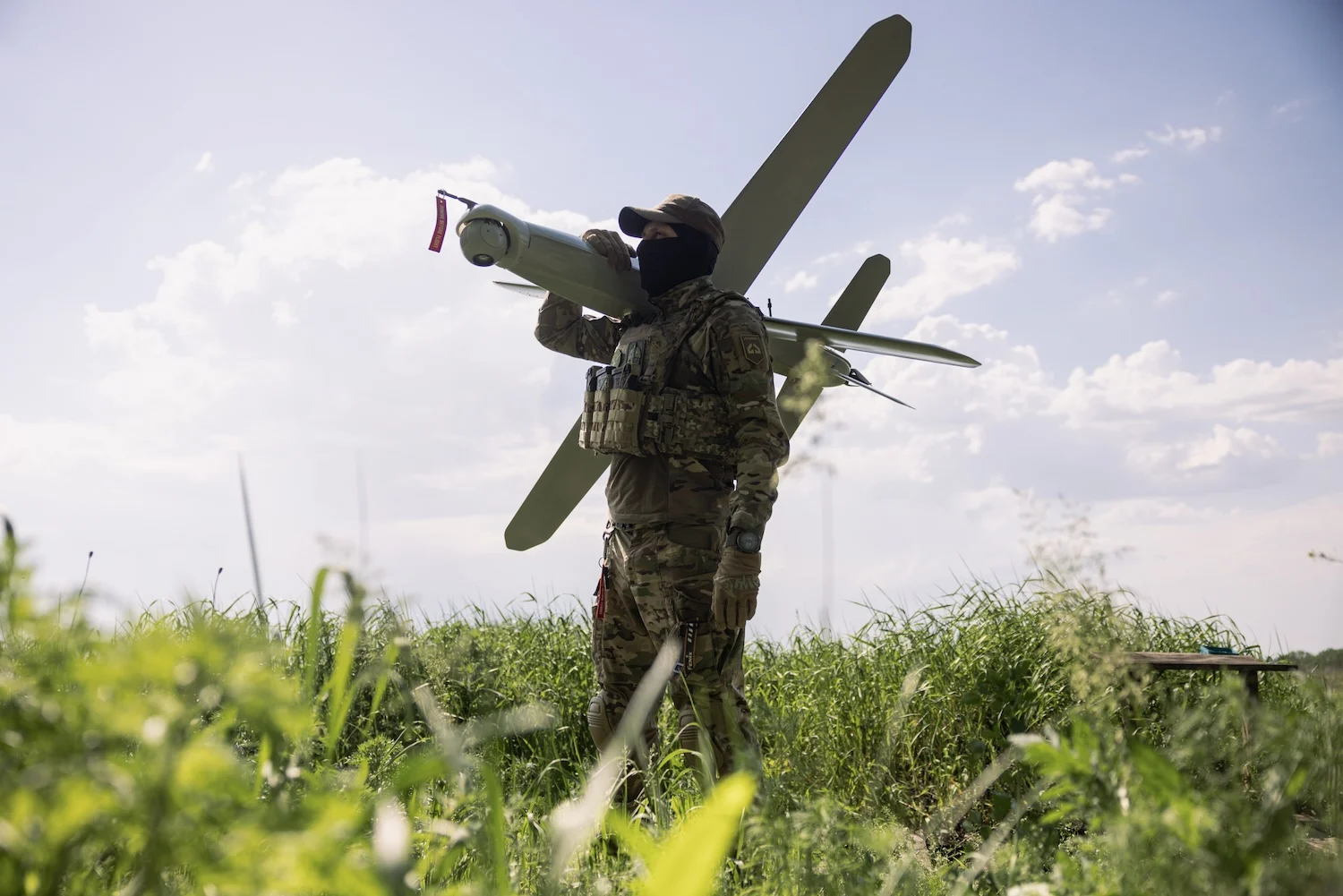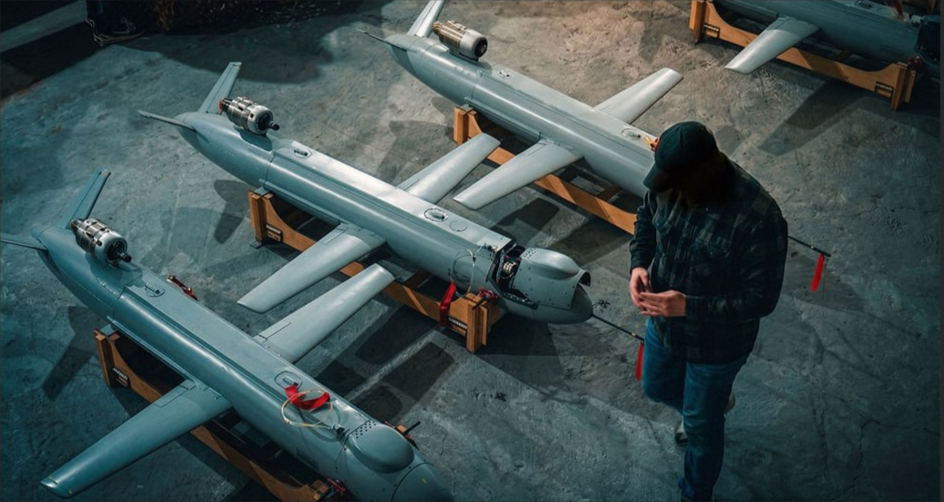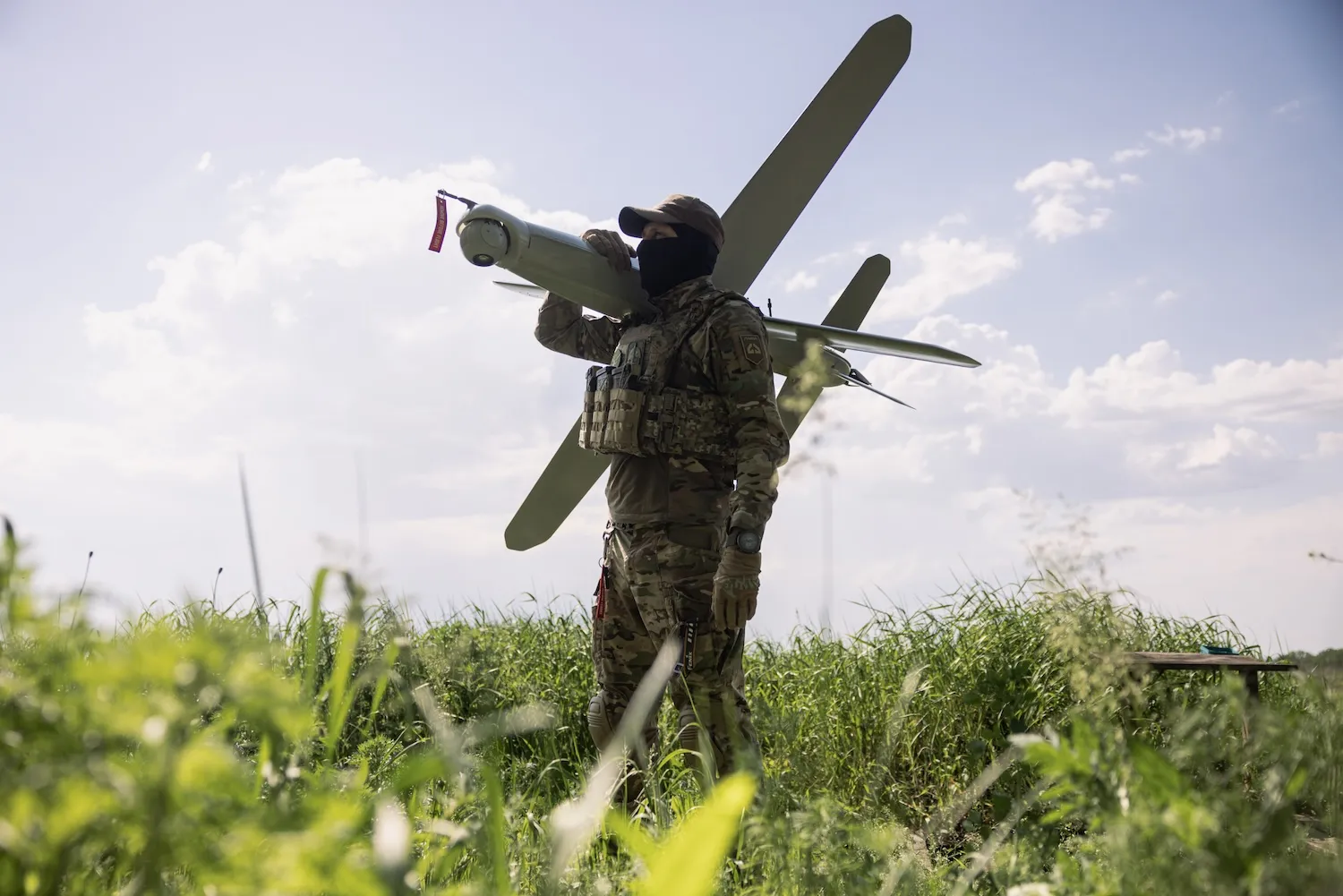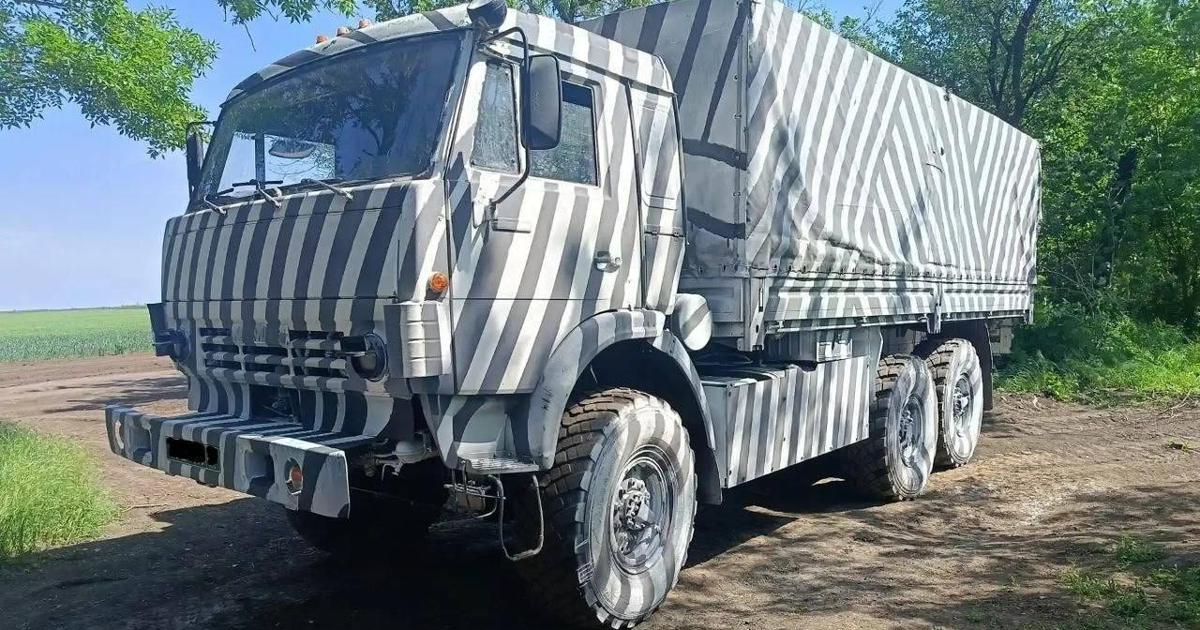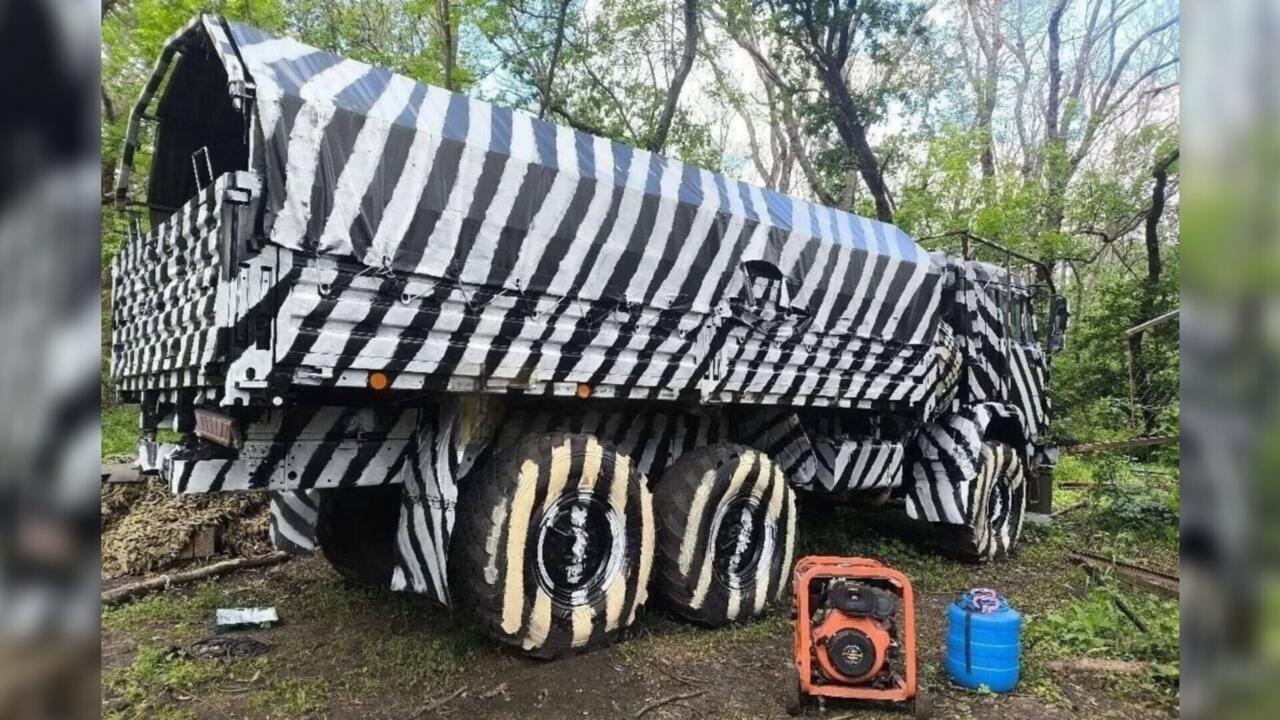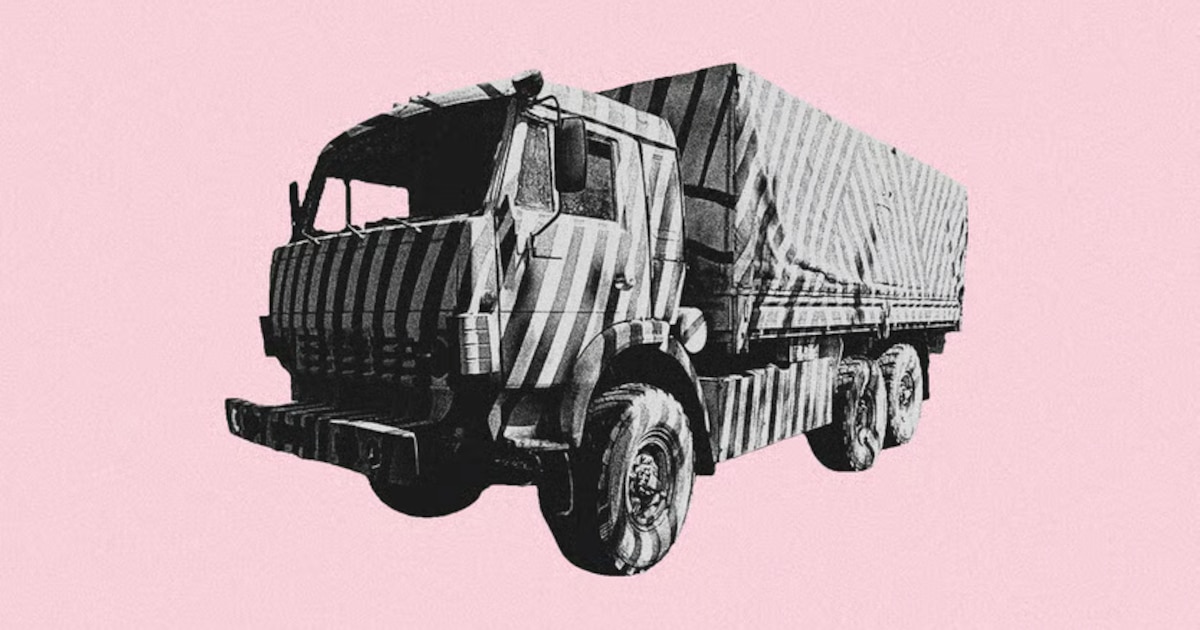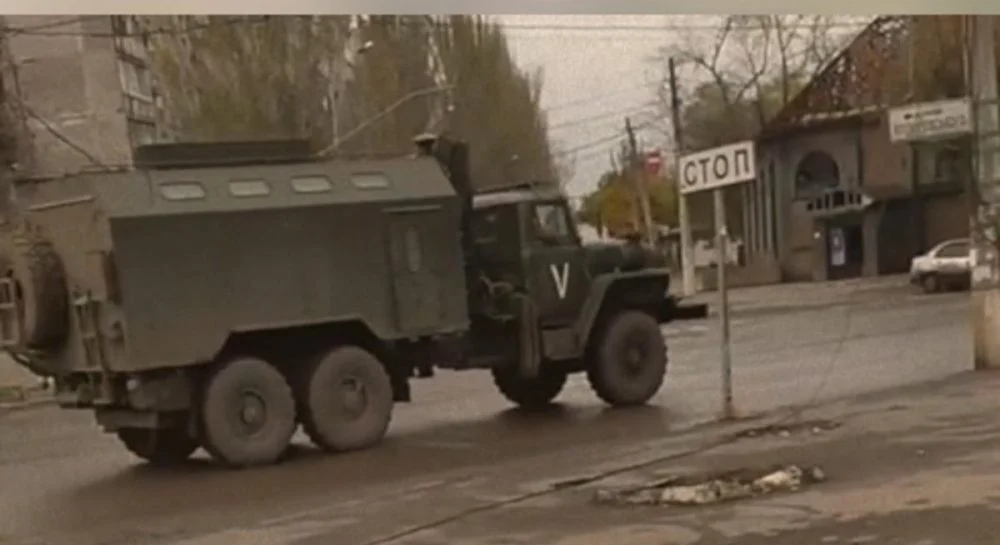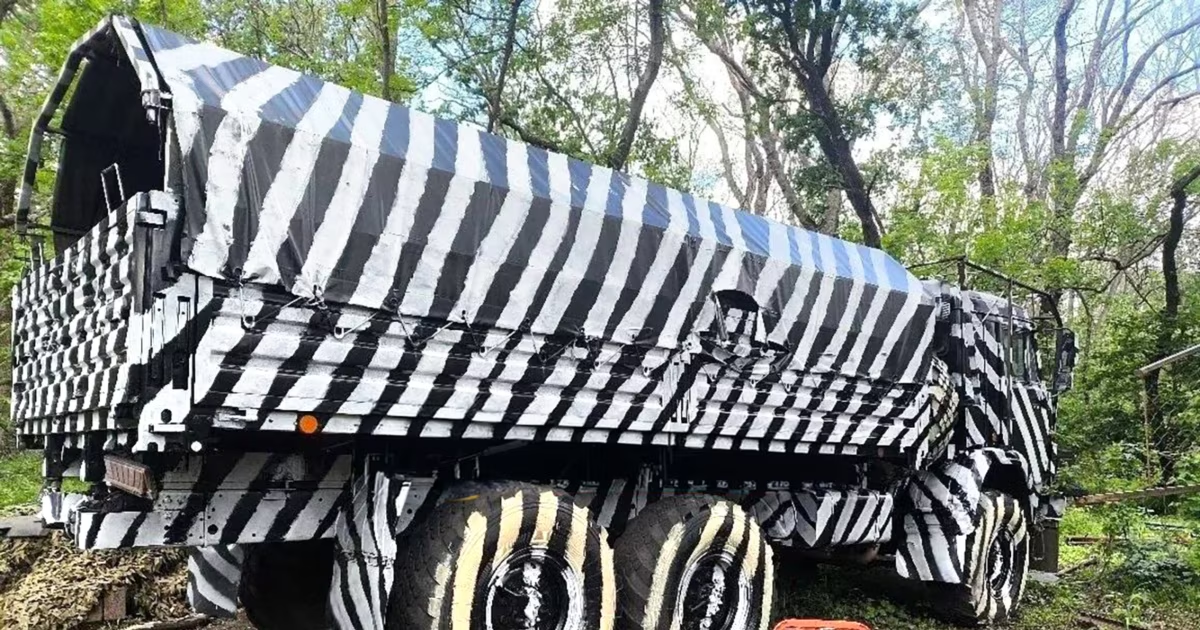
Russian military vehicles are being painted with vivid stripes to baffle AI systems of Ukrainian-launched drones, experts say. Now the "cloaking" tactic has apparently launched a high-stakes game of hide and seek on the highways of Russian-held territory in Ukraine.Pictures of Russian military vehicles overpainted with "dazzle camouflage" emerged in recent days as Ukraine has ramped up a "middle strike" drone campaign to hit Russian logistics equipment up to 200 kilometers from the front lines.Ukraine is launching kamikaze drones, including the US-made Hornet, in its ongoing midrange drone attacks that have included destroying trucks on roads shared by civilian and military vehicles.
A Russian logistics vehicle painted in black and white stripes at an unspecified location
Geert De Cubber, a specialist in autonomous systems at the Military Academy of Belgium, says military AI systems are trained with pictures of obvious targets before being released into battle. "You feed the algorithm a very large number of labeled images and the algorithm will learn for itself how to associate the features such as colors, patterns, textures, and gradients in the image to labels," he told RFE/RL.In the context of Ukraine, visual cues such as forest green color schemes and the "Z" symbol associated with Russia's invasion of Ukraine would be obvious inputs to visual identification algorithms.Zebra patterns appearing on trucks in recent days may be able to throw some optical hunting systems off the scent, De Cubber explains."If the dazzling patterns are not in the [drone's] database, then they would certainly have an effect on the performance of the detector," he says.In military applications, the robotics expert says, AI targeting menus must remain tightly constrained."If you train the algorithm on military buses, you wouldn't want it to generalize the detection to school buses."