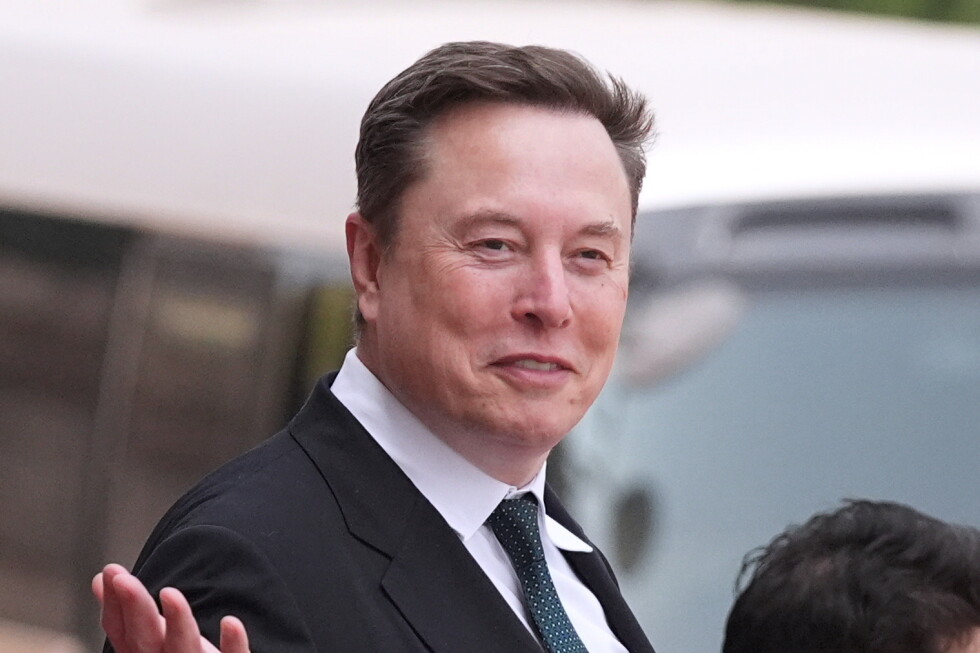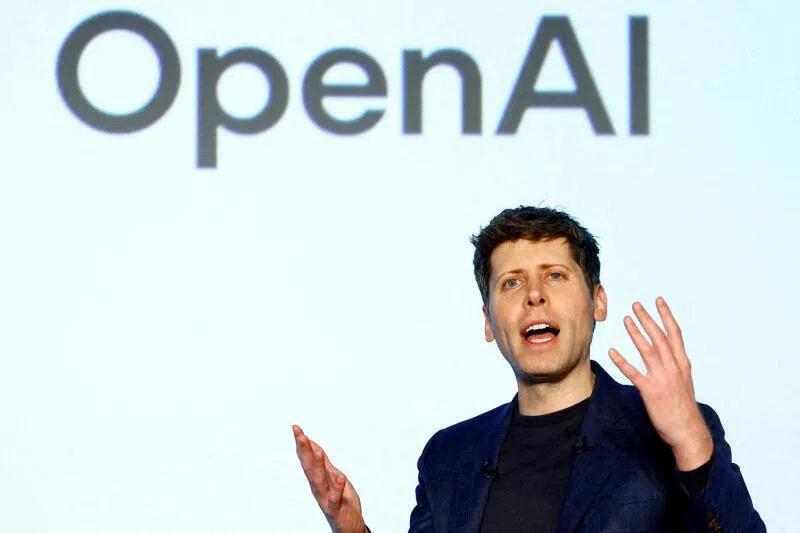
Some of the leading artificial intelligence companies are moving toward initial public offerings this year at eye-popping valuations. From Anthropic to SpaceX to OpenAI, tech giants are looking to take their shares public to access more capital in the race to shape the technology's future.The amount of money involved in building and maintaining artificial intelligence models, the pursuit of artificial general intelligence that can surpass humans at many tasks, and widespread AI adoption all have led to an air of excitement around the technology that has helped lift the stock market to record highs."These companies are now burning through cash to win the AI race, and public equity is the cheapest source available, particularly in a rising interest rate environment," said Michael Field, chief equity analyst at Morningstar.But amid the billions - even trillions - at stake, worries about an AI bubble are looming in the background. Some experts fear tech companies and venture capitalists are pouring too much money into a still-nascent and unproven technology.For now, though, the market shows no signs of a slowdown. Here's a look at some of the biggest AI-focused companies.SpaceXElon Musk's SpaceX was valued at $800 billion last year, but its value grew to $1.25 trillion after the space exploration company merged in February with Musk's artificial intelligence company, xAI. Now, SpaceX plans an IPO that could become one of the biggest stock sales ever - even though the company is currently losing billions of dollars a year. SpaceX lost $2.6 billion from operations last year on $18.7 billion in revenue, according to a May regulatory filing, and the losses kept piling up at the start of this year. xAI, which features the Grok chatbot, lost $6.4 billion in operations last year, according to a company document.Musk got SpaceX to buy xAI earlier this year despite protests from some SpaceX investors that it was a bailout and unethical given that he was a controlling shareholder in both.SpaceX said on Wednesday it plans to raise up to $75 billion when it goes public this month, setting the stage for the largest-ever stock market debut and putting Musk on course to becoming the world's first trillionaire. An offering of that size would easily break the record for the largest IPO, which was set by Saudi Aramco in 2019 when the oil giant went public and raised $26 billion.AnthropicAnthropic, the maker of the Claude chatbot, was formed in 2021 by ex-OpenAI leaders. It was recently valued at $965 billion, making it one of the world's most valuable startups. It has been a meteoric rise for what was once a little-known research laboratory. The San Francisco-based company is moving toward going public on Wall Street, announcing June 1 that it has submitted a confidential filing with the U.S. Securities and Exchange Commission for a proposed IPO.Anthropic has said it is making annualized revenue of $47 billion from selling its technology to people and organizations using Claude to write code and do other work and personal tasks on their behalf.OpenAIThe maker of ChatGPT began in 2015 as a nonprofit dedicated to developing AI for the common good. It is now a company valued at $852 billion planning an IPO as soon as this fall.While OpenAI may have helped set off the current AI boom, Anthropic's meteoric rise and Claude's growing popularity have left the ChatGPT maker playing catch-up.In an unsuccessful lawsuit against OpenAI and its top executives, Elon Musk, an OpenAI co-founder, claimed the company diverted from its founding mission to make more money. OpenAI had countered that Musk was simply seeking a bigger slice of the company. OpenAI has not yet reported filing initial IPO paperwork with the SEC.Several AI heavyweights are already public companiesGoogle designed the Gemini AI assistant in response to a competitive threat posed by OpenAI's ChatGPT, which came out in late 2022. Gemini AI models are integrated into Google search and other products such as Maps. The market value of Alphabet, Google's Mountain View, California-based parent company, was $4.54 trillion at the beginning of June, up from $2.3 trillion a year earlier. That growth is a sign that Alphabet's spending spree on AI is producing dividends so far, despite investor worries about some of its peers' massive AI investments.Meta's AI push has meant integrating its assistant, Llama, into all aspects of its business, including advertising and consumer-facing tools such as a digital assistant that can help with daily tasks, as well as image and video creation. Unlike many rival models, Llama is open source, meaning it is largely available to the public and to developers. Meta AI is available as a standalone app and it is integrated into the Menlo Park, California-based company's smart glasses. Meta's market value as of early June was $1.55 trillion, down from $1.76 trillion a year earlier amid investor concerns about the company's massive AI spending.Microsoft, which went public 40 years ago, likely would have been running behind in the AI race were it not for a timely multibillion-dollar investment in OpenAI. Microsoft provided the computing power and financial backing that helped OpenAI build ChatGPT. In turn, Microsoft was able to use the same technical foundation to power its own AI assistant, now called Copilot. The once-exclusive partnership has since evolved as both companies look to other partners to advance their AI ambitions.
AI companies are barreling toward huge Wall Street debuts. A look at the biggest players - The Economic Times
From Anthropic to SpaceX to OpenAI, tech giants are looking to take their shares public to access more capital in the race to shape the technology's future.
884 words~4 min read