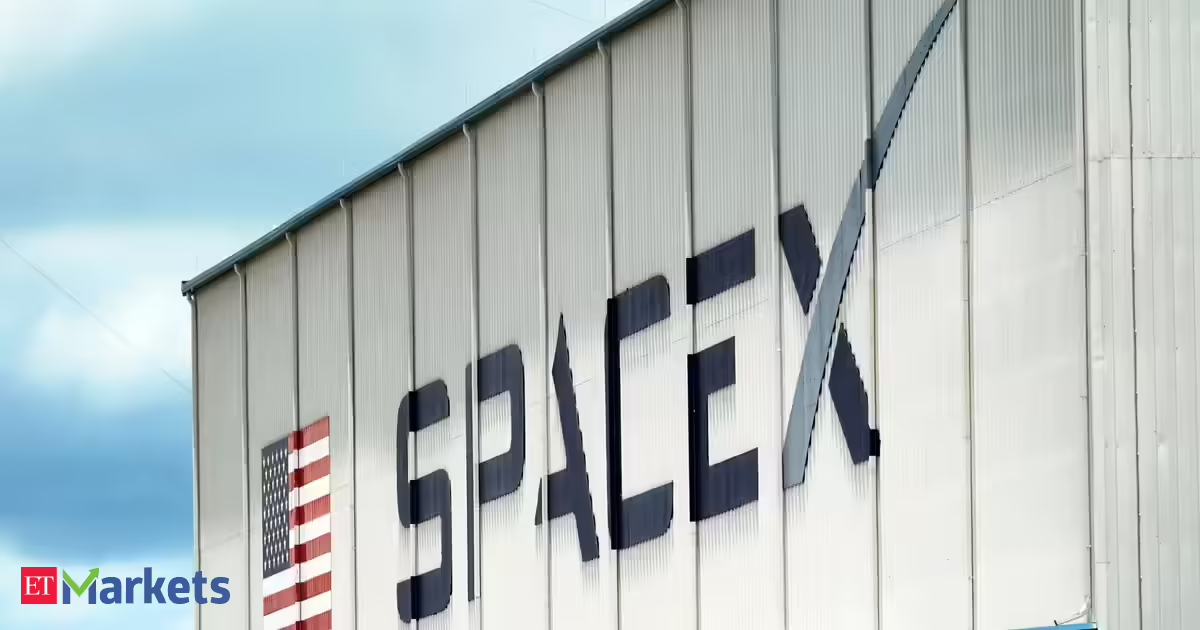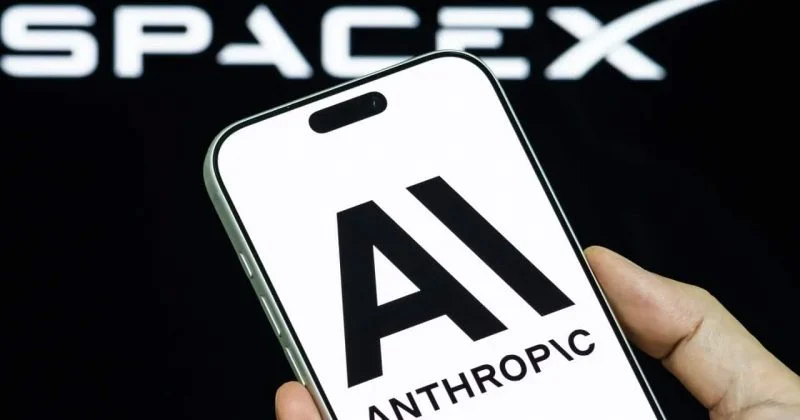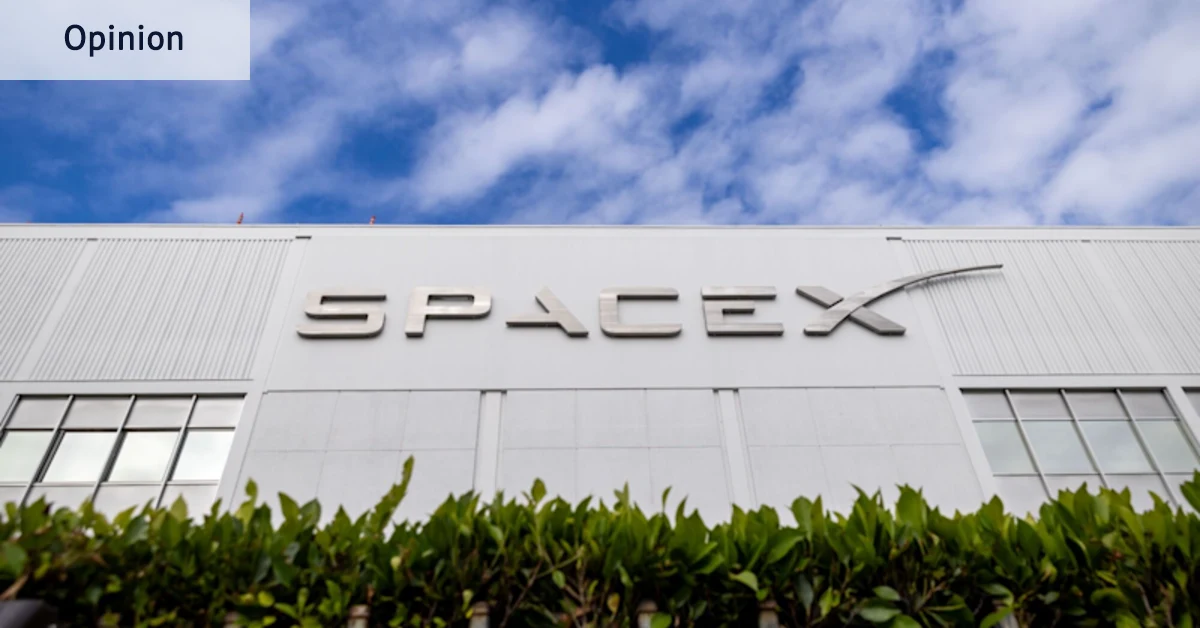
OpinionJune 2, 2026 — 12:09pmElon Musk’s SpaceX is on the verge of a $US1.75 trillion (2.4 trillion) sharemarket listing. Anthropic has filed early documents for a $US1 trillion-plus initial public offering. And OpenAI isn’t far behind with its own $US1 trillion-plus float.There’s never been anything quite like this: three giant start-ups, with combined market valuations approaching or surpassing $US4 trillion, listing on the US market within months of each other.Excluding SpaceX’s rockets, the oldest of these three AI ventures now being valued at more than $US1 trillion each is just over a decade old. The world’s largest physical retailer, Walmart, founded nearly 64 years ago and earning more than $US22 billion a year, has a market capitalisation of less than US$1 trillion now and IBM, around for nearly 115 years, is worth only about $US300 billion.Valuations are sky-high for AI companies like SpaceX, and keep rising. Can it continue?BloombergNone of those AI giants is profitable, with only Anthropic appearing to be on revenue and cost run-rates that put potential profitability on the horizon.Indeed, as a group, they are racking up multi-billion dollar losses each month. SpaceX lost $US4.3 billion, on $US45.7 billion of revenue, in only the first quarter of this year.Yet, they have been able to raise vast amounts of capital at ever-increasing valuations from private investors ahead of their floats – Anthropic, valued at $US380 billion in February, raised $US65 billion at a company valuation of $US965 billion this week. And they are expected, between them, to raise the best part of $US200 billion more before the end of the year.The need for ongoing access to very large chunks of new capital makes AI companies acutely vulnerable to any misstep, either of their own making or in their external environment.SpaceX will be first cab off the rank, selling about $US75 billion worth of new shares and testing the market’s appetite for capitalising an AI future that’s opaque and impossible to value with conventional methods. At $US1.75 trillion, it would be valued at more than 100 times its revenues.With Nasdaq, the New York Stock Exchange and other index providers changing their rules to fast-track the AI IPOs’ inclusion immediately into their indices – a process that normally takes three months – there will be a level of forced investment from exchange-traded funds and passive funds that track these indices to help ensure them a smooth transition into the public markets.Plus, there’s extraordinary hype among institutional and retail investors alike about AI and its eventual commercial potential, with SpaceX’s listing also buoyed by Musk’s personal followers, captured by his success at Tesla and his sci-fi vision of lunar missions, the colonisation of Mars and solar-powered data centres in space.Still … what if? What if one of these offerings fizzles?That’s not a prediction. As long as the US sharemarket remains relatively stable through to the listing of the three companies, they should get away smoothly, such is the enthusiasm for all things AI – even if the impact of gathering the $US200 billion or so to top up their coffers is to force investors to sell other listed investments to raise the cash to participate in the IPOs.The companies – indeed the entire AI sector and those dependent on it, like the companies selling the computer chips or constructing data centres and the plants to power them – are reliant on open-ended access to capital, for which they have an insatiable appetite.They’ve been testing the limits of private markets, which is why SpaceX, Anthropic and, inevitably, OpenAI are now seeking access to the $US70 trillion or so US sharemarket.To maintain that access, they have to sustain the accelerating increase in their valuations even as those valuations, and the rate at which they have escalated, stretch credulity, with the pace of rising capital investments on AI development significantly outstripping their revenue growth rates.SpaceX’s capital expenditures in the March quarter, for instance, were $US10.1 billion, up from $US4 billion in the same quarter last year. Its revenue was less than half the amount it invested.Even the “hyperscalers,” the massive tech companies with massive cash flows from more established activities, are investing beyond their cashflows.Google’s parent company Alphabet, having previously relied on its own cash generation and debt to fund its AI investments, announced plans for a $US80 billion equity raising this week (including $US10 billion from legendary investor Warren Buffett’s conglomerate Berkshire Hathaway).That need for ongoing access to very large chunks of new capital makes AI companies, particularly pure AI contenders like SpaceX, Anthropic and OpenAI, acutely vulnerable to any misstep, either of their own making or in their external environment.They’ll be even more vulnerable in a listed, transparent environment.If, for instance, OpenAI missed its revenue targets and shareholder expectations in a listed environment, its value – $US852 billion at its last $US122 billion raising in March – would fall (probably precipitously), instead of continuing to rise and rise.Any indication of financial gravity in a sector that has so far defied it would have repercussions throughout the highly connected, even incestuous tech sector, where circular financial relationships are a pervasive and structural feature caused by the sheer demand for capital to fund the training of the companies’ AI models.For the moment, the strength of the sharemarket and the hype around AI provides, it seems, open-ended access to that capital, the lifeblood of the sector.It wouldn’t take much, however – a sharp decline in the overall sharemarket, a missed revenue target, a regulatory clampdown that slows development or an AI breakthrough in China – for valuations to be unwound, access to capital to be throttled and for an implosion to rock the entire sector as the mutual dependence of its participants becomes a liability rather than an asset.The whole industry is an edifice built on the flimsiest of foundations, vulnerable to the merest setback.The whole industry is an edifice built on the flimsiest of foundations, vulnerable to the merest setback.That’s not a comment on the technology, which could lead to profound changes in the way we work and live, but rather on the Ponzi-like structures that have – through necessity because of the sheer scale of the finance required -- been created to fund it.At present, there is nothing to suggest that the spiralling AI valuations could unravel, even though the productivity-enhancing benefits of AI that are supposed to support the valuations by foreshadowing massive surges in revenue and supercharged earnings growth have yet to emerge to any meaningful degree.Anthropic is, however, showing signs that such growth is feasible. A year ago, its annualised revenue run-rate was $US4 billion. By July this year, it expects it to be $US50 billion. Its narrow focus on business applications differentiates it from most other AI aspirants.At some point, the distance between valuations today and the point of profitability, or even cashflow breakeven, in the future – a distance that is increasing as the growth in capital expenditures outstrips revenue growth by a widening margin – could create a pause for investor thought.It’s all well and good to say, as Musk did in the SpaceX prospectus, that the addressable market for AI-related activities might be $US28.5 trillion.If that market is unable to be commercialised by the AI companies for decades, it’s worth nothing in the net present value calculations of future cash flows that investors normally use to value their investments. They have set those aside, at least for the moment, during the AI boom.That may be appropriate while the AI sector is still nascent, but at some point, more conventional investment arithmetic will be brought to bear and the notion that the value of AI companies can only ever increase exponentially may be tested.The industry either matures in the relatively near term, with its cashflows covering its capital expenditures and profits within distant sight, or its ability to continue to access capital will come under pressure.That would have implications, probably unpleasant, not just for sharemarkets or those providing increasing volumes of debt to AI companies, but also for the money sunk into AI infrastructure, and for real economies.The Market Recap newsletter is a wrap of the day’s trading. Get it each weekday afternoon.From our partners
SpaceX, Anthropic, OpenAI: What if one of the mega AI IPOs fizzles?
The companies driving artificial intelligence need access to ever-increasing amounts of capital at ever-increasing valuations. That makes them vulnerable.
TL;DRAI
SpaceX, Anthropic, OpenAI IPOs at $4T+ valuations, raising $200B despite unprofitability. Sector's extreme capital hunger for model training creates systemic risk; revenue miss or market shock could trigger valuation collapse and funding freeze.
1,358 words~6 min read