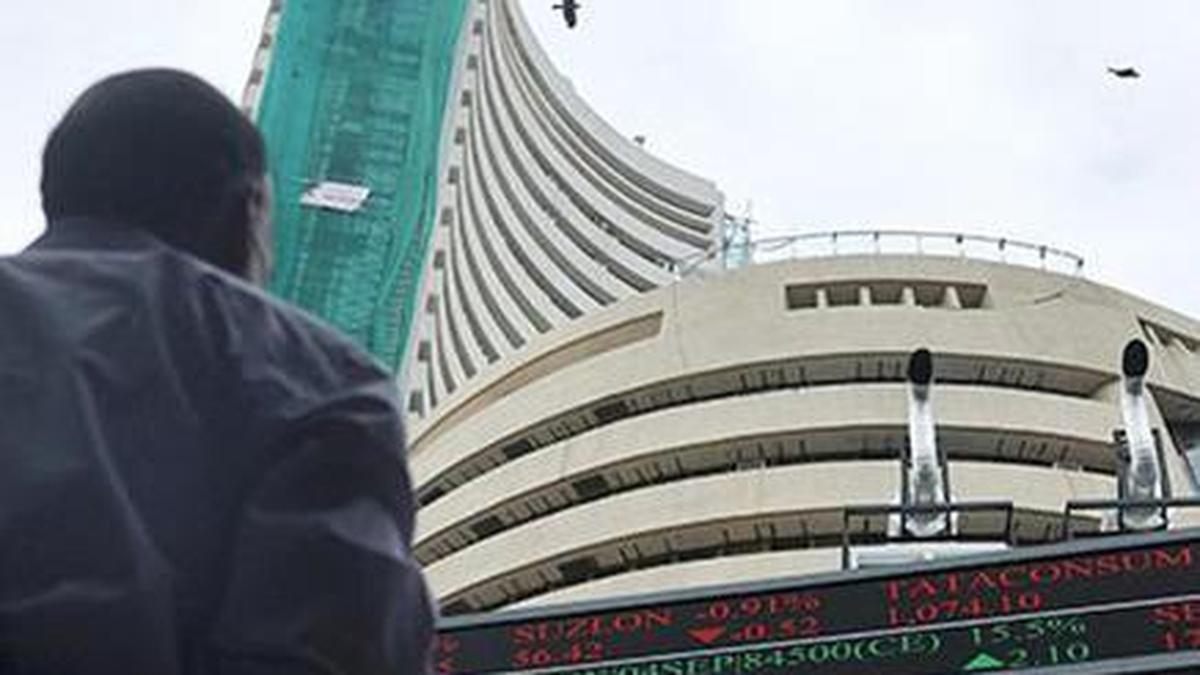
Indian stock market opened in red on Thursday, with Sensex and Nifty falling amid persistent FII selling and other headwinds.At 9:22 am, Sensex traded 300 pts lower, below the 74,100 level; meanwhile, Nifty 50 dropped over 50 pts to trade below 23,350. This came as India VIX, which measures volatility in markets, jumped 6% to 16.28.Infosys, Eternal, ICICI Bank, Bharti Airtel, Kotak Mahindra Bank and Reliance Industries shares were the top losers on Sensex, falling up to 1%. Asian Paints shares, meanwhile, recorded marginal gains.Broader markets also opened in the red, with Nifty Midcap 100 and Nifty Smallcap 100 indices falling up to 0.3% each. All sectoral indices opened in the red, with Nifty IT falling nearly 1% to lead losses. Around 1,242 stocks declined on NSE, while 1,069 stocks advanced and 128 remained unchanged.Headwinds stronger than tailwinds for Dalal StreetIn the near-term, headwinds are stronger for the market than tailwinds, said VK Vijayakumar, Chief Investment Strategist at Geojit Investments. “The continuing uncertainty in West Asia and the big and sustained FPI selling are the strong headwinds which are weighing on the market. In the absence of any resolution of the West Asia crisis, there is no scope for a healthy rally in the market. The bullish undertone of the booming markets in US, Japan, South Korea and Taiwan suggests more FPI selling in India,” he added.The aggressive short positions of the FPIs in the derivatives market indicate further potential downside unless there is an unexpected resolution to the West Asia crisis bringing crude prices down, the analyst noted, adding that the renewed clashes in Lebanon and the intermittent exchange of fire between US and Iran indicate no immediate resolution of the crisis. “Trading in this volatile market amidst huge uncertainty would be extremely risky. The ideal strategy in this situation is to wait and watch. Meanwhile market weakness will offer buying opportunities in high quality stocks under temporary pressure from FPI selling. Long-term investors can buy such stocks which have a good risk-reward construct now. For instance, the beaten down leading banks staged a recovery yesterday. Pharmaceuticals which are weak now have the potential to stage a comeback. Auto and auto ancillaries look good for the long-term,” according to Vijayakumar.Back in the Middle EastUS President Donald Trump criticised Israeli Prime Minister Benjamin Netanyahu as "crazy" in a phone call that involved expletives, saying he was "a little bit perturbed" that Israel's fighting with Hezbollah militants in Lebanon was holding back peace talks with Iran."We've worked very well together. I like Bibi a lot. And I work very well with him," Trump told The New York Post's "Pod Force One." In an interview on the American business-news channel CNBC, Netanyahu responded that he and Trump sometimes have "tactical disagreements" but have "common goals" and "agree on the main things."Israel and Lebanon agreed Wednesday to renew their fragile ceasefire and create a number of "pilot" security zones inside Lebanon from which Hezbollah militants would be banned. Trump, meanwhile, remained inconclusive about the timeline for Iran and US finally agreeing to their much-awaited peace deal.Rupee rises Indian rupee gained 7 paise to 95.69 against US dollar in early trade. “The higher oil prices have limited the rupee’s recent recovery and kept market sentiment cautious ahead of key domestic triggers,” said Jateen Trivedi, VP Research Analyst - Commodity and Currency, LKP Securities.“The next major reaction in the currency market is likely to come from the RBI policy decision on 5 June, where participants will closely watch the central bank’s stance on inflation, liquidity, and currency stability. For the near term, rupee is expected to trade within a range of 95.25–96.25,” he added.(With inputs from agencies)(Disclaimer: Recommendations, suggestions, views and opinions given by the experts are their own. These do not represent the views of The Economic Times)
Sensex falls over 300 points, Nifty below 23,350 amid persistent FII selling
Indian stock markets opened lower on Thursday, with Sensex and Nifty declining due to persistent FII selling and global headwinds. Geojit Investments noted that geopolitical uncertainties in West Asia and FPI outflows are weighing on the market, suggesting a cautious approach for investors.
634 words~3 min read