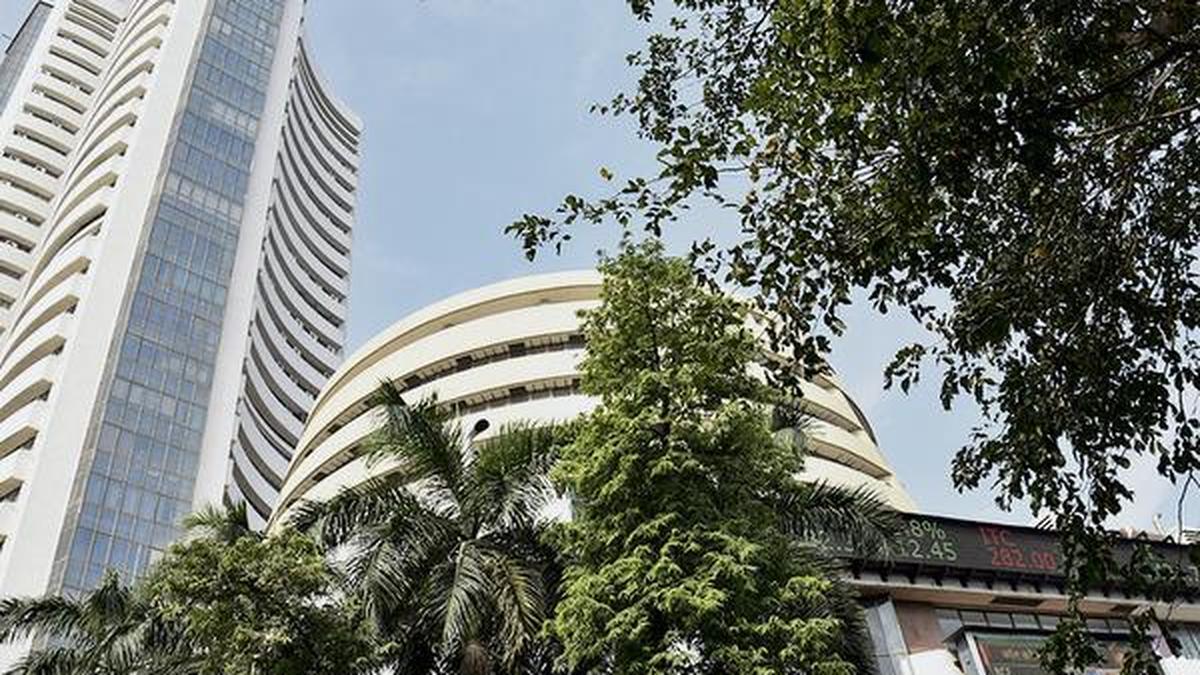
Indian equity markets witnessed a sharp sell-off on Monday, with the Sensex and Nifty tumbling over 1% each as a steep decline in global markets, continued foreign institutional investor (FII) outflows and other headwinds weighed heavily on investor sentiment.Sensex slumped over 650 points to trade below 73,600, while Nifty 50 tumbled over 200 points, slipping below the 23,150 level. Meanwhile, India VIX, which measures volatility in markets, surged nearly 12% to 17.66.The market rout wiped out over Rs 5 lakh crore from the combined market value of BSE-listed firms, reducing overall market capitalisation to Rs 456 lakh crore.All Sensex constituents traded in the red amid the bloodbath, with Zudio and Westside-parent Trent dropping nearly 2% to lead losses. M&M, ICICI Bank, Bajaj Finance and Tata Steel also declined 2% each.The bearish sentiment was broad-based, with Nifty Midcap 100 and Nifty Smallcap 100 indices sinking more than 1% each. All sectoral indices on NSE traded in the red, with Nifty Auto, Nifty IT, Nifty Consumer Durables, Nifty Realty, Nifty Private Bank, Nifty PSU Bank, Nifty Metal and several others dropping over 1% each. Around 2,073 stocks declined on NSE, while 492 advanced and 109 remained unchanged.VK Vijayakumar, Chief Investment Strategist at Geojit Investments, said markets are starting the week under significant pressure. He noted that the Nasdaq's 4.18% decline on Friday has unsettled global sentiment, triggering sharp selloffs in technology-heavy markets such as South Korea and Taiwan. Adding to the concerns, escalating tensions in West Asia, with Iran launching missiles at Israel following Israel's strikes in Lebanon, have pushed crude oil prices higher. Vijayakumar also pointed out that stronger-than-expected US jobs data has reduced the likelihood of an early interest rate cut by the US Federal Reserve, despite calls from President Donald Trump for lower rates.Here are the key factors behind today’s Dalal Street selloff:1) Global markets crashSouth Korea’s Kospi plunged 9% on Monday morning, leading to a 20-minute trading halt, as the massive selloff in tech stocks raged on. The index is now down about 14% from the record high it soared to last week. Japan’s Nikkei, meanwhile, plunged around 4% while Hong Kong’s Hang Seng and China’s Shanghai Composite fell more than 1% each.Wall Street sharply crashed on Friday, with the tech-heavy Nasdaq tumbling more than 4% to record its biggest single-day fall since April 2025, after a better-than-expected US jobs report raised worries about the Federal Reserve’s higher interest rates.The Nasdaq Composite index sank around 4.2%, weighed down by a more than 6% crash in Nvidia's share price and a nearly 8% drop in Broadcom shares, whose relatively weak guidance on Wednesday spurred fears that AI demand may not grow as quickly as estimated. The Dow Jones Industrial Average fell 1.4%, while the S&P 500 dropped nearly 3%.Also read: Why did Nasdaq plunge 4% to log worst day in over a year2) Fed rate hike worriesA surprisingly strong US jobs report showed employers added 1,72,000 jobs in May - more than double the 80,000 that economists had expected. While a strong jobs market reflects well on the economy, it can also trigger inflation worries and concerns that the Federal Reserve, the American central bank, is less likely to reduce its rates anytime soon."We are talking about a strong economy," said Gary Schlossberg, market strategist at Wells Fargo Investment Institute, as quoted by Reuters. "That just adds to inflation risk coming from the Gulf. It makes it difficult for the Fed to even think about rate cuts and might even increase the chances - although we're still not forecasting that yet - of a rate hike by the Fed before the end of the year against the backdrop of inflation,” he said.A rate hike by the Federal Reserve often triggers worry that the Indian counterpart RBI may follow with a similar move. Additionally, a rate hike by the American central bank puts pressure on the rupee, along with impact on certain sectors including IT.3) Persistent FII sellingForeign Institutional Investors (FIIs) remain sellers for the sixth consecutive session in the Indian market on Friday, selling Indian equities worth more than Rs 8,776 crore, according to provisional data on NSE.FII offloaded shares worth Rs 31,120 crore in the first week of June, Pabitro Mukherjee, Deputy Vice President-Research at Bajaj Broking, highlighted. Domestic Institutional Investors (DIIs), meanwhile were net buyers. “Investor sentiment remained subdued amid ongoing geopolitical tensions, which continued to support elevated crude oil prices. Heightened global uncertainty, coupled with prevailing macroeconomic challenges, resulted in cautious market participation. Going forward, institutional flows are expected to remain highly sensitive to developments in US–Iran relations and fluctuations in oil prices,” he said.4) Rupee tumblesRupee dropped 17 paise to 95.35 against the US dollar in early trade. This came after the Indian currency recorded sharp gains on Friday after the RBI maintained the repo rate at 5.25% and announced a series of measures to support foreign capital inflows and strengthen forex liquidity.“Overall, the policy is mildly supportive for the rupee, with the focus now shifting back to crude oil prices, FII flows, and upcoming US Non-Farm Payrolls data. Rupee range is seen between 95.00–96.00 in the near term,” said Jateen Trivedi, VP Research Analyst of Commodity and Currency, LKP Securities.5) Middle East tensions flare upTensions continue to rise in the Middle East. Israel’s military has launched military targets in western and central Iran, after Iran on Sunday fired several missiles at Israeli targets. This came even after US President Donald Trump insisted that an agreement to end the wider war remains well within reach, and reportedly told Israeli Prime Minister Benjamin Netanyahu to refrain from further attacks.Sounds of blasts were reportedly heard in Tehran, Tabriz and Isfahan, local media reported. This further weakens the already fragile ceasefire, and raises worries over further escalations.6) Oil prices surgeAs a result of the rising hostilities in the Middle East, oil prices surged. Brent crude futures jumped around 4% to near $97 per barrel, while WTI Crude futures gained over 3.5% to near $94 per barrel.This comes amid rising worries over the prolonged closure of the Strait of Hormuz, a narrow 33-kilometre waterway connecting the Persian Gulf with the Gulf of Oman that handles over 20% of the world’s daily oil and gas shipments.Also read: Crude oil jumps 3% as Israel attacks Lebanon in latest escalation. Where are prices headed?7) Bond yields riseAs a result of the rising inflation worries and oil prices, US Treasury yields surged. The yield on benchmark US 10-year notes rose to 4.57% while the 30-year bond yield rose to 5.024%. The 2-year note yield, which typically moves in step with interest rate expectations for the Federal Reserve, jumped to 4.191%. Falling bond yields typically make bonds less attractive to investors, which in turn can lead to some uptrend in markets.What lies ahead?The Nifty 50 closed Friday at 23,366.70, down 49.85 points or 0.21%, extending its consolidation phase as the index continued to struggle near the 23,500 mark amid persistent FII selling and lack of fresh domestic triggers, said Rajesh Palviya, Head of Research of Axis Direct, who highlighted that while the decline was modest, market sentiment remains cautious with participants closely monitoring global developments.“Global cues have turned distinctly negative after Wall Street witnessed a sharp sell-off led by technology, semiconductor and AI-linked stocks. The stronger-than-expected U.S. jobs data has reignited concerns that the Federal Reserve could maintain a hawkish stance for longer, resulting in higher bond yields and renewed risk aversion across global equities,” he added.From a technical perspective, the near-term bias remains cautious as long as the Nifty trades below the 23,500–23,550 resistance zone, according to the analyst. He sees that the immediate support is placed around 23,100, and a sustained breach below this level could trigger further weakness towards the 23,000–22,800 zone. However, despite the negative opening, any stability in global markets and easing in crude oil prices could help the index find support at lower levels, Palviya further said.Also read: Support at 23,000–23,100 zone remains critical for Nifty Bulls(With inputs from agencies)(Disclaimer: Recommendations, suggestions, views and opinions given by the experts are their own. These do not represent the views of The Economic Times)
Why is market crashing today? Sensex plunges 650 points, Nifty below 23,150. 7 factors behind selloff
Indian equity markets experienced a significant sell-off on Monday, with the Sensex and Nifty tumbling over 1% each. This decline was driven by a steep fall in global markets, continued foreign institutional investor outflows, and escalating Middle East tensions, pushing crude oil prices higher and raising concerns about US interest rates.
1,354 words~6 min read