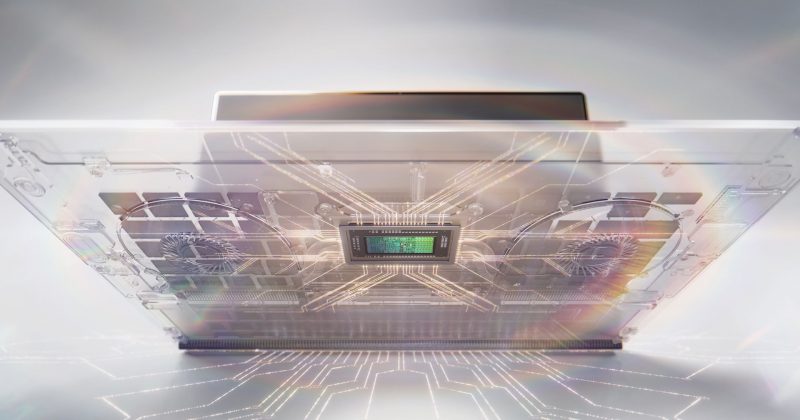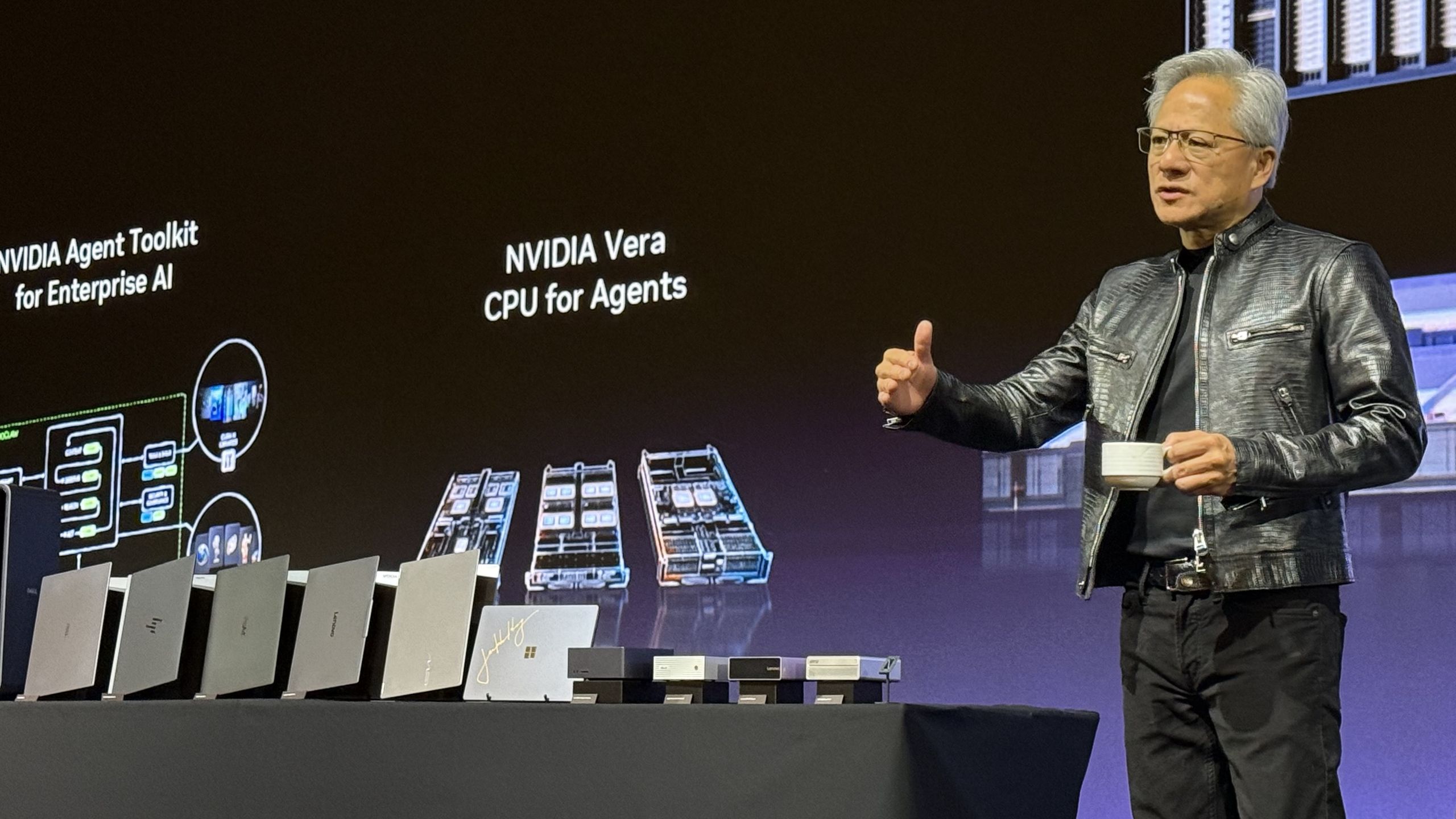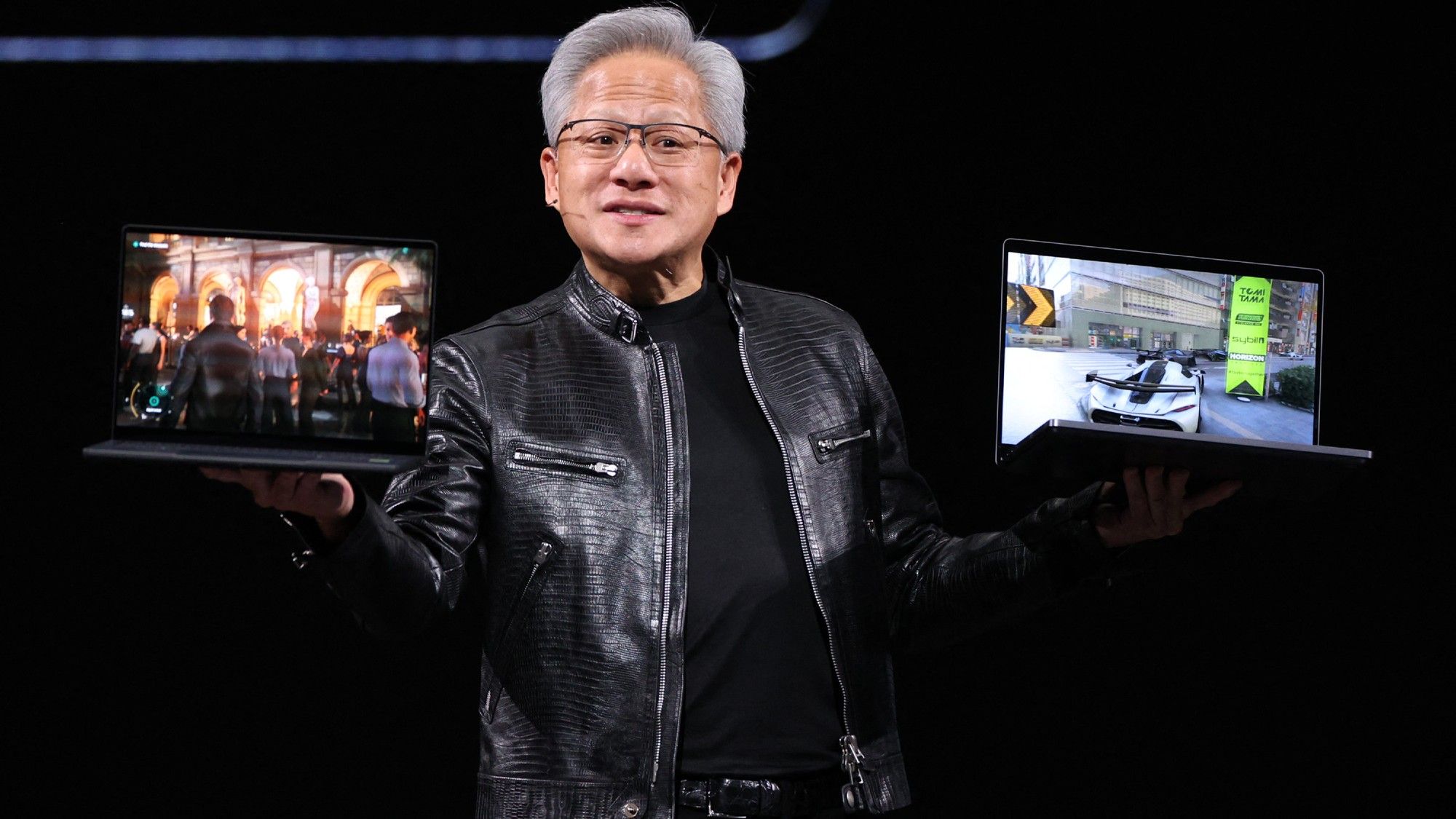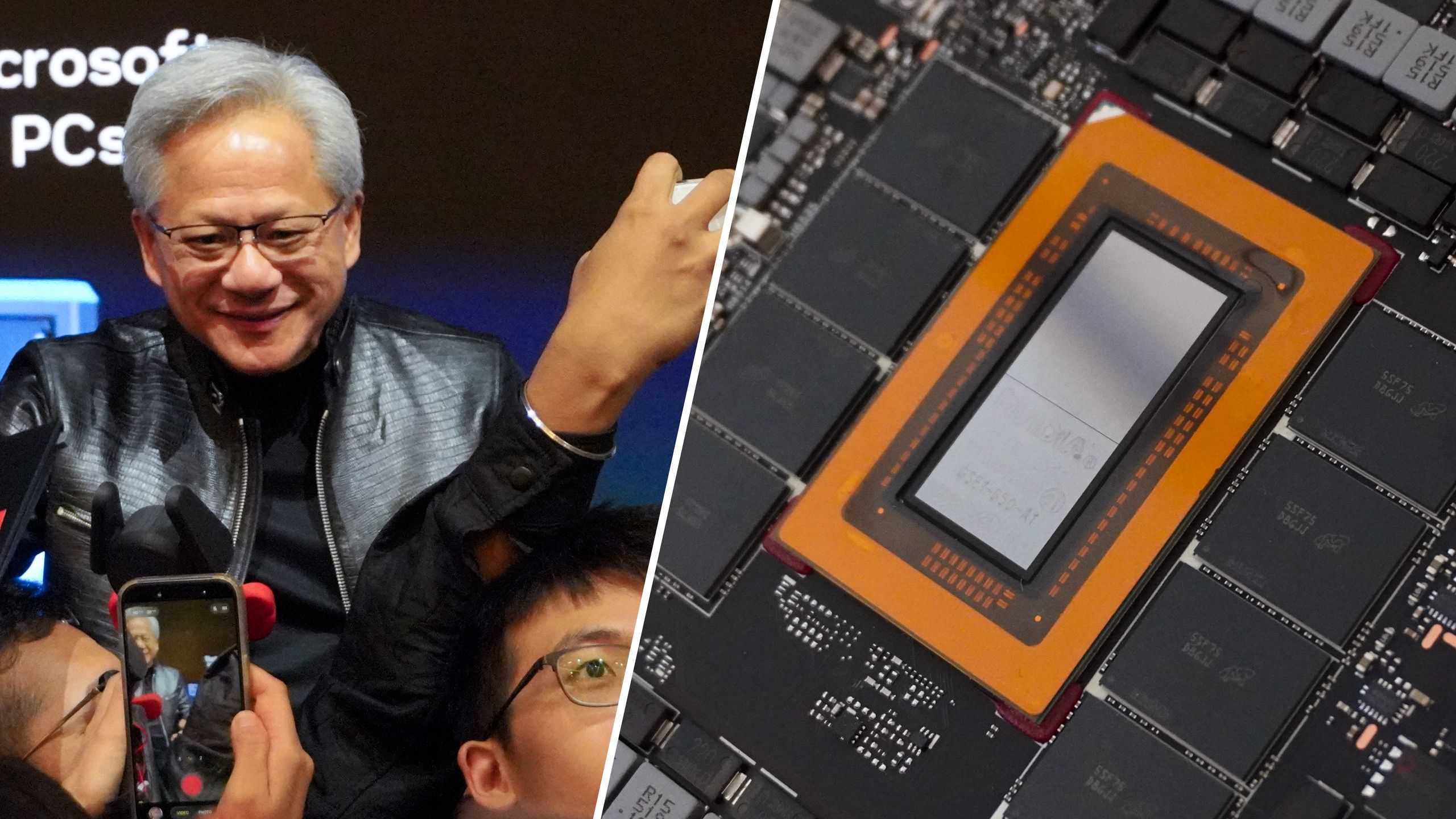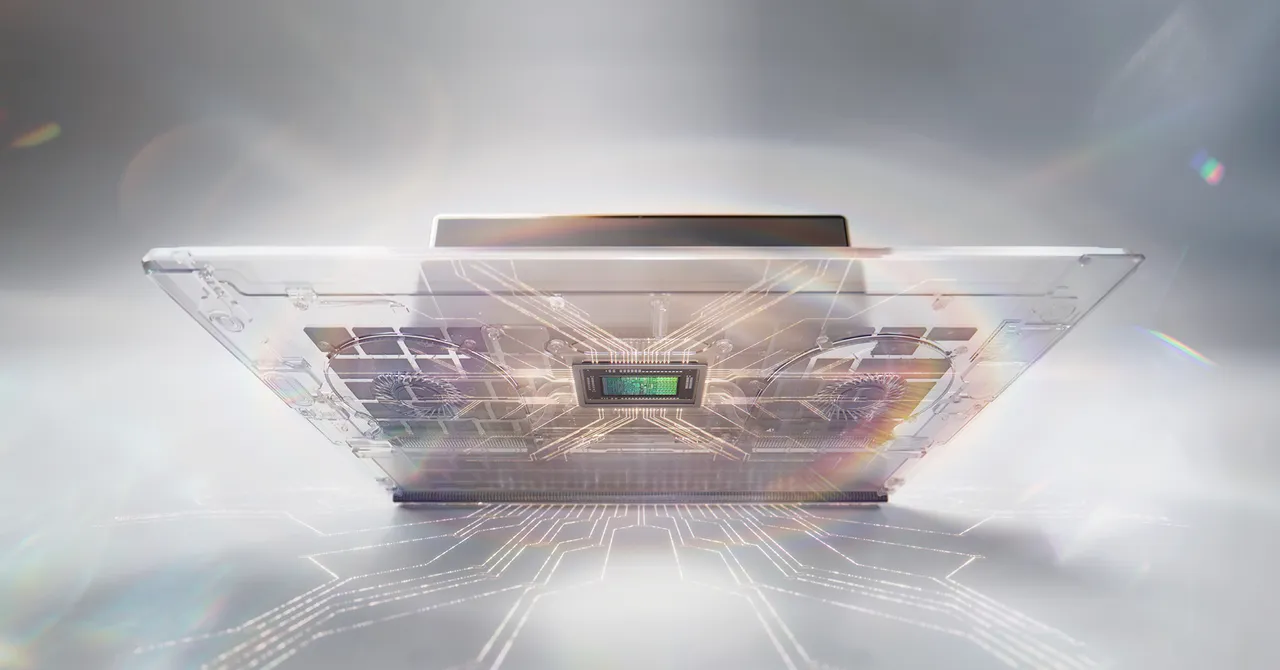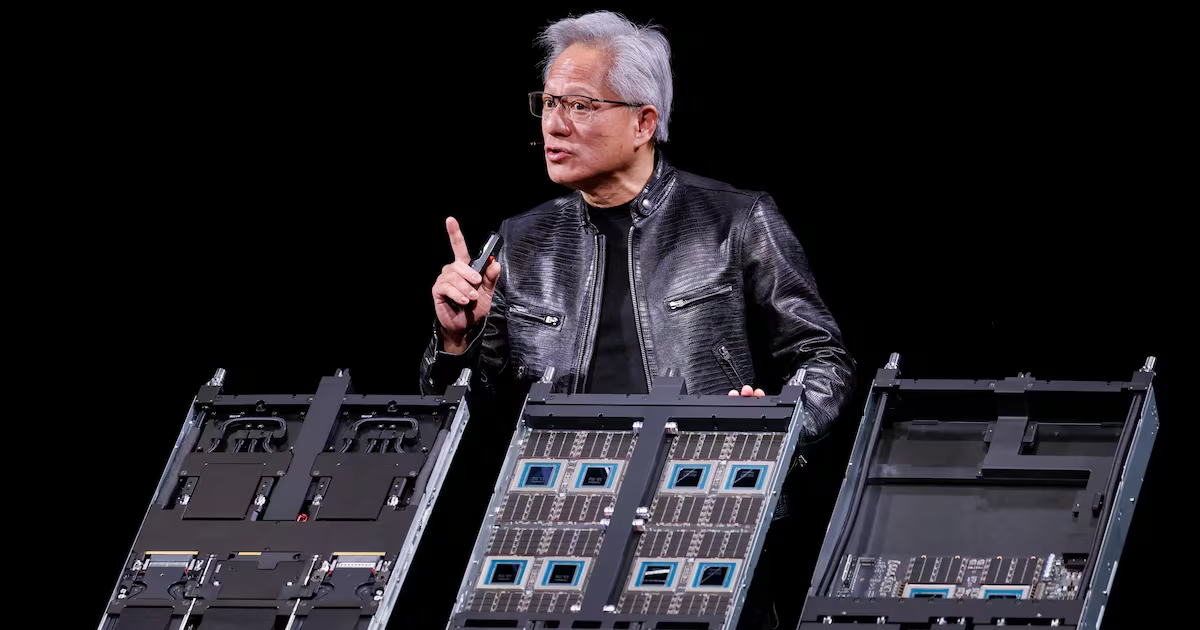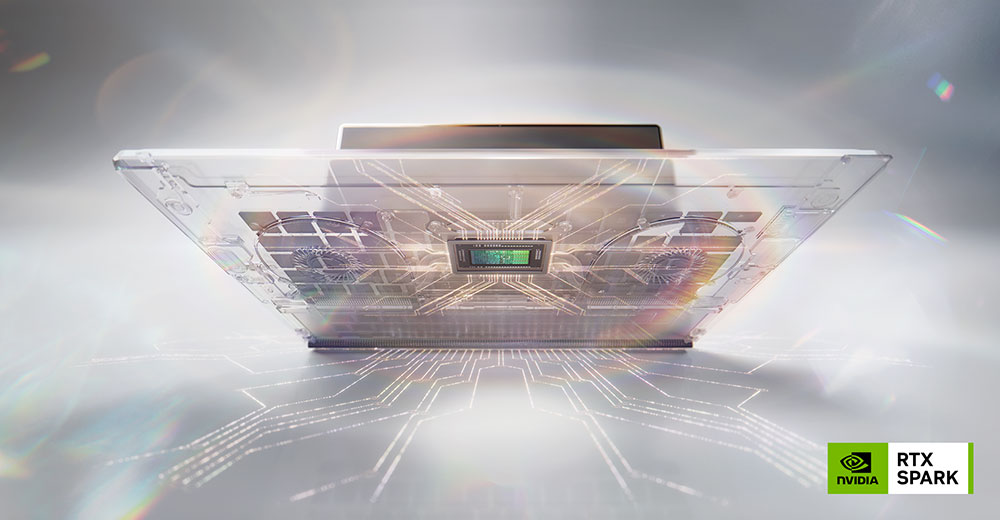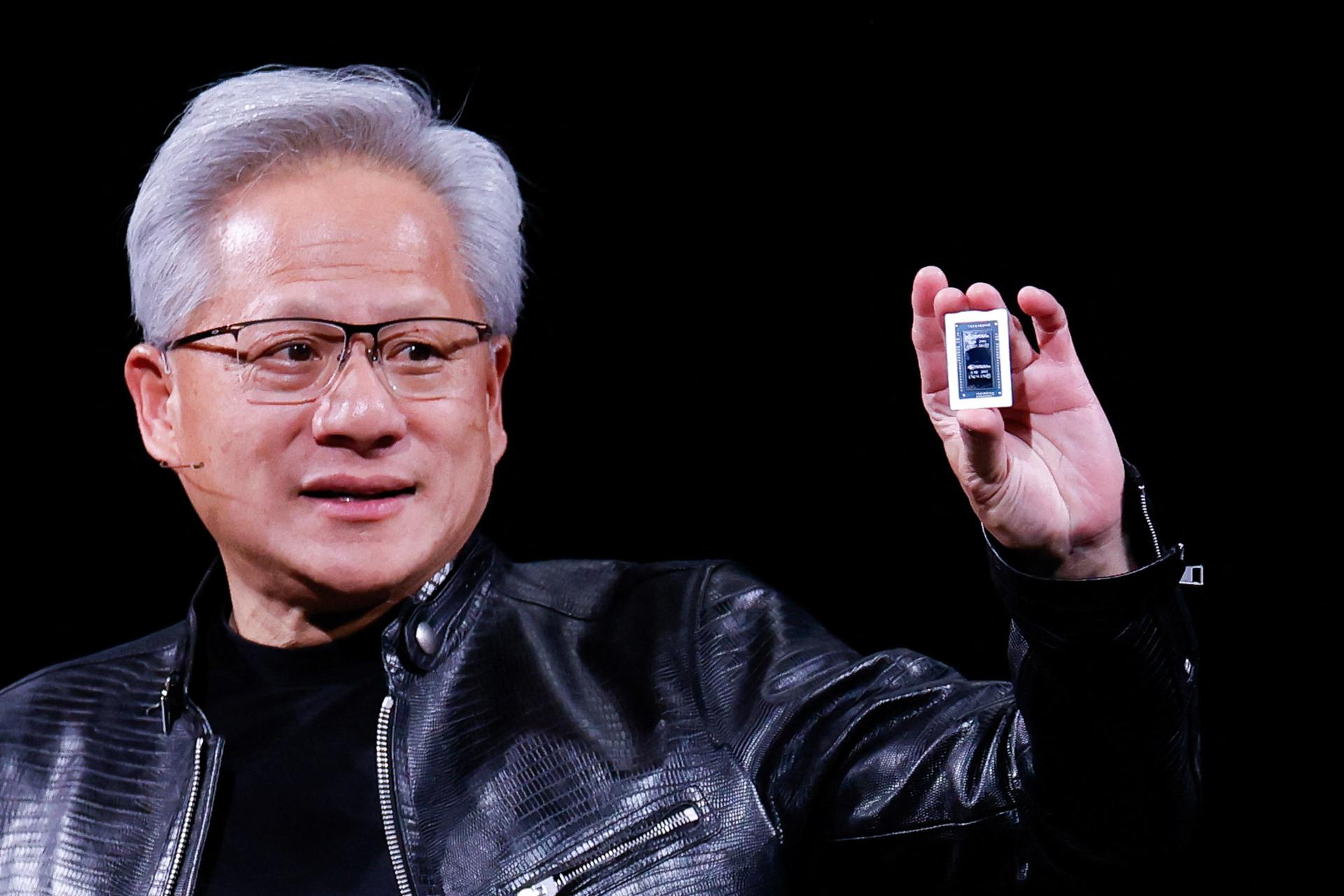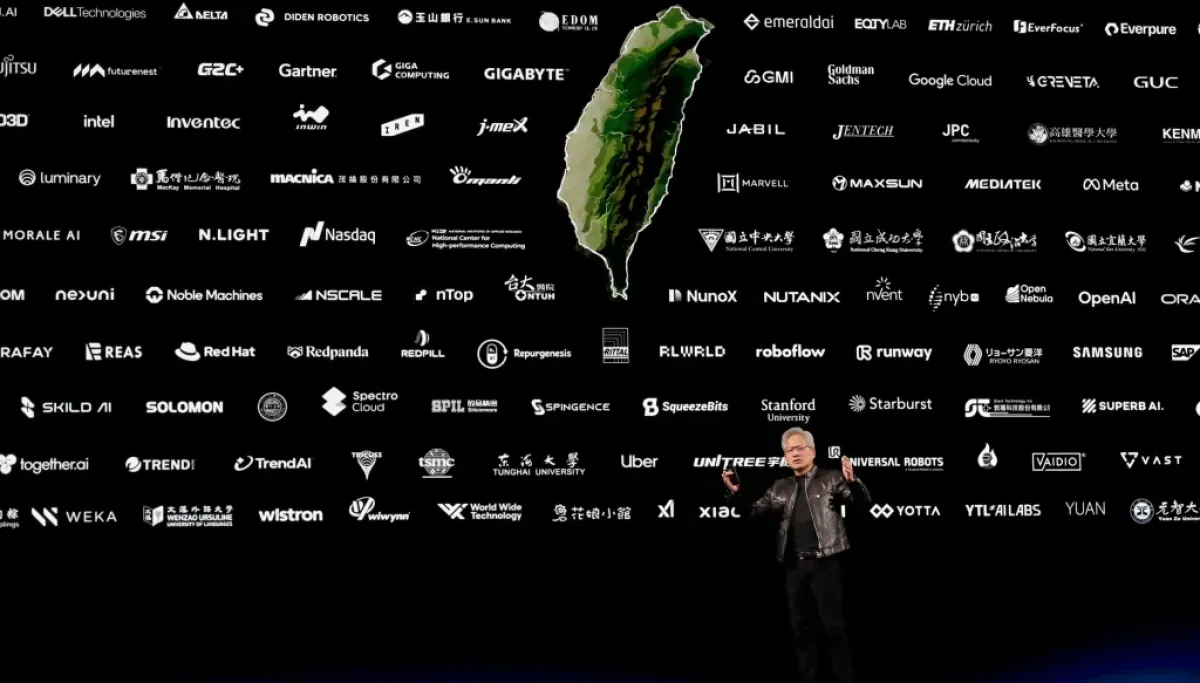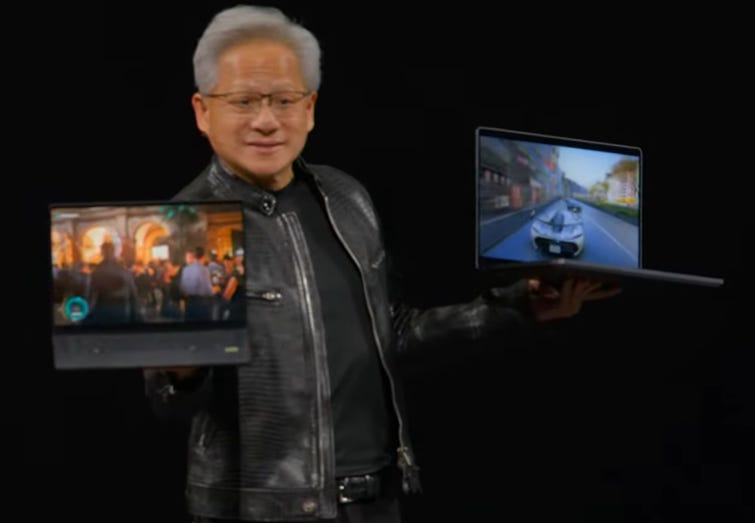
Figure 1. Nvidia CEO Jensen Huang shows off RTX Spark laptops.“It started with a spark, an idea to reimagine the PC for the first time in 40 years. For the age of AI, what becomes of our personal computer in a world of agents?” – Jensen HuangNvidia CEO Jensen Huang gave another gangbuster keynote at Computex conference in Taiwan on Monday, declaring “useful AI has arrived” and calling this the Age of Agents, a new computing era where AI is delivered through running AI agents that reason, plan, and use tools.Jensen Huang had real announcements behind his hype, introducing several new AI models, AI chips, and systems. Some of the key highlights:Nvidia announced the Vera CPU, explicitly designed for AI agent use and able to manage massive graphical processing units (GPUs) inside localized agentic loops. Vera integrates 88 custom “Olympus” ARM-based cores and utilizes LPDDR5X memory to achieve 40% lower peak memory latency, 50% faster core-to-core communication, and 1.8x performance over prior CPUs.Nvidia announced that the Vera Rubin system is now in full production. Vera Rubin is Nvidia’s latest generation of AI supercomputer that combines GPUs and CPUs specifically engineered for agentic AI. It marks a major milestone for Nvidia as it dominates as the leading AI infrastructure company.To support AI infrastructure buildout, Nvidia introduced the DSX blueprint, a reference design for building and operating AI factories that integrates hardware, cooling, power, and networking for maximum revenue-generating compute.Nvidia introduced Nemotron 3 Ultra, an open-source Mixture of Experts (MoE) AI model featuring 550B total parameters and 55B active parameters designed for agentic use. Nemotron 3 Ultra utilizes a novel hybrid State Space Model (SSM) architecture that makes is faster and cheaper for AI inference, yet with performance comparable to leading open AI models like MiniMax M2.7.Nvidia is providing an enterprise toolkit that includes models, orchestration harnesses like Open Shell, and access to CUDA X libraries that act as specialized skills for agents, to empower AI users to build their own agent harnesses and systems.Nvidia continues to push AI models and tools for physical AI, including updates to the Isaac Groot platform and a reference design for humanoid robotics. For the robotics, autonomous vehicle, and physical system sectors, Nvidia launched Cosmos 3, an “Omni” multimodal foundation model trained on 20 trillion tokens of images, audio, video, action data, and text. They also announced the Alpamo 2 open model designed for reasoning in autonomous vehicles, which enables level 4 autonomous driving for robotaxis.However, the most interesting announcement was the RTX Spark Superchip and the Agentic PC, Nvidia’s effort to reinvent the personal computer with a 1 petaflop superchip that that Blackwell GPU and Grace CPU to run local AI agents natively.“We’re reinventing the personal computer, for creating, for gaming, for agents. This is the dawn of a new personal computing revolution, and it starts with NVIDIA RTX Spark.” – Jensen HuangFabricated on TSMC’s 3-nanometer process and packing 70 billion transistors, the system-on-chip RTX Spark merges a Blackwell-architecture RTX GPU featuring 6,144 CUDA cores with a custom 20-core Grace CPU. Boasting one petaflop of local AI performance and 128 GB of high-bandwidth unified memory, the hardware allows personal AI assistants to run locally, securely, and continuously inside Windows agent sandboxes.Designed in collaboration with Microsoft and MediaTek, RTX Spark is engineered to support agent-centric computing on the consumer PCs and laptops and has integrated graphics and GPU performance comparable to a dedicated desktop RTX 5070 graphics card. Achieving that tier of graphics compute on an integrated platform represents a massive step forward for thin-and-light Windows laptops.Consumer laptops and PC can be equipped with 32 GB of RAM for general productivity and gaming, but with top-tier configurations with 128 GB of unified memory you can run larger AI models and agentic AI systems natively.With its unified memory design and integrated GPU, Nvidia’s RTX Spark gives the Windows ecosystem a competitive performance and efficiency equivalent to Apple’s series of M series of chips. Finally, there will be an AI PC that can give Apple M5-equipped MacBook Pro a run for its money.Figure 2. The heart of the AI PC is the RTX Spark, a Grace-Blackwell CPU-GPU SOC that supports 120 GB of unified memory to run large AI models.And the thing that I am just incredibly pleased, incredibly honored is that 100% of the world’s PC industry has joined us to reinvent the PC. A new line, a new beginning. – Jensen HuangThis isn’t the first time an ARM-based Windows PC has been attempted. The first ARM Windows device was Surface RT in 2012; later came Windows 11 on ARM powered by Qualcomm’s Snapdragon chips.Nor is it the first AI PC. After the ChatGPT moment, Intel launched their bid for the AI PC chipset while Microsoft offered the Copilot + PC. The problem was these prior efforts lacked the performance needed for rigorous AI workloads and were eclipsed by better performance out of Apple’s MacBooks.Nor is it Nvidia’s first attempt at an AI desktop box. Nvidia has been shipping the DGX Spark since 2025, a Linux-based desktop box for AI that uses a GB10 Grace-Blackwell chip with similar specs to the RTX Spark.RTX Spark brings the Windows OS that DGX Spark lacks, turning NVidia’s Grace-Blackwell superchip into an engine for Windows laptops and PCs. This RTX Spark is a significant performance boost from prior ARM PC efforts, which gives it a better chance to crack that market.One thing in favor of RTX Spark is that it’s built for gaming and graphics applications as well as AI workloads. Leveraging Nvidia Blackwell-class GPUs and its Cuda stack, the RTX Spark offers Deep Learning Super Sampling (DLSS) upscaling and frame generation technologies to accelerate games. Microsoft has worked with Windows tools developers to make their apps work on ARM-base Windows machines. Nvidia has also pushed Adobe to rebuild its Adobe Premiere Pro editing engine around GPU-accelerated computing rather than relying heavily on the CPU.There are still many questions about it. Reviewers have noted that Nvidia did not share full benchmarks, leaving users to assess gaming performance on demo applications. Microsoft has announced Surface Laptop Ultra but it and other PC makers won’t be delivering them until later this year.The main barrier to adoption could be cost. DGX Spark with GB10 chip and 120GB memory already costs $4700, and a similarly-loaded RTX Spark will undoubtably be in the same range, limiting widespread adoption. On the other hand, cutting the memory down to avoid high component pricing will limit the system’s utility with AI models.With a market cap of about $5.4 trillion, Nvidia is worth more than any company on the planet, almost $1 trillion above its closest U.S. peers. It has placed itself at the center of the AI revolution by making critical and correct bets about the technology stack needed to support AI.Nvidia has earned huge success building the core GPU chips and the AI supercomputers that go into AI factories in data centers. Now, Nvidia is going after the one led by others, the PC market, This bringing AI home to the PC. Wall Street is recognizing the threat it poses to others; this announcement at Computex on Monday moved Nvidia up and Intel and AMD down.Still, behind the hype, what RTX Spark is really doing is bring ARM-based Grace-Blackwell CPU-GPU integrated SoC to Windows. Is this what users need? I think so, but buyers will decide and devices won’t be out until later this year when they’ll compete with Apple’s M6. It’s not a sure thing.One Reddit commenter opined:It [RTX Spark] is a pipe cleaner product - attempt to get this “NV-made Arm-based SoC for laptops” to market and be a thing for software developers. It is late, underpowered and probably overpriced (based on DGX Spark pricing and current RAM & storage prices) but it lays the groundwork for the next gen chip that might be better.Whatever the market reaction, Nvidia will keep pursuing it, because Jensen’s vision of an “AI supercomputer for your home AI agent” is on target, and Nvidia will keep iterating until they get it right.If and when it takes hold, we will likely see the end of the desktop PC graphics card and the rise of unitary memory, so larger AI models can be run on laptops and PCs. We will also see a class of home devices used not as personal computers but as Agent Computers, running OpenClaw or Hermes 24/7.Nvidia moving beyond the data center and moving to the edge tells us something important: AI is reinventing the PC just like it is reinventing every part of the information technology stack. Smaller devices like phones and laptops will run advanced AI models and AI agents, literally bringing AI home.
RTX Spark: AI Comes Home to the PC
Jensen Hunag’s Computex Keynote announces Vera CPU, Nemotron Ultra 3, and the RTX Spark, the heart of the AI PC for the Agentic era.
1,448 words~7 min read