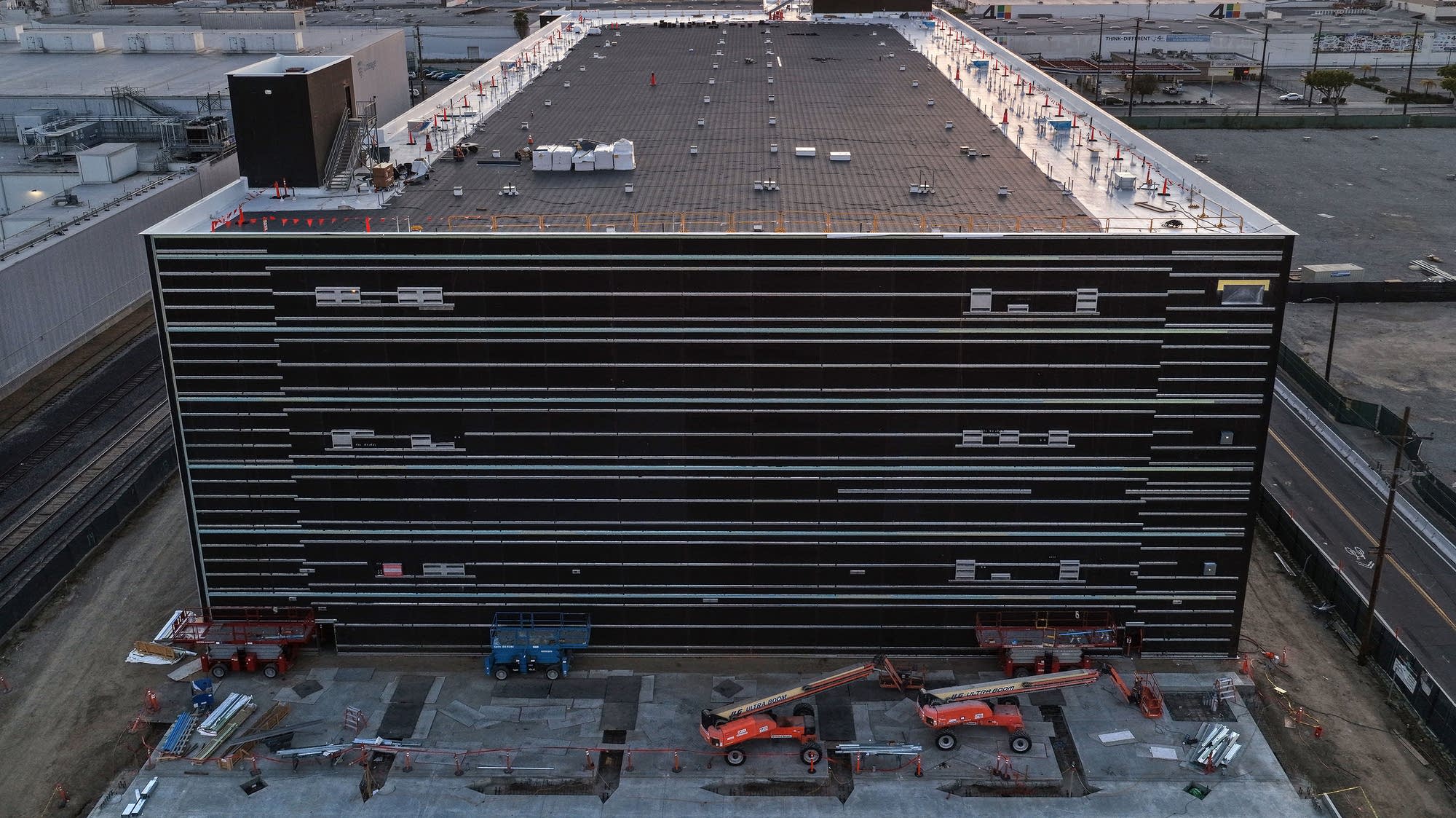
Alphabet's move to raise $85 billion to fund its artificial intelligence plans is another signal that Big Tech is moving to emerging technology. The big-ticket moves might appear to be a logical next step from a business standpoint. However, analysts said that the magnitude of the financing required means investment must focus on deliverables and longer-term returns. Merely buying into the hype without an endgame in sight would be detrimental to the future of emerging technology. The rush to fund the AI race now will stem the flow of future investments into AI, they said.Failure of the so-called Big Tech companies will push investors to the “breaking point”. It will invite unnecessary scrutiny as well as demands of compelling results, which could force the AI cookie to crumble.“Technology companies can be creative in funding AI, but the key question is whether they are being strategic or financially clever,” Alina Timofeeva, a Riyadh-based analyst who advises governments and regulators, told The National.“Long-term strategic capital, joint ventures, leasing, asset-backed structures and energy partnerships are options, but only if they support real value rather than simply funding AI race.”It may not add upCalifornia-based Alphabet, the parent company of Google, this week said it will raise the $85 billion – initially $80 billion – through equity offerings, which includes a $10 billion investment from Warren Buffett's Berkshire Hathaway.“Berkshire’s $10 billion investment in Alphabet is a strong endorsement of Alphabet, rather than AI dream as a whole, [and] its AI and cloud strategy, but also of its existing cash flows, market position and ability to absorb huge capex,” Ms Timofeeva said.Play01:02Why is sovereign AI so important? We ask Nvidia“Investors such as Berkshire Hathaway will back AI where the downside is protected and the business case is credible. That is very different from funding the AI dream at any price.”Oracle, in February also said it plans to raise as much as $50 billion in 2026 through debt and equity deals to fund its data centre expansion. Not all Big Tech names, however, are going the equity route: both Facebook parent Meta Platforms and Microsoft are fuelling their AI plans by increasing their capital expenditures to $175 billion and $190 billion, respectively.Amazon currently leads the race with $200 billion earmarked for AI through Amazon Web Services: the company Jeff Bezos founded has already flagged a $15 billion AI revenue run rate within AWS, reinforcing confidence in demand.“AI itself isn't the pit [for endless spending]; undisciplined AI spending is. Companies chasing AI as a general strategy without thoughtful care about the value add will [just] burn capital,” Rawan Baddour, co-founder of UAE-based financial services company Zest Equity, told The National.Different routeApple, meanwhile, seems to be taking a different route, having put just a little over 10 per cent of its revenue – about $4.3 billion – towards research and development, including for AI, over the past two quarters. Analysts say that the move, given its partnership with Google earlier this year, means the iPhone maker might just let the rest do the heavy lifting and then tap into them.Still, “no company has invested enough yet, because there hasn’t been a full investment in changing day-to-day operations to meet the AI moment”, Sam Huber, global president of New York-based tech firm Napster, told The National.Nevertheless, between Alphabet, Amazon, Apple, Meta and Microsoft, AI spending is estimated to top $700 billion this year.Shifting focusBut investor focus is shifting “decisively” from the scale of investment to the returns that investment can generate”, eToro market analyst Josh Gilbert said.“This is the first real stress test for the AI trade. Markets have been willing to support massive investment, but now investors want to see clear returns,” he said. “Growth, margins and cash flow all need to start moving in the right direction.”The breaking point for investors will come if AI bets start to look like a money pit and circular financing arrangement, Ms Timofeeva said.“And if [AI] demand does not translate into profitable revenue, investors will demand tougher terms, stronger collateral and better protection,” she said.Ms Baddour said the discipline of backers in the mould of Berkshire has always been about cash flow and competitive moats, not narratives.“And that's exactly the lens institutional capital is starting to apply to AI. The first wave of AI funding rewarded vision and team. The next will reward proof and scalability: measurable productivity gains, sustainable competitive advantage, clear unit economics,” she said.“Big backers won't fund AI dreams indefinitely; they'll fund AI companies that look more like operating businesses than research labs. We're already seeing that shift in private markets.”It's not just about the moneyThe current AI race is reminiscent of previous tech gold rushes, including when the internet, e-commerce and social media began creeping into people's consciousness, creating business opportunities.With AI, the investment has become a lot more important, in parallel with the potential rewards, and “we know from history that the early adopters end up reaping the rewards”, Mr Huber said.Play01:17Pope Leo calls for AI to be 'disarmed'“But companies should first identify a use case for AI that has potential to move their top-line and experiment around it with minimal resources until they see results – then they can double down on what works.”Other considerationsThen, there are other considerations, including whether or not companies will have the scale and capability to support the infrastructure to underpin their AI goals.Mazen Hayek, a Dubai-based media consultant, argues that Alphabet's $80 billion raise, Claude maker Anthropic's highly-anticipated initial public offering and trillion-dollar valuations among the biggest of Big Tech are not bets on algorithms.Rather, they are “bets on infrastructure – data centres, power grids and chip supply chains”.“Frontier AI is not constrained by ideas, or funding – it is constrained by energy and silicon. The real bottleneck is physical: how much cheap power you can secure, and how many chips you can produce and access,” he told The National.“The winners in this race will not be those with the boldest ideas, but those who can lock in the energy and compute capacity to run them at scale.”
How Big Tech's misstep on $700bn AI bet may drive investors to 'breaking point' | The National
Rush to be part of technology race in short term will jeopardise future investments into AI, say analysts
1,008 words~5 min read