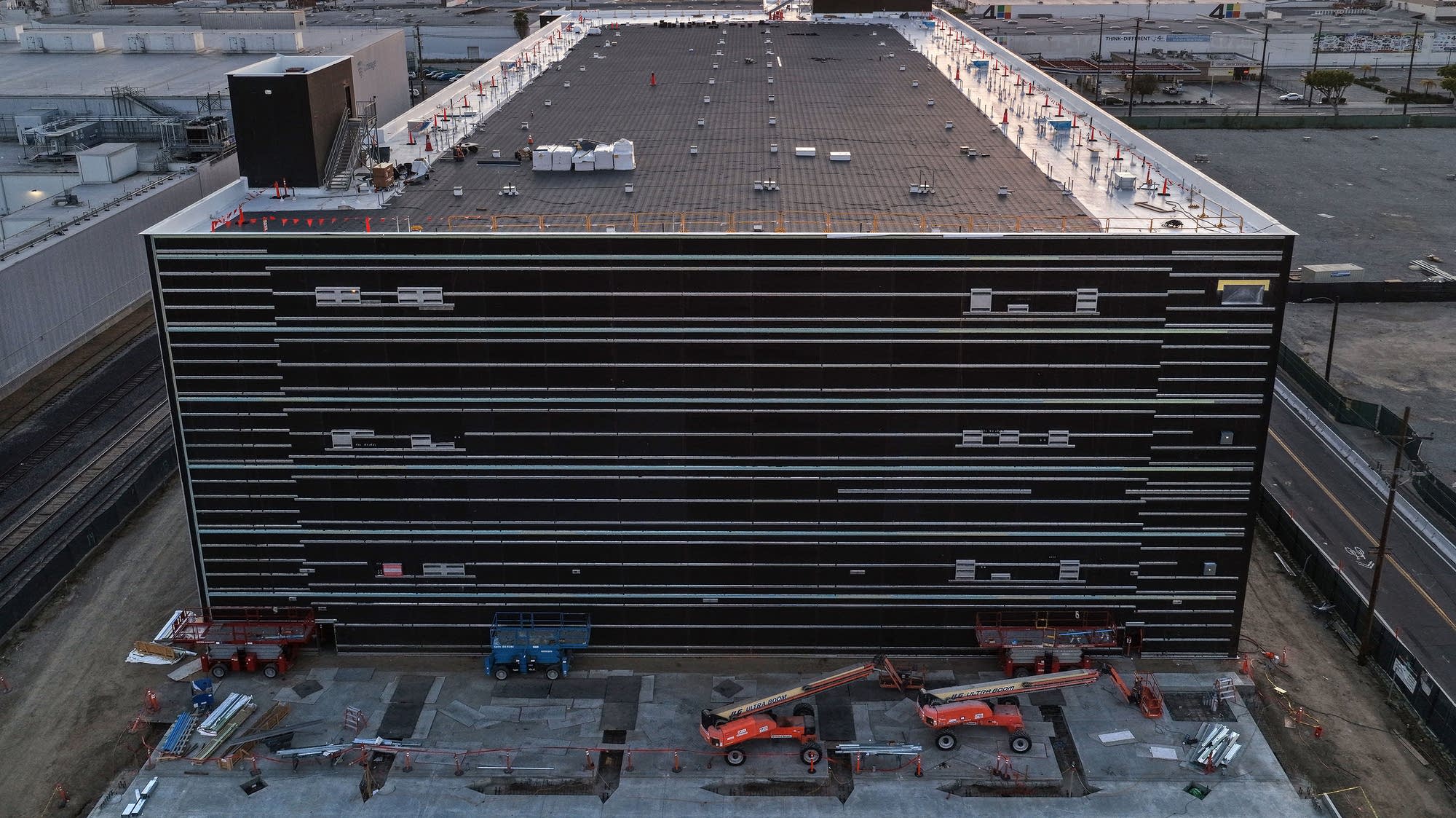
Alphabet, one of the most cash-rich companies in American history, has decided to sell new shares to help pay for its AI data centers .Why it matters: It's an object lesson in how the AI boom may be disrupting trends — such as the steady "shrinkage" of the stock market due to share buybacks — that have been sources of market stability for years. State of play: Alphabet's plan to sell $80 billion in shares — announced after Monday's close — caught the market by surprise, sending the stock down by roughly 4% as investors digested the dilution the sale represented.Context: It was the latest in a flurry of plans from tech giants to raise cash through stock sales to pay for the AI boom.Top AI lab Anthropic — recently valued at nearly $1 trillion by private investors — announced Monday that it had confidentially filed plans with the SEC for its public offering. (The details of the offering have not been finalized, but it is expected to be one of the largest in history.)OpenAI is also reportedly close to a confidential filing in advance of its own public offering.And last week, Elon Musk's SpaceX publicly filed plans to raise an expected $75 billion in a share sale, which, if successful, would eclipse Saudi Aramco's IPO as the largest-ever initial offering. (SpaceX owns Musk's AI lab Grok.)By the numbers: The scale of those offerings has supercharged expectations for the market in new stocks this year.Goldman Sachs U.S. equity analysts now expect large companies to raise a record $225 billion in IPOs this year, almost six times as much as last year.The intrigue: The IPO surge has prompted a flurry of questions about where the money to buy the stock will come from. Wall Street doesn't seem worried.What they're saying: "Public equity markets remain capable of absorbing a materially larger AI financing cycle than current issuance levels imply," wrote Morgan Stanley analysts in a note last week. "In the U.S. specifically, a return to historical average and peak levels would represent $0.7 trillion and $1.1 trillion, respectively, both far greater than ~$500 billion of US equity capital market issuance in 2025." Yes, but: Even so, these sales of stock may represent a milestone for the structure of the U.S. stock market."Since the early 2000s, a confluence of factors systematically reduced available public equity year after year," wrote Savita Subramanian, head of U.S. equity and quantitative strategy at Bank of America Securities. "More buybacks, longer private incubations, more take-privates, low rates, ample liquidity, etc. Today, an issuance deluge may be imminent."
Here comes the stock deluge
The AI boom may be disrupting trends that have been sources of market stability for years.
429 words~2 min read