I would have enjoyed mathematics more at school if I’d known what the real value was. The benefit of studying maths isn’t numeracy at all: it’s creativity – a kind of benign neuro-diversity. A new set of eyes through which to see the world, and the priceless lesson that the best way to solve a problem is to redefine it.
Many of the most interesting people I’ve met have been mathematicians. Nassim Taleb taught me a whole new way to look at statistical variance. And, in a chance meeting with Stephen Wolfram, I heard something which at first surprised me, but which has needled me ever since.
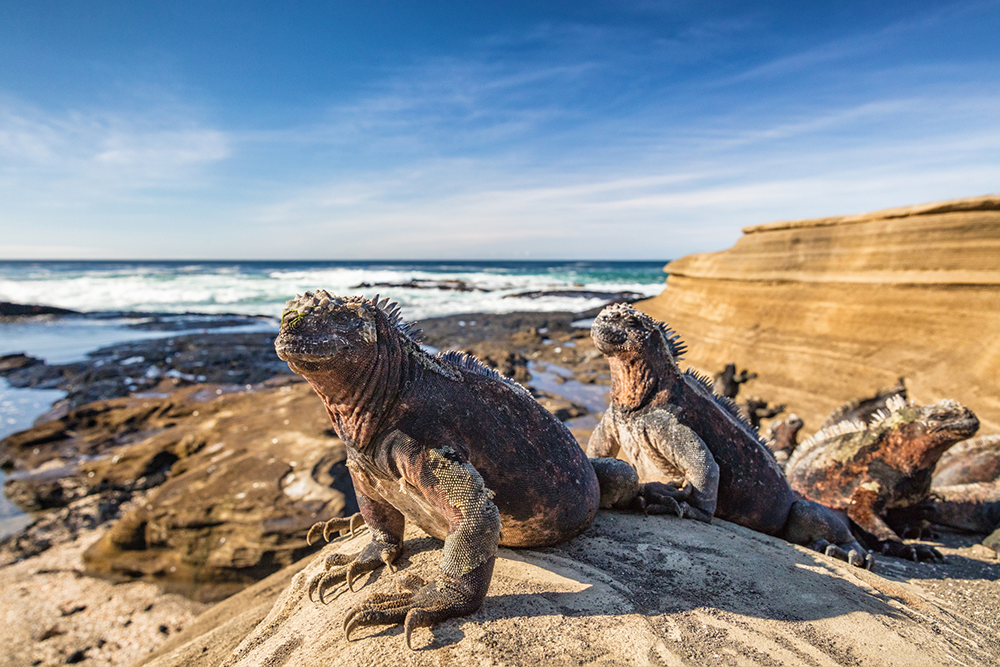
When I joined the advertising industry in the 1980s, it was like the Galapagos Islands. Now it’s more like a Kansas cornfield
What he said was this: ‘The reason evolution works is that it has quite a loose fitness function.’
This is at first a strange claim. We are taught to believe that evolution is a kind of brutal, efficiency-optimising elimination game, red in tooth and claw. But in a way it’s incredibly relaxed. Provided you can (a) find an ecological niche in which you can (b) survive long enough to (c) reproduce, you get to stay in the game. It doesn’t matter whether you are a shark, a tree, a mushroom or a bonobo, if you can satisfy a, b and c, you stay in business. Some stromatolite bacteria in western Australia have continuously ticked all three boxes for three-and-a-half billion years.