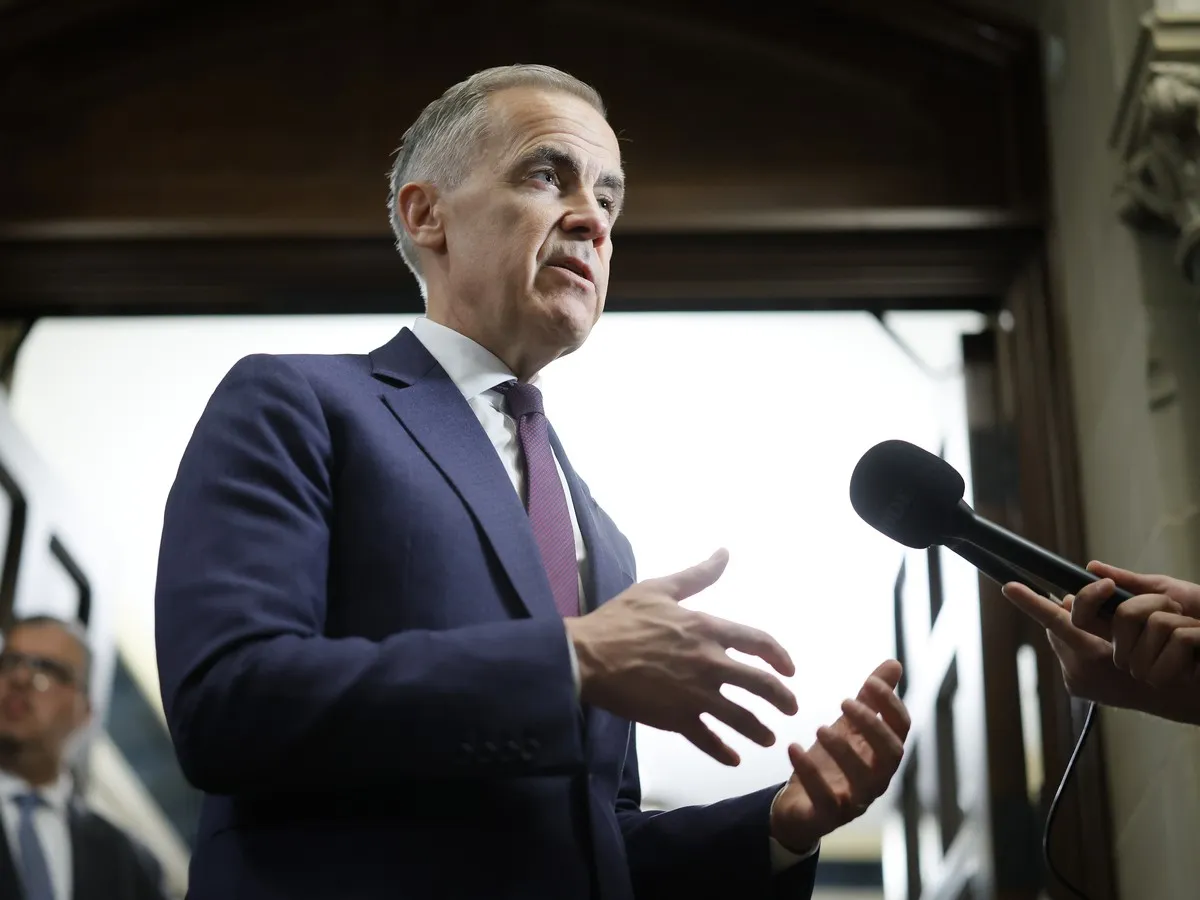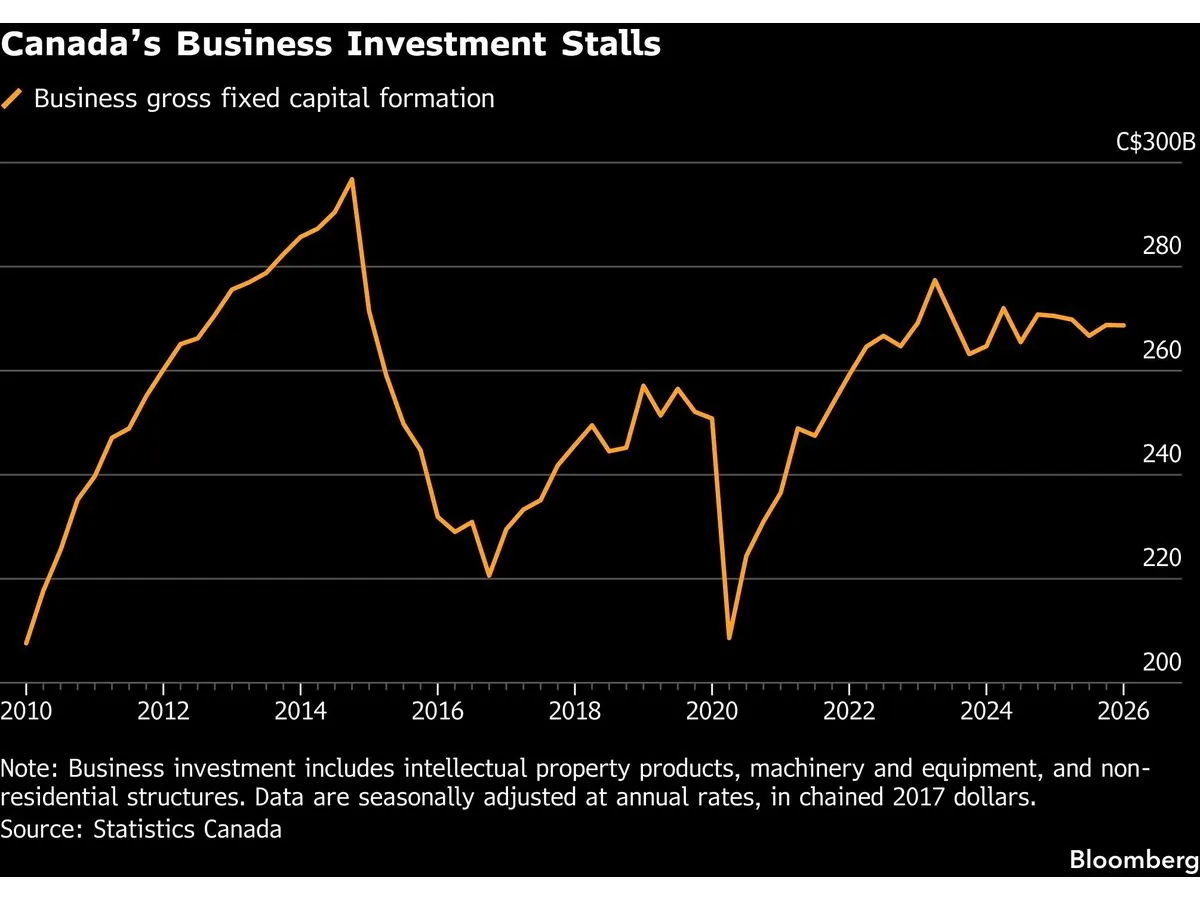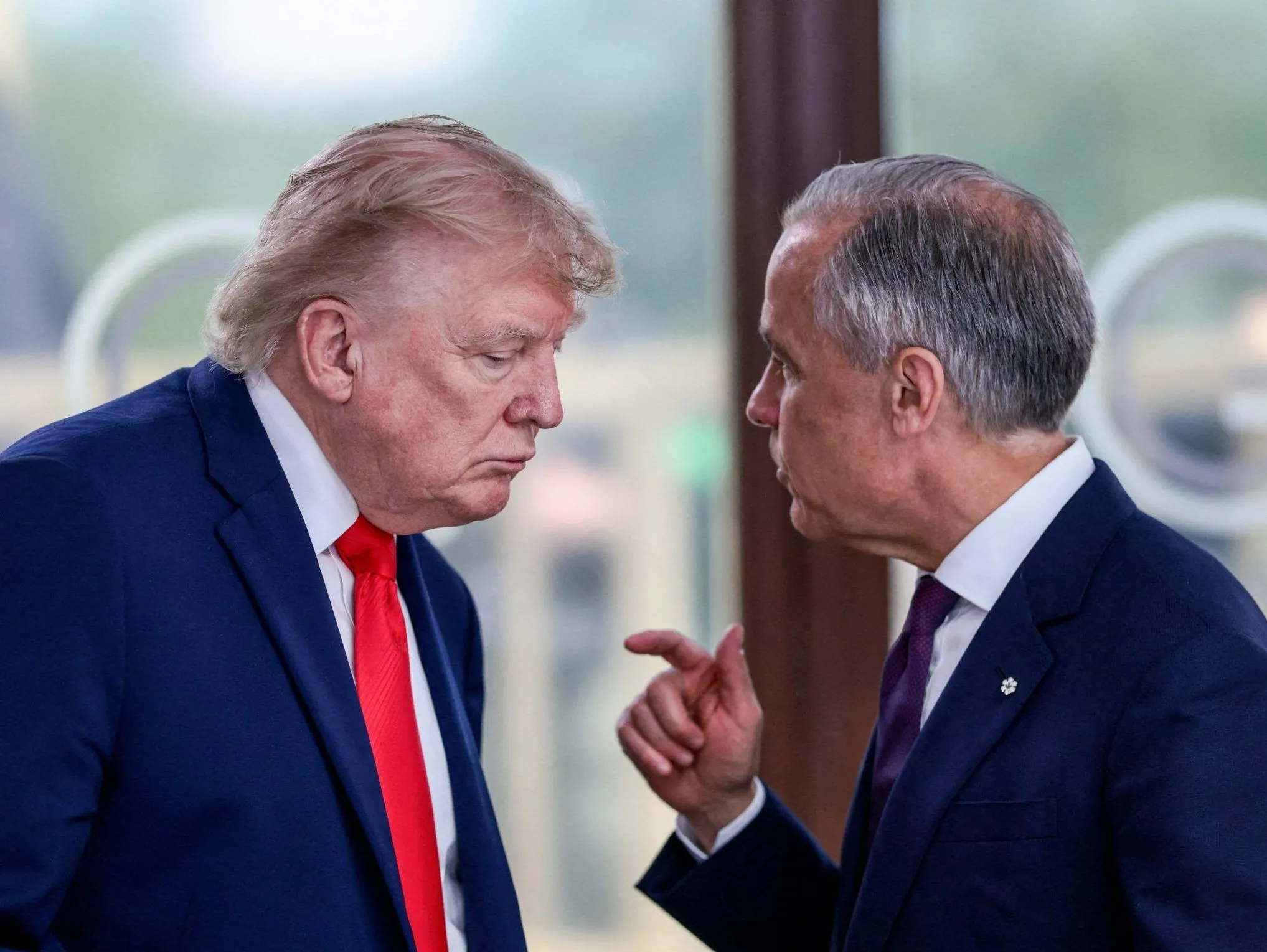
Skip to Content News Archives Economy Energy Oil & Gas Renewables Electric Vehicles Mining Commodities Agriculture Real Estate Mortgages Mortgage Rates Finance Banking Insurance Fintech Cryptocurrency Work Wealth Smart Money Wealth Management Investor Personal Finance Family Finance Retirement Taxes High Net Worth FP Comment Executive Women Puzzmo Newsletters Financial Times Business Essentials More Innovation Information Technology FP500 Podcasts Small Business Lives Told Tails Told Shopping Financial Post Store Obituaries Place a Notice Advertising Advertising With Us Advertising Solutions Postmedia Ad Manager Sponsorship Requests Classifieds Place a Classifieds ad Working Profile Settings My Subscriptions Saved Articles My Offers Newsletters Customer Service FAQ News Economy Energy Mining Real Estate Finance Work Wealth Investor FP Comment Executive Women Puzzmo Newsletters Financial Times Business Essentials HomeNewsEconomyNewly-proposed U.S. tariffs will have limited impact on Canada's economic outlook, economists sayExemptions means new suite of tariffs justified by 'forced labour' claim are not likely to darken economic picture You can save this article by registering for free here. Or sign-in if you have an account.U.S. President Donald Trump speaks during an event in the Oval Office of the White House on June 3 in Washington, D.C. Photo by Kevin Dietsch/Getty ImagesThe United States is proposing a new 10-per-cent tariff on Canada and other trading partners in an attempt to rebuild a tariff regime that was struck down by the U.S. Supreme Court earlier this year, but economists say it won’t significantly change Canada’s economic outlook because most exports will still be exempted.Subscribe now to read the latest news in your city and across Canada.Exclusive articles from Barbara Shecter, Joe O'Connor, Gabriel Friedman, and others.Daily content from Financial Times, the world's leading global business publication.Unlimited online access to read articles from Financial Post, National Post and 15 news sites across Canada with one account.National Post ePaper, an electronic replica of the print edition to view on any device, share and comment on.Daily puzzles, including the New York Times Crossword.Subscribe now to read the latest news in your city and across Canada.Exclusive articles from Barbara Shecter, Joe O'Connor, Gabriel Friedman and others.Daily content from Financial Times, the world's leading global business publication.Unlimited online access to read articles from Financial Post, National Post and 15 news sites across Canada with one account.National Post ePaper, an electronic replica of the print edition to view on any device, share and comment on.Daily puzzles, including the New York Times Crossword.Create an account or sign in to continue with your reading experience.Access articles from across Canada with one account.Share your thoughts and join the conversation in the comments.Enjoy additional articles per month.Get email updates from your favourite authors.Create an account or sign in to continue with your reading experience.Access articles from across Canada with one accountShare your thoughts and join the conversation in the commentsEnjoy additional articles per monthGet email updates from your favourite authorsSign In or Create an AccountorIn a press release late Tuesday, the U.S. Trade Representative’s Office (USTR) said it is proposing tariffs between 10 to 12.5 per cent on 60 countries it claims are failing to prevent the import of products made with forced labour.Canada was identified as one of six countries or regions that “have failed to effectively enforce a forced labor import prohibition,” which would subject it to 10 per cent tariffs. The other five on the list are Mexico, Ecuador, the European Union, Indonesia and Pakistan.Get the latest headlines, breaking news and columns.By signing up you consent to receive the above newsletter from Postmedia Network Inc.A welcome email is on its way. If you don't see it, please check your junk folder.The next issue of Top Stories will soon be in your inbox.We encountered an issue signing you up. Please try againHowever, a report from the U.S. Federal Register said products that are compliant with the Canada-U.S.-Mexico Agreement (CUSMA) will not be subject to the tariffs. This reflects the same exemptions Canadian and Mexican products had enjoyed during the earlier tariff regime.The tariffs also don’t come into effect right away, and could change following a public comment and review period.Prime Minister Mark Carney said Wednesday morning that the tariffs will not have an impact on the “vast, vast, vast majority of Canadian trade,” and promised to propose legislation to tighten regulations around products using forced labour in the country’s supply chains before the House of Commons rises for its summer break.“We support the overall objective (of eliminating forced labour),” Carney told reporters.The USTR’s announcement came hours after the Organisation for Economic Co-operation and Development forecast moderate growth for Canada. According to an outlook released Wednesday, growth in gross domestic product is expected to reach 1.2 per cent in 2026 and 1.7 per cent in 2027 as the economy “recovers from the 2025 trade‑related slowdown triggered by higher U.S. tariffs” and business investments gradually recover.The OECD’s outlook is similar to the Bank of Canada’s April forecast, when officials projected economic growth to accelerate from 1.2 per cent in 2026 to 1.6 per cent in 2027.Both predated Statistics Canada’s first-quarter GDP data published last Friday, which showed the economy had experienced two quarters of negative real annualized growth, the technical definition of recession.“Their forecast is a bit dated and high,” said Nathan Janzen, assistant chief economist at the Royal Bank of Canada. “If you incorporate the first-quarter GDP data, it will probably be (lower).”Janzen concurred that Tuesday’s tariff announcement will not affect that economic outlook due to the exemptions, but said that doesn’t diminish the economic uncertainty facing the country.“I don’t think this changes anything in terms of the Canadian trade backdrop.… It’ll still be a headwind for business investment in Canada, but I think that’s just status quo at this point. It’s not something that can be avoided,” he said.TD economist Rishi Sondhi said the announcement signals that U.S. tariffs are here to stay, but he doesn’t expect it to be a shock to the economy.“The U.S. previously said that it would rebuild its tariff structure,” he noted.“This particular announcement wouldn’t change Canada’s economic outlook going forward, but Canada’s economy is still underperforming and a big part of that can be traced to the uncertainty associated with the trade situation with the U.S.“That uncertainty makes it more difficult for businesses to invest, makes it more difficult for Canadian firms to ship their goods and makes Canadian exports less competitive when they’re exported to the U.S.”Overall, both economists forecast a small increase in business investment by the end of the year.The central bank’s first-quarter Business Outlook Survey also suggested that business investment and hiring intentions have improved since the end of last year, reflecting improving domestic demand and a lessening of the uncertainty.“Some of the (first-quarter) data on actual business spending and spending plans has actually looked a little bit better, and that was at a time when the trade backdrop was as uncertain as today,” Janzen said.Sondhi warned, however, that the growth will not be significant.“Our current forecast has some very modest growth investments in machinery equipment and structures. We’re not forecasting large scale recovery,” he said.“Business investment could see some mild pickup from low levels moving forward, but this doesn’t signal that there will be a lot of strength in that area.” Join the Conversation This website uses cookies to personalize your content (including ads), and allows us to analyze our traffic. Read more about cookies here. By continuing to use our site, you agree to our Terms of Use and Privacy Policy.
Newly-proposed U.S. tariffs will have limited impact on Canada's economic outlook, economists say
Newly proposed U.S. tariffs won’t significantly change Canada’s economic outlook because most exports will still be exempted. Find out more.
1,236 words~6 min read