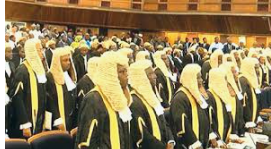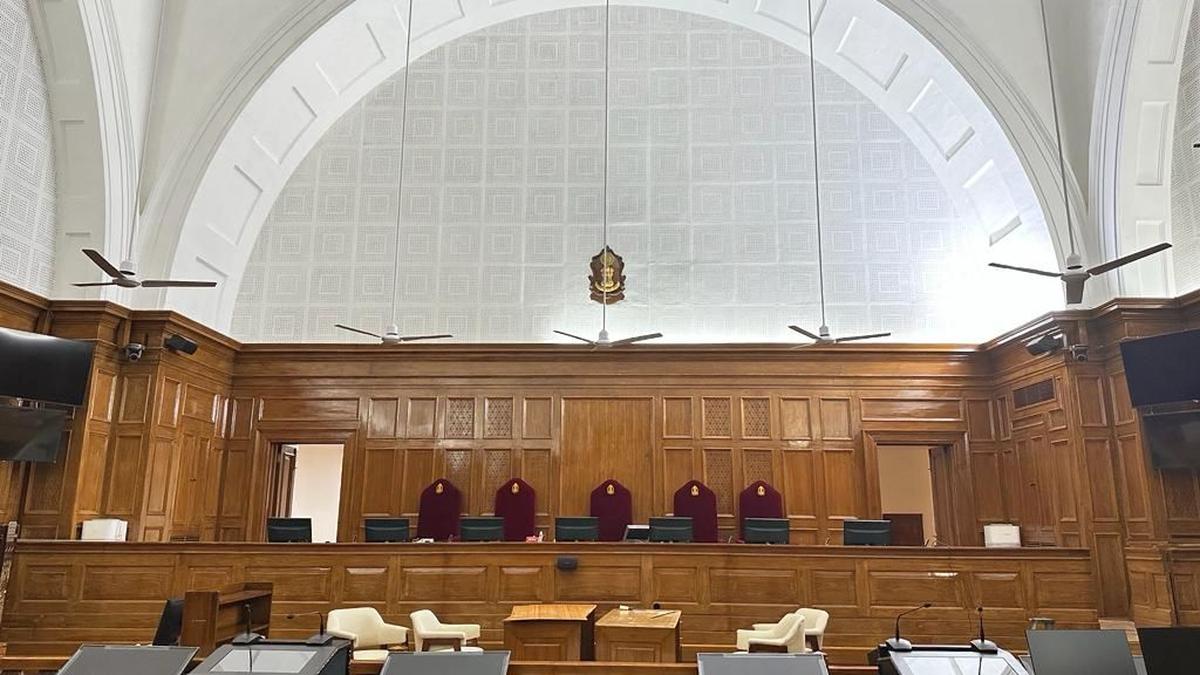
The debate over judicial holidays has resurfaced in recent weeks, with critics questioning why courts observe extended breaks. The assumption is that judges, like most professionals, step away from work during these periods. That assumption is largely wrong.For most judges, a holiday is rarely a holiday in any conventional sense.The public sees only the visible part of the work: judges presiding over courtrooms, hearing arguments, questioning lawyers and delivering orders. What they do not see is the considerably longer phase that begins after court hours, when judges return home to write judgments. This work often stretches past midnight. Each judgment requires close analysis of facts, application of legal principles, reference to precedent, and precision in language, since every word carries legal weight.A single decision can affect lives, businesses, reputations and personal liberty.A time for uninterrupted workThis pattern is not unique to India.Justice Ruth Bader Ginsburg, who was a judge of the United States Supreme Court for 27 years, was known to arrive at her chambers shortly after lunch and work late into the night. Her former law clerk Goodwin Liu, now a Justice of the California Supreme Court, has spoken of receiving voicemails from her at two or three in the morning, when she was at the height of her writing. From oral argument to majority opinion, she averaged 60 days, the fastest pace on her Bench. When she underwent surgery for colon cancer in 1999, and again for pancreatic cancer in 2009, she scheduled her procedures so as not to miss a single day on the Bench.In India, the workload is no less demanding. Justice D.Y. Chandrachud, during his eight-year tenure in the Supreme Court, authored over 600 judgments and sat on more than 1,200 Benches before retiring as the 50th Chief Justice of India in November 2024. Few professions outside the Bench demand such sustained intellectual output year after year, and that too with little public recognition of the labour involved.The mornings begin no easier. Long before court assembles, judges are reading voluminous case files, studying precedents and preparing for the day’s hearings. By the time proceedings open, hours of unseen work have already gone in.Judicial breaks, then, are not periods of rest but working windows. During these breaks, judges complete pending judgments, study lengthy case records and prepare for matters of constitutional importance. With case backlogs continuing to rise across courts, these are often the only stretches available for uninterrupted work.Families bear much of the strain. Spouses and children of judges describe a familiar pattern: even on holidays, judges are occupied with their laptops, files or video calls with law clerks. The time supposed to be shared in company with their family is regularly interrupted by judicial work. Thus, judicial service is not only an individual commitment. It becomes a shared one for the household.Not as lucrativeThe economic side of the Bench is also not discussed often. While judges receive a structured and respectable salary, it is not comparable to what senior lawyers earn at the top end of the bar. A senior advocate may earn in a single hearing what a judge earns over several months. Judges, in turn, carry the greater burden of decision-making and accountability.Many take the Bench after giving up lucrative practices, choosing service to the nation over personal financial gain.The pressures do not end with the workload. Judicial decisions are scrutinised publicly and legally. Judges must remain neutral and detached, even when the cost of doing so is high.The unseen costIn his autobiography, Neither Roses Nor Thorns, Justice H.R. Khanna recalled the night before he delivered his lone dissent in the ADM Jabalpur case during the Emergency. Sitting in the moonlight in his compound with the Ganges flowing in front of them, he turned to his younger sister and said, “I have prepared a judgment which is going to cost me the Chief Justiceship of India.” He was right. The following year he was superseded for the top post by Justice M.H. Beg, who had ruled with the majority, and resigned soon after.His dissent, eventually vindicated when the Supreme Court overruled ADM Jabalpur in the Puttaswamy verdict of 2017, is now remembered as one of the bravest decisions in Indian judicial history.The dedication asked of a judge does not end with retirement either. Lord Denning, whom Margaret Thatcher described as probably the greatest English judge of modern times, served on the Bench for 38 years and delivered around 2,000 reported judgments before retiring at 83. He continued writing books on the law till his 100th birthday.Closer home, Justice V.R. Krishna Iyer kept producing books, articles and lectures on jurisprudence long after his retirement from the Supreme Court, almost until his death at 99 in 2014.The debate on judicial holidays deserves a more informed footing. A judge’s duty does not pause when courts close. It continues through late night drafting, early morning preparation, and constant engagement with the law.Before questioning the system, it may help to first understand what it actually asks of those who serve in it.Kapil Sibal is Senior lawyer and Member of the Rajya Sabha
Why judicial holidays are necessary
A judge’s duty does not pause when courts close. It continues through late night drafting, early morning preparation, and constant engagement with the law
845 words~4 min read