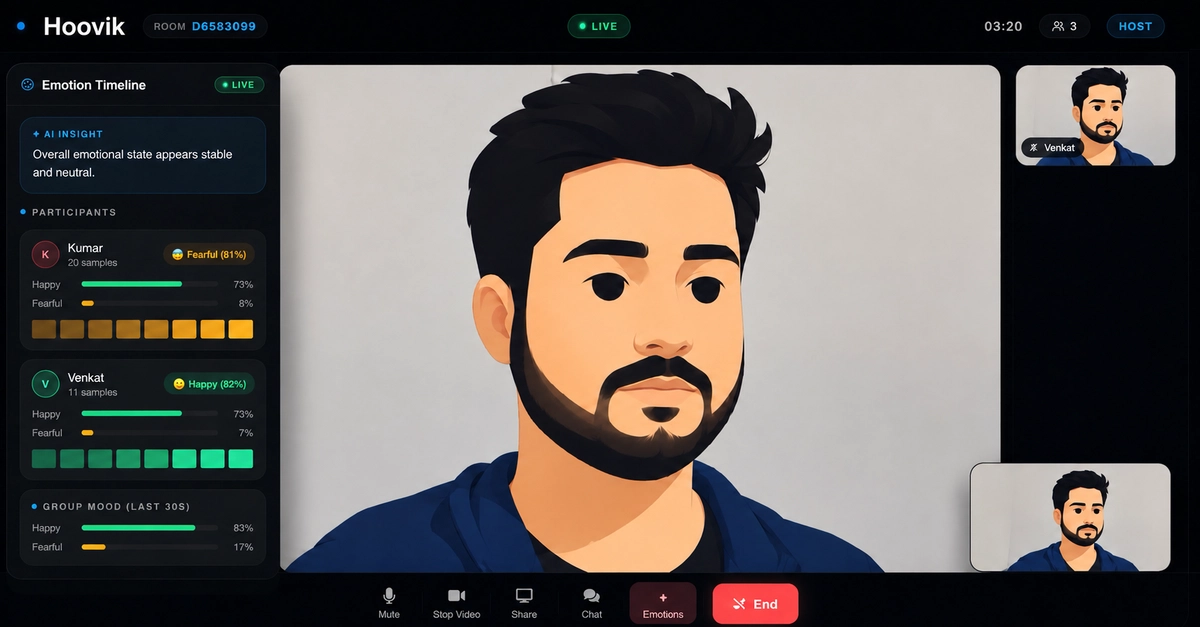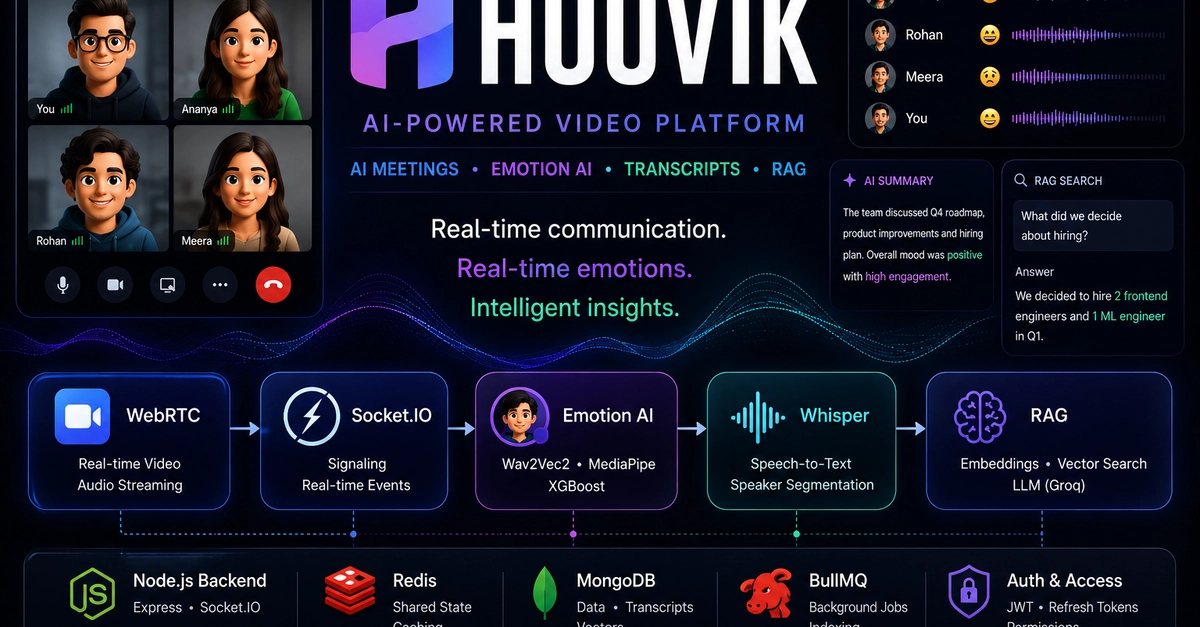
A complete breakdown of Hoovik: WebRTC signaling, distributed Node.js with Redis, real-time emotion AI, RAG on meeting transcripts, and a Python transcription pipeline — all wired together.
I've previously written about individual parts of Hoovik, including its emotion analysis system and WebRTC signaling architecture.
Those articles focused on specific subsystems. This one focuses on the complete platform.
Hoovik is not a single application. It is a collection of services working together: a React/WebRTC frontend, a distributed Node.js backend, a transcription pipeline, a real-time emotion recognition service, and a retrieval-augmented search system built on meeting transcripts.
This article walks through how those systems interact, the architectural decisions behind them, and the tradeoffs encountered while building each component.