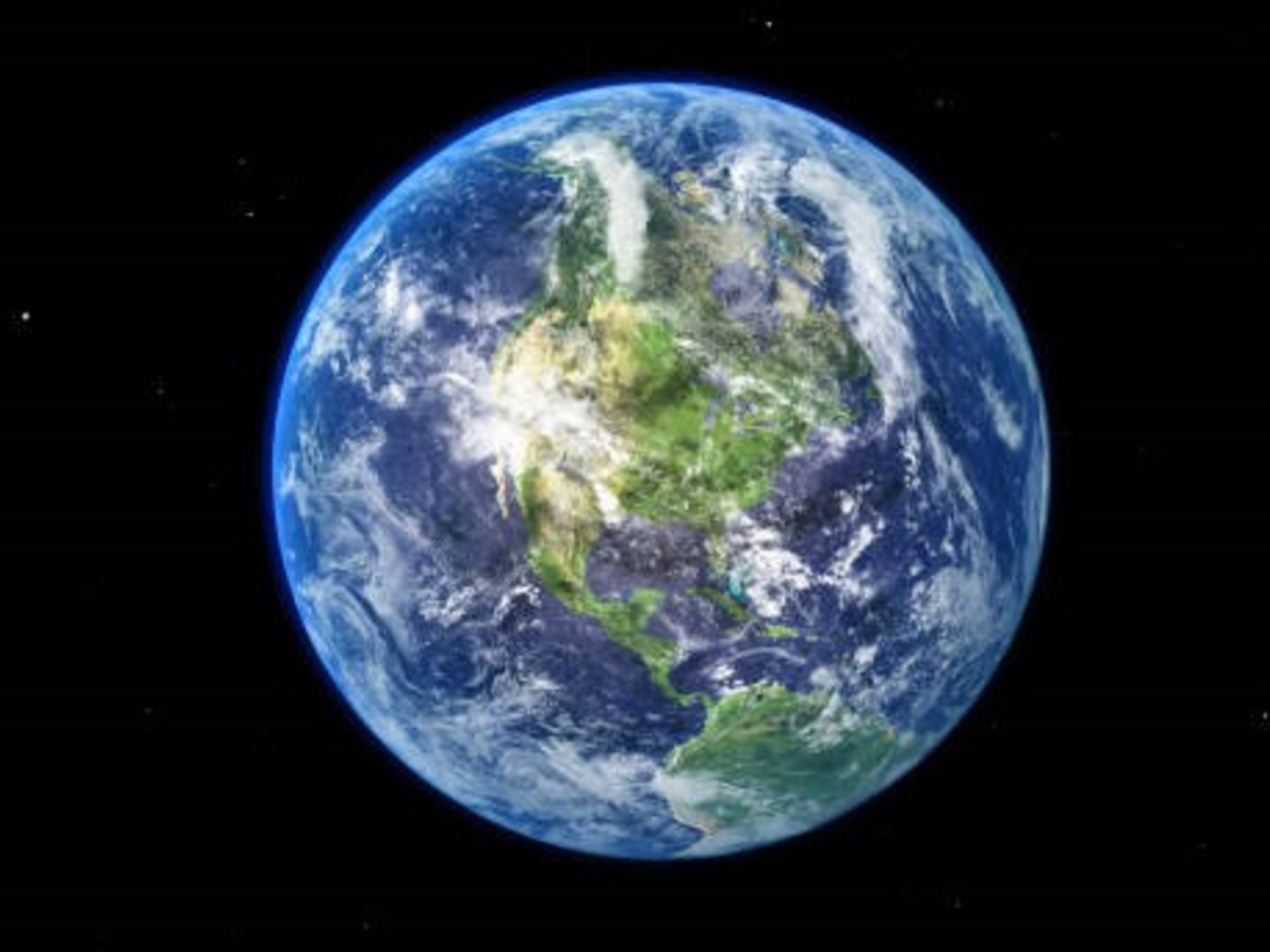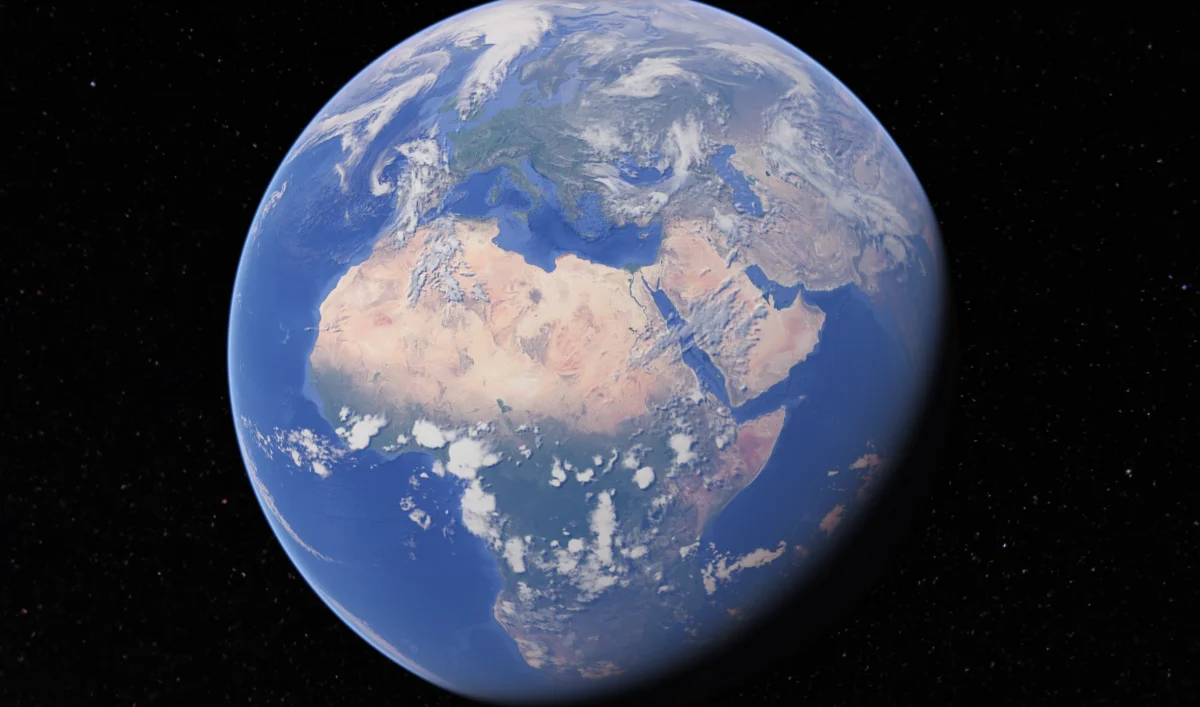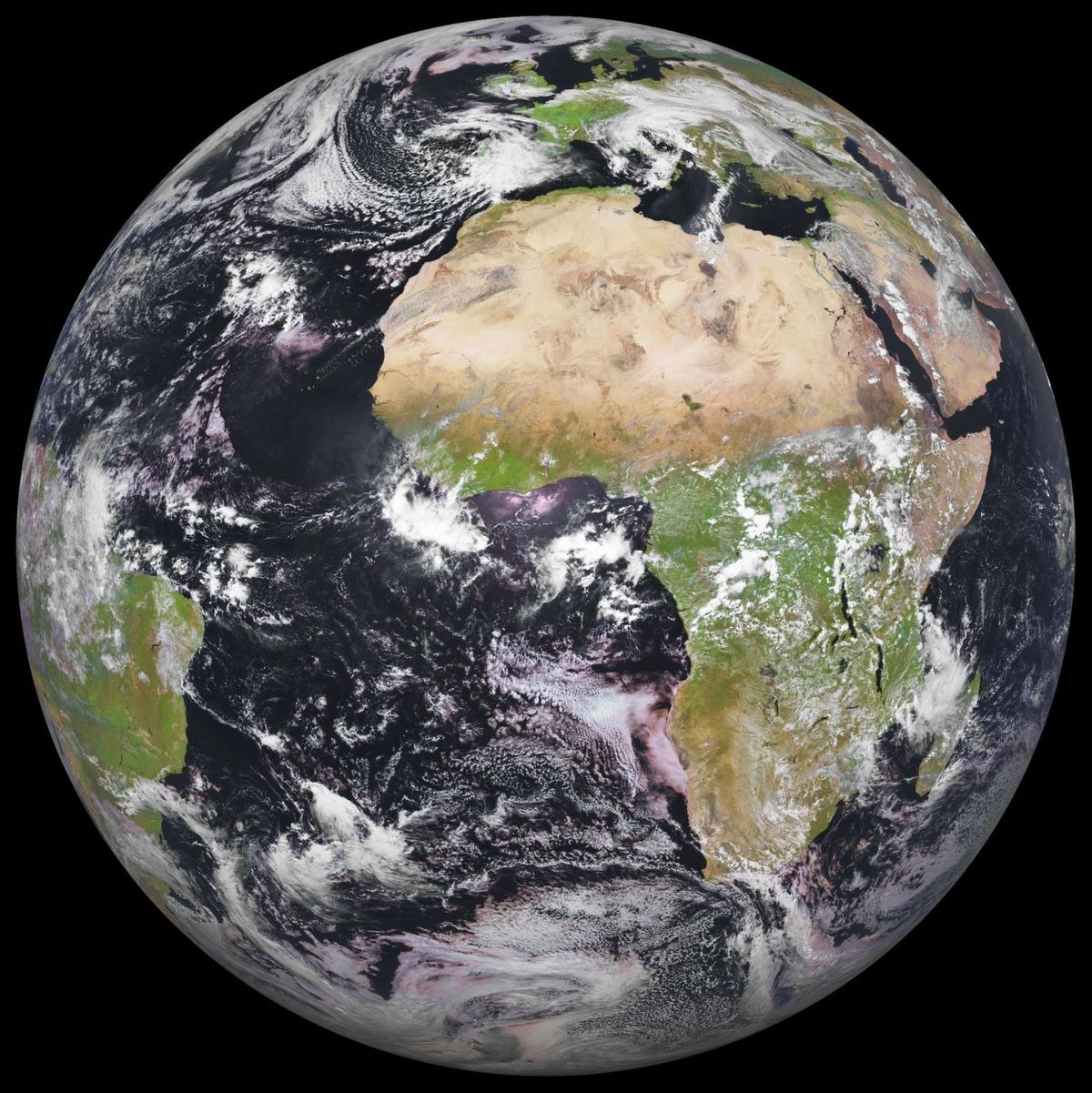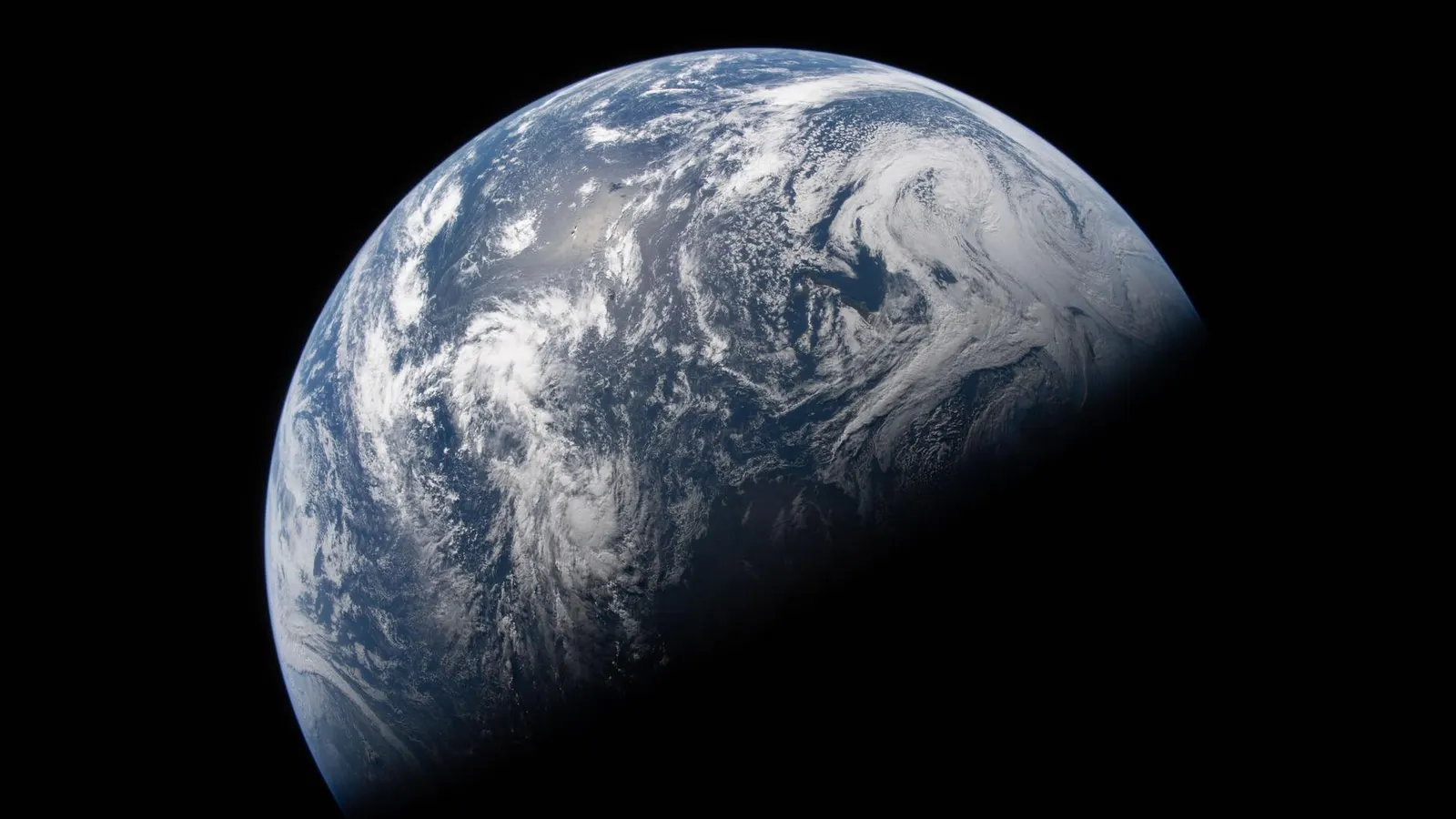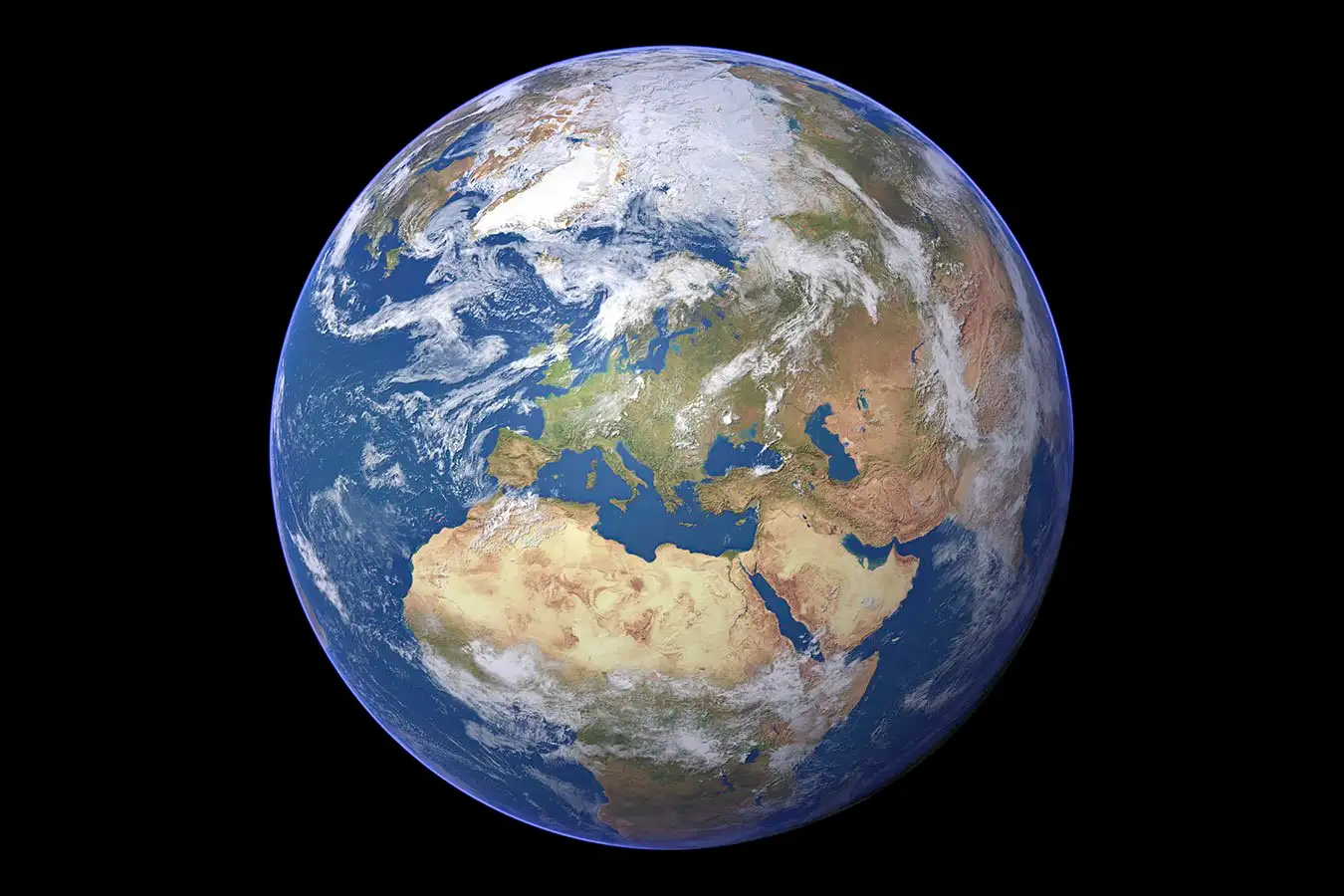
The 27° east meridian, running through Europe and Africa, divides Earth into two equally reflective halvesPLANETARY VISIONS LTD/SCIENCE PHOTO LIBRARY
A line that runs through Africa, Europe, Alaska and both poles divides Earth into two halves that reflect the same amount of light – and this newly discovered symmetry may play a critical role in the planet’s climate.
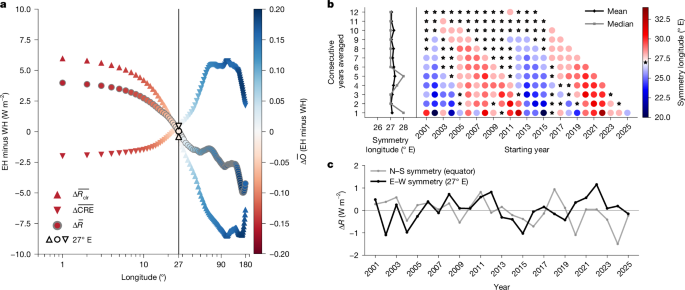
It was previously known that the northern and southern hemispheres have almost equal reflectivity, or albedo, but Jianhao Zhang at the National Oceanic and Atmospheric Administration in the US and his colleagues have now uncovered a second line of symmetry along the 27° east and 153° west meridians.
The hemispheres separated by this line are nearly equal in three respects: their albedo in clear skies, the reflectivity of clouds and the fractions covered by ice-free oceans. This symmetry has persisted throughout 25 years of satellite observations analysed by Zhang and his colleagues.
At first, Zhang thought it must be a coincidence. “What convinced me that the east-west symmetry is not trivial are three features: its uniqueness, its persistence and what we call the triple symmetry feature,” he says. “Finding one division with equal total reflection might be expected. But finding a persistent, unique east-west division that also balances land-ocean distribution, clear-sky reflection and cloudy-sky reflection is much less trivial – especially given how variable and dynamic clouds are.”