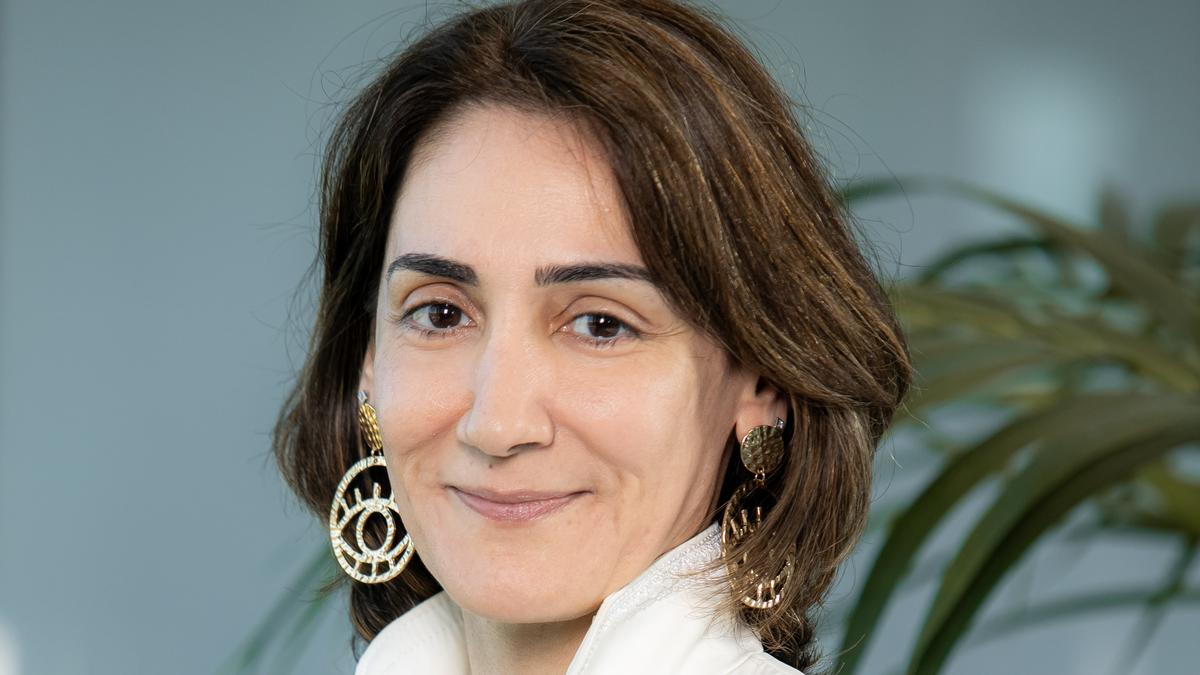
One of the biggest misconceptions in the incorporation of Artificial Intelligence (AI) in education is that it must be integrated equally deeply in all curricula, according to Rafif Srour, Dean of Programs at IE University in Spain.Speaking to The Hindu in the run-up to the South Summit 2026 in Madrid, co-organised by IE University, Ms. Srour said that while on the one hand there is no subject that AI should be kept away from, there certainly are some that require a much more deft touch when it comes to AI. ‘False impression of knowledge’“Now the question is how and when to use this technology,” she explained. “One of the biggest misconceptions is to assume that, with this tool, we need to deeply integrate it within every one of my curriculums. I think that’s a big mistake because, if we do this, you create a false impression of knowledge.” “I can go to any large language model (LLM) and ask about quantum physics and it will give me pages and pages,” she added. “Does that mean I have become a quantum physicist? Very far from it. Ms. Srour added that this false impression of knowledge is becoming increasingly pervasive and that it is something that educators have to be extremely careful about for their students. “So, selectively deciding when and how to use or to integrate this technology within the curricula is extremely important,” she said. “In an age where AI can automate nearly anything, what are the skills that remain or how do you want to teach your students?”Changing curriculum to deal with AIMs. Srour, who also teaches computational thinking and logical mathematical thinking at IE University, said that she has had to change her curriculum three times in as many years to adapt it to what AI is able to do. “Those AI tools are becoming excellent in providing the answers,” she explained. “If I give an exercise to my students to solve at home, I know that they would solve it with the AI. Does that mean that they’ve learned what I want them to learn? Absolutely not, because of this false impression of knowledge creation.”Instead, she restricts the use of AI in her classes and focuses a lot of her time on giving her students complex, real-life situations to navigate. “So, you try to give students very complex systems and you teach them how to navigate through that complexity, clear the noise and get to the essential components,” she explained. “And from that essential component, they must know how to formulate the problem statement.” “The minute that they’re able to formulate the problem, I allow them to pass it on to the machine because the machine can solve it for them,” Ms. Srour added.Need for ‘cognitive patience’ in studentsShe also spoke about another trend she was picking up in her students that has been brought on by AI — cognitive impatience. This, she said, is also something that needs to be trained out of them.“Intellectual or cognitive patience is something that is extremely important for an engineer or for a scientist to develop because the world they’re going to join is a highly uncertain place,” Ms. Srour explained. “So, they will have to learn not only how to navigate uncertainty, but to be okay with not knowing the answers to the many questions that they will be facing.”One of the ways she is trying to instill this ‘cognitive patience’ is by going back to pen and paper and asking students to actually work out mathematical or statistical problems by hand, step-by-step. AI impact on jobsThe other impact she is seeing of AI is not just on incoming students, she said, but also on those that are graduating and looking for jobs. “I have a very close relationship with my students and so now that they’re going towards their graduation, I’ve started observing certain trends and am starting to sense it from our own graduates,” she explained. “They say they cannot find jobs, it’s very hard, they go through a number of interviews and the interviews are getting harder.” As far as IE University is concerned, she said that the first line of reaction that they are doing is that they are working hard to bring the industry experience to our students in such a way that the experience they would have received in 1-2 years on the job is now learnt in class. “We have created a lab where students work on real cases, whatever is happening in the industry right now,” Ms. Srour said. “We are co-designing curricula with the industry. A big portion of our professors are people that actually work in the industry. So they’re experimenting firsthand and are teaching our students firsthand at the same time.”(The reporter is in Madrid at the invitation of IE University)
‘Thinking AI needs to be integrated deeply into every curriculum is a mistake’
Rafif Srour warns against deeply integrating AI into all curricula, highlighting risks of creating a false impression of knowledge.
803 words~4 min read