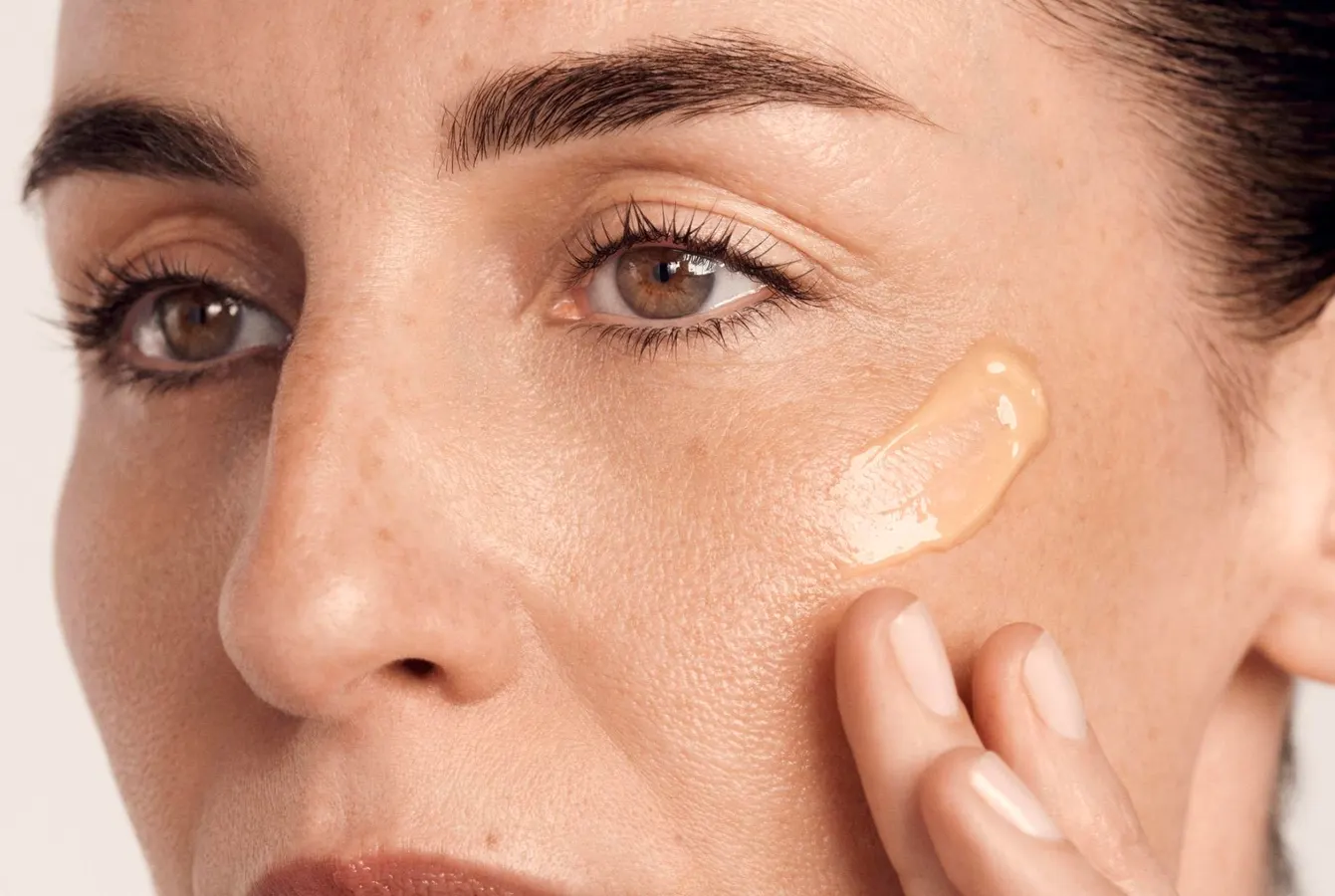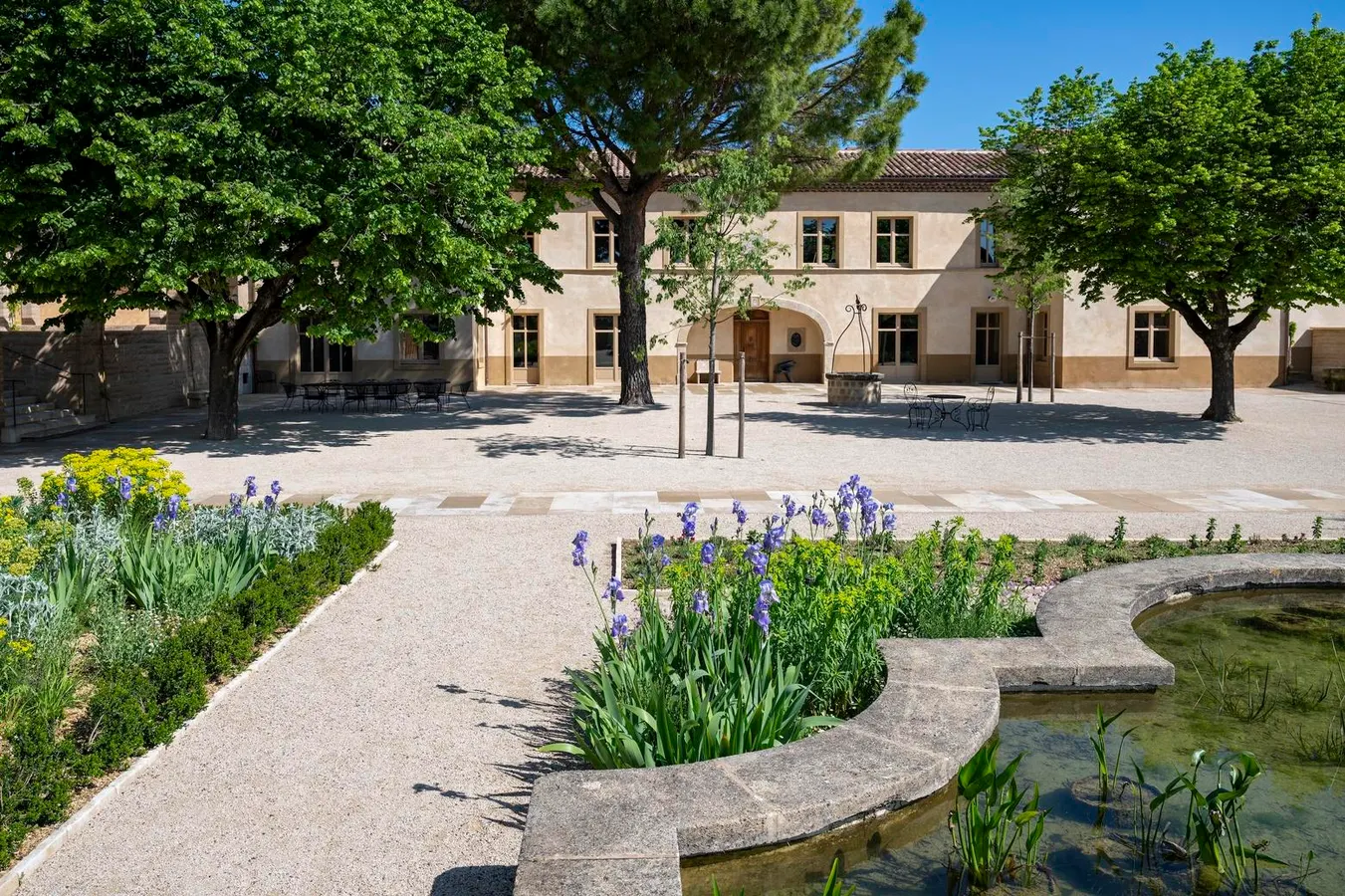
Château de BeaucastelBeau Domaine SkincareBeau Domaine Skincare is in a very unique position, and it’s not just because Brad Pitt is the co-founder and co-director of the skincare brand. Despite that it launched in 2022, Beau Domaine actually has centuries of history and science behind it. The proof of that is in a beautiful building in the south of France in the heart of Provence, surrounded by the vineyards of Château de Beaucastel that produce some of the most coveted wines in the world by the Perrin family.Above the fireplace of their once simple, stone-walled ancestral home reads “5 Septembre 1687.” Wine has been grown on this land for centuries, and it was once owned by Louis XIV, who used it as a hunting lodge. Since 1909, over five generations, the farming has been done without pesticides or herbicides, instead relying on organic farming techniques, allowing them to cultivate the finest and purest ingredients. The Perrin family is dedicated to farming practices that are better for the planet and their wine—and now, your skin. Though no one no longer lives in the farmhouse, it was fully restored and the historical part of the house was returned to its former glory during a major renovation, along with the winery.The Beau Domaine Skincare rangeBeau Domaine Skincare“Being the fifth generation of Beaucastel, it is a project which is completely inside of what we think about culture, about beauty, about wine making,” says Pierre Perin, a co-founder of Beau Domaine and co-owner of Château de Beaucastel. “Today, Beaucastel is not only for wine anymore. We also want to use grapes to make cosmetics. It's what makes Beaucastel special today. It respects the family tradition, which is very important, so we're going to continue that, and we are amazed by what has been done in Beaucastel before. To be able to have 100 years of history of no chemicals, no practices that we don't want to have, is something that we are proud of.”The Perrin family has embraced sustainable farming for generations, adapting to the most advanced technologies over the years across all their vineyards. Now they are leading the charge in agricosmetics, the latest frontier of clean beauty. The concept is that the efficacy and authenticity of skincare is intrinsically linked to the quality of the agricultural raw materials used in the formulas. Instead of purchasing pre-processed ingredients from third parties, agricosmetic brands rely on an integrated vertical, growing, studying and processing their ingredients every step of the way themselves, giving them absolute control over exactly what goes into their products. This process not only ensures the ingredients are grown to the highest standards, but also that everything is done so ethically in-house, with full transparency. This starts from the soil and ends with the final ingredients. Château de BeaucastelBeau Domaine SkincareA cutting-edge facility has been built around the ancestral home that remains at the center of the Château de Beaucastel headquarters, illustrating the balance between history and modernity, which is evident in the property’s circularity and biodynamic practices (a horse is used to plow). The property’s significant renovation was completed last May and the renovated Beaucastel includes a 12-meter deep swimming pool for water collection and a wind tower for natural cooling. Whenever possible, they used local materials and innovative practices to respect the environment. “The wind is very important,” Perrin says. “The building was created with respect of the elements that we have in Beaucastel. The building was built with our own earth.” Similar to adobe, they used local dirt and clay to create a concrete that was used to create the building. They are one of the most sustainable wineries in the world. “What is left after the winemaking is very important,” Perrin says. “When we make wine, we extract 50% of what is in the skin. What is left after that is 50% of the antioxidants, the color, the flavor, and we said 15 years ago, what are we going to do with that?” The answer was Beau Domaine Skincare.The Perrin family’s advanced agricosmetics approach stems from their whole-plant philosophy. Every single part of the vine is utilized for its unique bioactive compounds, including stilbenoids from the roots, resveratrol from the canes, antioxidant complexes from grapes and oligomeric procyanidins from seeds. Each is carefully isolated, stabilized and optimized for potency. Nothing goes to waste, resulting in a fully circular system. They approach all products made from the vine the same way, prioritizing terroir and sustainable practices. The grapes used by Château de Beaucastel for their wines are top-notch, so it makes sense they’d also excel as a skincare ingredient. The vineyards of Château de BeaucastelBeau Domaine SkincareTo prove it, Beaucastel has partnered with several universities in Europe to study the benefits their grapes have on health. “The brand was built on more than 15 years of scientific research with the University of Bordeaux,” says Léo Lajoie, PhD, Head of Research and Development, Beau Domaine and Famille Perrin. Their research pinpointed the efficacy of antioxidant activity and studied the effects of catechins and resveratrol.Agricosmetics requires a deep understanding of science and skincare every step of the way. That’s what enabled Beau Domaine to create their proprietary skin longevity technology, GSM10 and PROGR3. They studied all 13 grape varieties at Beaucastel and selected three to create a new patent-pending powerful antioxidant active ingredient, GSM10, which fights oxidative stress at the intracellular and extracellular level and is enhanced with a post-biotic microorganism, a Lactobacillus, to help balance the skin. Made with upcycled grape marc, it’s deeply sustainable. “We introduce GSM10 in every product in our cosmetic line,” Lajoie says.The walls of Château de Beaucastel are made of concrete from the local dirt and clayBeau Domaine SkincarePROGR3 was created in partnership with a leading geneticist, Professor Nicolas Lévy of Aix-Marseille University, Chief Scientist for Rare Diseases at the Servier Group, after researching molecules in plant extracts that counter the effects of progerin, which causes DNA damage and premature aging. PROGR3 contains three plant actives: resveratrol from vine shoots, apigenin from chamomile and catechin from green tea. “The apigenin from chamomile is cold-pressed and we get the blend of resveratrol from our own vines,” Lajoie says.The Beau Domaine Skincare products are rounded out with other compounds sourced straight from the vineyard’s crops, such as hydrating organic grape water and olive oil. “An important thing about the cosmetic line is the olive oil that is produced here is organic and really concentrated in compounds,” Lajoie says. “We performed a lot of tests to know exactly what it contains.”They also put plenty of research into their extraction techniques. “It's very important to be able to produce our cosmetics actives, but it's also important to use the most natural process of extraction,” Perrin says. “It can boost the activity of your skin. To be regenerative makes the most of your body, your vineyards, your earth. To be able to be better is suitable to all our activities.”Beau Domaine Skincare The Body & Tattoo CreamBeau Domaine SkincareIt took 15 years to research and develop the active ingredients. The provenance and detailed research behind the carefully curated ingredients is what makes Beau Domaine Skincare so efficacious, which is validated through clinical testing by independent labs. For example, The Cream, an anti-aging daily moisturizer, increases hydration by 84% after two hours and 34% after 24 hours, improves radiance by 35% and reduces dehydration fine lines by 16%. The Serum plumps skin by 42%, reduces signs of fatigue by 12% and crow's feet by 11%, and 94% said it left their skin more radiant. The Cleansing Emulsion, an antioxidant face wash, improved hydration levels for 100% of testers and 97% said their skin was clean, fresh and supple after using.Those three products make up Pitt’s skincare routine. “Brad is an architect,” Perrin says. “He loves beautiful things. He loves nature.” He weighs in on product development and advises on design. He’s the one who requested that their latest launch, The Body & Tattoo Cream, also be used to brighten and preserve tattoos. His aesthetic is evident in the chic wood caps that top most of the products. The wood caps are finished by hand in the mountains of France, showcasing the attention to detail of the brand and craftsmanship of local artisans. Beau Domaine Skincare productsBeau Domaine SkincareThe rest of the packaging was created with the utmost devotion to sustainability. Opting to avoid plastic, the jars are made of glass. When plastic is necessary, such as for the pumps, it's post-consumer recycled plastic. The packaging is as light as possible to reduce shipping weights and their carbon footprint. They work with as many local suppliers as possible, so the packaging comes from France or Italy. In beauty, often what’s old is new again. Despite that organic farming is centuries old, agricosmetics is the future of skincare. “We don't have to compromise between what we put on our skin, the impact on the planet and the efficiency of the products,” Perrin says. “We have produced our own ingredients and we are going to continue that. We want to respect five generations of what we're doing at Beaucastel.”
Agricosmetics Is The Future Of Sustainable Beauty—And Beau Domaine Is Leading It
Born in a storied vineyard in the south of France, Beau Domaine is paving a new path in agricosmetics, proving how skincare that’s better for the planet is even better for your skin.
1,524 words~7 min read