NurPhoto / Getty Images
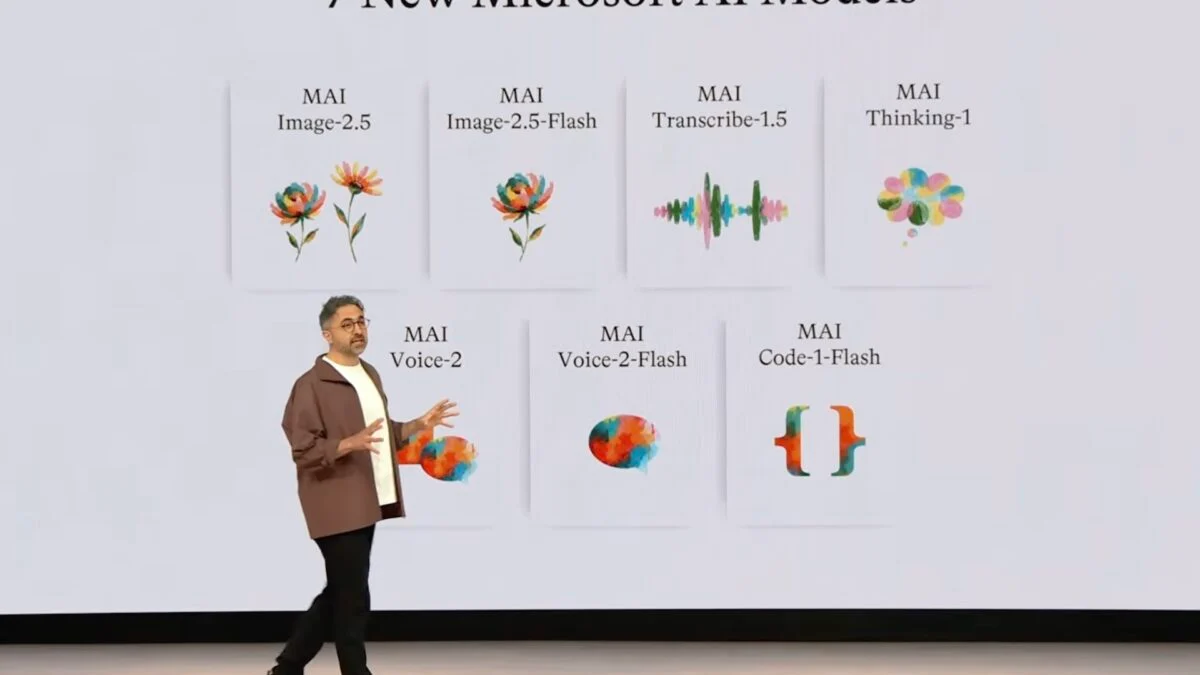
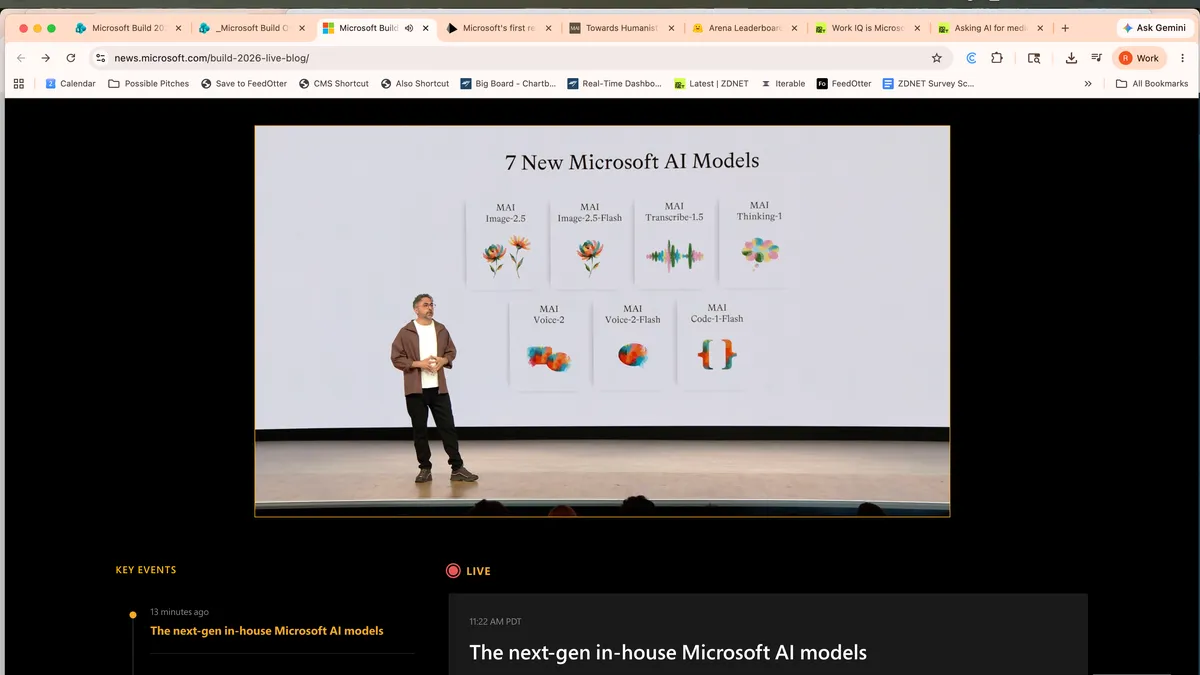
Microsoft $MSFT -1.84% unveiled a family of seven in-house AI models on Tuesday at its Build developer conference in San Francisco, a move the company framed as a bid for long-term self-sufficiency and reduced dependence on outside model providers including OpenAI.
The flagship model, MAI-Thinking-1, is a reasoning model with 35 billion active parameters and a 256,000-token context window. The company said it was trained from scratch with no distillation from other AI companies' models — a detail meant to appeal to enterprise customers concerned about data lineage. In blind testing conducted by independent raters, MAI-Thinking-1 was preferred over Anthropic's Claude Sonnet 4.6, and it matched Claude Opus 4.6 on the SWE Bench Pro coding benchmark, the company said. The model is available in private preview on Microsoft Foundry, the company's platform for integrating AI models into applications.
There are economic incentives behind the push. Hosting models on Azure rather than licensing them from outside vendors means Microsoft sidesteps royalty payments to partners like OpenAI — savings that can be passed down the chain to developers, according to CNBC.
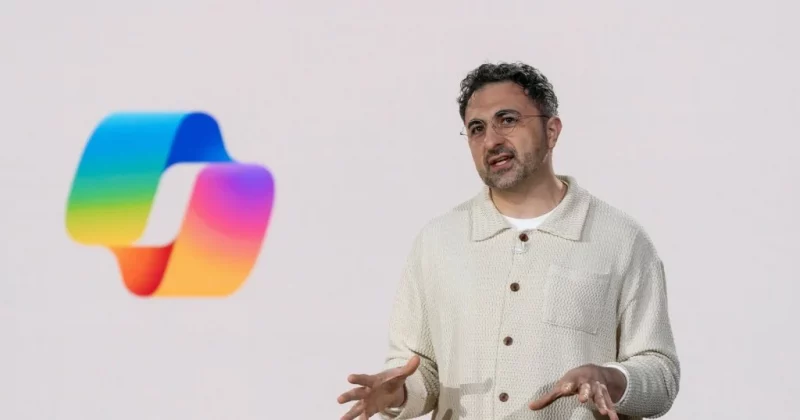
Benchmarked against McKinsey's requirements, Microsoft's models beat OpenAI's GPT 5-5 while delivering tenfold cost savings, Microsoft AI CEO Mustafa Suleiman said, according to CNBC. "This is all about long term self-sufficiency for Microsoft and our partners. It's about models you can trust," Suleiman wrote, according to GeekWire.