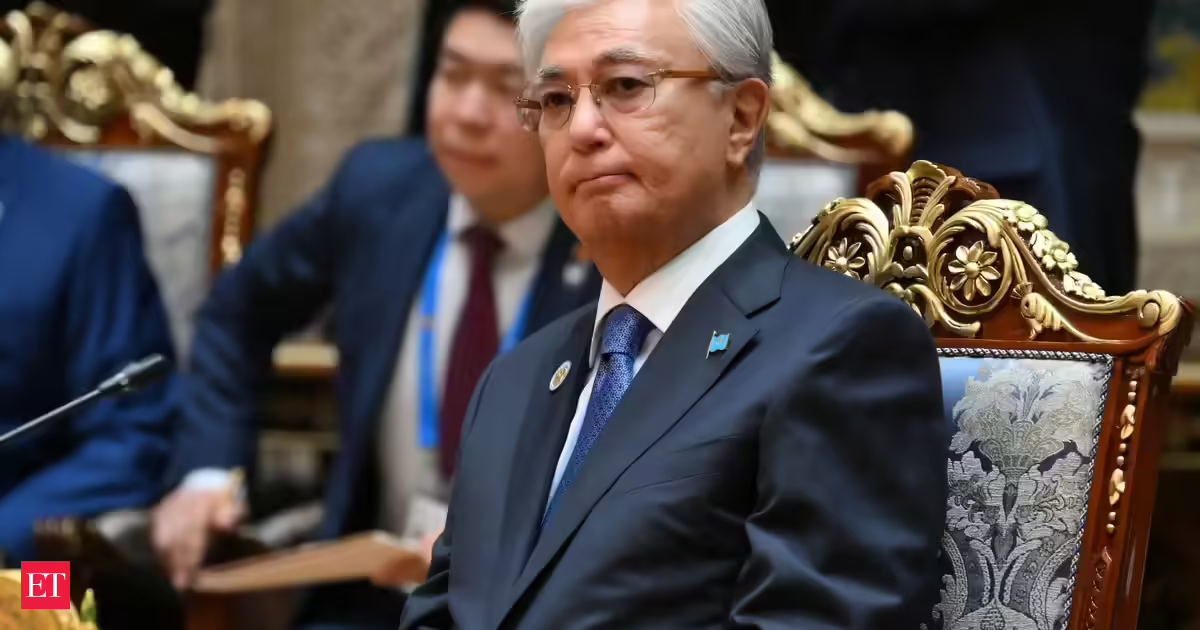
People in Kazakhstan remember the millions killed in the famine and political persecutions of the early Soviet era with a solemn ceremony on 31 May. Kazakh President Kassym-Jomart Tokayev, during a wreath-laying ceremony, highlighted that the losses the nation sustained in the 20th century should not be forgotten.
The Great Famine
By the 1930s, the Bolsheviks had largely stabilised their rule, eliminated competition and started building communism across the Soviet Union. They decided it was time to accelerate the country’s industrialisation, through a massive collectivisation campaign, during which they confiscated all of Kazakhs’ livestock.
“When people were herded into collective farms, enormous herds would be concentrated in one place. This led to deaths from lack of food,” explained Andrey Drebezgov, head of the Exhibition Department at the KarLag Museum.
The Red Army slaughtered much of the remaining cattle, unable to feed the animals. Herd numbers fell from 40 million to five million. For a nation whose primary source of food was cattle, this meant widespread starvation.