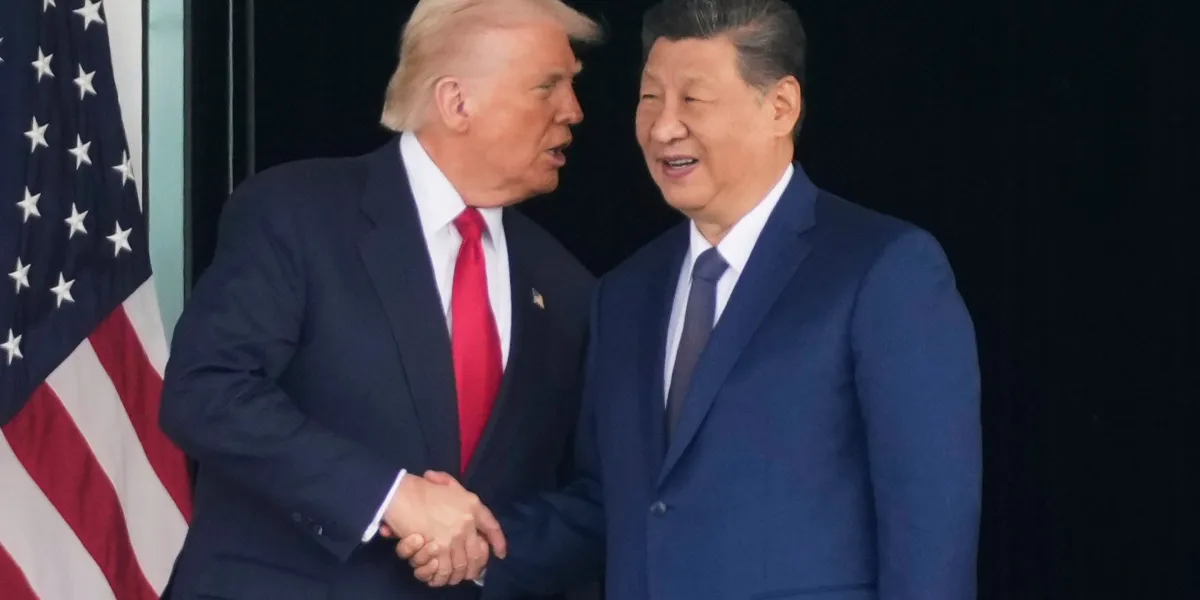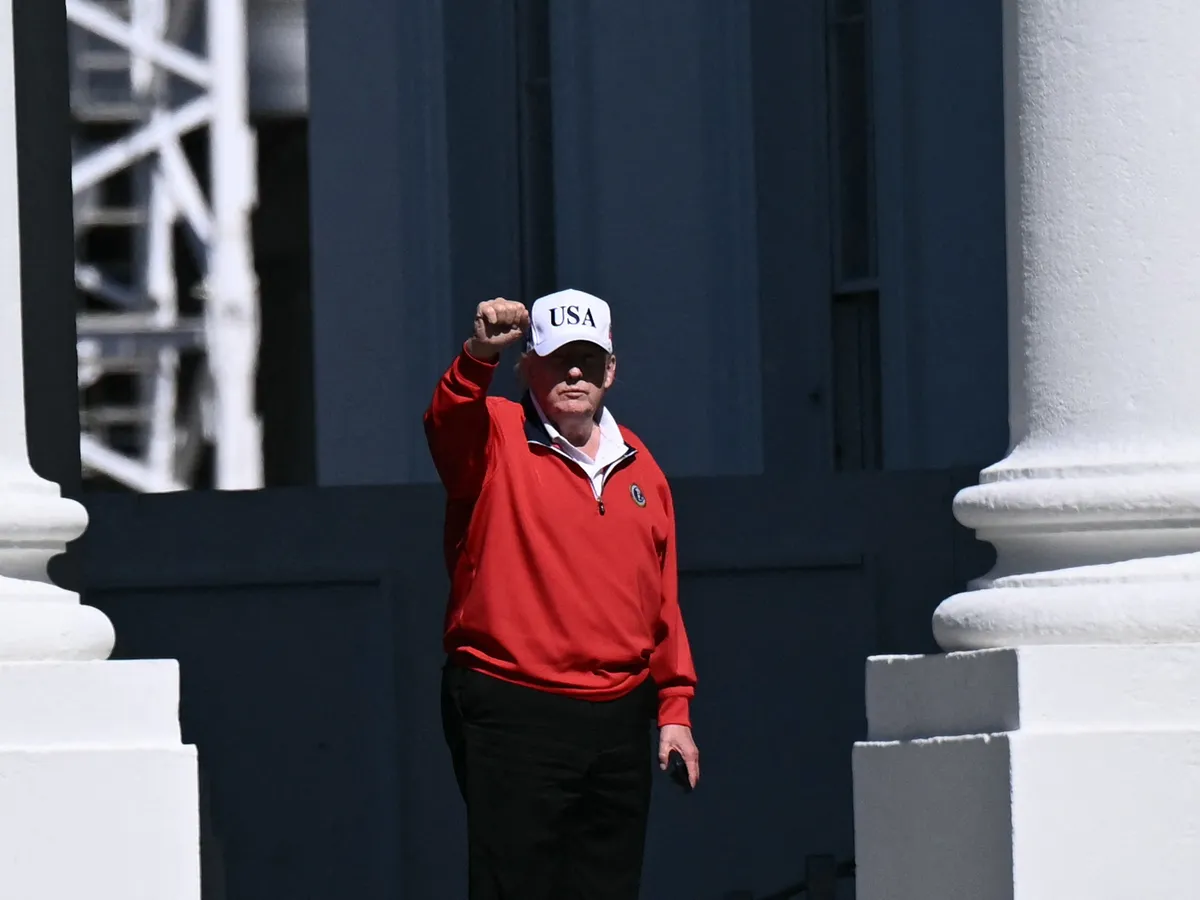
Skip to Content News Archives Economy Energy Oil & Gas Renewables Electric Vehicles Mining Commodities Agriculture Real Estate Mortgages Mortgage Rates Finance Banking Insurance Fintech Cryptocurrency Work Wealth Smart Money Wealth Management Investor Personal Finance Family Finance Retirement Taxes High Net Worth FP Comment Executive Women Puzzmo Newsletters Financial Times Business Essentials More Innovation Information Technology FP500 Podcasts Small Business Lives Told Tails Told Shopping Financial Post Store Obituaries Place a Notice Advertising Advertising With Us Advertising Solutions Postmedia Ad Manager Sponsorship Requests Classifieds Place a Classifieds ad Working Profile Settings My Subscriptions Saved Articles My Offers Newsletters Customer Service FAQ News Economy Energy Mining Real Estate Finance Work Wealth Investor FP Comment Executive Women Puzzmo Newsletters Financial Times Business Essentials HomeNewsEconomyTrump begins rebuilding his tariff wall with new proposed leviesUnder the new structure a 10% tariff rate would apply to imports from CanadaAuthor of the article:Last updated 19 minutes ago You can save this article by registering for free here. Or sign-in if you have an account.U..S President Donald Trump raises his fist as he returns to the White House in Washington, DC, on May 31, 2026 after golfing at his Trump National Golf Club in Sterling, Virginia. Photo by Brendan SMIALOWSKI / AFP via Getty ImagesThe U.S. is proposing new tariff of at least 10 per cent on imports from 60 trading partners in U.S. President Donald Trump’s biggest move to rebuild his protectionist wall since his earlier levies were struck down by the U.S. Supreme Court.Subscribe now to read the latest news in your city and across Canada.Exclusive articles from Barbara Shecter, Joe O'Connor, Gabriel Friedman, and others.Daily content from Financial Times, the world's leading global business publication.Unlimited online access to read articles from Financial Post, National Post and 15 news sites across Canada with one account.National Post ePaper, an electronic replica of the print edition to view on any device, share and comment on.Daily puzzles, including the New York Times Crossword.Subscribe now to read the latest news in your city and across Canada.Exclusive articles from Barbara Shecter, Joe O'Connor, Gabriel Friedman and others.Daily content from Financial Times, the world's leading global business publication.Unlimited online access to read articles from Financial Post, National Post and 15 news sites across Canada with one account.National Post ePaper, an electronic replica of the print edition to view on any device, share and comment on.Daily puzzles, including the New York Times Crossword.Create an account or sign in to continue with your reading experience.Access articles from across Canada with one account.Share your thoughts and join the conversation in the comments.Enjoy additional articles per month.Get email updates from your favourite authors.Create an account or sign in to continue with your reading experience.Access articles from across Canada with one accountShare your thoughts and join the conversation in the commentsEnjoy additional articles per monthGet email updates from your favourite authorsSign In or Create an AccountorFollowing an investigation into how trade partners handle goods allegedly produced by forced labour, a 10 per cent tariff rate would apply to imports from Canada, Mexico, the European Union, Taiwan and the U.K., among other places, according to a statement from the Office of the U.S. Trade Representative.Products from other major economies, including China, India, Japan, South Korea, Brazil and Switzerland, would be subject to a 12.5 per cent levy.Get the latest headlines, breaking news and columns.By signing up you consent to receive the above newsletter from Postmedia Network Inc.A welcome email is on its way. If you don't see it, please check your junk folder.The next issue of Top Stories will soon be in your inbox.We encountered an issue signing you up. Please try againThe trade office said it was imposing the lower rate on goods from economies that impose prohibitions on forced labor imports or have committed to doing so, while those “that have failed to impose and effectively enforce” them received a higher rate.The move is a major step in Trump’s push to reinstate the tariffs he imposed during his first year in office before they were deemed unconstitutional. The recommended duties are a result of probes launched under a separate legal authority known as Section 301 of the Trade Act of 1974.A separate raft of 301 investigations includes a review of U.S. trading partners’ excess manufacturing capacity, the findings of which may also be released soon. Trade analysts are speculating whether any future duties from that probe would be stackable on top of those proposed under the forced labor investigation.“Trade partners will be understandably upset by this determination,” said Deborah Elms, head of trade policy at the Hinrich Foundation in Singapore. “You’ve opened a door now for a whole lot of new tariff and non-tariff adjustments,” she added.Equities remained higher after the news. MSCI’s All Country World Index rose 0.1 per cent to a record, with gauges in Asia and the U.S. setting all-time highs.The levies arrive at a pivotal time for the global economy with financial markets already on edge over the Iran war and a resultant spike in oil and gas prices. Those higher energy prices have fueled new fears about inflation, and in the U.S. exacerbated affordability concerns among voters that threaten Trump’s Republican Party in November’s midterm elections.The levies won’t go into effect immediately and are subject to a public comment and review period before implementation, which could result in changes before any duties are codified. Written comments are due to be submitted by July 6, and a Section 301 panel is expected to convene public hearings beginning on July 7, according to the notice.The USTR investigated whether the economies involved had failed to impose a forced labor import prohibition or effectively enforce such a prohibition. “None of the 60 economies whose acts, policies, and practices are the subject of these investigations effectively enforce a forced labor import prohibition,” it found.“This creates a dynamic where American workers are forced to compete globally on an unlevel playing field,” U.S. Trade Representative Jamieson Greer said in a statement. “We will no longer tolerate this disparity.”Citing the Trafficking Victims Protection Reauthorization Act of 2005, the USTR flagged 34 goods in particular countries that are made with inputs produced with forced labor. Those included cotton used for garments, critical minerals for solar products, fish used for fish oil and fish meal, and palm fruit used palm oil.The move will test the tolerance of the largest U.S. economic partners, who have largely restrained from retaliating against Trump’s tariffs, opting instead to negotiate deals to lower import taxes and ensure market access.“Any tariffs on Australian exports to the United States are unjustified and inconsistent with our free trade agreement,” Australia’s trade ministry said. India’s commerce ministry said in a statement that New Delhi “remains engaged with the U.S. on the matter.”Japan’s trade and foreign ministries and China’s foreign ministry didn’t immediately respond to requests for comment.The new levies also pose questions about the stability of a truce with China following a summit between Trump and counterpart Xi Jinping in May, which saw them agree to establish new boards on trade and investment to manage the relationship between the world’s two largest economies.“Because it is not only targeting China, I believe there should still be some room for communication and dialog between Beijing and Washington,” said Zhu Feng, dean of the School of International Studies at Nanjing University. “If additional Section 301 follow-up actions are rolled out successively, it will indeed pose new challenges to the ‘Beijing Consensus.’”Beijing last month indicated that it would accept some increase in U.S. tariffs to a level agreed upon in October.There are also several proposed exceptions to the tariff regime.Apparel and textile imports from some countries would be able to enter the U.S. at a reduced tariff rate — with those quotas set according to the volume of U.S. exports of textiles to those nations.Other products are exempt from the tariffs entirely, including beef, tomatoes, bananas, coffee, orange juice and other food items. Metals, which are already covered by other levies, are excluded, as are certain fuels and chemicals.Trump’s broad trade agenda suffered a sharp blow in February when the U.S. Supreme Court struck down levies he imposed using emergency powers.As a stopgap measure, the president also implemented a 10 per cent global levy under Section 122 of the trade law, though those import taxes expire in July. The Section 122 tariffs are themselves subject to an ongoing legal challenge.Section 301 tariffs are seen as more legally sound and flexible than other powers Trump has eyed, but also more time-consuming.The Hinrich Foundation’s Elms said the imposition of the newly announced tariffs is likely to coincide with the expiry of the Section 122 levies, once consultation and hearings wrap up.Greer has said the goal was to complete a series of trade investigations to allow Trump to quickly enact new tariffs after the outgoing measures expire.With assistance from Catherine Lucey, Philip J. Heijmans, Yoshiaki Nohara, James Mayger, Derek Wallbank, Philip Glamann, Nectar Gan and Isabelle Chong Join the Conversation This website uses cookies to personalize your content (including ads), and allows us to analyze our traffic. Read more about cookies here. By continuing to use our site, you agree to our Terms of Use and Privacy Policy.
Trump begins rebuilding his tariff wall with new proposed levies
The U.S. is proposing new tariff of at least 10% on imports from 60 countries in a move to rebuild Trump's protectionist wall. Read more.
TL;DRAI
Trump reinstates 10% tariffs on Canada/EU/Taiwan, 12.5% on others (China, India, Japan) using forced-labor probe—sidestepping prior court block. For tech teams, hardware margins tighten; signals supply-chain realignment toward geopolitical sourcing.
1,532 words~7 min read