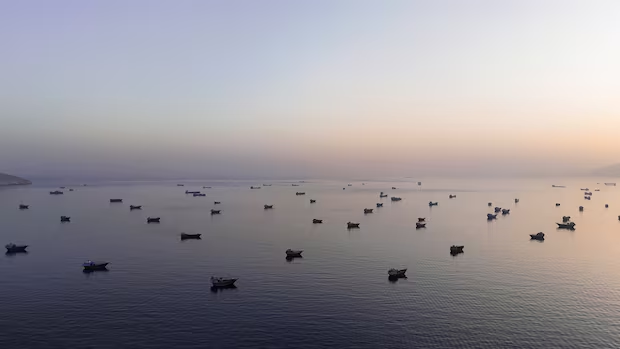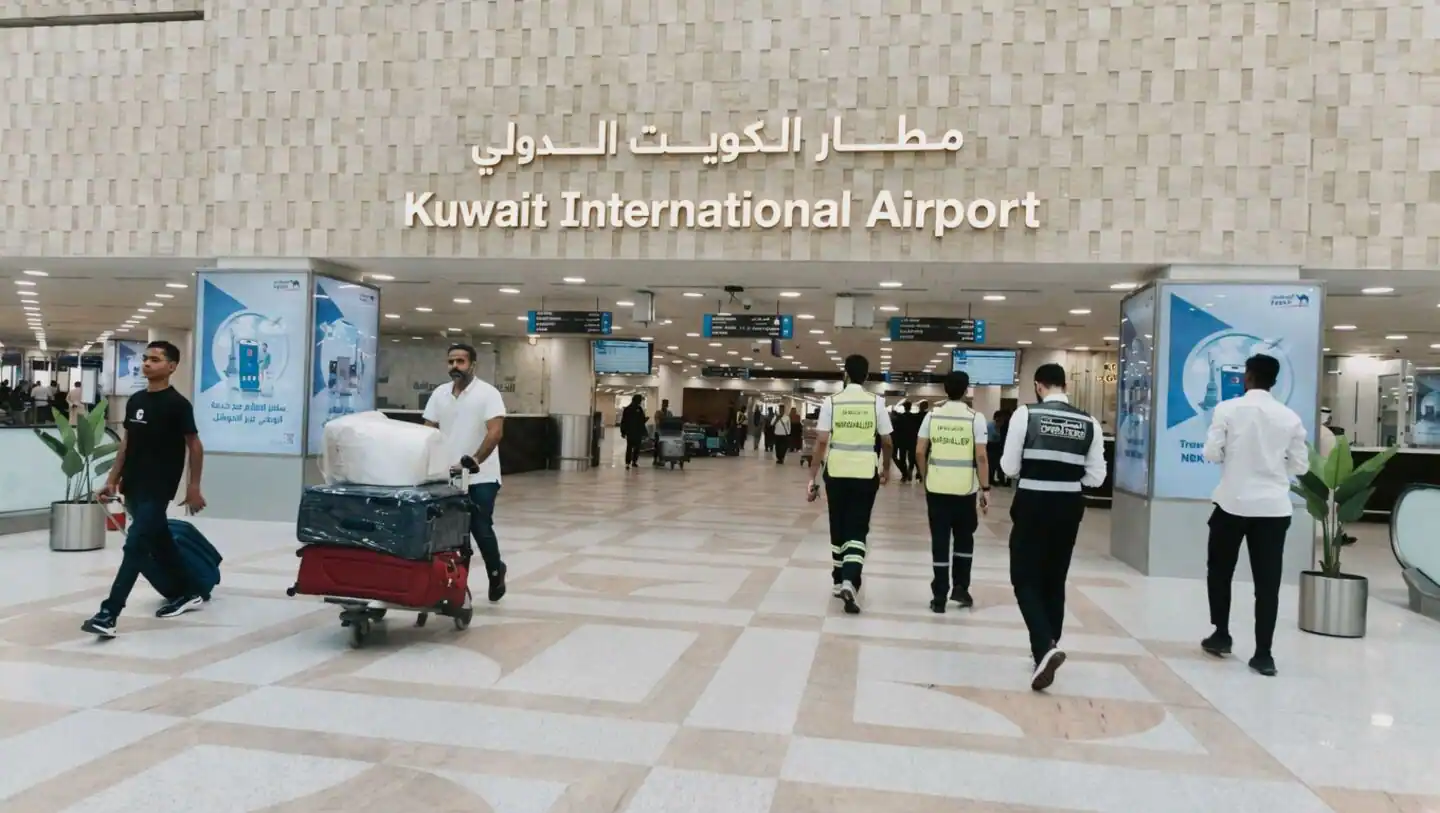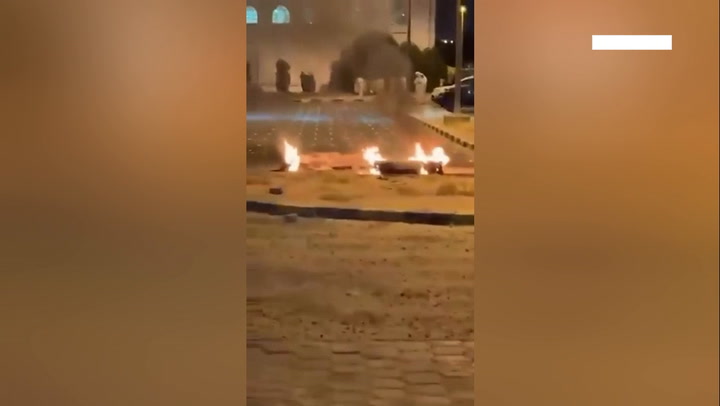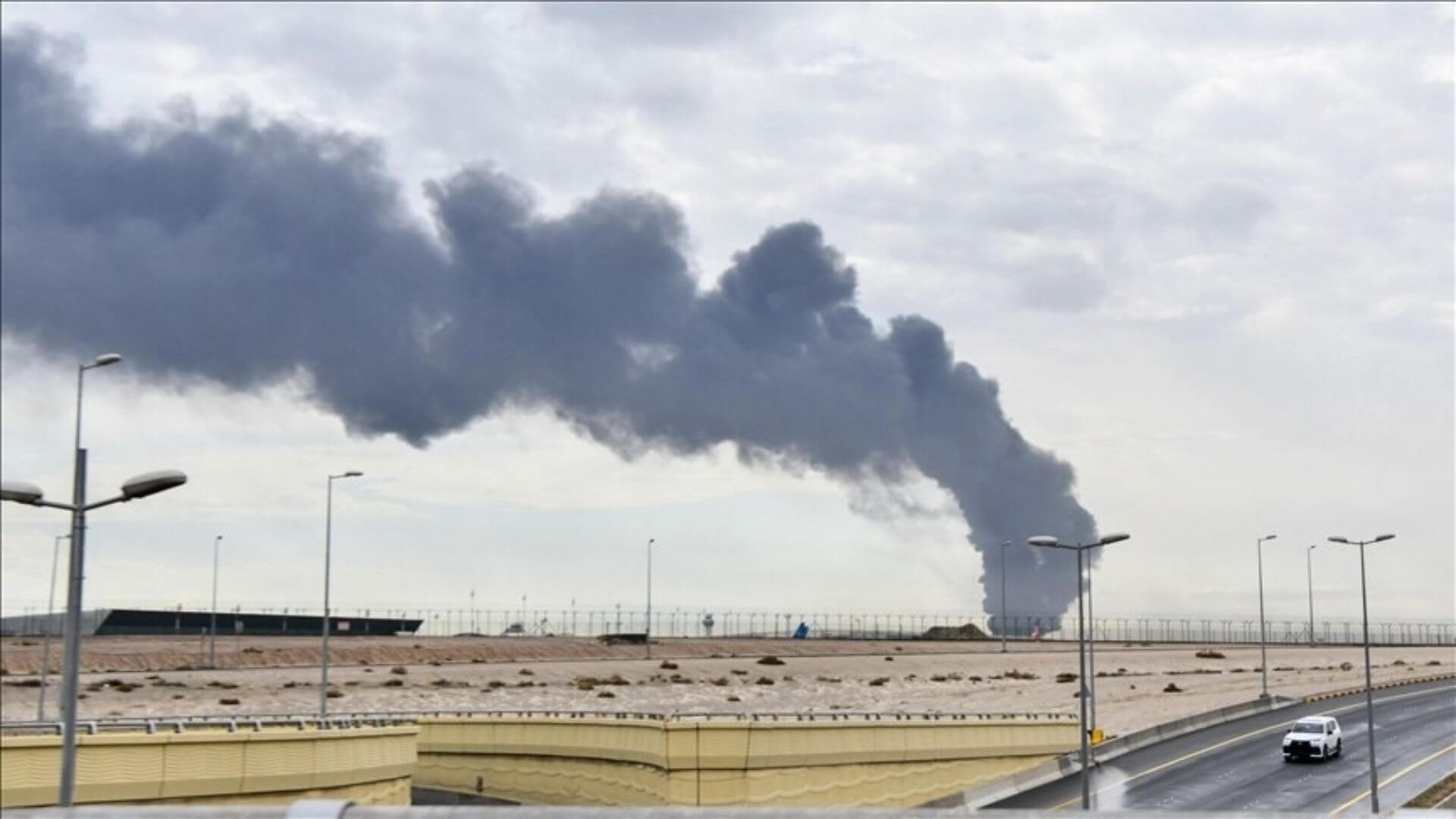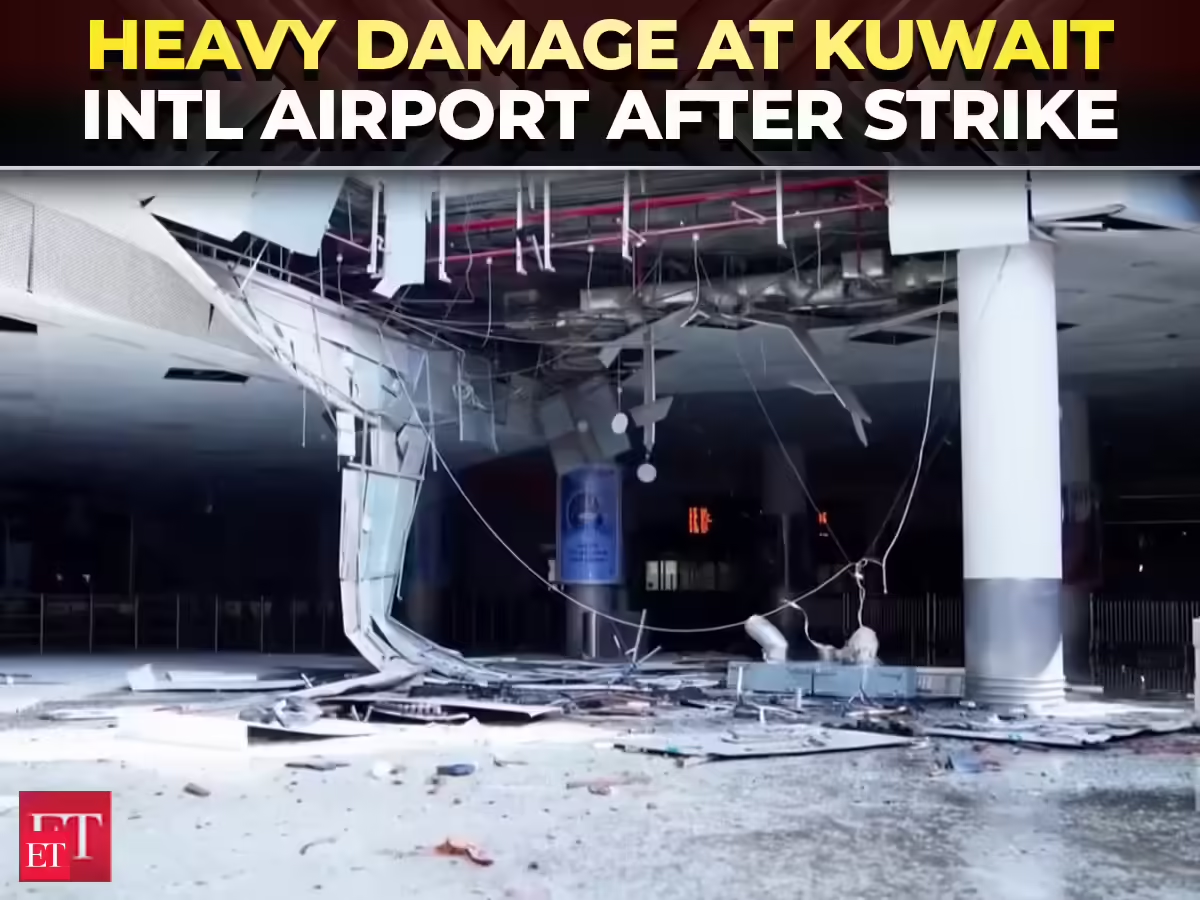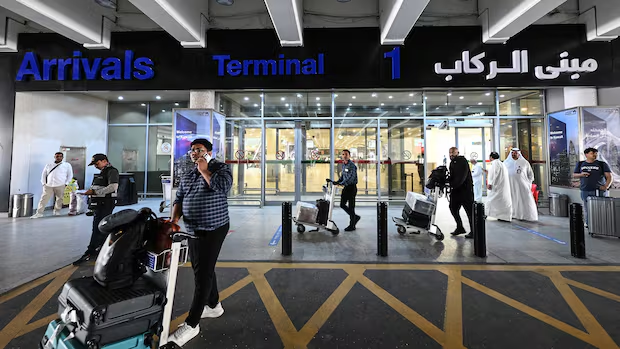
WorldFlights at Kuwait International Airport were suspended Wednesday after an Iranian drone and missile attack damaged airport facilities and diplomatic missions, killing one person and wounding more than 60, according to Kuwaiti authorities and state media.Trump says in new interview that Iran's ayatollah is involved in negotiations to end warThomson Reuters · Posted: Jun 03, 2026 4:56 AM EDT | Last Updated: 33 minutes agoListen to this articleEstimated 5 minutesThe audio version of this article is generated by AI-based technology. Mispronunciations can occur. We are working with our partners to continually review and improve the results.Passengers arrive at Kuwait International Airport on Monday, the airport's start of a phased reopening plan following repair and upgrade works completed after previous Iranian attacks since Feb. 28, when war broke out in the region. (Yasser al-Zayat/AFP/Getty Images)Flights at Kuwait International Airport were suspended Wednesday after an Iranian drone and missile attack damaged airport facilities and diplomatic missions, killing one person and wounding over 60, according to Kuwaiti authorities and state media.The civil aviation authority said Kuwait Airways was resuming flights from Terminal 4, after evaluating damage and taking safety measures. On Monday, the airport had started a phased reopening plan following repair and upgrade works completed after previous Iranian attacks.The latest strike marks an escalation for the oil-rich Gulf country, which had seen relative calm since a ceasefire in the Iran war was announced on April 8. Iran had frequently launched missiles and drones at Kuwait — an American ally — as well as at other Gulf states in the wake of the U.S.-Israel attack on Iran on Feb. 28.Bahrain's army said it had intercepted three missiles and several drones as Iran said it had attacked the headquarters of the U.S. Fifth Fleet in the country, as well as an airbase and helicopters in another, unspecified, regional state.Iran's Foreign Ministry said in a statement that it reserved the right to self-defence, saying Kuwait and Bahrain bore "direct and clear responsibility" for the attacks, alleging their territory and facilities had been used to support U.S. military operations against Iran.The U.S. military said two Iranian missiles aimed at Kuwait fell short or broke up in flight, while several ballistic missiles failed to strike their targets in the region.People swim at Suru Beach in Bandar Abbas, Iran, along the Strait of Hormuz, in this picture obtained from Iran's ISNA news agency on Monday. (Amirhossein Khorgooei/ISNA/AFP/Getty Images)In further signs of escalation, the U.S. military said it had downed drones targeting civilian ships in regional waters and U.S. forces in Kuwait, and had carried out strikes on Qeshm Island near the Strait of Hormuz after attempted attacks by Iran.Iranian media said the Revolutionary Guards' navy targeted a vessel with missiles in response to what it said was a U.S. attack on an Iranian tanker near Hormuz."Disrupting the security of the Strait of Hormuz will carry a heavy price for the U.S. military," media cited the Guards as saying. Promises of imminent deal not yet metA shaky ceasefire has not led to a breakthrough in a permanent end to the fighting. Iranian media said Tehran has not communicated with Washington for several days, but U.S. President Donald Trump said negotiations had not stopped, even claiming in a new podcast interview with the New York Post that aired Wednesday that Iran's Ayatollah Mojtaba Khamenei is involved in negotiations.U.S. Secretary of State Marco Rubio, in congressional committee on Tuesday, said there had been "indications" that Khamenei, who became Iran's supreme leader after his father was killed on the first day of the war, was "increasingly engaged at some level" in negotiations. But Rubio also said it can sometimes take days to get a response from Iran in negotiations that have been mediated by Pakistan.U.S. lawmakers, including some of Trump's fellow Republicans, have been increasingly questioning the fighting, as the Iran conflict enters its fourth month. Last month, the Senate voted to advance a war powers resolution that would end the Iran conflict unless Trump obtains authorization by Congress. Days later, House leaders abruptly postponed a vote on a similar resolution when it looked likely to pass.WATCH | Rubio defends Trump administration actions in Iran war:U.S. Secretary of State questioned over Iran warJune 2|Duration 4:26U.S. Secretary of State Marco Rubio is testifying to two committees in Washington on Tuesday. It's the first time he's been questioned on Capitol Hill since the U.S.-Israel war with Iran began.Since mid-March, Trump has repeatedly said he is close to a deal to end the fighting and allow negotiators to tackle thorny issues, including the future of Iran's nuclear program. Trump has said his top priority is to stop Iran from acquiring nuclear weapons. Iran denies it is developing a nuclear bomb and says its atomic program is for peaceful purposes.Tehran is seeking access to billions of dollars in oil revenues, waivers on crude exports, a lifting of a U.S. blockade on its ports and continued leverage over the Strait of Hormuz, traversed by one-fifth of the world's oil and liquefied natural gas traffic before the war.They fled Iran after years of fear and protest. Canada's new asylum law has put them in limboAnalysisWhy the seizing of Lebanon's Beaufort Castle handed Iran leverage in peace talksTrump acknowledges testy call with NetanyahuThousands, mainly in Iran and Lebanon, have died in the war since it began Feb. 28, while also causing global economic pain by pushing up energy prices, particularly in Europe, Asia and Africa.It also triggered the latest round of conflict between Israel and Lebanese militant group Hezbollah, with Israel pursuing its deepest incursion into Lebanon in 25 years. LISTEN | Center for International Policy's Matt Duss on the war and Abraham Accords :Front Burner31:21Does a ‘peace deal’ fuel Middle Eastern war?On Wednesday, Israeli drone strikes killed at least six people in southern Lebanon and targeted a car just south of Beirut, Lebanese security sources said. Israel said it intercepted a hostile aircraft likely fired by Hezbollah.There was no immediate response from the Israeli military to Reuters questions about the drone strikes, but the attack on the car appeared to mark the closest attack to Beirut since Trump asked Israel not to hit the Lebanese capital, under a U.S.-mediated partial ceasefire announced on Monday.Trump acknowledged Wednesday the reports earlier this week that he engaged in a harsh exchange with Israeli Prime Minister Benjamin Netanyahu, saying he was not happy with Israel's fighting with Lebanon."I did," Trump said in the Post's Podcast One interview. "I wouldn't say angry. I was a little bit perturbed at his constantly fighting with Lebanon, you know."Trump went on to say he and Netanyahu get along very well. With files from CBC News
Flights at Kuwait's airport suspended after deadly drone attack by Iran | CBC News
Flights at Kuwait International Airport were suspended Wednesday after an Iranian drone and missile attack damaged airport facilities and diplomatic missions, killing one person and wounding more than 60, according to Kuwaiti authorities and state media.
TL;DRAI
Iran ha colpito Kuwait con droni/missili (1 morto, 60+ feriti), escalation dopo 5 settimane di calma. Minaccia lo Stretto di Hormuz (20% petrolio/gas mondiale) e fragilizza negoziati nucleari, elevando volatilità per supply chain tech.
1,109 words~5 min read