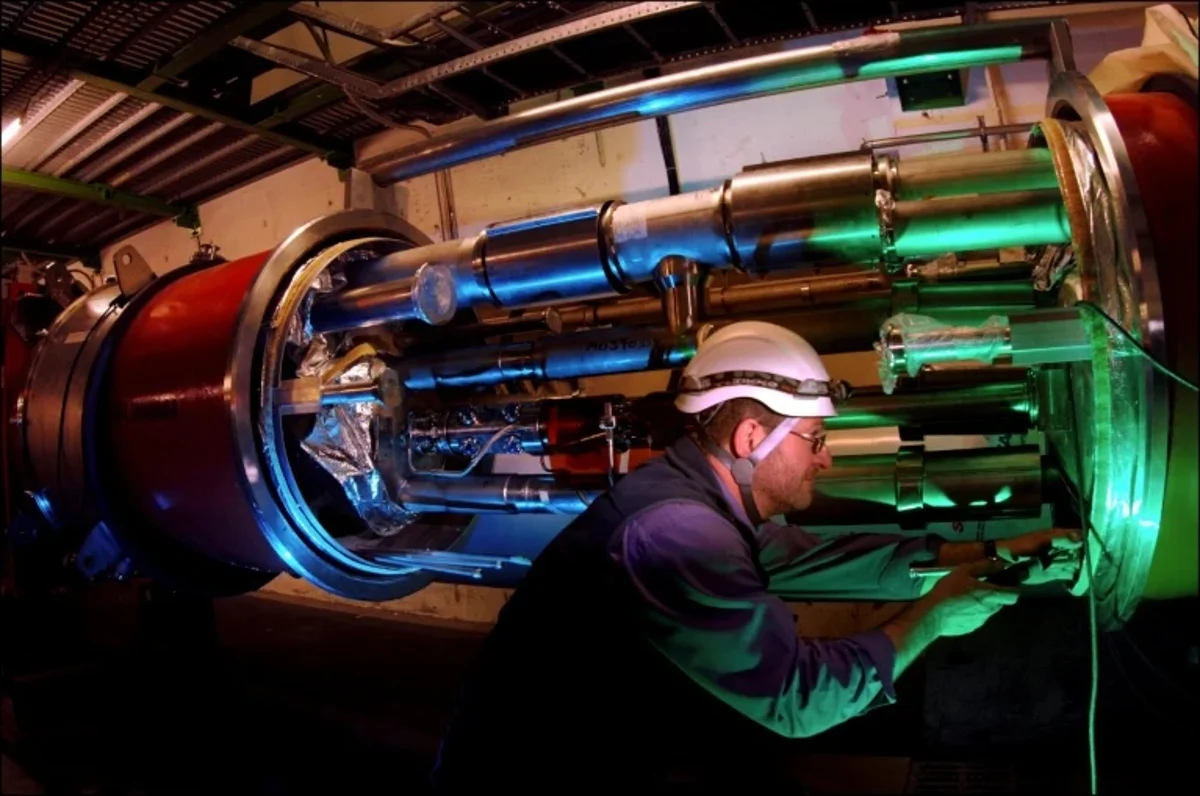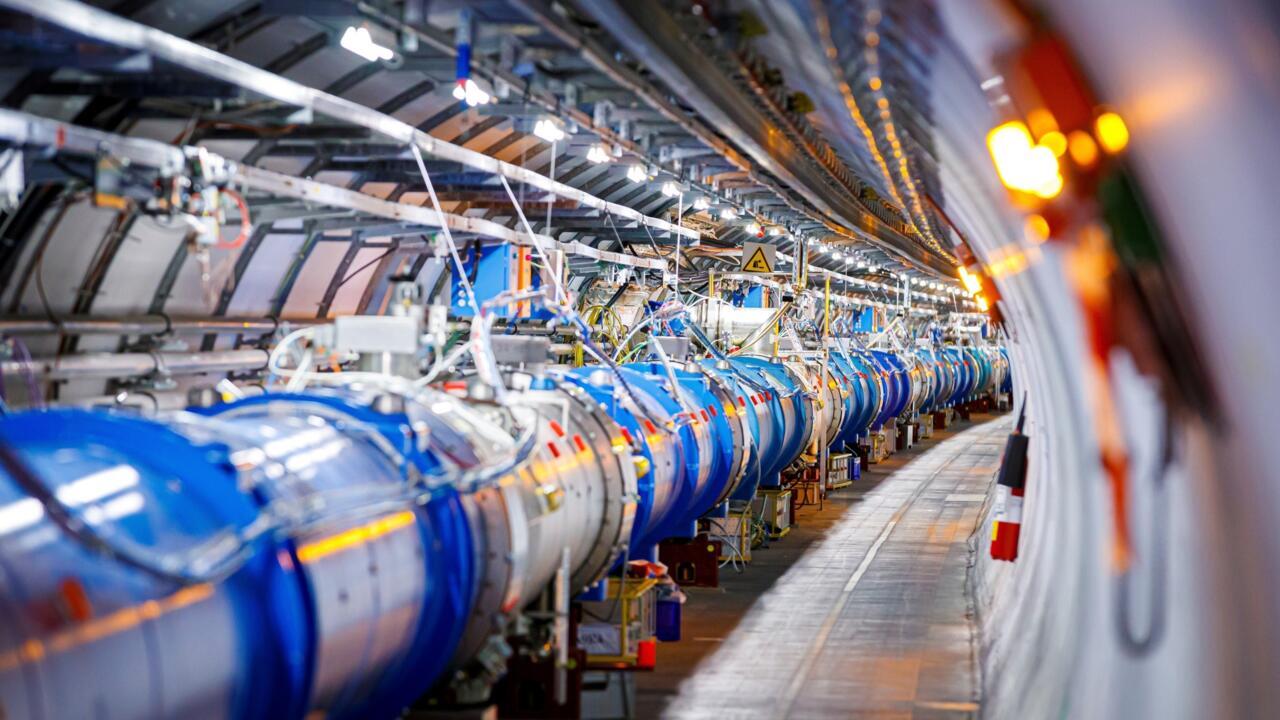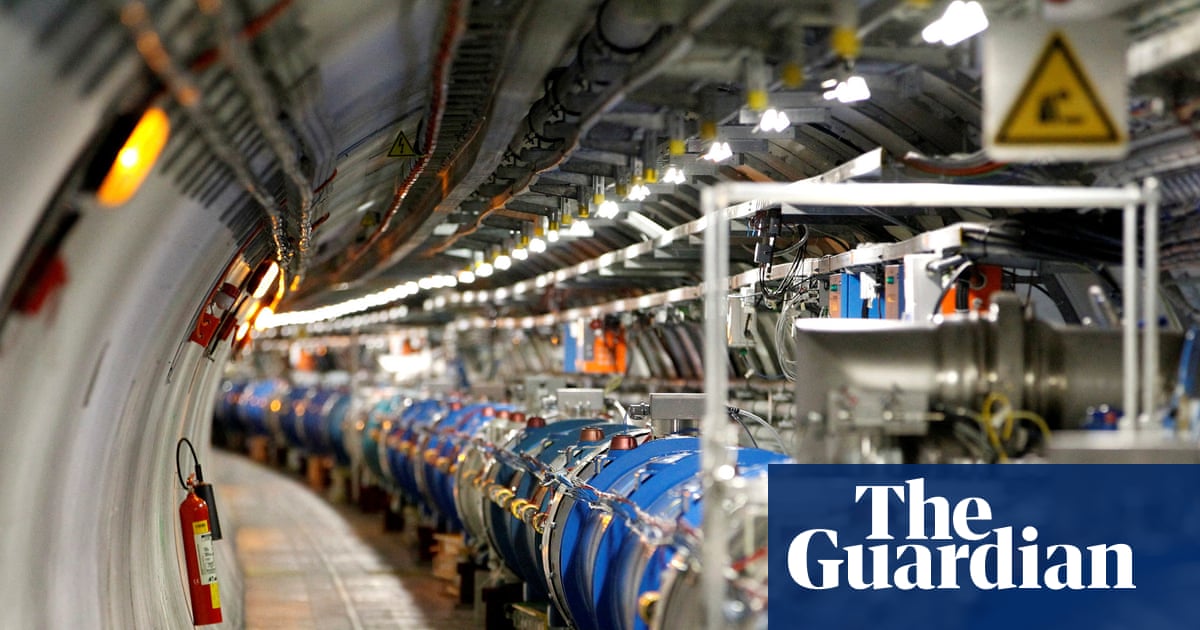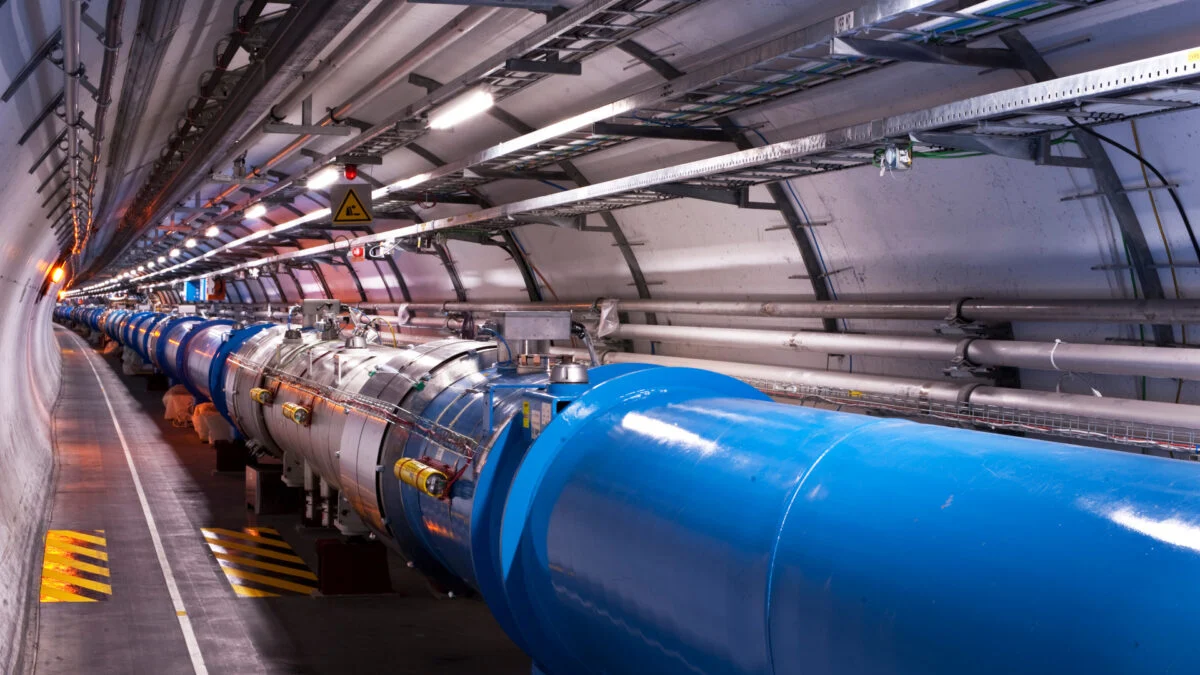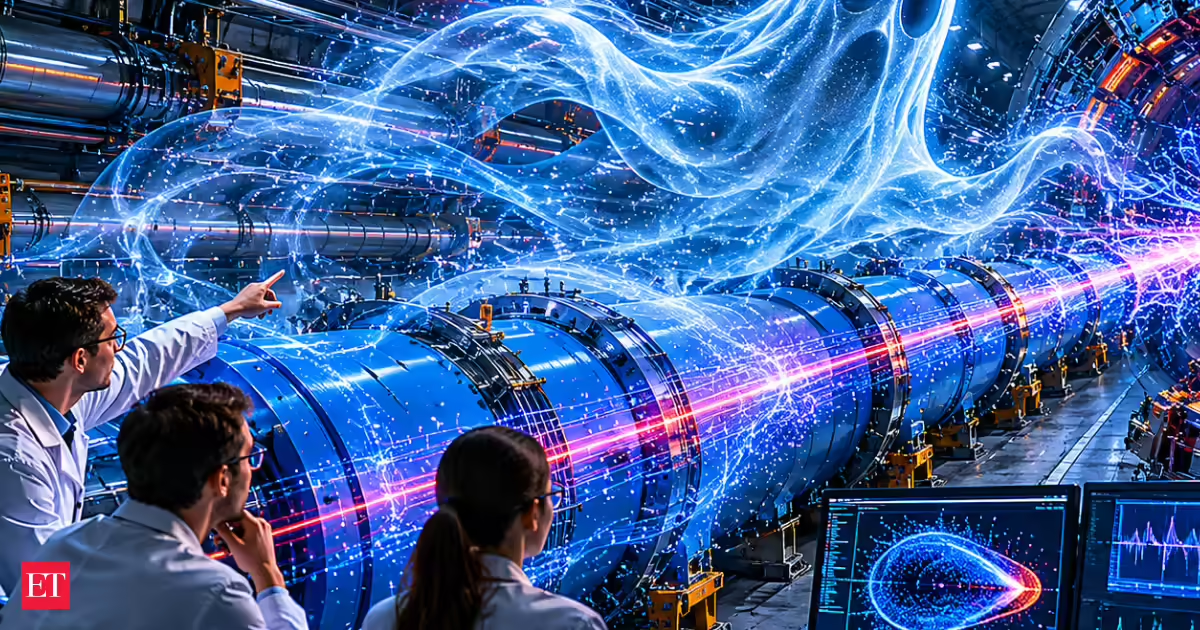
For more than two decades, scientists at CERN knew something strange was lurking inside one of the world's most powerful particle accelerators. They couldn't see it, but they could see the damage it caused. The mystery was finally solved in 2024.A team of physicists has mapped an invisible "ghost" resonance inside CERN's Super Proton Synchrotron (SPS) — a giant particle accelerator that has been operating since the 1970s.The discovery puts a face to a long-suspected phenomenon that has been quietly disrupting particle beams, causing them to drift off course and limiting the performance of major physics experiments.The Hidden TroublemakerThe SPS plays a crucial role in CERN's operations. It acts as the final launchpad for particle beams before they are sent into the world's largest particle collider, the Large Hadron Collider.But for years, scientists noticed something was going wrong. As beam intensities increased, more particles mysteriously disappeared.The culprit? A powerful resonance effect triggered by tiny imperfections in the accelerator's magnetic system."When these resonances occur, particles don't follow exactly the path we want and then fly away and get lost," physicist Giuliano Franchetti explained in a study published in Nature Physics.Hunting the GhostThe hunt began back in 2002 when researchers at CERN and the GSI Helmholtz Centre for Heavy Ion Research started investigating unexplained particle losses.The challenge was immense. The resonance existed in a complex four-dimensional space, making it impossible to observe using traditional methods.After years of simulations and painstaking experiments, scientists tracked particle movements across roughly 3,000 beam passages using highly sensitive monitors. The data revealed the elusive resonance structure for the first time.Even better, the measurements perfectly matched decades of theoretical predictions.Why It MattersThis isn't just a scientific curiosity.The SPS feeds beams directly into the Large Hadron Collider, meaning any improvement in beam quality could enhance future discoveries about the fundamental building blocks of the universe.Researchers say the findings could also benefit future particle accelerators and even help engineers working on nuclear fusion reactors, where similar techniques are being used to keep superheated plasma under control.Mystery Solved, Mission ContinuesScientists have now located and mapped the accelerator's "ghost," but getting rid of it is the next challenge.Researchers are developing new theories and engineering solutions to minimize the resonance's impact and improve accelerator performance.For twenty years, the phenomenon was known only through the chaos it caused. Now, it finally has a shape, a location, and a name.And in science, seeing the monster is often the first step toward defeating it.
When scientists found the 'ghost' haunting CERN's most powerful accelerator
For over two decades, scientists at CERN observed unexplained particle losses in their Super Proton Synchrotron. A new study has finally mapped this invisible "ghost" resonance, a phenomenon caused by magnetic system imperfections. This breakthrough, matching theoretical predictions, promises to improve particle accelerator performance and aid future discoveries.
408 words~2 min read