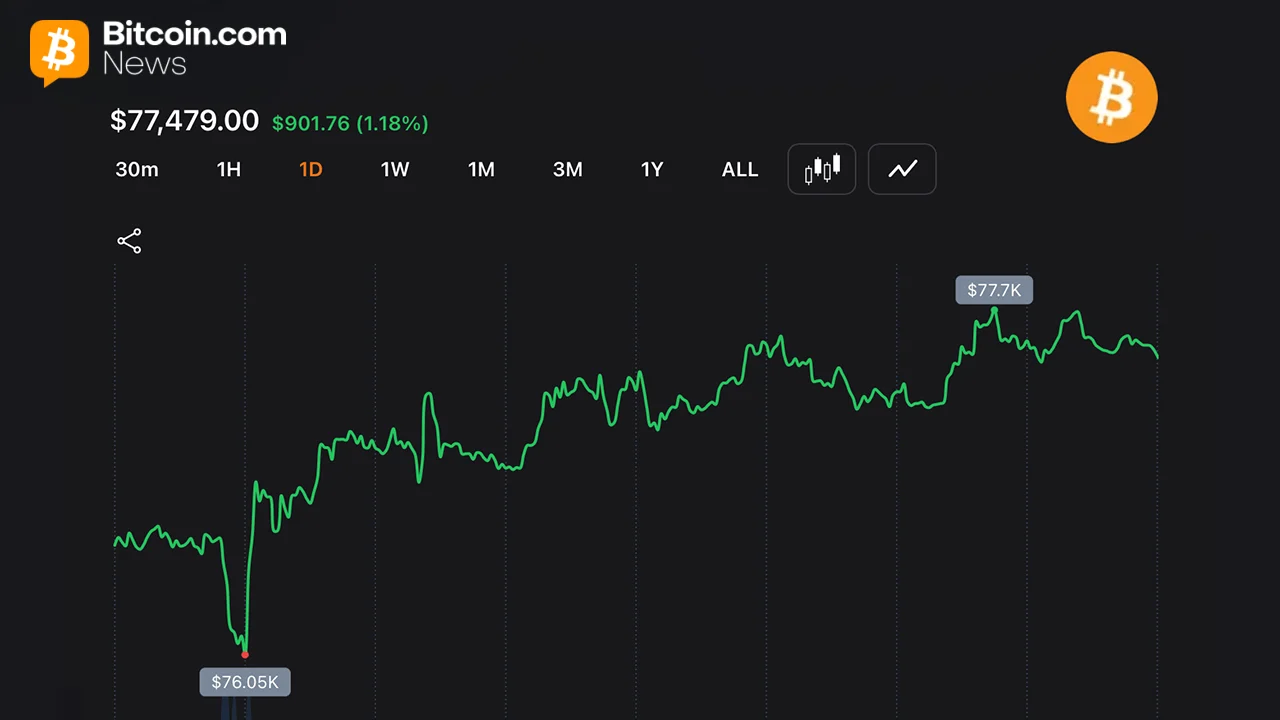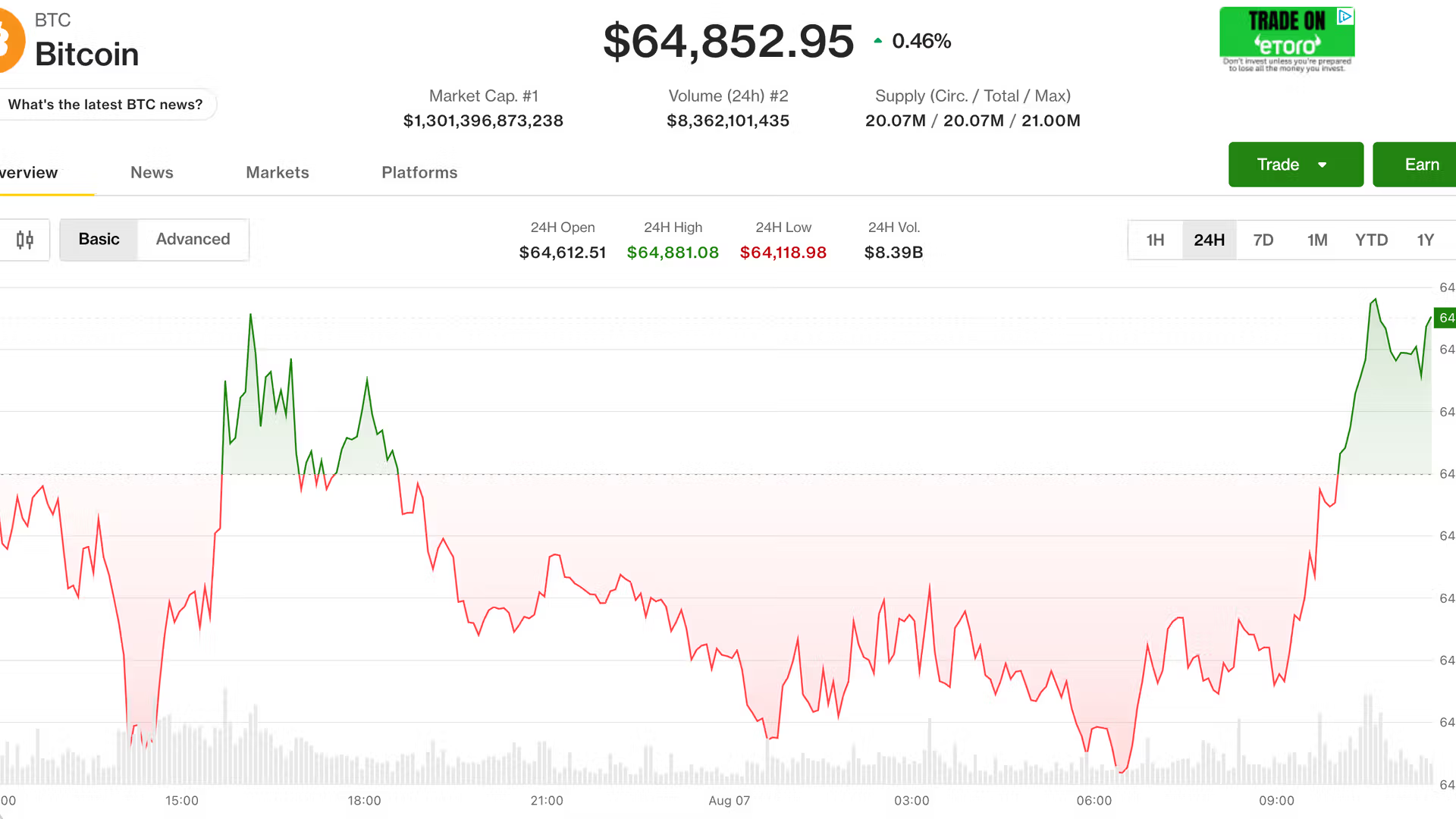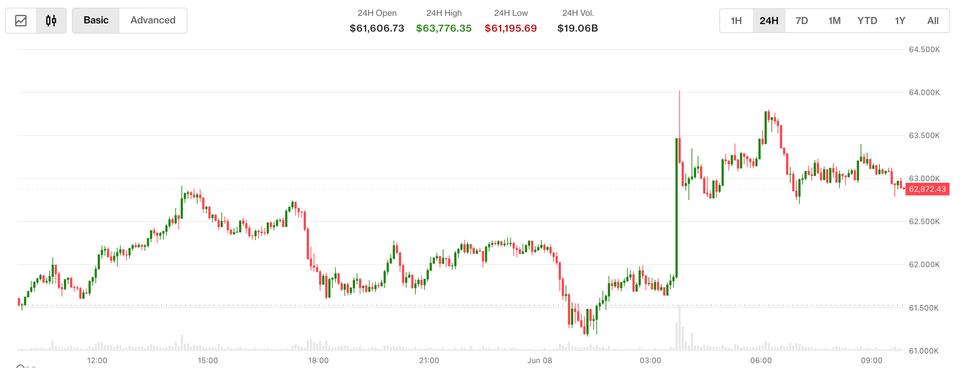
Bitcoin has surged in price. This has been due to an alleviation of tension in the Middle East oil crisis.Oil prices have been gradually clambering up since the start of the conflict. Brent crude oil has made gains of around 50%, while traditional safe-haven assets like gold have dropped 10%. This impacts the price of everything, and traditionally sees people run from risk assets, of which Bitcoin is one. Recent ceasefire news has seen it regain its footing once more.Bitcoins Current SituationTuesday, April 7th, saw the Bitcoin price surge past the $70k barrier for the first time in three months. It peaked at $72,738, before closing just below the $72,000 marker. On Wednesday, April 8th, it had stabilised somewhat at $71,8181. The BTC to INR ratio had this at 6,642,599, putting it up around 4% over the last 24 hours.Tuesday was an optimistic one, as a two-week extension of the deadline in tensions with Iran was requested by Pakistan. This pushed up stocks, and further improvements were seen later in the day when a solution was agreed that would reopen the Strait of Hormuz, the section of sea where most of the world’s oil passes.Binance highlighted just how vital this was. They believe that geopolitical deadlines have remained the primary volatility catalyst. Markets are hyper-focused on the April 6th strike deadline regarding the Iran conflict, and they stated how this had created a high risk of expectation reversals for risk assets. Near-term price action will remain decoupled from traditional fundamentals until the binary risk of military escalation is resolved.The Changing Price of BitcoinBitcoin has had varied signals and has mainly been propped up by institutional investors who have often continued buying. Monday, the 6th, saw Bitcoin Spot ETF products in the United States pull in $471.3 million in inflows. In fact, March itself had recorded $1.3 billion in inflows, after four straight months of losses that began in November 2025.All of this has led to positive statistics for Bitcoin. Primarily, this comes from the Moving Average Convergence Divergence (MACD), which is a good indicator of trends and price movement. A buy signal has appeared, as the MACD line has passed above both the centre and signal lines. Buying pressure is strengthening, though it does not give an indication of whether it will maintain or sustain a further rally.For the short sellers who had bet on a continued escalation of the conflict, around $427 million was lost. From the crypto sphere, $595 million was liquidated, and of this, short squeeze positions accounted for around $427 million, coming from around 118,489 traders. The largest single liquidation came from a $11.79 million short between Bitcoin and USDT. On Sunday evening, the Fear and Greed index sat at 8. It has been sitting under 10 throughout the entire period of hostility. Many had expected the result of the negotiations to go one way, when they in fact swung the other.Some indicators suggest that Bitcoin has done extremely well throughout the tensions. It is above the levels that were seen in early March, in contrast to indices and gold, which have dropped. Additionally, it is trading within a fairly tight range. While this was between the $62,000 to $70,000 mark, it is now looking at a tighter range from $65,000 upwards.Other Factors Weighing on BitcoinIt is not just a war abroad that will dictate Bitcoin’s price in the coming weeks. While a continued ceasefire may help, there are many domestic factors on US soil that must not be overlooked. Binance noted how the increase in oil could have an impact on the prospect of US stagflation concerns. Surging oil prices and the Iran conflict have eliminated Fed cut expectations while flipping the ECB and BoE toward hawkish stances. According to them, markets are currently pricing a 180-degree pivot from easing to tightening as supply shocks persist and growth signals weaken.They also highlighted the critical data window to test inflation pass-through: Upcoming NFP, CPI, and PCE releases that will determine if energy costs are infiltrating core services and labor markets. Strong prints may temporarily reinforce hawkish narratives before the Fed’s long-term growth mandate forces a dovish pivot.Another factor is the passing of the CLARITY Act. This is a regulatory framework for the US cryptocurrency sector. While those in the cryptosphere are predicting that it is almost a surefire to pass, prediction markets are reducing its chances by the day. It has already gone through Congress, but has been stuck in the Senate Banking Committee. This has mainly been over whether stablecoins should pay interest.All of this is being done against the clock, with mid-term on the horizon. Those within the committee, and advocates of the bill, have said that agreements are being reached and that no difference is insurmountable on this issue.Thus, the conflict in the Middle East is being made the scapegoat for Bitcoin’s tumbling price. Yet its woes began in October, far before the conflict was even an idea. This means that even with a resolution, other factors such as the cooling global and US economy will play a huge part.“This article is part of sponsored content programme.”Published on June 3, 2026
Bitcoin Breaks $70k as Oil Tensions Ease: BTC to INR Gains
Bitcoin surges past $70,000 as Middle East oil conflict tensions ease. Discover the impact of US Spot ETF inflows, MACD buy signals, and the CLARITY Act.
858 words~4 min read