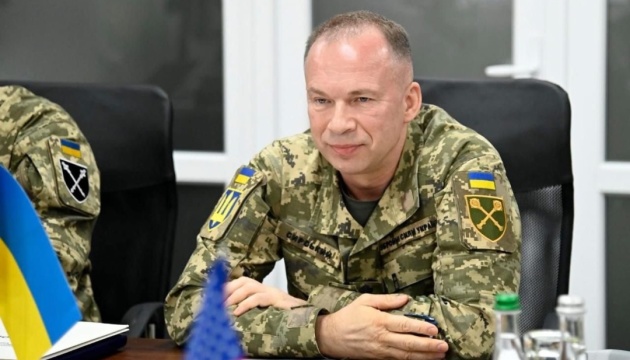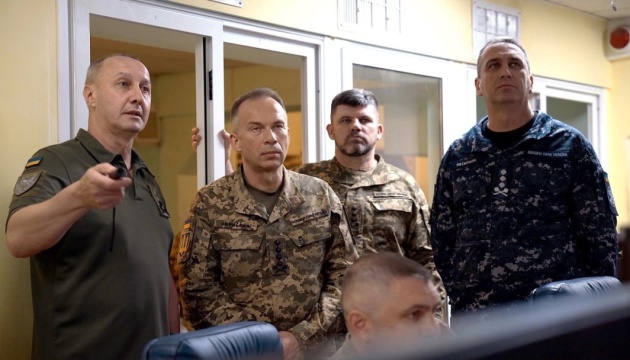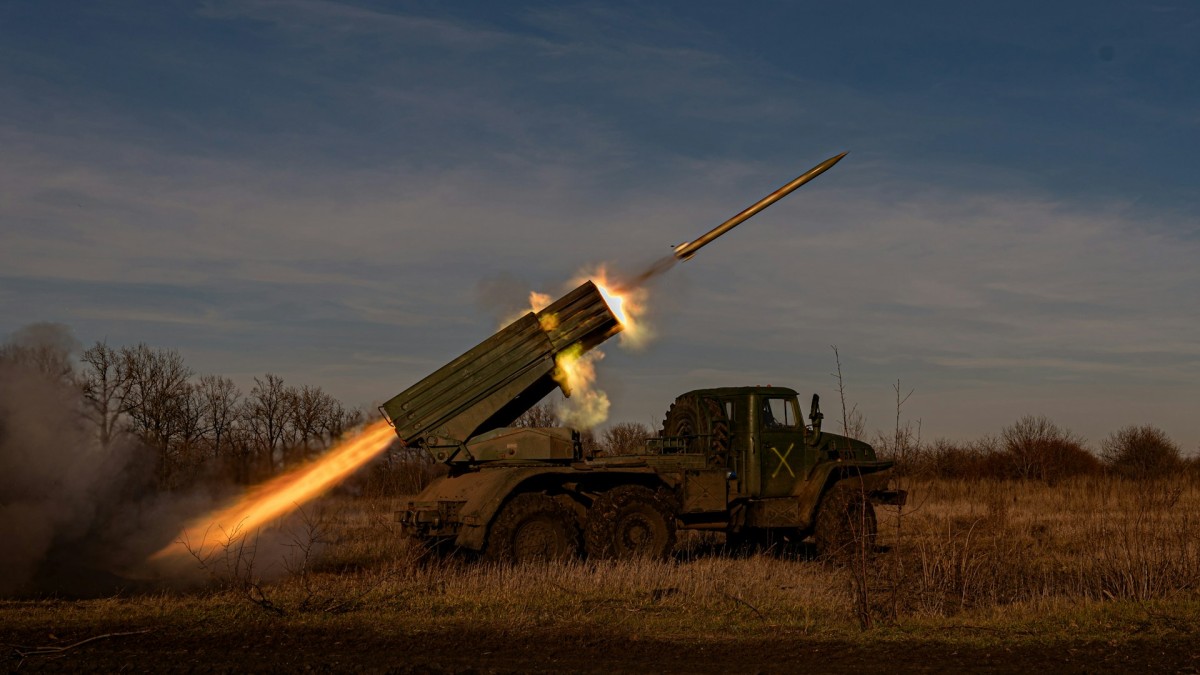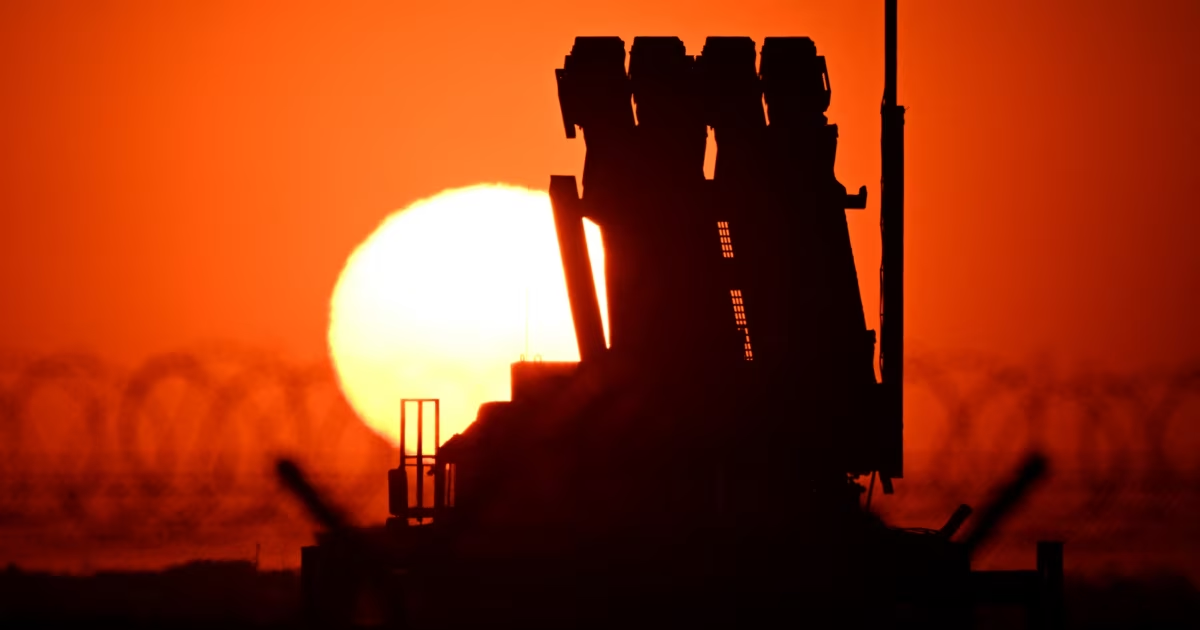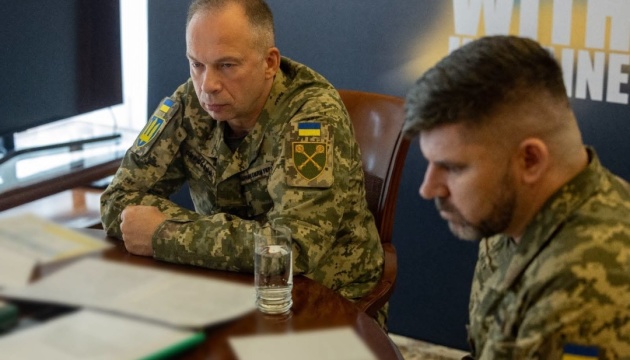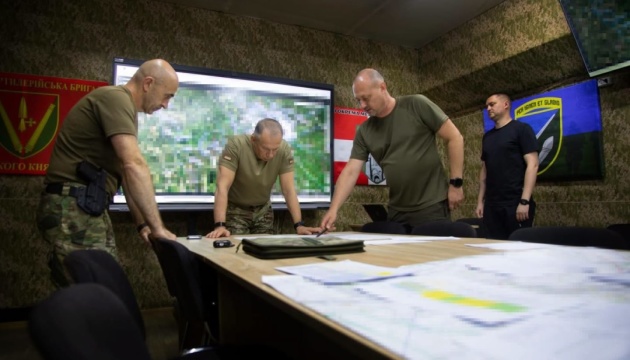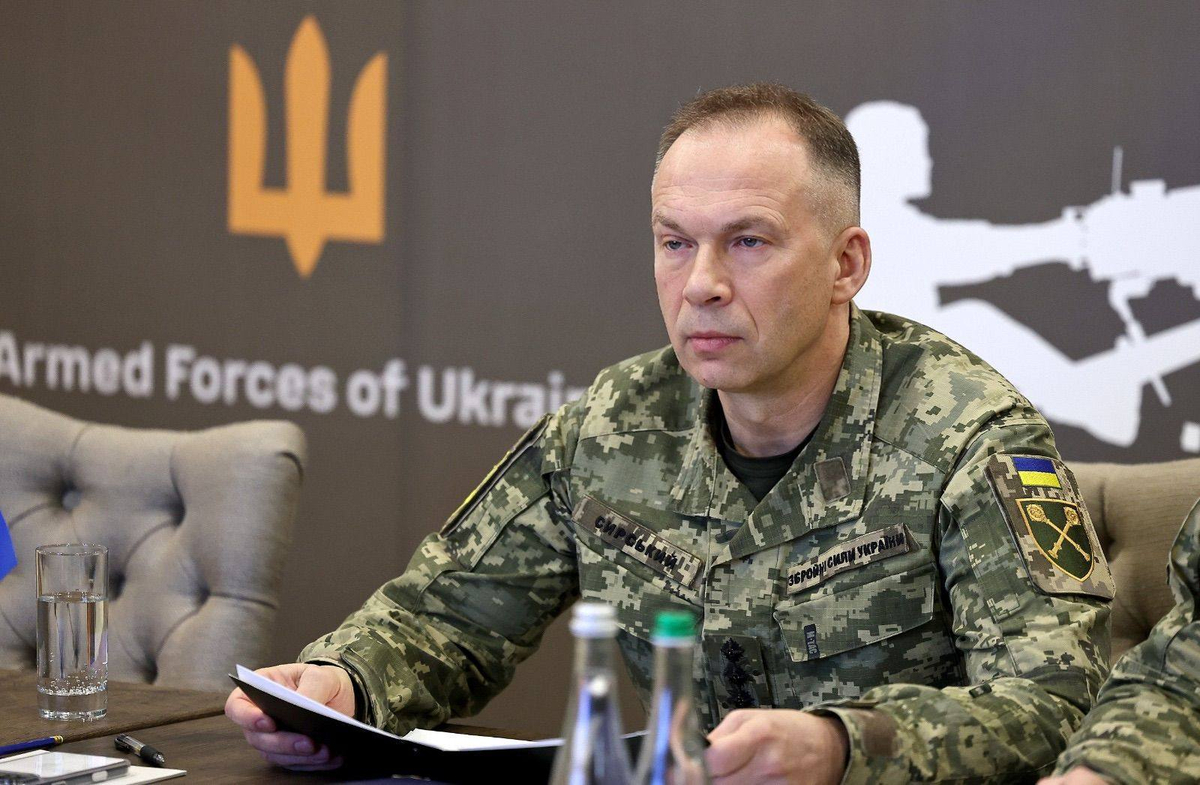
Ukrainian Armed Forces (AFU) Commander-in-Chief, Gen. Oleksandr Syrsky said on Wednesday, June 3, that Ukraine must use its air defense resources as efficiently as possible due to continuing shortages of modern systems and interceptor missiles. In a Facebook post following a working visit to Air Command South, Syrsky said he reviewed the performance of command centers and air defense crews responsible for protecting Ukrainian airspace.JOIN US ON TELEGRAMFollow our coverage of the war on the @Kyivpost_official. “Ukraine today operates under conditions of a shortage of modern air defense systems and missiles for them,” Syrsky wrote. “That is why the rational use of available resources, improving the effectiveness of every element of air defense, and obtaining additional modern systems and ammunition from partners remain critically important.” During the visit, Syrsky received briefings from Air Command South commander Brig. Gen. Oleksandr Humeniuk and other officers on the current battlespace situation, Russian tactics and efforts to improve the effectiveness of Ukraine’s air defense network. Russia targets southern ports and logistics infrastructure Syrsky said special attention was given to command and control systems, information-sharing speed and coordination among different branches of Ukraine’s Defense Forces. He noted that Russia continues to target southern Ukraine’s port infrastructure, including grain terminals, maritime logistics facilities and other civilian sites.
Ukraine Must Use Air Defense Resources Carefully as Missile Stocks Remain Limited, Syrsky Says
Commander-in-Chief Oleksandr Syrsky said Ukraine continues to face shortages of modern air defense systems and interceptor missiles, calling for more efficient use of existing resources as Russia intensifies aerial attacks.
TL;DRAI
Gen. Syrsky stressed Ukraine must ration air defense resources amid critical shortages of modern systems and interceptor missiles. Supply chain constraints on Western Patriot deliveries expose operational risks as Russia escalates attacks on infrastructure.
741 words~3 min read